The transition matters because the surfactant used to manufacture PFA and PTFE can affect both environmental impact and laboratory cleanliness. Legacy surfactants such as PFOA and APFO are persistent, bioaccumulative, and associated with toxicity concerns, while residues or degradation fragments may contribute to trace-level contamination. Alternative short-chain fluoroether and fluoropolyether surfactants provide the processing performance needed for fluoropolymer production with substantially lower accumulation potential, helping manufacturers produce safer, higher-purity labware.
PFOA-free or alternative-surfactant manufacturing reduces the environmental burden of fluoropolymer production and lowers the risk that processing residues will interfere with sensitive laboratory analyses. The transition supports environmental compliance without sacrificing the chemical inertness and low-adsorption properties that make PFA and PTFE valuable.
Why the Manufacturing Surfactant Matters
Surfactants Enable Fluoropolymer Production
PFA and PTFE are manufactured through aqueous polymerization processes in which a surfactant helps disperse fluorinated monomers and stabilize the growing polymer particles.
The surfactant is a processing aid, not the primary structural component of the finished fluoropolymer. However, poorly controlled residues or fragments can still be relevant when the material is used in demanding laboratory applications.
Legacy C8 Chemistry Created Environmental Concerns
Historically, manufacturers commonly used PFOA and its salt, ammonium perfluorooctanoate (APFO), as fluoropolymer processing surfactants.
These long-chain perfluorinated compounds are highly persistent and can exhibit significant bioaccumulation potential. The primary reference identifies bioconcentration factors above 1,000 for C8 and longer perfluorinated chains, making their release an important environmental concern.
Alternative Fluoroethers Address the Main Risk
Modern processes use alternatives such as short-chain fluoroethers and fluoropolyether structures containing ether linkages or other more susceptible degradation sites.
These materials can lower aqueous surface tension and stabilize polymer emulsions while reducing the tendency to persist and accumulate in living organisms. This allows manufacturers to retain effective processing performance while moving away from legacy long-chain surfactants.
How the Transition Protects Labware Purity
Residual Processing Chemicals Can Matter at Trace Levels
Trace-analysis laboratories work near extremely low detection limits. Even a small contribution from residual surfactants, degradation fragments, or other manufacturing-related contaminants can increase background signals or compromise a result.
This is especially important for digestion vessels, reagent bottles, tubing, reaction apparatus, and sample containers used for elemental or organic analysis.
PFOA-Free Processing Reduces Leaching Concerns
If residual processing chemicals remain in or near the polymer matrix, they may potentially migrate out during contact with solvents, acids, heat, or samples.
Using resins produced through PFOA-free processes or controlled alternative-surfactant methods reduces this specific contamination pathway. It does not eliminate the need for proper resin purification, forming controls, cleaning, and quality testing.
High-Purity PFA and PTFE Preserve Sample Integrity
PFA and PTFE are already valued for their chemical inertness, low surface adsorption, and resistance to strong acids, bases, and organic solvents.
These properties help prevent target analytes from adhering to container walls and reduce the risk of metals, plasticizers, or organic contaminants entering the sample. Cleaner manufacturing strengthens these advantages by minimizing background contamination originating from the material itself.
Why This Is Important for Environmental Analysis
The Labware Must Not Become the Contaminant
Environmental laboratories often measure pollutants, trace metals, and other substances at very low concentrations. A container that releases even small quantities of interfering compounds can produce elevated blanks, distorted recoveries, or false confidence in the data.
PFOA-free and high-purity fluoropolymer materials help ensure that measured contamination comes from the sample rather than from the vessel or fluid-contact surface.
Low Adsorption Supports Accurate Recovery
PFA and PTFE have non-stick, low-adsorption surfaces. This is important when analyzing trace metals or organic compounds that might otherwise bind to container walls and produce artificially low results.
Material purity and surface performance work together: low adsorption preserves analyte recovery, while low background contamination preserves measurement specificity.
The Environmental Benefit Extends Beyond the Laboratory
Replacing persistent, bioaccumulative processing aids reduces potential emissions and waste concerns during fluoropolymer manufacturing.
It also helps manufacturers meet environmental stewardship programs and global restrictions directed at legacy PFOA and APFO chemistry. The result is a more responsible supply chain for laboratory products that may themselves be used to monitor environmental contamination.
Understanding the Trade-offs
“Alternative” Does Not Mean Automatically Risk-Free
A replacement surfactant should not be judged solely by the absence of PFOA. Its persistence, degradation products, bioaccumulation potential, manufacturing controls, and regulatory status must also be evaluated.
The relevant question is whether the alternative provides a demonstrably improved environmental and purity profile under controlled manufacturing conditions.
PFOA-Free Does Not Guarantee Perfect Cleanliness
A PFOA-free claim addresses a specific processing chemistry. It does not, by itself, guarantee that a finished vessel has no detectable extractables, particulate contamination, metal background, or other residues.
For critical work, users should also review certificates of analysis, extractables or leachables data, blank performance, cleaning procedures, and lot traceability.
Processing History Still Affects Performance
Molding, sintering, machining, packaging, and cleaning can introduce contaminants after polymerization. A high-quality resin can therefore produce unsuitable labware if downstream handling is poorly controlled.
Purity must be assessed across the entire manufacturing chain rather than inferred from the surfactant choice alone.
How to Apply This to Your Labware Selection
The transition to alternative fluoroether surfactants is most valuable when it is combined with documented material and manufacturing controls.
- If your primary focus is environmental compliance: Specify PFA and PTFE products made with PFOA-free or modern alternative-surfactant processes and request supporting regulatory documentation.
- If your primary focus is trace elemental analysis: Select high-purity labware with low metal blanks, low adsorption, and lot-specific quality data rather than relying only on a general “PFOA-free” statement.
- If your primary focus is trace organic analysis: Confirm extractables, leachables, and background-interference performance for the solvents, temperatures, and contact times used in your method.
- If your primary focus is maximum sample integrity: Use PFA or PTFE from controlled manufacturing and pair it with validated cleaning, blank testing, and contamination-control procedures.
Choosing modern fluoropolymer manufacturing processes helps protect both the environment and the reliability of the measurements your lab depends on.
Summary Table:
| Aspect | Legacy Surfactants (PFOA/APFO) | Alternative Fluoroethers |
|---|---|---|
| Environmental Persistence | High; bioaccumulative | Lower; less persistent |
| Purity Risk | Potential residues may interfere | Reduced leaching concerns |
| Manufacturing Performance | Effective but problematic | Effective with safer profile |
| Regulatory Compliance | Increasingly restricted | Supports compliance |
Ensure your labware meets the highest purity standards. Contact KINTEK today to explore our PFOA-free PFA and PTFE labware, designed for trace analysis and environmental safety. Our products include beakers, digestion vessels, and custom CNC-machined parts, all manufactured with advanced alternative surfactants. Contact us to discuss your requirements and see how we can support your lab's accuracy and sustainability goals.
Related Products
- High Purity PFA Crucible and Corrosion Resistant PTFE Beaker for Trace Analysis and Custom Laboratory Applications
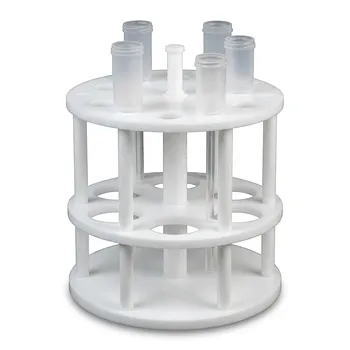
- Custom PFA Microcolumn Racks and PTFE Machined Low Background Corrosion Resistant Laboratory Fixtures
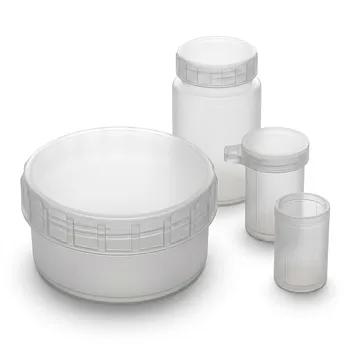
- PFA Reaction Jar Corrosion Resistant Wide Mouth PTFE Lab Bottle High Purity Chemical Vessel
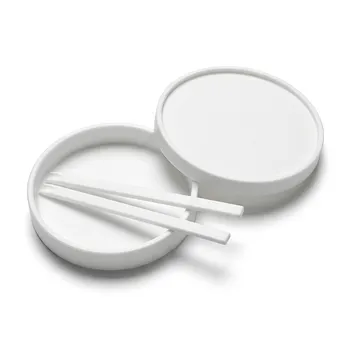
- Custom Polytetrafluoroethylene PTFE Petri Dishes 60mm Corrosion Resistant Low Background Labware
- Custom PTFE Petri Dish 30mm Corrosion Resistant Low Background Non Leaching Laboratory Ware
People Also Ask
- Why are high-purity vessels critical for BiFeO3 synthesis? Ensuring Phase Purity
- Why is the use of high-purity PFA or PTFE labware critical during TiO2 nanoparticle purification? Protect Sample Purity
- Why is high-purity PFA trace analysis labware used for MXene? Ensure Superior Material Integrity in Research
- Why is high-purity PFA labware necessary for Znx@LS-2 zeolite ICP-OES analysis? Ensure Trace-Level Precision
- Why is high-purity PFA trace analysis labware recommended for trace element detection? Achieve Gold Standard PPT Accuracy