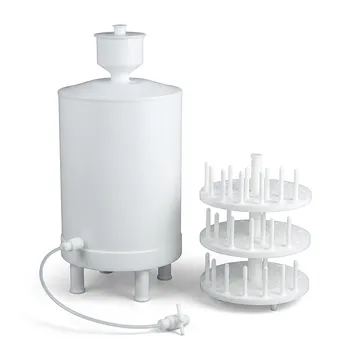
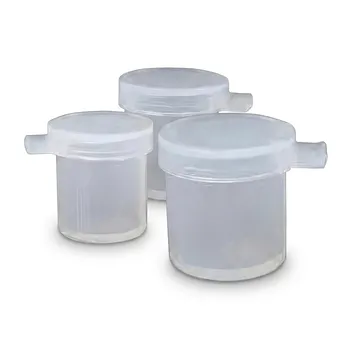
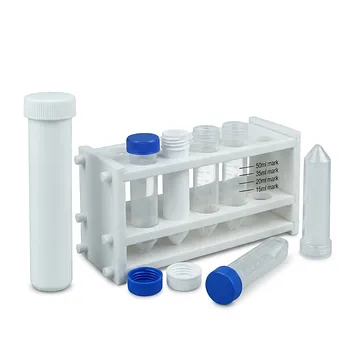
High corrosion resistance is mandatory because the precursors used in titanium dioxide ($TiO_2$) synthesis, such as titanium tetrachloride ($TiCl_4$) and concentrated hydrochloric acid ($HCl$), are aggressively corrosive and prone to rapid hydrolysis. Without chemical resistance, reaction vessels degrade, leaching trace impurities into the solution that disrupt the precise crystalline phase formation and chemical purity required for functional nanoparticles.
High-performance fluoropolymers like PTFE and PFA are the industry standard because they maintain structural integrity against strong acids. This inertness ensures that the resulting $TiO_2$ nanoparticles remain free from container-derived contaminants that would otherwise compromise their photocatalytic efficiency and morphological consistency.
The Corrosive Nature of $TiO_2$ Precursors
The Chemical Attack of $TiCl_4$ and $HCl$
The co-precipitation method relies on titanium tetrachloride ($TiCl_4$) and concentrated hydrochloric acid ($HCl$), both of which are highly reactive. These substances aggressively attack standard laboratory materials, causing rapid surface erosion and structural failure of the reaction vessel.
The Vulnerability of Standard Labware
Standard glass equipment is particularly susceptible to erosion when synthesis involves hydrofluoric acid ($HF$) or concentrated mineral acids. Over time, the acidic environment leaches ions from the container walls, directly contaminating the precursor solution.
Managing Rapid Hydrolysis
$TiCl_4$ is prone to rapid hydrolysis, a process that can be further complicated by the presence of impurities. Chemically inert labware ensures that the hydrolysis reaction occurs under controlled conditions, dictated only by the intended reagents and not by unintended side reactions with the container.
Impact on Nanoparticle Integrity and Performance
Protecting the Crystalline Phase
The specific crystalline structure of $TiO_2$ (such as anatase or rutile) determines its functional properties. Trace impurities leached from non-resistant labware can interfere with the lattice arrangement, leading to improper phase formation or structural defects.
Ensuring Photocatalytic Precision
Synthesized $TiO_2$ is frequently used in photocatalytic degradation studies where even minute trace metal impurities can skew results. Using high-purity PFA or PTFE containers ensures that catalytic efficiency measurements reflect the material’s inherent properties rather than contamination.
Consistency in Particle Morphology
In nanostructure synthesis, the kinetics of crystal growth are highly sensitive to the chemical environment. Corrosion-resistant labware prevents the introduction of foreign ions that could alter particle size and shape, ensuring a predictable and repeatable synthesis process.
Understanding the Trade-offs
Material Limitations of Fluoropolymers
While PTFE and PFA offer near-universal chemical resistance, they have a lower thermal ceiling than traditional borosilicate glass. Users must ensure that synthesis temperatures do not exceed the specific melting or deformation points of these polymers, typically around 250°C to 300°C.
Cost vs. Contamination Risk
High-purity fluoropolymer labware represents a significant upfront investment compared to glass or standard plastics. However, the cost of failed experiments, skewed data, and compromised nanoparticle purity often outweighs the initial expenditure on superior materials.
Physical Properties and Handling
Fluoropolymers are generally opaque or translucent, which can make visual monitoring of the co-precipitation process more difficult than in clear glass. Additionally, while they are chemically inert, they are softer than glass and can be prone to mechanical scratching if not handled with care during cleaning.
How to Apply This to Your Project
When selecting labware for $TiO_2$ nanoparticle synthesis, choose your materials based on the specific aggressive agents and purity requirements of your protocol.
- If your primary focus is maximum chemical purity: Utilize PFA (Perfluoroalkoxy) containers, as they offer the smoothest surface finish and the lowest levels of extractable metal ions.
- If your primary focus is high-temperature acid digestion: Opt for PTFE (Polytetrafluoroethylene) components, which maintain stability and inertness under a wide range of aggressive thermal and acidic conditions.
- If your primary focus is photocatalytic testing: Ensure all washing and purification steps are conducted in high-purity fluoropolymer beakers to avoid introducing trace metals that mask the catalyst’s true performance.
By prioritizing high corrosion resistance, you ensure that the synthesis environment remains a controlled variable, protecting the scientific integrity of your nanomaterial.
Summary Table:
| Factor | Corrosion Risk in Synthesis | Fluoropolymer (PTFE/PFA) Benefit |
|---|---|---|
| Chemical Purity | Metal ions leach from standard vessels | High chemical inertness; zero contamination |
| Crystallinity | Impurities disrupt phase lattice formation | Maintains specific phases (Anatase/Rutile) |
| Kinetic Control | Side reactions with container walls | Ensures controlled hydrolysis & particle growth |
| Performance | Masked photocatalytic efficiency data | Provides reliable results for catalyst testing |
Secure Your Research Integrity with KINTEK’s High-Performance Fluoropolymer Labware
Protect the crystalline precision of your titanium dioxide nanoparticle synthesis with laboratory supplies engineered for extreme chemical environments. KINTEK specializes in high-purity PTFE and PFA labware, ensuring your results are never compromised by vessel-derived contamination or leaching.
Whether you require everyday basic labware (beakers, measuring cylinders, crucibles, reagent/wash bottles, centrifuge and digestion tubes) or comprehensive fluid transfer components (tubing, fittings, valves), KINTEK delivers the absolute corrosion resistance needed for TiCl₄ and HCl processing. Our specialized manufacturing extends to:
- Sample Prep & Filtration: Separatory funnels, burettes, filters, pipettes, tweezers, and spatulas.
- Advanced Apparatus: Standard or custom electrochemical cells, battery testing fixtures, hydrothermal synthesis liners, microwave digestion vessels, and microchannel reactors.
- Consumables: High-durability stirring bars, O-rings, gaskets, seal tapes, and septa.
With end-to-end custom CNC fabrication, we are equipped to deliver everything from complex non-standard machined parts and bespoke laboratory setups to high-volume orders, maintaining an exclusive focus on high-performance fluoropolymer materials.
Don't let vessel corrosion ruin your data. Contact KINTEK for a Custom Quote Today
References
- Prashant D. Sanadi, Ganesh S. Kamble. Efficient hydrogen evolution via neutral water electrolysis using nanocrystalline TiO2 electrocatalyst. DOI: 10.1038/s41598-025-93371-0
This article is also based on technical information from Kintek Knowledge Base .
Related Products
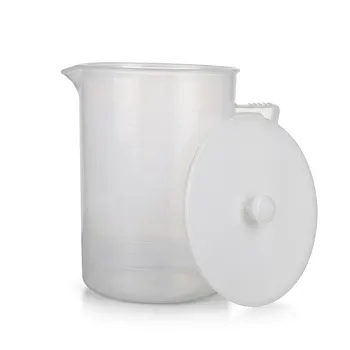
- High Purity PFA Crucible and Corrosion Resistant PTFE Beaker for Trace Analysis and Custom Laboratory Applications
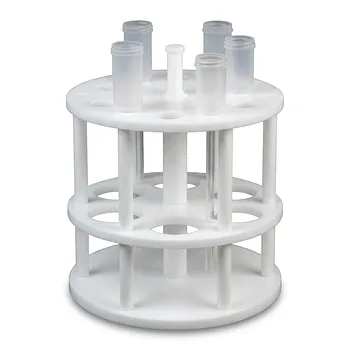
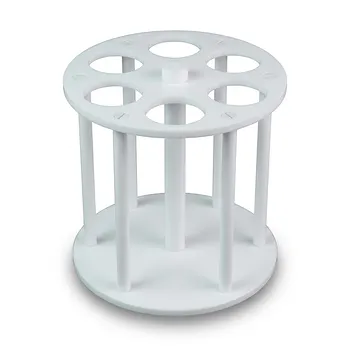
- Custom PFA Microcolumn Racks and PTFE Machined Low Background Corrosion Resistant Laboratory Fixtures
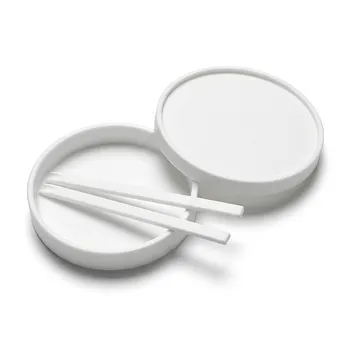
- Custom Polytetrafluoroethylene PTFE Petri Dishes 60mm Corrosion Resistant Low Background Labware
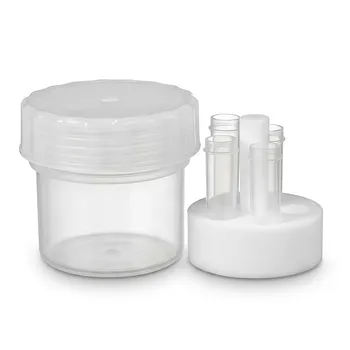
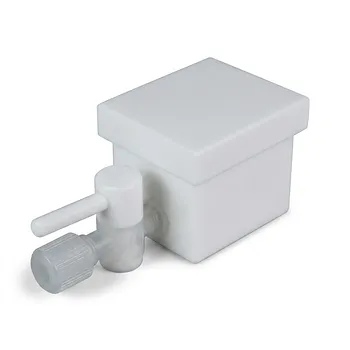
- Corrosion Resistant PTFE Support with PFA Transparent Reaction Tank and High Purity PFA Sampling Tube for Trace Analysis
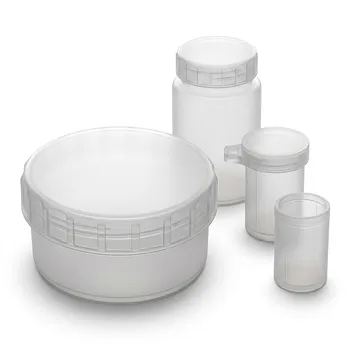
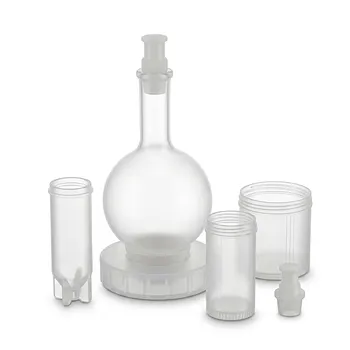
- PFA Reaction Jar Corrosion Resistant Wide Mouth PTFE Lab Bottle High Purity Chemical Vessel
People Also Ask
- Why are high-purity vessels critical for BiFeO3 synthesis? Ensuring Phase Purity
- Why is the use of high-purity PFA or PTFE labware critical during TiO2 nanoparticle purification? Protect Sample Purity
- Why is high-purity PFA labware necessary for Znx@LS-2 zeolite ICP-OES analysis? Ensure Trace-Level Precision
- Why is high-purity PFA trace analysis labware used for MXene? Ensure Superior Material Integrity in Research
- Why is high-purity PFA trace analysis labware used for sample processing when preparing Mo2CTx@MoS2? Ensure Material Purity