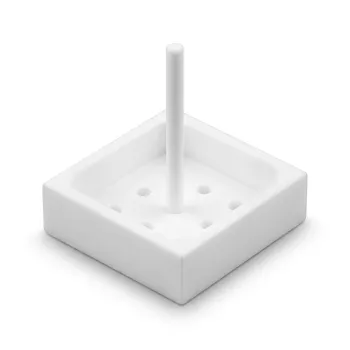
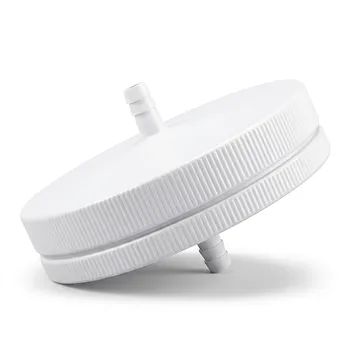
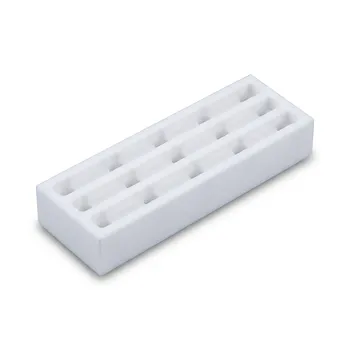
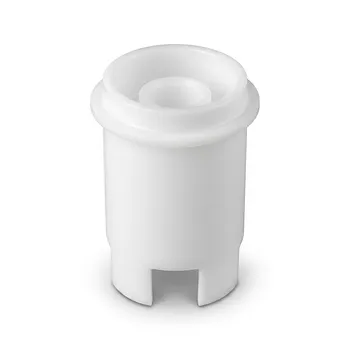
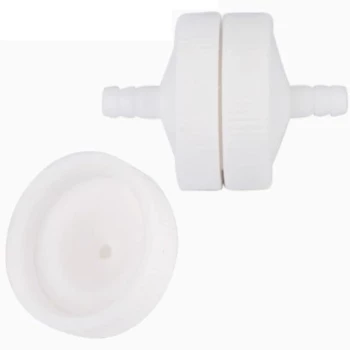
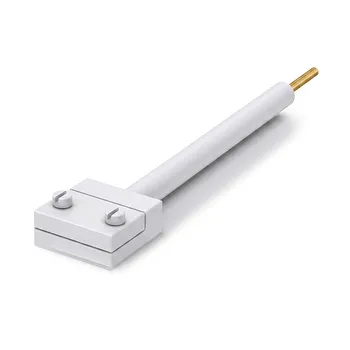
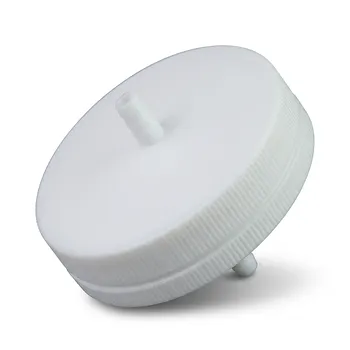
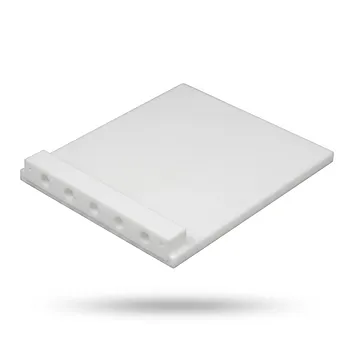
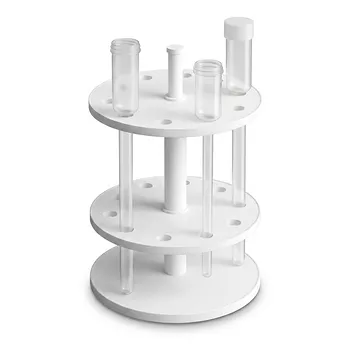
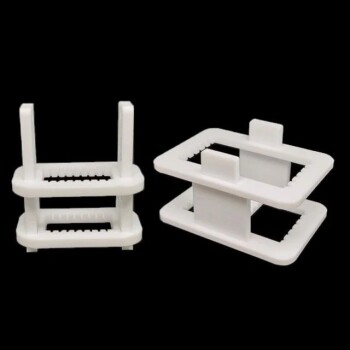
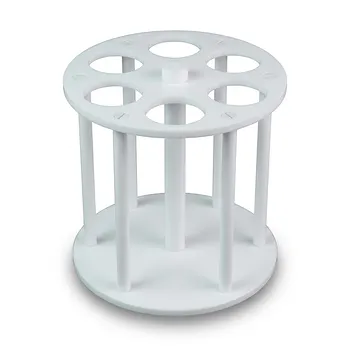
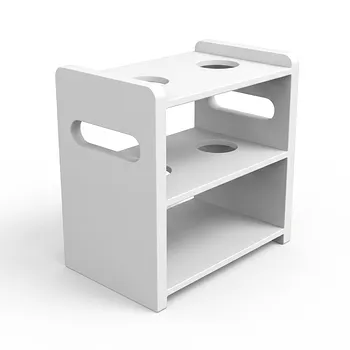
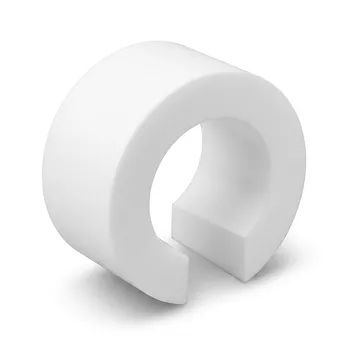
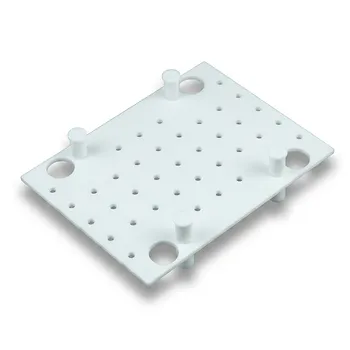
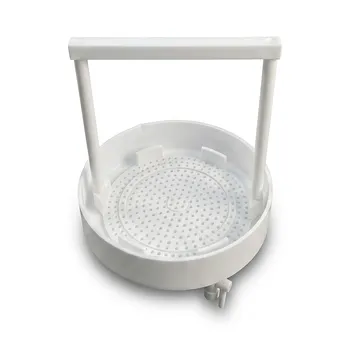
Custom PTFE substrate holders are recommended because they prevent chemical contamination that glass can introduce into alkaline synthesis baths. Concentrated alkaline solutions can attack glass, dissolving glass-derived ions into the precursor and changing its intended stoichiometry. PTFE is highly resistant to these reagents, helping maintain bath composition, film purity, morphology, and electronic performance.
The holder is part of the reaction environment. In alkaline synthesis, replacing glass with a chemically resistant PTFE holder reduces ion leaching and cross-contamination, allowing the intended reaction conditions—not the container material—to determine the final product.
Why Glass Can Compromise Alkaline Synthesis
Alkaline solutions can dissolve glass components
Glass is stable in many chemical processes, but strong bases—particularly high-concentration sodium hydroxide solutions—can chemically attack its surface.
This attack can release ions from the glass into the solution. Even small amounts of dissolution can matter when the synthesis depends on tightly controlled precursor concentrations.
Leached ions alter precursor stoichiometry
The dissolved glass species become unintended components of the reaction bath. They can change the ratio of the intended precursors and interfere with nucleation, growth, or deposition reactions.
As a result, the synthesized material may no longer reflect the designed chemical formulation.
Contamination can affect material performance
Changes in composition can degrade the properties of deposited or synthesized films. Potential consequences include altered film morphology, reduced purity, and less consistent steady-state photocurrent performance.
This is especially important for thin-film synthesis, where small chemical deviations can produce measurable changes in electronic behavior.
How PTFE Protects Reaction Control
PTFE resists aggressive alkaline reagents
PTFE offers very high chemical resistance to strong bases and other aggressive reagents used in chemical synthesis. It is therefore far less likely than glass to contribute dissolved container-derived species to the bath.
This resistance helps preserve the original precursor composition throughout the process.
PTFE reduces holder-to-bath cross-contamination
A PTFE holder does not readily erode under the relevant alkaline conditions, reducing the risk that the substrate support becomes a source of impurities.
The reaction is consequently governed more closely by the selected precursors, concentrations, temperature, and deposition parameters.
Low surface energy limits unwanted adhesion
PTFE has very low surface energy, so reactive species are less likely to adhere strongly to its surface. This can help prevent precursor depletion and reduce residue-related contamination.
The benefit extends beyond alkaline solutions to systems containing organic solvents or reactive coupling agents, provided the complete chemical and operating conditions are compatible with PTFE.
Why Custom Machining Matters
The holder geometry can match the substrate
A custom-machined holder can be designed around the substrate dimensions, immersion depth, exposed surface area, and required orientation.
This improves repeatability by keeping the substrate positioned consistently from one synthesis run to the next.
Stable positioning supports uniform deposition
Consistent positioning helps maintain comparable local conditions around the substrate, including contact with the precursor solution and exposure to the active reaction environment.
That consistency can contribute to more uniform film morphology and more reproducible performance measurements.
The holder becomes a controlled process component
A custom PTFE holder is not simply a replacement for glassware. It is a way to remove an uncontrolled material from the experimental system and make the substrate-support geometry part of the process design.
Understanding the Trade-offs
PTFE is highly resistant, not universally inert
PTFE is an excellent choice for many strong-base and high-purity applications, but no material should be treated as compatible with every chemical, temperature, pressure, or mechanical condition.
Compatibility should be confirmed for the specific reagents, operating temperature, exposure time, and cleaning procedure.
PTFE can be mechanically softer than glass
PTFE is relatively soft and can deform or scratch more easily than glass. Poorly designed clamps or excessive tightening may damage the holder or create dimensional changes over time.
The design should provide adequate support without applying unnecessary mechanical stress.
Surface condition still matters
A chemically resistant holder can still carry residues from machining, handling, or previous experiments. Cleaning and conditioning procedures remain necessary, particularly in high-purity synthesis and sensitive catalytic studies.
PTFE reduces one major contamination pathway; it does not eliminate the need for disciplined laboratory practices.
Cost and fabrication time may be higher
Custom machining generally costs more and takes longer than selecting an off-the-shelf glass component. That additional effort is justified when precursor purity, film reproducibility, or measurement consistency is more important than initial component cost.
How to Apply This to Your Project
The appropriate choice depends on whether chemical purity, geometric repeatability, or convenience is the dominant requirement.
- If your primary focus is precursor purity: Use a properly cleaned PTFE holder to minimize glass-derived ion leaching and maintain the intended solution stoichiometry.
- If your primary focus is film uniformity: Specify custom geometry that fixes substrate position, immersion depth, and exposed area across all runs.
- If your primary focus is reproducible electronic performance: Eliminate holder-derived contamination so changes in photocurrent or other properties can be attributed to the synthesis parameters.
- If your primary focus is cost and simplicity: Glass may remain suitable for chemically compatible, less sensitive reactions, but it should not be assumed safe for concentrated alkaline baths.
- If your primary focus is high-purity or mechanistic studies: Use PTFE or another verified fluoropolymer and control cleaning, handling, and compatibility conditions carefully.
Choosing a custom PTFE holder turns the substrate support from a potential contamination source into a controlled part of the synthesis process.
Summary Table:
| Aspect | Glass Holders | Custom PTFE Holders |
|---|---|---|
| Chemical Resistance | Susceptible to alkaline attack, ion leaching | Excellent resistance to strong bases, minimal leaching |
| Contamination Risk | High risk of altering precursor composition | Low risk, preserves stoichiometry |
| Customization | Limited off-the-shelf geometry | Tailored to substrate size and positioning |
| Mechanical Strength | Hard but brittle | Soft, can deform under stress |
| Cost & Lead Time | Lower cost, readily available | Higher cost, longer lead time |
| Ideal Use Cases | Less sensitive, compatible reactions | High-purity, reproducible synthesis |
Ensure your alkaline synthesis is contamination-free and reproducible with custom PTFE substrate holders from KINTEK. Our precision-machined PTFE and PFA components are designed for high-purity applications, helping you maintain precursor integrity and achieve consistent film properties. Whether you need standard labware or bespoke holders, our expert team can deliver the exact solution for your needs. Contact us today to discuss your requirements and discover how KINTEK can enhance your research outcomes. Contact us now!
Related Products
- PTFE Silicon Wafer Holder for Acid Etching and Cleaning Process 2 4 6 8 Inch Customizable High Temperature Resistant
- PTFE Filter Membrane Holder for Hydrogen Chloride and Water Filtration 90mm Environmental Sampling Clamp Customizable
- Custom PTFE Laboratory Cleaning Basket Carrier High Purity Acid Base Resistant Wafer Holder Low Background Contamination Free Chemical Bath Rack
- PTFE Membrane Filter Holder for Aerosol Environmental Monitoring and Low Concentration Particulate Matter Sampling Chemical Resistant Air Quality Analysis Component
- High Pressure PTFE Digestion Vessel Inner Cup Holder Custom Corrosion Resistant Low Background Teflon
People Also Ask
- What is the purpose of PTFE etching? Unlock Bondable Surfaces for Your Components
- Why is PTFE sometimes etched and how is this process performed? Unlock Strong Bonding for Your PTFE Components
- How does PTFE improve bearing performance? Achieve Low-Friction, Maintenance-Free Operation
- What are some applications of Teflon in bearing technology? Achieve Maintenance-Free, Low-Friction Performance
- What is unique about the design of PTFE bearings for different projects? Custom-Engineered for Your Specific Application