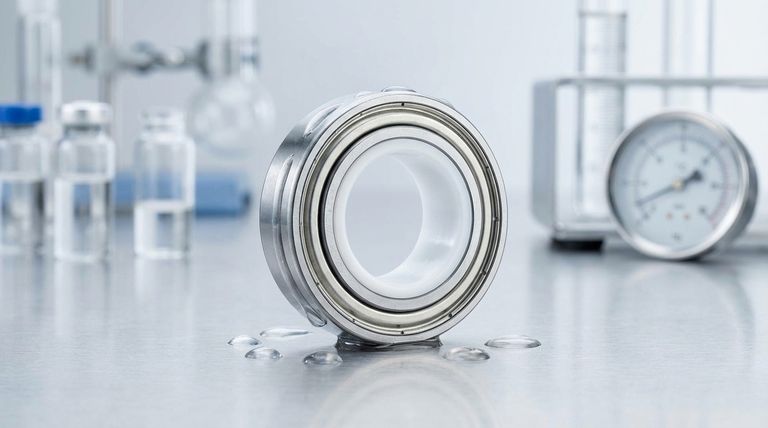
At its core, Polytetrafluoroethylene (PTFE) improves bearing performance by creating an exceptionally low-friction, self-lubricating surface. This unique material provides outstanding chemical resistance and maintains its stability across a wide range of temperatures, directly addressing the primary causes of bearing wear and failure.
The true value of PTFE in bearings isn't just one feature, but its ability to form a durable, multi-talented protective layer. It simultaneously reduces friction, eliminates the need for external lubrication, and shields the bearing from chemical attack.
The Core Mechanisms of PTFE in Bearings
To understand why PTFE is so effective, we need to look at its fundamental material properties. Each one translates directly into a tangible performance benefit for a bearing system.
Unmatched Frictional Reduction
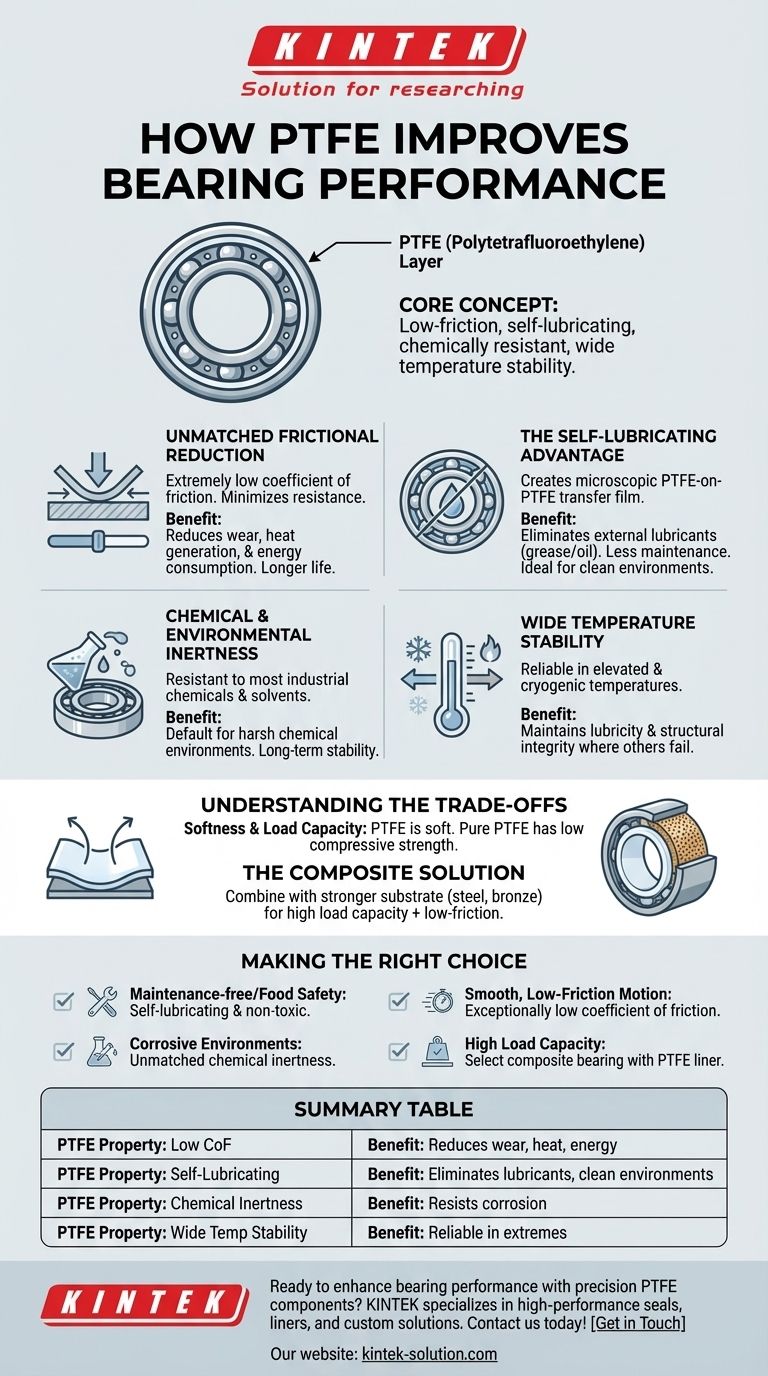
The most cited characteristic of PTFE is its extremely low coefficient of friction. This is one of the lowest of any solid material known.
This property means that surfaces slide against each other with minimal resistance. This directly reduces wear, heat generation, and energy consumption, leading to a longer and more efficient operational life for the bearing.
The Self-Lubricating Advantage
PTFE is inherently self-lubricating. As the bearing operates, a microscopic film of PTFE transfers to the mating surface, creating a smooth PTFE-on-PTFE interface.
This eliminates the need for external lubricants like grease or oil. The result is a cleaner system that requires significantly less maintenance and is ideal for environments where contamination is a concern, such as in food processing or medical devices.
Chemical and Environmental Inertness
PTFE exhibits outstanding chemical resistance. It is inert to nearly all industrial chemicals, solvents, and corrosive agents.
This makes PTFE-enhanced bearings the default choice for applications in harsh chemical environments where conventional materials would quickly degrade and fail. Its good weathering resistance also ensures long-term stability.
Wide Temperature Stability
Bearings often operate in demanding conditions where temperatures can fluctuate dramatically.
PTFE performs reliably across a very wide temperature range. It maintains its lubricity and structural integrity in both elevated and cryogenic temperatures where traditional lubricants would either break down or solidify.
Understanding the Trade-offs
While PTFE's properties are remarkable, it's critical to understand its limitations to apply it correctly. No material is a universal solution.
Softness and Load Capacity
The references note that PTFE is a soft and formable material. This same property that helps it create a transfer film also means pure PTFE has a relatively low compressive strength compared to metals.
For this reason, you will rarely find a high-load bearing made entirely of solid PTFE. Instead, it is most effectively used as a liner in a metal backing, woven into a fabric layer, or blended into other polymers as a performance-enhancing additive.
The Composite Solution
By combining PTFE with a stronger substrate (like steel, bronze, or advanced composites), engineers create a bearing that has both high load capacity and the low-friction, self-lubricating surface of PTFE. This composite approach leverages the best properties of each material.
Making the Right Choice for Your Goal
Your application's primary demand should guide your material selection.
- If your primary focus is maintenance-free operation or food safety: PTFE's self-lubricating and non-toxic properties make it the ideal choice.
- If your primary focus is performance in corrosive environments: The unmatched chemical inertness of PTFE will provide the necessary durability.
- If your primary focus is smooth, low-friction motion: PTFE's exceptionally low coefficient of friction is the key performance driver.
- If your primary focus is high load capacity: Ensure you are selecting a composite bearing that uses PTFE as a liner or fabric, not a bearing made of solid PTFE.
Understanding these properties allows you to select not just a material, but a complete engineering solution for your specific challenge.
Summary Table:
| PTFE Property | Bearing Performance Benefit |
|---|---|
| Low Coefficient of Friction | Reduces wear, heat, and energy consumption |
| Self-Lubricating | Eliminates need for external lubricants; ideal for clean environments |
| Chemical Inertness | Resists corrosion in harsh chemical environments |
| Wide Temperature Stability | Performs reliably from cryogenic to elevated temperatures |
Ready to enhance your bearing performance with precision-engineered PTFE components?
At KINTEK, we specialize in manufacturing high-performance PTFE seals, liners, and custom components for the semiconductor, medical, laboratory, and industrial sectors. Our expertise ensures your bearings operate with maximum efficiency, minimal maintenance, and superior chemical resistance.
Whether you need a prototype or high-volume production, we deliver solutions tailored to your specific challenges. Contact us today to discuss your project requirements! Get in Touch
Visual Guide
Related Products
- PTFE Silicon Wafer Holder for Acid Etching and Cleaning Process 2 4 6 8 Inch Customizable High Temperature Resistant
- Customizable PTFE Rods for Advanced Industrial Applications
- Customizable PTFE Seals Filter Holders for Versatile Applications
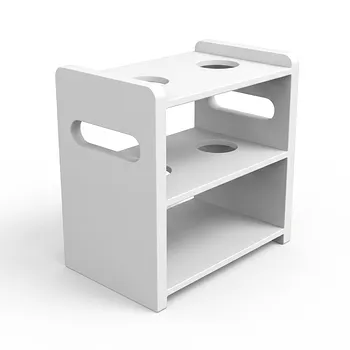
- Customizable PTFE Heat Insulation Plate High Temperature Corrosion Resistant Laboratory Support Layered Multi Tier Stand
- PTFE Anti Scald Heat Insulation Sleeve Hot Plate Support Feet Laboratory Benchtop Protection Customizable Thermal Barrier
People Also Ask
- What is the purpose of PTFE etching? Unlock Bondable Surfaces for Your Components
- Why is PTFE sometimes etched and how is this process performed? Unlock Strong Bonding for Your PTFE Components
- Why are custom PTFE substrate holders recommended over glass components for chemical synthesis involving alkaline precursor solutions?
- What are some applications of Teflon in bearing technology? Achieve Maintenance-Free, Low-Friction Performance
- What is unique about the design of PTFE bearings for different projects? Custom-Engineered for Your Specific Application