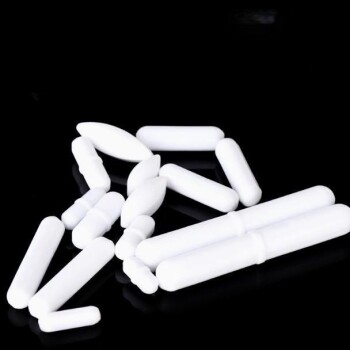
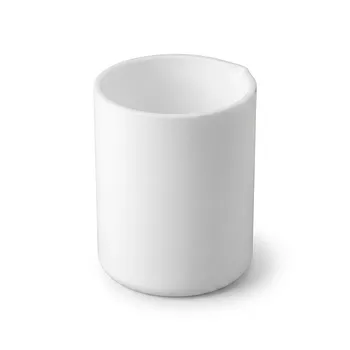
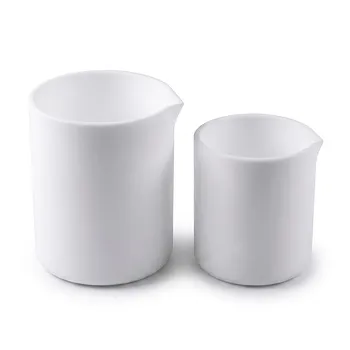
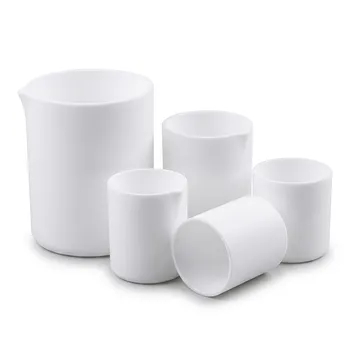
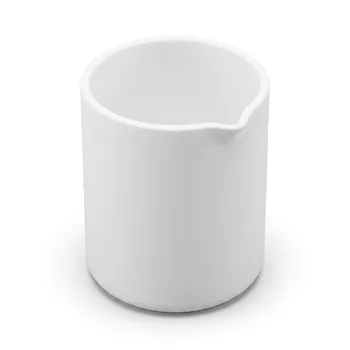
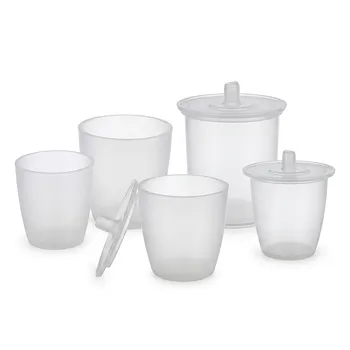
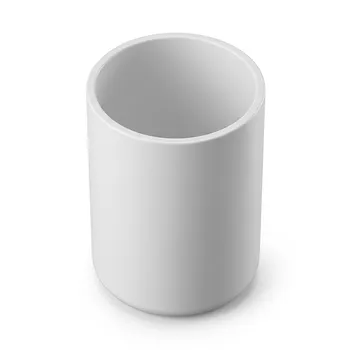
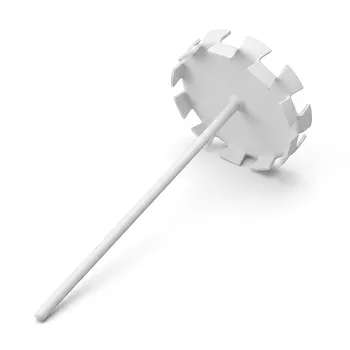
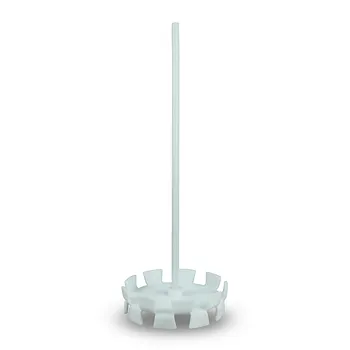
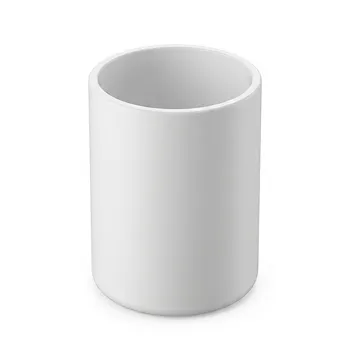
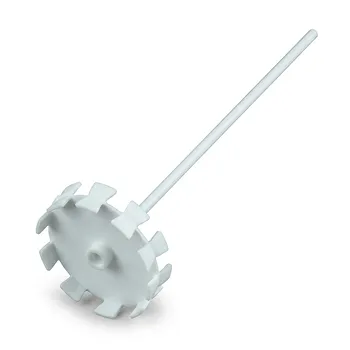
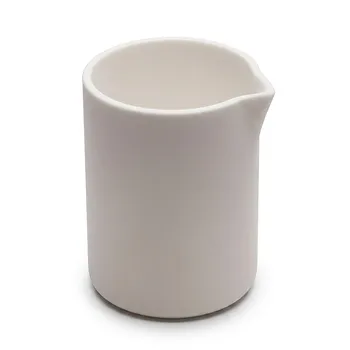
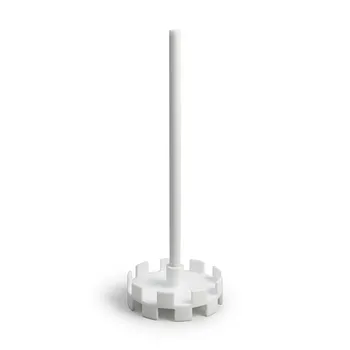
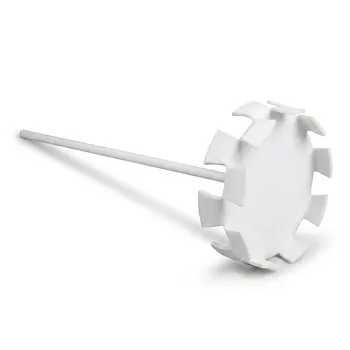
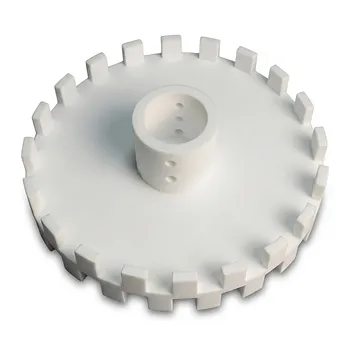
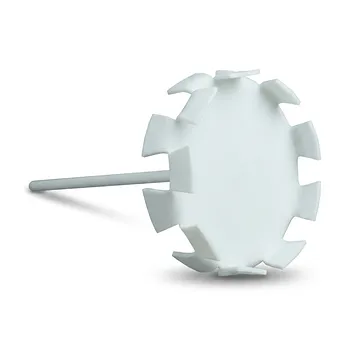
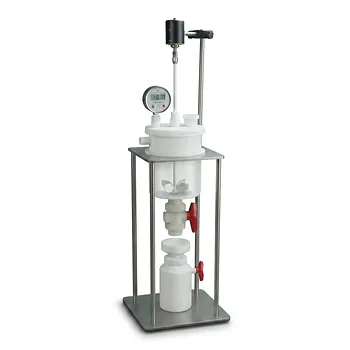
PTFE labware is non-stick because its molecular structure presents a fluorine-rich, low-energy surface that forms weak interactions with other materials. Strong carbon-fluorine bonds create a tightly bound electronic shell around the carbon backbone, while steric repulsion between fluorine atoms forces the polymer chain into a compact helical shape. Together, these features reduce surface adhesion, liquid wetting, and sliding resistance, giving PTFE beakers and stir bars their characteristic non-stick and low-friction behavior.
PTFE’s performance comes from the combination of a fluorine-dense outer surface, low intermolecular attraction, and a helical polymer-chain conformation. The surface is difficult for liquids, particles, and residues to wet or adhere to, while contacting materials can slide across it with minimal resistance.
Why Fluorine Creates a Non-Stick Surface
Strong Carbon-Fluorine Bonds
PTFE consists of a carbon backbone surrounded by fluorine atoms. The carbon-fluorine bond is strong and highly polarized, so the shared electrons remain tightly associated with the polymer rather than being easily available for chemical or intermolecular interactions.
This contributes to PTFE’s chemical inertness, but it also affects surface behavior. A PTFE surface offers relatively few favorable interaction sites for liquids, residues, or other solids to attach to.
The Fluorine-Rich Outer Shell
Fluorine atoms are larger than hydrogen atoms and form a dense protective sheath around the carbon chain. At the interface, this creates a fluorine-rich outer layer that shields much of the underlying carbon backbone.
That electronic and physical shielding reduces the strength of attractive forces between PTFE and contacting substances. Liquids therefore tend to spread less readily, and solid residues have difficulty establishing strong adhesion.
Low Surface Energy
PTFE has an exceptionally low surface energy, approximately 18 dynes/cm, compared with about 33 dynes/cm for polyethylene in the reference comparison. Low surface energy means the surface has limited thermodynamic incentive to attract and hold another material.
In laboratory vessels, this reduces droplet adhesion and residue retention. It helps samples drain more completely and makes cleaning easier, although it does not make PTFE universally resistant to every contaminant.
Why PTFE Has Low Friction
A Compact Helical Conformation
The fluorine atoms surrounding the carbon backbone are relatively large. Their steric repulsion prevents the chain from adopting the ordinary planar zigzag arrangement found in many carbon-chain polymers.
Instead, the PTFE chain assumes a tight helical conformation. This arrangement helps produce a smooth, fluorine-covered exterior and limits direct interaction between the carbon backbone and an opposing surface.
Weak Intermolecular Attractions
The fluorinated exterior has low polarizability and presents a surface with relatively weak intermolecular attraction. As a result, the contact between PTFE and another material can be maintained without creating strong adhesive forces.
This is the molecular basis of PTFE’s low resistance to sliding. Its dynamic coefficient of friction is approximately 0.04, compared with about 0.33 for polyethylene under the cited comparison.
Smooth Sliding in Stir Bars
In a PTFE-coated stir bar, the low-friction surface allows the bar to rotate and move through a liquid with limited rubbing against the vessel. The coating also resists attachment of precipitates, reaction products, and sample residues.
The result is smoother agitation and less material retained on the stir bar after use. The exact performance still depends on load, speed, temperature, surface finish, and the materials in contact.
How Structure Affects Laboratory Performance
Reduced Wetting and Sample Retention
Because PTFE has low surface energy, many aqueous and organic liquids do not wet it readily. Droplets tend to maintain stronger internal cohesion rather than spreading across the surface.
This can improve fluid recovery in beakers, digestion vessels, tubing, and other analytical components. It also reduces the amount of sample that remains as a thin film after transfer.
Easier Cleaning
Weak adhesion makes residues easier to remove through rinsing or routine cleaning. This is particularly valuable when a vessel must be reused between samples or when trace contamination could affect analytical results.
The benefit is best understood as reduced adhesion, not complete self-cleaning. Persistent films, particles trapped in surface damage, or substances with strong mechanical or chemical attachment may still require deliberate cleaning.
Lower Cross-Contamination Risk
Less residue retention can reduce carryover between experiments. PTFE’s chemical inertness also helps prevent the labware from reacting with aggressive reagents or contributing unwanted extractables under appropriate operating conditions.
However, cleanliness depends on the entire handling process, including cleaning chemistry, temperature, surface condition, storage, and the specific analytes involved.
Understanding the Trade-offs
Low Friction Is Not the Same as High Wear Resistance
PTFE slides easily, but it is relatively soft compared with engineering ceramics and many metals. Abrasive particles, sharp tools, or repeated mechanical contact can scratch or deform the surface.
A damaged surface may retain residues more readily than an intact one. PTFE components should therefore be handled with tools and cleaning methods that do not abrade them.
Non-Stick Does Not Mean Universal Non-Wetting
PTFE resists wetting from many liquids, but surface behavior depends on the liquid’s surface tension, composition, temperature, and exposure conditions. Some low-surface-tension liquids can wet fluoropolymer surfaces more effectively than water.
The practical outcome should be assessed for the specific solvent or sample matrix rather than inferred from the material name alone.
Surface Properties Can Change With Conditions
Temperature, mechanical load, processing history, and surface contamination can alter friction and wetting behavior. Reported coefficients such as 0.04 are material-reference values, not guarantees for every stir bar, beaker, or operating condition.
PTFE also has a useful operating range, but excessive heat or unsuitable processing can affect dimensions and performance even when the polymer remains chemically resistant.
How to Apply This to Your Project
The most useful design decision is to match PTFE’s molecular advantages to the actual contact, cleaning, and temperature conditions.
- If your primary focus is non-stick sample handling: Choose PTFE because its fluorine-rich, low-energy surface minimizes wetting, residue adhesion, and sample retention.
- If your primary focus is smooth stirring or sliding: Use PTFE where a very low-friction contact surface is needed, while limiting abrasive loads and sharp mechanical contact.
- If your primary focus is trace analysis: Take advantage of PTFE’s low adhesion and chemical inertness, but validate cleaning and carryover performance with the specific analytes and solvents.
- If your primary focus is long-term mechanical durability: Treat PTFE as a chemically resistant, low-friction polymer rather than an abrasion-proof structural material.
The same fluorine-shielded, helical structure gives PTFE labware its defining combination of low adhesion, low wetting, and exceptionally easy sliding.
Summary Table:
| Feature | How It Works | Benefit |
|---|---|---|
| Strong C-F bonds | Tightly bound electrons limit interaction | Chemical inertness, low adhesion |
| Fluorine-rich shell | Dense outer layer shields carbon chain | Reduced wetting, easier cleaning |
| Helical conformation | Steric repulsion forces twist | Smooth surface, low friction |
| Low surface energy | ~18 dynes/cm | Minimal droplet adhesion |
| Low friction coefficient | ~0.04 dynamic | Smooth sliding in stir bars |
| Weak intermolecular forces | Low polarizability | Reduced residue retention |
Ready to Enhance Your Lab's Efficiency?
Unlock the full potential of PTFE's non-stick, low-friction properties with KINTEK's premium fluoropolymer labware. From beakers and stir bars to custom CNC-machined parts, our PTFE and PFA products are engineered to minimize sample retention and cross-contamination, ensuring accurate results and smooth operations.
Why choose KINTEK?
- Superior materials: High-purity PTFE/PFA for trace analysis.
- Custom solutions: End-to-end CNC machining for bespoke setups.
- Reliable supply: Consistent quality for high-volume orders.
Contact our experts today to find the perfect labware for your application. Get a quote now!
Related Products
- Custom PTFE Teflon Parts Manufacturer PTFE Magnetic Stirring Bar
- High Temperature Resistant Thickened PTFE Beaker 2000ml for Chemical Processing and Laboratory Trace Analysis
- High Purity Custom PTFE Beaker 5000ml With Lid Hot Plate Heating Compatible High Temperature Chemical Labware
- Large Scale PTFE Beakers and Flasks for High Temperature Corrosion Resistant Laboratory Applications with Custom CNC Fabrication
- Custom Thickened PTFE Beaker 3000ml Hotplate Heating High Temperature Deformation Resistant Fluoropolymer Labware
People Also Ask
- What are some specialized PTFE stirring bars available? Optimize Your Lab Mixing Efficiency
- Can you provide examples of industries where PTFE bars have been successfully applied? Discover Key Applications
- How can the lifespan and performance of PTFE bars be maintained? A Guide to Proactive Care
- What are some future trends in the application of PTFE bars in the chemical industry? Engineering for Extreme Performance
- What are the primary applications of PTFE bars in the chemical industry? Solve Your Toughest Corrosion Problems