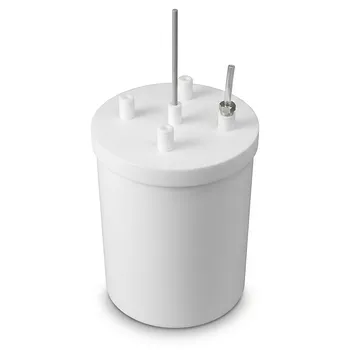
The defining property is PTFE’s fluorinated carbon backbone, built from exceptionally strong carbon–fluorine (C–F) bonds. Fluorine’s high electronegativity produces a bond that is difficult for acids, bases, solvents, and other reagents to break, giving PTFE unusually high chemical inertness. In trace analysis and digestion workflows, this stability minimizes contamination from leaching and prevents the vessel itself from being chemically degraded.
PTFE is suited to high-purity labware primarily because its strong C–F bonds make the polymer exceptionally resistant to chemical attack. That resistance helps preserve both sample composition and vessel integrity during aggressive digestion and ultra-trace analysis.
Why PTFE Protects Sample Integrity
The C–F bond resists chemical attack
PTFE consists of a carbon chain shielded by fluorine atoms. The resulting molecular structure is highly stable, so most laboratory acids, bases, organic solvents, and oxidizing reagents do not readily react with or dissolve it.
This is the central distinction between PTFE and many ordinary plastics, whose carbon-hydrogen or other chemical linkages can be attacked under severe laboratory conditions.
Chemical inertness reduces contamination
Trace analysis can be compromised by extremely small amounts of material leached from a container. Because PTFE is resistant to dissolution and chemical reaction, it contributes very little contamination to properly controlled sample-preparation workflows.
This makes PTFE valuable for digestion vessels, crucibles, beakers, reagent containers, and transfer components where the container must not become a source of trace elements or organic residues.
Low surface energy improves recovery
PTFE also has very low surface energy and non-stick behavior. Samples are less likely to adhere to the vessel walls, which can reduce sample retention and support more complete transfer or recovery.
This is a supporting advantage rather than the fundamental chemical reason for PTFE’s use. The strong C–F bond provides the chemical resistance; the low-energy surface improves handling and recovery.
Why Digestion Vessels Benefit From This Stability
Aggressive reagents remain contained
Acid digestion often exposes vessels to concentrated acids, harsh solvents, elevated temperatures, and pressure. PTFE generally maintains its chemical integrity under these conditions, helping the digestion vessel avoid corrosion, swelling, dissolution, or reaction with the sample medium.
That stability is particularly important when the goal is to measure elements present at very low concentrations.
Thermal resistance complements chemical resistance
PTFE has a high melting point and remains useful across a broad temperature range. It also does not behave like a conventional low-viscosity plastic when heated beyond its melting transition, instead forming a highly viscous gel.
However, thermal compatibility must still be evaluated against the vessel design, pressure, heating method, and operating temperature. Chemical resistance alone does not make every PTFE component suitable for every microwave digestion program.
The vessel remains chemically unobtrusive
A digestion vessel should enable the reaction without participating in it. PTFE’s chemically stable polymer structure allows it to serve as a largely passive barrier between aggressive reagents and the surrounding equipment.
That passivity protects both the sample and the digestion system from unwanted reactions or material degradation.
How PTFE Supports High-Purity Trace Analysis
It minimizes elemental background
For ultra-trace work, the material of construction must have low extractables and low elemental contribution. High-purity PTFE products are selected because the fluoropolymer itself is resistant to chemical extraction and does not readily release contaminants into compatible samples.
Actual performance still depends on resin purity, manufacturing, cleaning, handling, and the specific analytes being measured.
It resists solvent absorption and dissolution
PTFE is effectively insoluble in ordinary laboratory solvents. This prevents the vessel from dissolving, softening, or releasing substantial polymer-derived material during routine exposure to aggressive sample media.
The result is greater confidence that measured analytes originate from the sample rather than from chemical attack on the container.
It supports repeated harsh-use workflows
Because PTFE resists corrosion and surface degradation, high-quality components can often tolerate repeated exposure to demanding reagents when used within their specified limits. Consistent cleaning and inspection remain necessary, especially when analyzing elements at exceptionally low concentrations.
Understanding the Trade-offs
PTFE is not immune to every chemical condition
The phrase “resistant to virtually all chemicals” is more accurate than “immune to all chemicals.” Certain highly reactive systems, including molten or elemental alkali metals and some specialized fluorinating conditions, can attack PTFE.
Compatibility should therefore be confirmed for the exact reagent, concentration, temperature, exposure time, and pressure.
Temperature and pressure limits still matter
PTFE’s chemical resistance does not eliminate mechanical limits. Elevated temperature and internal pressure can affect dimensional stability, creep, seals, and vessel performance even when the polymer is not chemically attacked.
Microwave digestion systems must be operated according to the manufacturer’s temperature, pressure, and vessel-use specifications.
Purity is a manufacturing attribute
PTFE as a polymer may be chemically inert, but a finished product can still introduce contamination through fillers, pigments, machining residues, poor cleaning, or environmental handling. High-purity trace analysis requires appropriately manufactured and conditioned PTFE labware.
PFA may be preferable in some designs
PFA shares PTFE’s fluorinated chemistry and strong chemical resistance while offering different processing and molding characteristics. It may be preferred for transparent, molded, or more complex components, whereas PTFE is often chosen for machined parts and vessels requiring its particular mechanical and thermal properties.
Choosing PTFE for Your Application
The correct choice depends on both chemical compatibility and the cleanliness and operating requirements of the workflow.
- If your primary focus is ultra-trace contamination control: Choose high-purity PTFE or a comparable high-purity fluoropolymer, and control manufacturing, cleaning, and handling as carefully as material selection.
- If your primary focus is aggressive acid digestion: Use PTFE vessels within their specified temperature and pressure limits after verifying compatibility with the complete reagent system.
- If your primary focus is maximum sample recovery: Use PTFE’s low-surface-energy, non-stick behavior to reduce adhesion and liquid retention during transfers.
- If your primary focus is complex molded or transparent components: Evaluate PFA alongside PTFE, since both provide fluoropolymer chemical resistance but differ in processing and physical behavior.
PTFE’s strong C–F-bonded structure makes it a chemically passive, low-contamination platform for severe digestion and high-purity trace analysis.
Summary Table:
| Property | Benefit for High-Purity Trace Analysis |
|---|---|
| Strong C-F bonds | High chemical inertness; resists acids, bases, solvents, and oxidizers |
| Chemical inertness | Minimizes leaching and contamination from labware |
| Low surface energy | Non-stick behavior; reduces sample adhesion and improves recovery |
| Thermal resistance | Withstands high temperatures and pressures in digestion processes |
| Insolubility | Resists solvent absorption and dissolution, preventing polymer release |
Ensure the highest purity in your trace analysis with KINTEK's premium PTFE labware. Our products, from digestion vessels to custom CNC-machined components, are engineered for chemical resistance and contamination control. Contact us today to find the perfect solution for your lab – Get in touch with our specialists!
Related Products
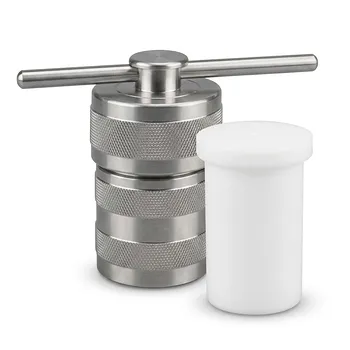
- 5ml High Pressure PTFE Digestion Vessel for Geological Mineral Analysis Corrosion Resistant Polytetrafluoroethylene TFM Digestion Inner Liner
- Custom High Purity PTFE Microwave Digestion Vessels and Graphite Block Compatible Acid Evaporation Tanks for Trace Metal Analysis
- PTFE Lined High Pressure Digestion Vessel 50ml High Temperature Hydrothermal Synthesis Tank
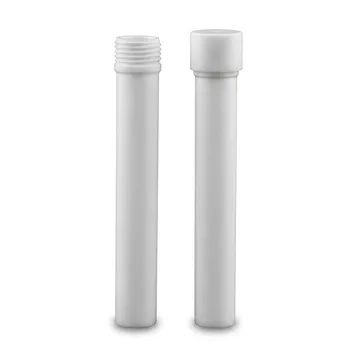
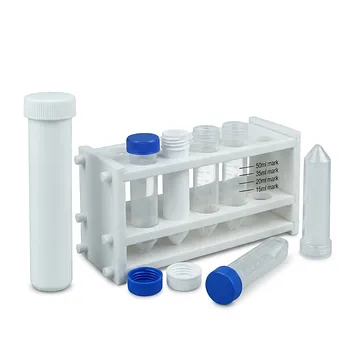
- Custom PTFE Digestion Tubes and High Purity Polytetrafluoroethylene Centrifuge Vessels 60ml for Trace Analysis
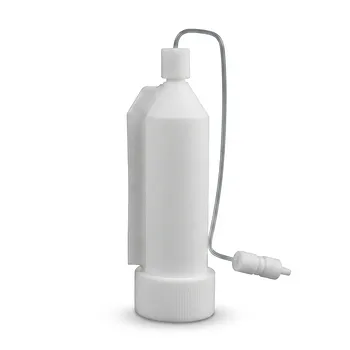
- Corrosion Resistant PTFE Digestion Bottle Solid Liquid Reaction Vessel High Purity Trace Analysis Mineral Labware
People Also Ask
- What safety features are typically incorporated into high-pressure PTFE digestion vessel designs? Ensure Lab Safety
- Why is a PTFE liner utilized in V2O5 synthesis? Ensure Chemical Purity and Corrosion Resistance
- What is the primary function of a PTFE liner? Key Benefits for Purity and Safety in Hydrothermal Synthesis
- What is the role of a PTFE liner in Bi2O3–TiO2 synthesis? Ensure High Purity and Controlled Crystal Growth
- What are the benefits of using a PTFE-lined vessel for carbon-sulfur cathode treatment? Maximize Purity & Performance