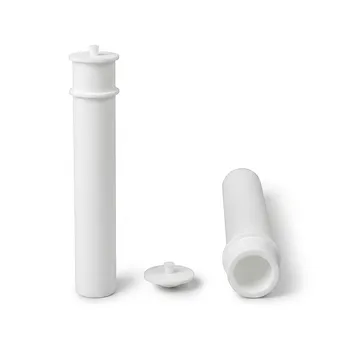
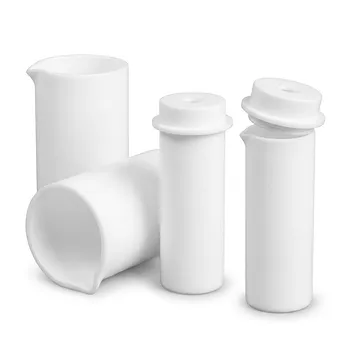
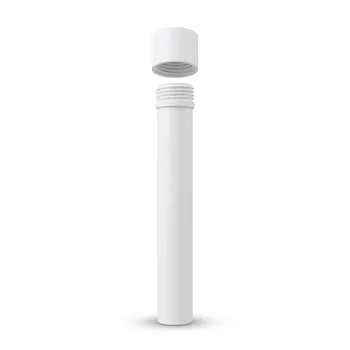
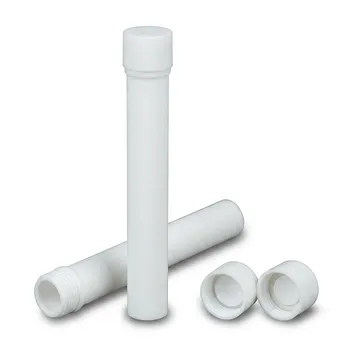
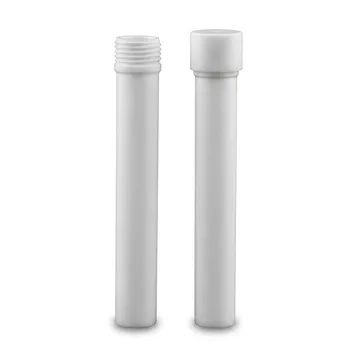
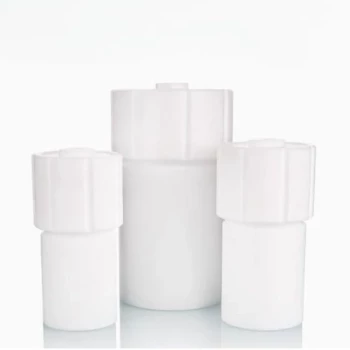
Isostatically molded PTFE provides superior structural integrity for digestion tubes by ensuring uniform density and minimal porosity throughout the material. This specific manufacturing process creates a vessel capable of withstanding extreme internal pressures and temperatures while significantly reducing gas permeation through the tube walls. These attributes are essential for maintaining the physical integrity of the vessel and preventing the loss of volatile elements during aggressive chemical digestion cycles.
Isostatic molding transforms PTFE from a high-performance plastic into a robust structural component capable of handling the rigors of high-pressure sample preparation. By eliminating the internal weak spots common in traditional extrusion or compression molding, this process ensures maximum safety and analytical precision.
The Impact of Isostatic Compression on Material Integrity
Achieving Uniform Density and Mechanical Strength
Isostatic molding applies equal pressure from all directions, which forces the PTFE particles into a consistent, uniform density. This homogeneity eliminates internal stress points and structural "grain" that can lead to failure under load.
The result is a tube with enhanced mechanical strength, allowing it to resist cracking or rupturing during the high-pressure phases of acid digestion. This structural reliability is the primary reason isostatically molded tubes are preferred for safety-critical applications.
Eliminating Porosity to Prevent Gas Permeation
One of the most critical structural advantages is the minimal porosity achieved through isostatic compression. By closing microscopic voids between polymer chains, the process creates a denser barrier that is much harder for gases to penetrate.
Reducing gas permeation is vital for preventing the escape of volatile sample components like mercury or arsenic. It also protects the outer microwave system components from corrosive acid vapors that might otherwise leach through the tube wall.
Performance in High-Stress Digestion Environments
Resistance to Structural Deformation Under Pressure
Digestion tubes often operate at pressures reaching 200 bar, which creates immense outward stress on the vessel walls. Isostatically molded PTFE is specifically designed to minimize structural deformation under these conditions.
By maintaining its shape, the tube ensures a reliable seal with the vessel cap throughout the heating cycle. This prevents leaks that could lead to sample loss or dangerous pressure drops within the digestion system.
Microwave Transparency and Volumetric Heating
PTFE is microwave-transparent, a structural property that allows energy to pass through the tube wall without heating the vessel itself. This enables rapid, uniform volumetric heating of the sample-acid mixture inside.
Because the tube does not absorb microwave energy, the structural integrity of the PTFE is preserved even as the internal contents reach temperatures sufficient to dissolve complex matrices.
Understanding the Trade-offs and Material Variations
Addressing Creep and Cold Flow
While isostatically molded PTFE is robust, all PTFE is subject to creep, or deformation under a constant load over time. In high-pressure environments, this can eventually lead to a change in the tube's dimensions after repeated use.
To mitigate this, many high-end systems use TFM-PTFE, a modified grade that incorporates perfluoropropyl vinyl ether. This copolymer offers even lower permeability and significantly better resistance to deformation at high temperatures compared to standard PTFE.
Surface Finish and Cleaning Requirements
The structural density of molded PTFE allows for a smooth surface finish after final fabrication or machining. This non-wetting characteristic prevents "memory effects" where trace elements from previous samples get trapped in surface irregularities.
However, users must be careful during cleaning; despite its chemical resistance, physical abrasions can damage the surface. The material’s non-stick properties are its greatest asset for maintenance, provided no mechanical damage occurs.
Making the Right Choice for Your Goal
To ensure you select the best vessel for your laboratory's needs, consider the following recommendations:
- If your primary focus is volatile element retention: Choose isostatically molded TFM-PTFE tubes to ensure the lowest possible gas permeation and the tightest seals.
- If your primary focus is cost-effective routine digestion: Standard isostatically molded PTFE provides excellent chemical resistance and sufficient strength for most moderate-pressure applications.
- If your primary focus is high-throughput microwave processing: Ensure the tubes are rated for at least 200 bar and feature the uniform density provided by isostatic molding to handle rapid thermal expansion.
The structural superiority of isostatically molded PTFE is the fundamental safeguard that allows modern laboratories to perform aggressive acid digestions with both safety and precision.
Summary Table:
| Feature | Advantage | Laboratory Impact |
|---|---|---|
| Uniform Density | Eliminates internal stress and weak spots | Prevents cracking and rupturing under high pressure (up to 200 bar). |
| Minimal Porosity | Dense barrier against gas molecules | Prevents loss of volatile elements (Hg, As) and protects equipment from corrosion. |
| Structural Rigidity | Minimal deformation/creep | Maintains a reliable seal with vessel caps to prevent leaks and sample loss. |
| Microwave Transparency | Energy passes through without heating the tube | Allows rapid, uniform volumetric heating of samples for efficient digestion. |
| Smooth Surface Finish | Non-stick, non-wetting properties | Prevents "memory effects" and simplifies cleaning of trace contaminants. |
Unlock Superior Analytical Results with KINTEK High-Performance Fluoropolymers
Maximize your laboratory's safety and precision with KINTEK, your premier partner for high-performance PTFE and PFA solutions. We offer an exhaustive range of laboratory supplies, from everyday basics like beakers, measuring cylinders, crucibles, and digestion tubes to advanced fluid transfer components including tubing, fittings, and valves.
Why Choose KINTEK?
- Precision Engineering: Our end-to-end custom CNC fabrication allows us to deliver everything from complex non-standard machined parts to bespoke laboratory setups.
- Comprehensive Inventory: We supply everything from sample prep tools (filters, pipettes, tweezers) and consumables (O-rings, gaskets, seal tapes) to specialized reaction apparatus like electrochemical cells, battery testing fixtures, and microwave digestion vessels.
- Material Expertise: We maintain an exclusive focus on high-performance fluoropolymers, ensuring your equipment withstands the most aggressive chemical environments.
Ready to upgrade your lab with custom-engineered solutions or high-volume orders? Contact KINTEK today to discuss your specific requirements!
Related Products
- Custom 100ml PTFE Digestion Tube for Heavy Metal Trace Analysis and High Temperature Acid Digestion
- High Purity PTFE Digestion Tubes and Custom Centrifuge Tubes 100ml for Trace Analysis and Chemical Digestion
- Custom High Purity PTFE Digestion Tubes and Centrifuge Tubes for Trace Metal Analysis
- Corrosion Resistant PTFE Digestion Tubes for Graphite Block Systems with Acid Reflux Caps Custom Dimensions
- Industrial High Purity PTFE Digestion Tubes Chemical Resistant Teflon Labware Custom Fabricated Trace Analysis Vessels
People Also Ask
- What are the common capacities and physical configurations available for PTFE digestion tubes? Expert Selection Guide
- How do PTFE digestion tubes assist in pharmaceutical and biological sample preparation? Ensure High Recovery & Purity
- How do PTFE digestion tubes minimize contamination during ultra-trace elemental analysis? Achieve high-purity results.
- What is the primary function of PTFE digestion tubes in a laboratory setting? Essential for Pure Sample Mineralization
- What is the primary role of a PTFE digestion tube in analytical chemistry? Ensure High Purity and Trace Accuracy