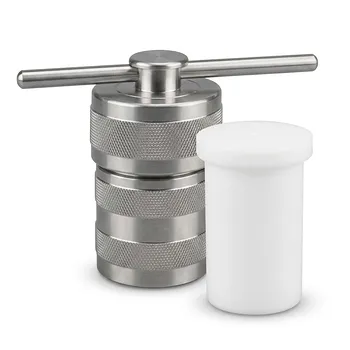
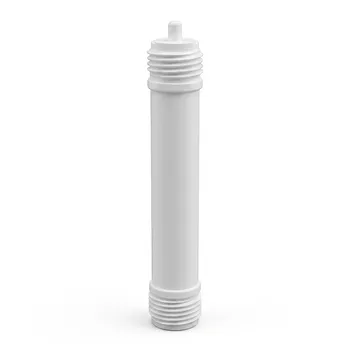
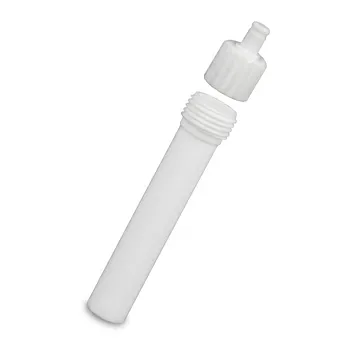
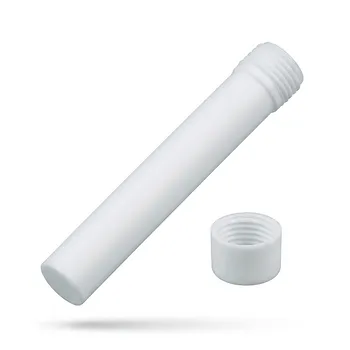
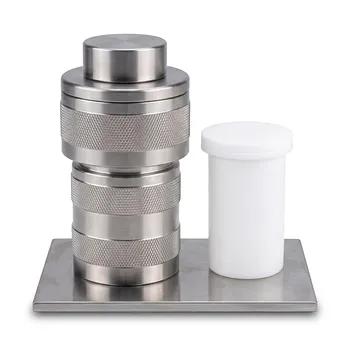
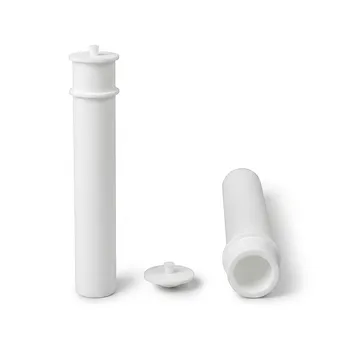
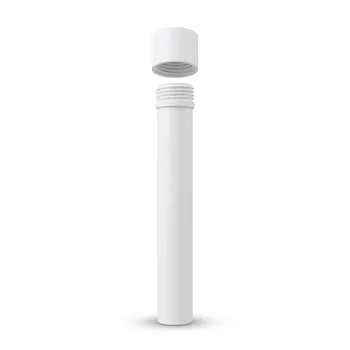
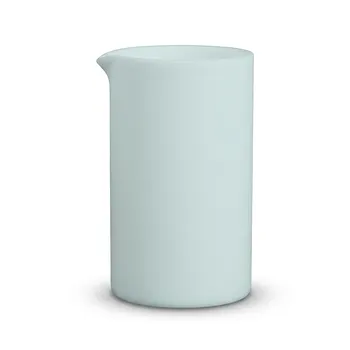
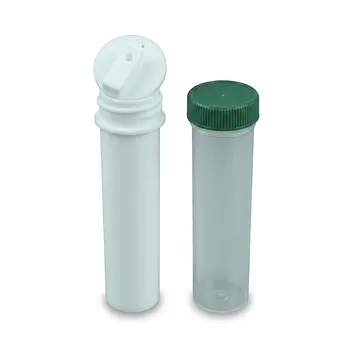
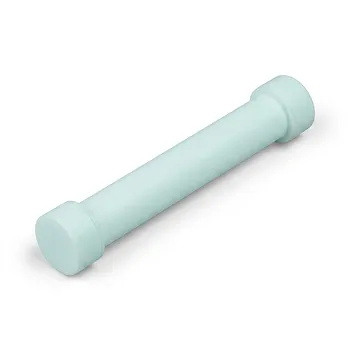
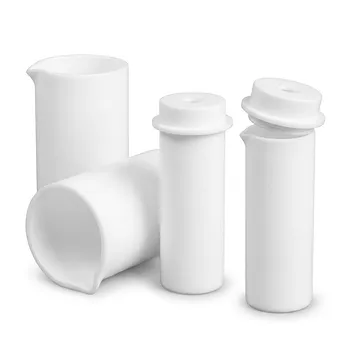
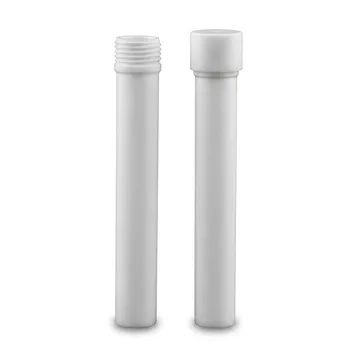
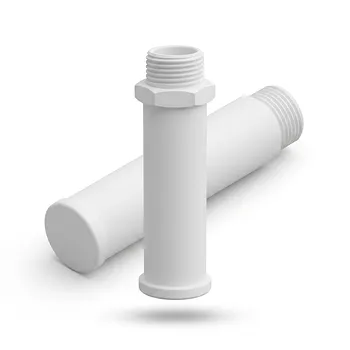
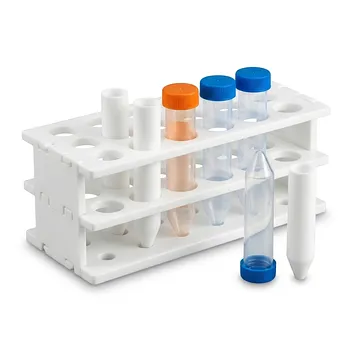
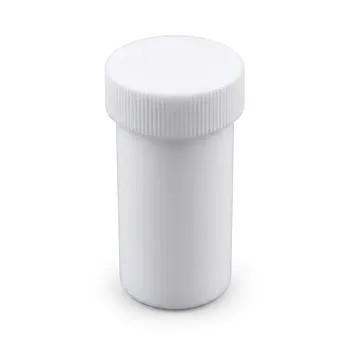
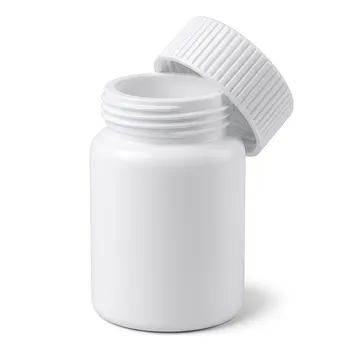
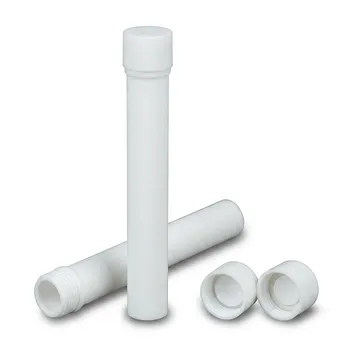
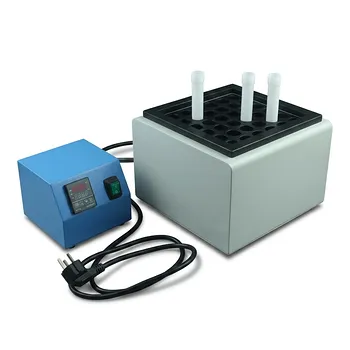
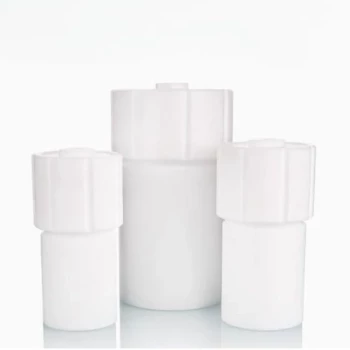
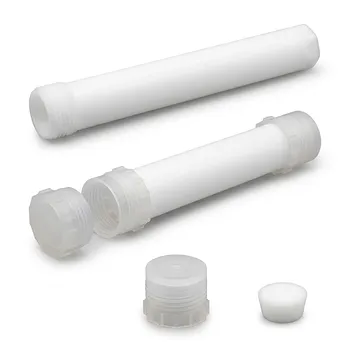
High-performance PTFE liners are the indispensable barrier between reactive chemistry and reactor hardware. These liners are required for hydroxyapatite (HAp) synthesis because they provide extreme resistance to the highly alkaline (pH 10) environments and high pressures characteristic of the hydrothermal process. Furthermore, their microwave transparency and chemical inertness prevent metal ion contamination while ensuring efficient, uniform volumetric heating of the reaction precursors.
The use of PTFE liners addresses the dual challenge of extreme chemical corrosion and electromagnetic requirements. By isolating the reaction from the metal vessel, they protect the equipment and ensure the production of high-purity crystals.
Managing Extreme Chemical Environments
Resistance to Strong Alkalinity
The synthesis of hydroxyapatite typically occurs in highly alkaline environments, often reaching a pH of 10. Standard materials degrade under these conditions, but high-performance PTFE offers superior resistance to strong base corrosion.
Thermal and Mechanical Stability
Hydrothermal reactions generate significant internal pressure at elevated temperatures. PTFE liners are engineered for thermo-mechanical stability, allowing them to maintain their structural integrity without reacting with chemical precursors.
Protection of the Pressure Vessel
The liner acts as a critical chemical barrier that isolates the reaction medium from the stainless steel outer shell. This prevents the strong alkaline media from corroding the metal walls, thereby ensuring the overall safety of the high-pressure process.
Ensuring Material Purity and Integrity
Preventing Metal Ion Leaching
Without a liner, reactants would directly contact the metal reactor, causing metal ions to leach into the solution. PTFE effectively eliminates this risk, ensuring the synthesized nanopowders remain uncontaminated by external elements.
Low Trace Element Background
High-purity PTFE possesses an extremely low trace element background. This is vital for the controlled growth of microstructures and the synthesis of high-purity single-crystal materials used in medical or technical applications.
Non-Stick Surface Characteristics
The mold-release properties and non-stick surface of PTFE facilitate the easy collection of synthesized materials. This ensures a higher yield of nanopowders and simplifies the cleaning process between batches.
Optimizing Microwave-Assisted Synthesis
Microwave Transparency
Unlike metal containers, PTFE is microwave transparent, allowing electromagnetic energy to pass through the liner. This enables the energy to act directly on the reaction solution for rapid temperature increases.
Uniform Volumetric Heating
Because the liner does not absorb the microwave energy, it facilitates uniform volumetric heating. This prevents "cold spots" and ensures that the heat is generated within the solution itself rather than conducted from the container walls.
Understanding the Trade-offs
Temperature Limitations
While PTFE is thermally stable, it has a distinct operating temperature limit, typically around 250°C to 260°C. Exceeding these limits can cause the material to soften or release toxic fluorinated vapors, compromising both the reaction and safety.
Pressure Sensitivity
The performance of the liner is dependent on its wall thickness and fit within the outer vessel. If the liner is not properly seated or if the pressure exceeds design specifications, the PTFE can undergo "cold flow" or deformation.
Cleaning and Memory Effects
Despite its non-stick nature, PTFE can occasionally absorb trace amounts of certain organic species or ions if not rigorously cleaned. For high-precision synthesis, specialized cleaning protocols are necessary to prevent cross-contamination between different batches.
Making the Right Choice for Your Goal
- If your primary focus is material purity: High-performance PTFE is essential to prevent metal leaching and ensure a low trace element background in your HAp crystals.
- If your primary focus is rapid synthesis: Utilize the microwave transparency of PTFE to achieve fast, uniform heating that traditional metal vessels cannot provide.
- If your primary focus is equipment longevity: Ensure your PTFE liners are inspected regularly for deformation to protect your expensive stainless steel pressure vessels from alkaline corrosion.
The selection of a high-performance PTFE liner is a critical decision that directly determines the purity, safety, and efficiency of the hydroxyapatite synthesis process.
Summary Table:
| Feature | Benefit for HAp Synthesis |
|---|---|
| Chemical Resistance | Withstands pH 10+ environments; prevents vessel corrosion. |
| Microwave Transparency | Allows direct, uniform volumetric heating for faster reactions. |
| Metal-Free Purity | Eliminates metal ion leaching; ensures high-purity nanopowders. |
| Thermal Stability | Maintains integrity under high-pressure hydrothermal conditions. |
| Non-Stick Surface | Simplifies material collection and cleaning; increases yield. |
Elevate Your Synthesis Precision with KINTEK High-Performance Fluoropolymers
Achieving high-purity hydroxyapatite crystals requires more than just the right chemistry—it requires the absolute reliability of your reaction environment. KINTEK specializes in high-performance PTFE and PFA laboratory supplies, engineered to withstand extreme alkalinity and high-pressure hydrothermal conditions.
From everyday basic labware like beakers, digestion tubes, and reagent bottles to advanced hydrothermal synthesis liners and microwave digestion vessels, our products provide an indispensable barrier against contamination. Backed by end-to-end custom CNC fabrication, KINTEK can deliver everything from complex non-standard machined parts to high-volume orders, ensuring your lab equipment—from fluid transfer components to sample prep tools—meets the highest performance standards.
Protect your research and maximize your yield today. Contact KINTEK Now to discuss your custom laboratory needs and experience the difference of expert fluoropolymer manufacturing.
References
- Wipada Chaiyachet, Ekkachai Kanchanatip. Microwave-assisted hydrothermal synthesis of hydroxyapatite from fermented fish by-product for removal of lead from contaminated water. DOI: 10.1186/s43088-025-00704-z
This article is also based on technical information from Kintek Knowledge Base .
Related Products
- 5ml High Pressure PTFE Digestion Vessel for Geological Mineral Analysis Corrosion Resistant Polytetrafluoroethylene TFM Digestion Inner Liner
- High Purity PTFE Microwave Digestion Vessel for Soil and Food Analysis Acid Resistant Fluoropolymer Sample Preparation Liners
- High Purity PTFE Microwave Digestion Vessel Replacement Liner for Acid Sample Preparation and Trace Analysis
- High Purity TFM Microwave Digestion Vessels PTFE Acid Evaporation Liners Domestic GT-400 Equivalent Laboratory Reaction Containers
- PTFE Lined High Pressure Digestion Vessel 50ml High Temperature Hydrothermal Synthesis Tank
People Also Ask
- What safety features are typically incorporated into high-pressure PTFE digestion vessel designs? Ensure Lab Safety
- What is the function of high-pressure PTFE digestion vessels in mineral analysis? Optimize Sample Mineralization
- Why is a PTFE liner utilized in V2O5 synthesis? Ensure Chemical Purity and Corrosion Resistance
- What is the primary function of a PTFE liner? Key Benefits for Purity and Safety in Hydrothermal Synthesis
- What is the role of a PTFE liner in Bi2O3–TiO2 synthesis? Ensure High Purity and Controlled Crystal Growth