Full perfluorination is essential when chemical integrity, containment, and trace purity must be maintained over time. Fully fluorinated polymers such as PTFE and PFA create a dense, chemically inert barrier that greatly limits the absorption, swelling, degradation, and permeation that can affect standard polyolefins. This protects volatile or aggressive reagents from loss, concentration changes, contamination, and hazardous vapor release while preserving the reliability of bottles, tubing, valves, and fittings.
Perfluorination protects both the reagent and the equipment: strong carbon-fluorine bonds provide exceptional chemical resistance, while the low-energy, non-wetting surface reduces absorption, residue retention, and cross-contamination.
Why Standard Plastics Can Fail
Volatile chemicals can migrate through polymer walls
Permeation occurs when chemical molecules dissolve into a polymer and slowly diffuse through its matrix. Volatile solvents and other small organic molecules can therefore pass through a container wall even when no visible leak exists.
This can cause reagent loss, changing concentrations, altered sample composition, and vapor emissions. The risk increases during long-term storage, elevated temperatures, or exposure to highly volatile chemicals.
Aggressive reagents can attack the material
Strong acids, bases, organic solvents, and corrosive process chemicals can cause conventional polymers to swell, soften, embrittle, or degrade. Material damage may eventually lead to leaks, cracking, deformation, or premature component failure.
Glass and metals can also be unsuitable for certain reagents because they may corrode or contribute trace contaminants. Material selection must therefore consider both chemical compatibility and the purity requirements of the application.
Partial fluorination leaves more vulnerable chemistry
Partially fluorinated polymers still contain carbon-hydrogen sites that can be more susceptible to chemical attack, solvent swelling, or long-term degradation. They may perform well in moderate service, but they do not provide the same chemical barrier as a fully fluorinated structure.
Full perfluorination replaces these more reactive sites with a fluorine-rich surface and polymer backbone. The result is a more chemically neutral interface for contact with severe reagents.
How PTFE and PFA Protect Fluid Integrity
Strong carbon-fluorine bonds resist chemical attack
PTFE and PFA contain highly stable carbon-fluorine bonds. These bonds make the materials resistant to a broad range of concentrated acids, strong bases, organic solvents, and corrosive environmental agents.
The polymers generally do not dissolve or readily degrade under conditions that can damage standard plastics. This stability helps preserve the dimensional and mechanical integrity of bottles, tubing, valves, and fittings during prolonged chemical exposure.
A dense barrier reduces permeation
A fluorine-rich material structure creates a highly resistant path for chemical molecules moving through the polymer. This substantially reduces the permeation of volatile agents, solvents, and aggressive reagents through container walls and tubing.
Permeation is not literally impossible under every combination of chemical, temperature, pressure, thickness, and exposure time. However, fully fluorinated components provide a much stronger barrier than many conventional polyolefin alternatives and are often the appropriate choice when long-term containment matters.
Low surface energy reduces absorption and residue
PTFE and PFA have low-energy, non-wetting surfaces. Chemicals are less likely to adhere to or penetrate the interior surface, which reduces retained residue after draining or rinsing.
This is particularly important in trace analysis and high-purity fluid handling, where a small amount of carryover can distort results. Smooth fluoropolymer tubing and fittings also reduce locations where contaminants can accumulate.
High-purity construction limits contamination
Fully fluorinated components are selected when chemical inertness and low leachables are more important than material cost. They help prevent the fluid from extracting unwanted substances from the container or flow path.
For reagent bottles, acid digestion vessels, transfer lines, and analytical instrument plumbing, this protects the sample from both the equipment and the surrounding environment.
Why Each Component Benefits
Reagent bottles and wash bottles
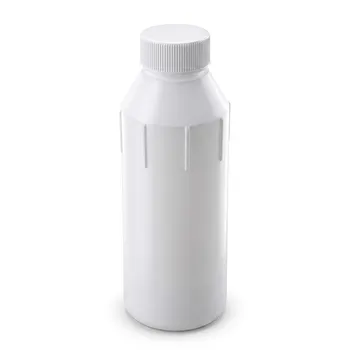
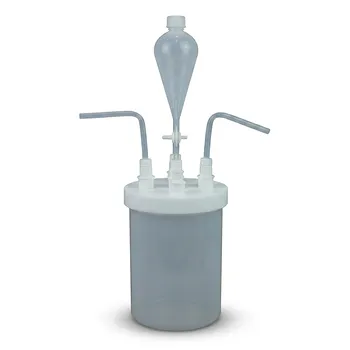
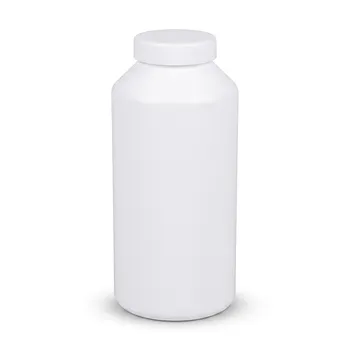
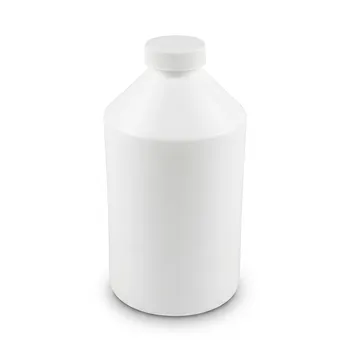
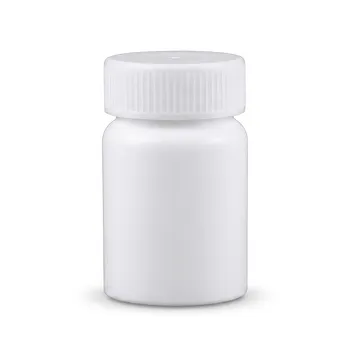
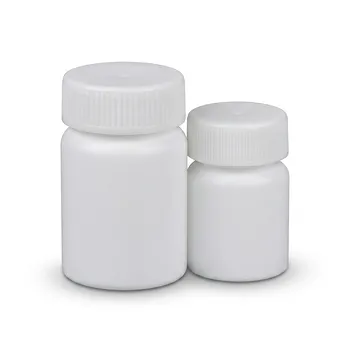
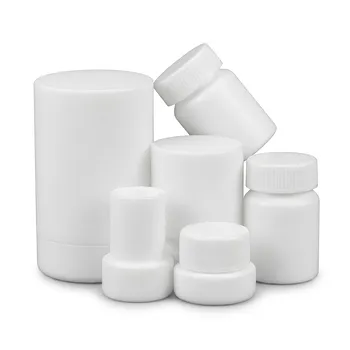
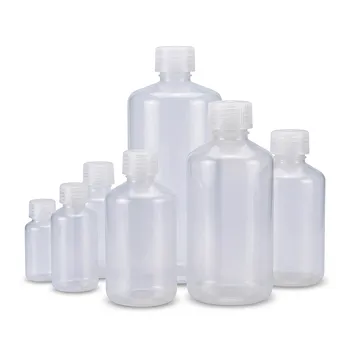
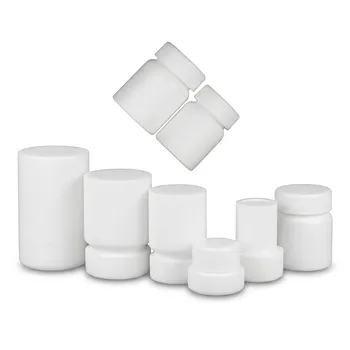
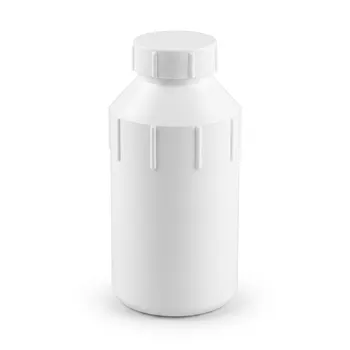
A perfluorinated bottle limits vapor and liquid migration through the wall while resisting attack from the stored reagent. It helps maintain reagent mass, concentration, and purity during extended storage.
This is especially valuable for volatile solvents, concentrated acids, aggressive bases, and reagents used in trace analytical work.
Tubing and valves
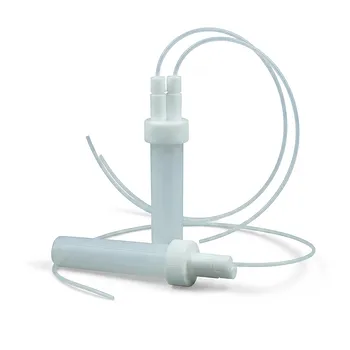
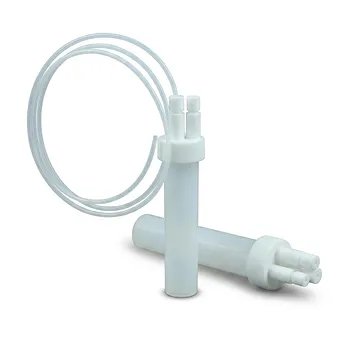
Tubing and valves remain in direct, continuous contact with the chemical, so their internal surfaces must resist swelling, extraction, and residue retention. PFA and PTFE provide broad chemical compatibility and smooth flow paths for demanding transfer systems.
Stable tubing also reduces the risk that prolonged exposure will produce cracking, leaks, particulates, or contamination downstream.
Fittings and seals
Fittings are potential failure points because they must maintain both chemical resistance and a reliable seal. PFA fittings and compatible fluoropolymer components help prevent leakage caused by material degradation or chemical swelling.
Correct design remains important: even a chemically resistant material can fail if the fitting is improperly sized, mechanically overstressed, or used outside its temperature and pressure limits.
Understanding the Trade-offs
Perfluorinated materials are not universally necessary
Full perfluorination is justified when the reagent is volatile, highly corrosive, chemically aggressive, unusually pure, or stored for a long period. Less demanding applications may be served adequately by other materials with suitable compatibility data.
Using PTFE or PFA everywhere can increase cost without providing a meaningful benefit when exposure is mild and contamination or permeation is not a concern.
Temperature and pressure still matter
Chemical resistance does not eliminate mechanical limitations. Temperature, pressure, wall thickness, flexing, vacuum exposure, and permeation time can affect component performance.
Material compatibility should therefore be evaluated under the actual operating conditions rather than based only on a general statement that a polymer is chemically inert.
PTFE and PFA have different practical strengths
PTFE offers exceptional chemical resistance and low friction but can be less convenient for transparent inspection or certain precision-forming processes. PFA combines strong chemical resistance with melt-processability and greater transparency, making it useful for tubing, bottles, and fittings where visual monitoring or complex shapes are important.
The correct choice depends on the required combination of purity, flexibility, transparency, dimensional stability, fabrication method, and operating conditions.
“Fluorinated” does not always mean “fully perfluorinated”
A product described broadly as fluorinated may contain partially fluorinated polymers, blends, coatings, or lower-concentration formulations. These materials can have different resistance to swelling, cracking, chalking, leaching, and long-term surface degradation.
For critical applications, verify the actual material designation, formulation, wetted-surface construction, and chemical compatibility data. The performance of a fluoropolymer blend should not automatically be treated as equivalent to solid PTFE or PFA.
Making the Right Choice for Your Goal
Choose the material based on the dominant failure mode you need to control.
- If your primary focus is long-term storage of volatile reagents: Use fully fluorinated bottles or containers to reduce permeation, vapor loss, concentration drift, and environmental emissions.
- If your primary focus is high-purity fluid transfer: Use PTFE or PFA tubing, valves, and fittings to reduce absorption, leaching, residue retention, and cross-contamination.
- If your primary focus is aggressive chemical processing: Select components with fully fluorinated wetted surfaces and verify compatibility at the actual temperature, pressure, and exposure duration.
- If your primary focus is cost control: Reserve perfluorinated components for the most volatile, corrosive, pure, or consequential chemical services, and qualify less expensive materials for lower-risk applications.
Full perfluorination gives chemical storage and fluid handling systems the strongest practical protection against reagent loss, material degradation, and contamination when failure is unacceptable.
Summary Table:
| Feature | Benefit |
|---|---|
| Strong C-F bonds | Resist acids, bases, solvents |
| Dense barrier | Reduces permeation and vapor loss |
| Low surface energy | Minimizes absorption and residue |
| High-purity construction | Prevents contamination and leaching |
| Suitable components | Bottles, tubing, valves, fittings |
Need lab supplies that ensure chemical integrity? KINTEK's PTFE/PFA products are engineered for volatile reagents and high-purity applications. Contact us to find the ideal solution—click here to get a quote!
Related Products
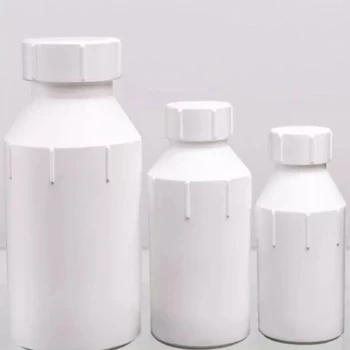
- Custom PTFE Bottles for Diverse Industrial Applications
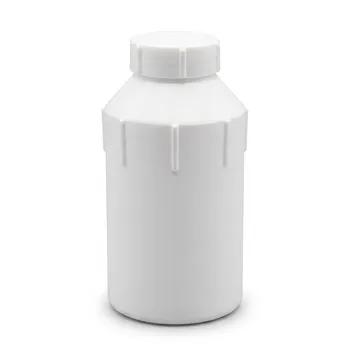
- PTFE Fluoropolymer Reagent Bottles and Sampling Containers for Corrosion Resistant Low Background Chemical Storage
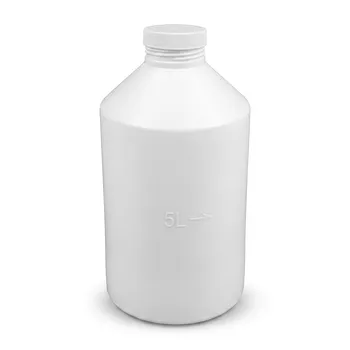
- Large Capacity 5L PTFE Storage Tank and Custom Reagent Bottle Corrosion Resistant Leakproof Screw Seal Laboratory Container with PTFE Cap
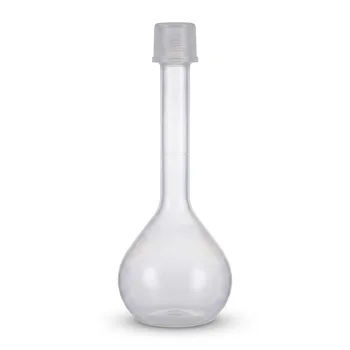
- High Purity PFA Volumetric Flask 1000ml 2000ml Constant Volume Bottle Acid Resistant Trace Analysis Custom Laboratory Labware
- High Purity PTFE Reagent Storage Bottle Chemical Resistant Teflon Plastic Low Background Virgin Material Vessel
People Also Ask
- What are the temperature limits for the PTFE bottle? Ensure Safety from -200°C to 260°C
- What are the advantages of the PTFE bottle's non-stick surface? Ensure Purity and Efficiency in Your Lab
- What makes the PTFE bottle durable? Unmatched Chemical & Thermal Stability for Demanding Applications
- What material is the PTFE bottle made from? Discover the Benefits of 100% Virgin PTFE
- What are the key applications of the PTFE bottle? Ensure Chemical Safety and Sample Purity