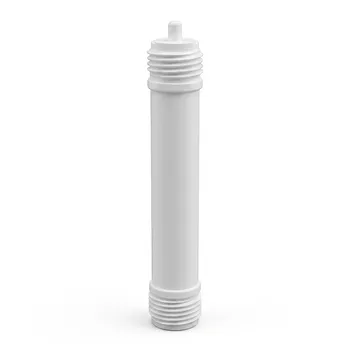
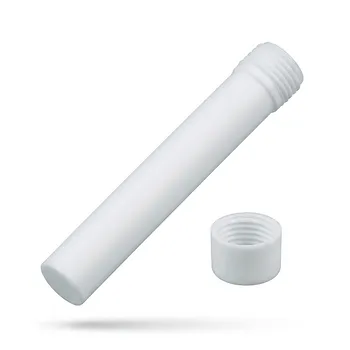
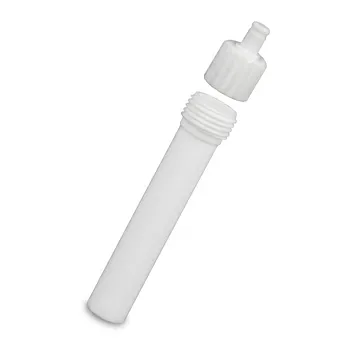
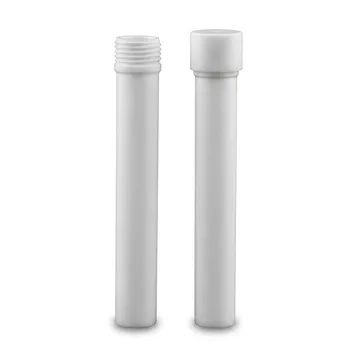
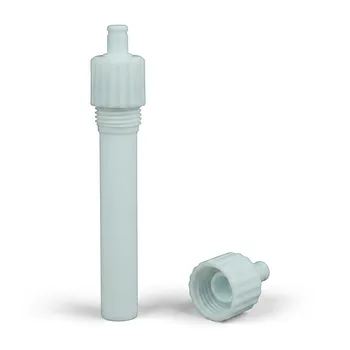
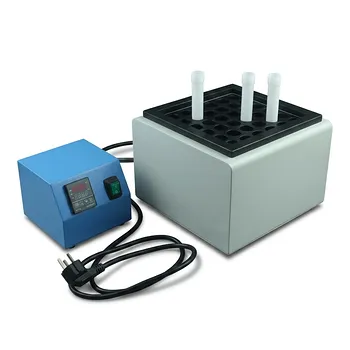
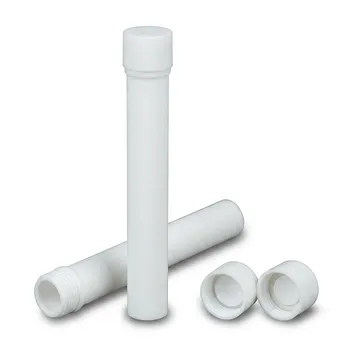
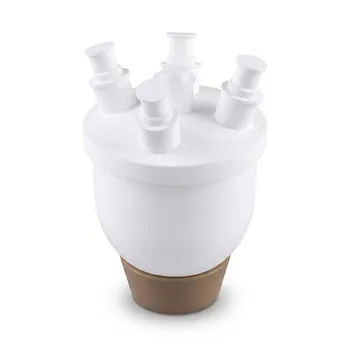
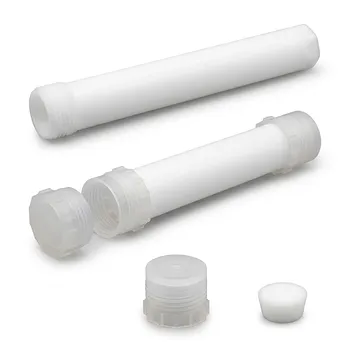
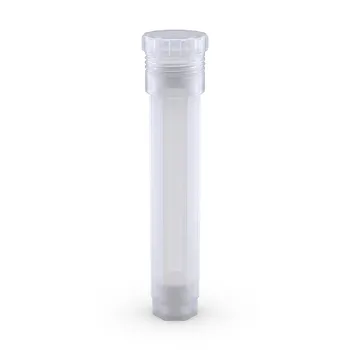
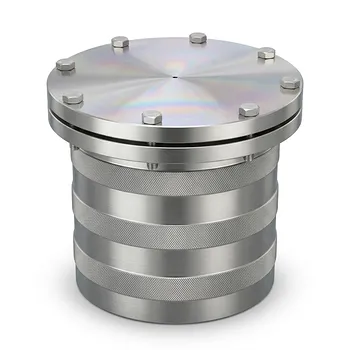
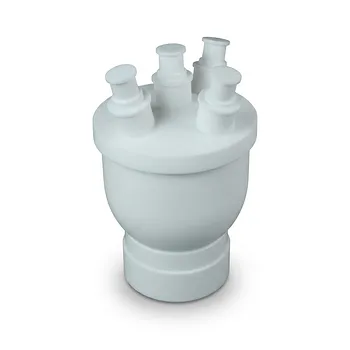
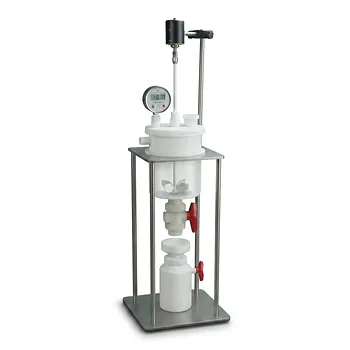
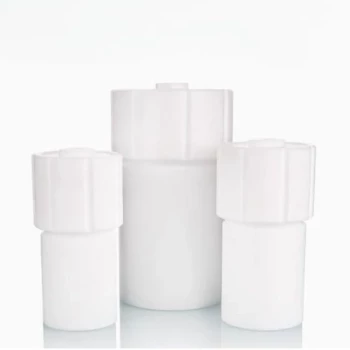
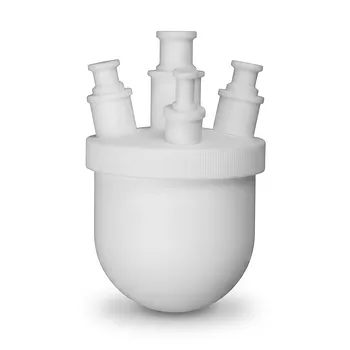
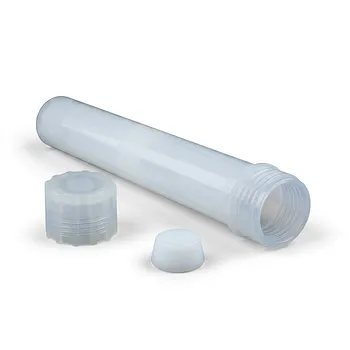
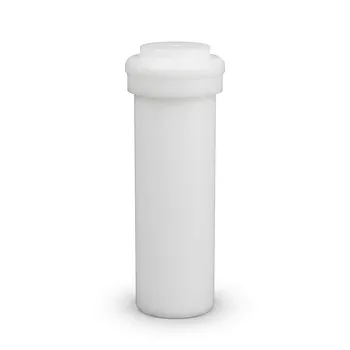
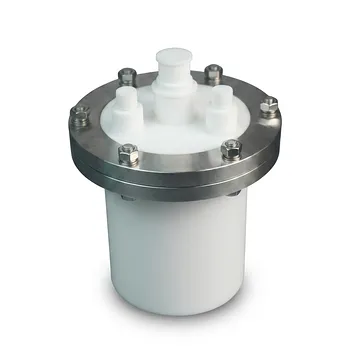
High-purity PTFE or PFA liners serve as the primary electromagnetic window and chemical barrier during the synthesis of $MnFe_2O_4/rGO$ nanocomposites. These fluoropolymer liners allow microwave energy to pass through the vessel walls unhindered, facilitating the rapid, volumetric heating required for the simultaneous reduction of graphene oxide and the crystallization of manganese ferrite. Their extreme chemical inertness prevents the leaching of metallic or silica impurities, ensuring the resulting nanocomposite maintains its intended magnetic and phase characteristics.
Core Takeaway: High-purity PTFE/PFA liners are essential for achieving phase purity and uniform morphology in $MnFe_2O_4/rGO$ synthesis by providing microwave transparency and a chemically inert reaction environment that can withstand high-pressure conditions.
Optimizing Energy Transfer through Microwave Transparency
Facilitating Rapid Volumetric Heating
PTFE and PFA materials are microwave-transparent, meaning they do not absorb electromagnetic energy. This allows the microwave field to interact directly and immediately with the reaction precursors and polar solvents inside the liner.
Promoting Uniform Nucleation
Because the energy penetrates the vessel walls without loss, the entire volume of the reaction mixture heats rapidly and uniformly. This is critical for $MnFe_2O_4/rGO$ because it ensures that the manganese ferrite nanoparticles decorate the graphene oxide sheets evenly rather than forming large, irregular clusters.
Maintaining Chemical and Phase Purity
Prevention of Impurity Leaching
High-purity liners act as a barrier that prevents metal ions or silica from leaching out of the vessel walls and into the reaction. In magnetic synthesis, even trace amounts of foreign ions can significantly degrade the magnetic performance and structural integrity of the $MnFe_2O_4$ core.
Stability in Harsh Environments
The one-step synthesis of $MnFe_2O_4/rGO$ often involves harsh chemical environments, including strong reducing agents and high temperatures. PTFE and PFA possess exceptional resistance to these conditions, ensuring that the liner does not react with or contaminate the high-purity precursors.
Protection of the Pressure Vessel
These liners isolate the corrosive reaction solution from the metallic body of the microwave autoclave. This prevents erosion of the expensive hardware and stops secondary contamination that would occur if the reaction mixture made contact with the autoclave's structural components.
Structural Containment and Material Recovery
Support for High-Pressure Synthesis
Microwave-assisted synthesis often generates significant internal pressure as polar solvents are heated beyond their boiling points. The mechanical properties of PTFE and PFA allow them to maintain a sealed environment, which is necessary for the hydrothermal growth of high-quality crystals.
Maximizing Product Yield
The non-stick properties of fluoropolymers ensure that the synthesized $MnFe_2O_4/rGO$ nanocomposites do not adhere to the vessel walls. This allows for the full collection of the colloidal product and minimizes material loss during the recovery phase.
Understanding the Trade-offs and Limitations
Temperature Constraints
While PTFE and PFA are thermally stable, they have strict upper temperature limits (typically $260^\circ C$ for PTFE and $200^\circ C$ for PFA). Exceeding these limits can lead to liner deformation, safety hazards, or the release of fluorinated decomposition products.
Memory Effects and Contamination
Repeated use of liners under high pressure can lead to micro-cracks or porosity over time. These microscopic defects can trap trace amounts of reagents from previous runs, potentially leading to cross-contamination if the liners are not rigorously cleaned or replaced.
How to Apply This to Your Project
Recommendations for Synthesis Success
- If your primary focus is magnetic performance: Prioritize high-purity PTFE to eliminate metallic ion leaching, which preserves the saturation magnetization of the $MnFe_2O_4$ core.
- If your primary focus is rapid synthesis at extreme pressures: Use PFA liners for their superior sealing capabilities, but ensure your reaction temperature remains below $200^\circ C$ to prevent material failure.
- If your primary focus is material yield and consistency: Utilize new or lightly used liners to leverage their non-stick properties, ensuring you can recover the maximum amount of $rGO$-based nanocomposite.
By serving as both a transparent window for energy and an impenetrable shield against contamination, these liners are the silent enablers of high-quality nanocomposite production.
Summary Table:
| Feature | Impact on MnFe2O4/rGO Synthesis |
|---|---|
| Microwave Transparency | Facilitates rapid, uniform heating for even nanoparticle decoration. |
| Chemical Inertness | Prevents metal/silica leaching, preserving magnetic phase purity. |
| Non-stick Surface | Minimizes material loss and ensures maximum recovery of nanocomposites. |
| High-Pressure Support | Maintains the sealed environment required for hydrothermal crystal growth. |
Elevate Your Material Synthesis with KINTEK’s High-Performance Fluoropolymers
Achieving phase-pure MnFe2O4/rGO nanocomposites requires a reaction environment free from metallic and silica contamination. KINTEK specializes in the manufacture of high-purity laboratory supplies crafted exclusively from PTFE and PFA, ensuring your advanced research stays pure and precise.
Our extensive range includes:
- Reaction & Digestion Tools: Microwave digestion vessels, hydrothermal synthesis liners, and custom reaction apparatus.
- General Labware: From high-purity beakers, crucibles, and reagent bottles to tubes and filtration tools.
- Fluid Transfer & Consumables: Tubing, fittings, valves, stirring bars, and high-performance gaskets.
- Bespoke Engineering: End-to-end custom CNC fabrication for complex, non-standard machined parts and advanced electrochemical cells.
From everyday consumables to high-volume bespoke orders, KINTEK provides the high-performance fluoropolymer solutions your lab demands. Contact us today to discuss your specific requirements and optimize your synthesis results!
References
- Kun-Yauh Shih, H.‐H. Tseng. One-Step Microwave-Assisted Synthesis of MnFe<sub>2</sub>O<sub>4</sub>/rGO Nanocomposites and Their Electrochemical Properties in Supercapacitors. DOI: 10.1021/acsomega.4c07810
This article is also based on technical information from Kintek Knowledge Base .
Related Products
- High Purity PTFE Microwave Digestion Vessel for Soil and Food Analysis Acid Resistant Fluoropolymer Sample Preparation Liners
- High Purity TFM Microwave Digestion Vessels PTFE Acid Evaporation Liners Domestic GT-400 Equivalent Laboratory Reaction Containers
- High Purity PTFE Microwave Digestion Vessel Replacement Liner for Acid Sample Preparation and Trace Analysis
- Custom High Purity PTFE Microwave Digestion Vessels and Graphite Block Compatible Acid Evaporation Tanks for Trace Metal Analysis
- High Performance PTFE Microwave Digestion Vessel Replacement Bespoke Fluoropolymer Acid Digestion Tank Intelligent Sample Preparation Labware
People Also Ask
- How does the dielectric property of PTFE benefit microwave-assisted digestion? Unlock Rapid and Uniform Sample Heating
- What are the advantages of using microwave digestion vessels? Optimize EG@MO synthesis with superior thermal control.
- What safety features are commonly integrated into microwave digestion vessels? Ensuring High-Pressure Laboratory Safety
- What are the advantages of using microwave digestion vessels for environmental analysis? Boost speed and sample accuracy.
- How do microwave digestion vessels support pharmaceutical elemental impurity testing? Achieve Precise USP Compliance