Magnetic stirring is the fundamental mechanism for achieving molecular-level homogeneity and controlled nucleation during synthesis. In the production of MoS2/CQD heterostructures, stirring ensures that the molybdenum source, sulfur source, and carbon quantum dots (CQDs) are perfectly distributed before and during the reaction. This process is essential for preventing the independent agglomeration of materials and ensuring the formation of high-quality, defect-rich heterojunctions.
Core Takeaway: Magnetic stirring serves as the primary control for phase uniformity; it prevents the self-nucleation of MoS2, forcing it to grow in-situ upon the CQDs to create a highly dispersed, active heterostructure rather than a mixture of isolated components.
The Preliminary Phase: Achieving Molecular Homogeneity
Uniform Precursor Distribution
Before the hydrothermal reaction begins, magnetic stirring facilitates the molecular-level mixing of sodium molybdate dihydrate and thiourea within deionized water. This ensures that every part of the solution maintains an identical concentration of molybdenum and sulfur ions.
Preparing the CQD Interface
Stirring is the physical prerequisite for the uniform embedding of Carbon Quantum Dots within the MoS2 nanosheets. By keeping the CQDs in a constant state of suspension, the system ensures they are available as nucleation sites throughout the entire volume of the solvent.
Establishing High-Quality Heterojunctions
The physical proximity achieved through stirring allows for the creation of robust heterojunction interfaces. Without this initial homogenization, the resulting material would likely consist of separate phases of MoS2 and CQDs, significantly reducing the synergistic electronic effects required for high performance.
Dynamic Growth Control During Synthesis
Enhancing Mass and Heat Transfer
In specialized hydrothermal systems, continuous dynamic agitation significantly improves mass transfer and heat exchange. This prevents localized temperature gradients or concentration "dead zones" that could lead to inconsistent crystal growth.
Inhibition of Self-Nucleation
A dynamic environment effectively inhibits the self-nucleation of MoS2 precursors in the bulk solution. By suppressing independent crystallization, the system forces the MoS2 to nucleate and grow directly on the carbon-based carrier.
Maximizing Exposed Active Sites
By promoting in-situ growth on the CQDs, stirring ensures that MoS2 nanosheets are highly dispersed rather than stacked. This architecture is critical for maintaining fully exposed edge active sites, which are the primary drivers of catalytic activity.
Understanding the Trade-offs and Challenges
Equipment Limitations
While continuous stirring is ideal, standard hydrothermal autoclaves are sealed static vessels that do not allow for agitation once the heating begins. In these cases, the initial stirring phase must be exceptionally thorough to compensate for the lack of movement during the reaction.
Shear Force Considerations
Excessive stirring speeds can introduce high shear forces that may interfere with the delicate assembly of nanostructures. Finding the balance between "thorough mixing" and "structural preservation" is a key optimization step in the synthesis process.
Concentration Sensitivity
If the precursor concentration is too high, even vigorous stirring may not prevent agglomeration once the hydrothermal temperature is reached. Stirring is a facilitator of uniformity, but it cannot overcome the fundamental thermodynamic drive toward aggregation in over-saturated solutions.
Optimizing Stirring for Your Synthesis Goals
How to Apply This to Your Project
To achieve the best results in MoS2/CQD synthesis, the stirring strategy must be aligned with the desired final properties of the heterostructure.
- If your primary focus is Maximizing Catalytic Activity: Prioritize high-speed initial stirring and lower precursor concentrations to ensure the thinnest possible MoS2 layers with maximum edge exposure.
- If your primary focus is Interface Stability: Focus on a longer, moderate-speed stirring phase to allow CQDs to fully interact with the molybdenum ions before the temperature is raised.
- If your primary focus is Batch Consistency: Utilize a specialized autoclave equipped with internal magnetic stirring to maintain a dynamic environment throughout the entire heating cycle.
Properly executed magnetic stirring is the bridge between a simple chemical mixture and a highly engineered, functional heterostructure.
Summary Table:
| Function | Key Mechanism | Impact on Heterostructure |
|---|---|---|
| Precursor Distribution | Molecular-level mixing | Prevents independent agglomeration & phase separation. |
| Nucleation Control | Inhibits self-nucleation | Forces in-situ growth of MoS2 directly on CQD interfaces. |
| Mass & Heat Transfer | Dynamic agitation | Eliminates concentration dead zones for uniform crystal growth. |
| Surface Optimization | Dispersion promotion | Maximizes exposed active edge sites for catalytic activity. |
Elevate Your Synthesis Precision with KINTEK
Achieving the perfect MoS2/CQD heterostructure requires more than just the right chemistry—it requires high-purity, high-performance equipment that can withstand demanding hydrothermal conditions. KINTEK specializes in manufacturing an exhaustive range of laboratory supplies crafted from premium PTFE and PFA, ensuring zero contamination and superior chemical resistance for your most sensitive reactions.
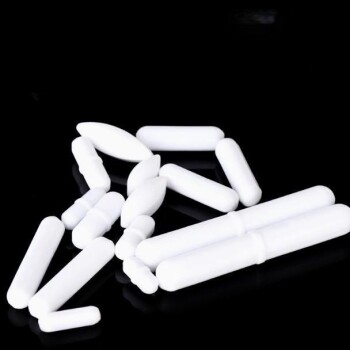
Whether you need everyday essentials like magnetic stirring bars, beakers, and reagent bottles, or specialized components such as high-purity hydrothermal synthesis liners, microwave digestion vessels, and custom electrochemical cells, we have you covered. Our expertise extends to comprehensive fluid transfer components (tubing, valves, fittings) and advanced sample prep tools, all backed by end-to-end custom CNC fabrication for bespoke laboratory setups.
Ready to optimize your lab’s efficiency with high-performance fluoropolymer materials? Contact us today to discuss your standard or non-standard machined part requirements and discover the KINTEK advantage.
References
- Fani Rahayu Hidayah Rayanisaputri, Vivi Fauzia. The Role of Solvent in Carbon Quantum Dot Synthesis on the Performance of MoS<sub>2</sub> Nanosheet/Carbon Quantum Dot Heterostructures as Electrocatalysts for the Hydrogen Evolution Reaction. DOI: 10.1021/acsanm.4c06067
This article is also based on technical information from Kintek Knowledge Base .
Related Products
- Custom PTFE Teflon Parts Manufacturer PTFE Magnetic Stirring Bar
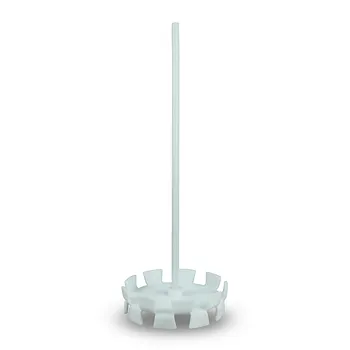
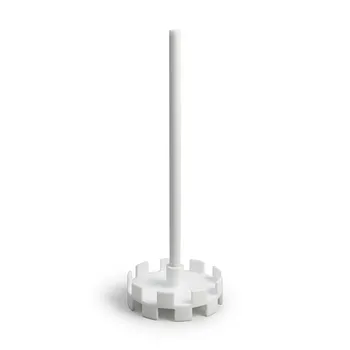
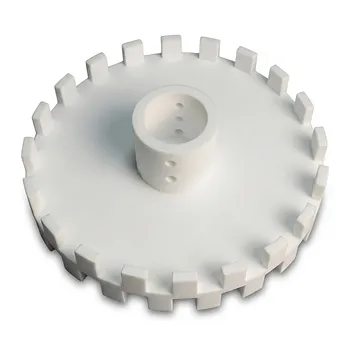
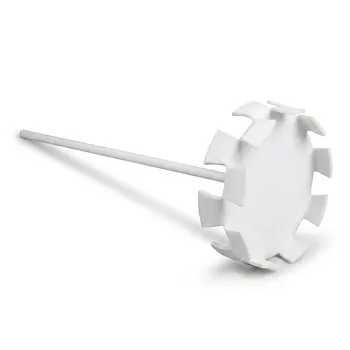
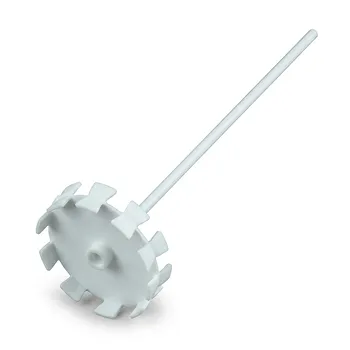
- Corrosion Resistant PTFE Dispersing Disc and High Temperature Propeller Stirring Paddle for Laboratory Chemical Mixing
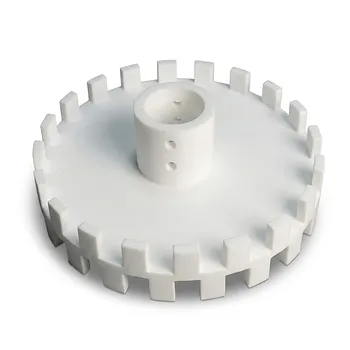
- Corrosion Resistant PTFE Turbine Stirring Disk and High Performance Fluoropolymer Dispersion Impeller for Industrial Chemical Mixing
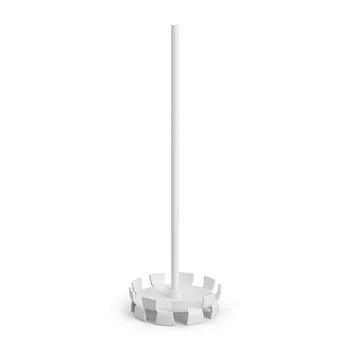
- Custom PTFE Dispersing Disc and Stirring Rod for Chemical Processing and Laboratory Mixing
- Corrosion Resistant PTFE Stirring Impeller and Customizable Polytetrafluoroethylene Dispersion Disk
People Also Ask
- What are some specialized PTFE stirring bars available? Optimize Your Lab Mixing Efficiency
- Can you provide examples of industries where PTFE bars have been successfully applied? Discover Key Applications
- How can the lifespan and performance of PTFE bars be maintained? A Guide to Proactive Care
- What are some future trends in the application of PTFE bars in the chemical industry? Engineering for Extreme Performance
- What are the primary applications of PTFE bars in the chemical industry? Solve Your Toughest Corrosion Problems