Use low-shear blending, not conventional high-speed mixing. The required setup includes a clean, enclosed, temperature-controlled area; a low-shear mixer such as bottle rollers, a V-blender, or a multidirectional shaker; sealed compatible containers; gentle screening equipment; and controlled aging facilities. The essential sequence is to keep the resin cool, screen it gently, distribute the lubricant evenly without splashing, blend at low speed, sieve minor agglomerates, and age the sealed compound before extrusion.
The objective is uniform lubricant distribution without initiating PTFE fibrillation. Keep the resin below its first transition temperature during storage and blending, use only gentle motion, and allow at least 12 hours of sealed aging at approximately 35 °C for lubricant diffusion.
Required Processing Environment
Temperature control
Conduct storage, screening, and blending in a clean enclosed area maintained below approximately 19 °C, the PTFE fine-powder transition temperature identified in the reference material.
For storage, approximately 15 °C is a recommended target. The resin should remain below the transition point for at least 24 hours before blending to reduce the risk of premature particle deformation or pre-shearing.
Humidity and static control
Maintain relative humidity near 50% to help dissipate static charge during powder handling.
The area should also provide antistatic flooring, grounded equipment, conductive or antistatic clothing, suitable ventilation, and explosion-proof lighting because liquid hydrocarbon lubricants can produce ignitable vapors.
Contamination control
Use a clean area and lint-free garments and wipes. Keep containers closed whenever possible, and prevent dust, fibers, metal fragments, and lubricant splashes from entering the compound.
Required Equipment
Low-shear blending equipment
Suitable equipment includes:
- Motorized bottle rollers for small-scale batches
- V-blenders operated at low speed, such as approximately 24 rpm
- Multidirectional shaker mixers that gently redistribute the powder without repeatedly slamming it against container walls
- Clean, wide-mouth polyethylene or polypropylene bottles for bottle-rolling operations
- Sealed twin-shell or V-blender containers for larger batches
The equipment must provide gentle tumbling or rolling rather than cutting, kneading, or high-speed impeller action.
Screening equipment
Use a gently vibrated four-mesh screen before blending if lumps are present from transport or storage.
A final sieve is also used after lubrication to break up loose agglomerates. Screening should be gentle; avoid forcing material through the mesh with a scoop, spatula, or other sharp utensil.
Sealed handling and grounding equipment
Containers must seal tightly enough to limit lubricant evaporation during blending and aging.
Ground the mixer, container supports, hoses, nozzles, and other conductive equipment. This reduces static accumulation during powder and solvent handling.
Aging equipment
Provide a controlled location capable of maintaining approximately 35 °C for at least 12 hours while the compound remains sealed.
The aging temperature is a post-blending condition. It does not replace the requirement to keep the resin below approximately 19 °C during storage and blending.
Operational Blending Procedure
1. Condition and inspect the resin
Keep the resin below approximately 19 °C during storage and handling, with approximately 15 °C preferred for storage.
Inspect the powder for foreign material or compacted lumps. If necessary, pass it through a gently vibrated four-mesh screen immediately before blending.
2. Load the powder carefully
Transfer the screened resin into a clean, dry, wide-mouth polyethylene or polypropylene bottle, or into the sealed vessel of a low-speed V-blender.
Avoid sharp scoops, scraping, packing, or any action that compresses or shears the particles.
3. Create a lubricant-receiving cavity
For bottle blending, gently twist or roll the bottle enough to form a central cavity in the powder bed.
This allows the liquid lubricant to be added into the powder rather than onto the container wall, reducing lubricant loss and improving distribution.
4. Add the lubricant evenly
Add the specified formulation quantity directly into the cavity. Pour slowly to prevent splashing, localized wet spots, and unnecessary vapor generation.
The lubricant type and amount must come from the qualified PTFE paste-extrusion formulation; the blending method alone cannot compensate for an incorrect lubricant ratio.
5. Seal the container
Close the bottle or blender tightly before rotation.
A sealed system helps prevent lubricant evaporation and limits contamination while the liquid is being distributed through the powder.
6. Blend at low speed
For bottle rolling, rotate the sealed bottle at approximately 15 rpm for 20–30 minutes as a small-scale operating example.
For V-blending, use a validated low speed such as approximately 24 rpm. The correct setting is the lowest speed that produces uniform redistribution without vigorous impacts or powder being thrown against the vessel walls.
7. Sieve after initial blending
After blending, pass the lubricated powder through a sieve to break up loose or minor agglomerates.
Do not use aggressive deagglomeration equipment. The purpose is gentle size equalization, not mechanical grinding or high-energy dispersion.
8. Reroll briefly if required
For the bottle-rolling method, reroll the screened compound for approximately 3–5 minutes to restore uniformity after sieving.
This short finishing step should remain gentle and should not be extended unnecessarily.
9. Age the sealed compound
Age the sealed blend for at least 12 hours at approximately 35 °C.
This period allows the liquid lubricant to diffuse uniformly into the porous PTFE particles and helps establish consistent powder flow before preforming or paste extrusion.
10. Inspect before extrusion
Before processing, verify that the compound is free of visible foreign material, excessive lumps, and signs of lubricant loss.
Any deviation in appearance, flow, or batch mass should be investigated before the material is preformed or extruded.
Why Shear Control Matters
Fine-powder PTFE fibrillates easily
Dispersion-polymerized PTFE fine powder is extremely shear-sensitive. Excessive mechanical action can cause premature fibrillation rather than simply separating agglomerates.
Prematurely fibrillated resin may become difficult or impossible to process consistently by paste extrusion.
Lubricant distribution must come from diffusion
The liquid lubricant should be distributed through gentle movement and then allowed to diffuse into the polymer particles during sealed aging.
High-speed mixing is not a substitute for aging and can damage the resin while attempting to accelerate wetting.
Uniformity depends on the complete sequence
Screening, low-shear blending, post-blend sieving, and aging each solve a different problem:
- Pre-screening removes storage-related lumps.
- Low-shear blending distributes the lubricant without fibrillation.
- Post-blend sieving breaks loose agglomerates.
- Aging allows lubricant diffusion and stabilizes flow behavior.
Skipping one step can produce non-uniform extrusion even if the lubricant ratio is correct.
Understanding the Trade-offs
Lower speed protects the resin but increases process time
Low-speed blending reduces shear damage but may require longer mixing or more careful validation to achieve uniformity.
Do not increase speed simply to shorten the cycle unless the change has been demonstrated not to cause fibrillation or flow instability.
Screening improves flow but can cause damage if forced
A sieve can remove loose lumps, but pushing the powder through with a tool introduces localized compression and shear.
Use vibration or gentle movement rather than scraping, pressing, or grinding.
Elevated-temperature aging improves diffusion but needs separation from blending
Aging at approximately 35 °C promotes lubricant diffusion, while blending below approximately 19 °C protects the unprocessed resin from premature deformation.
Treat these as separate controlled stages, and keep the compound sealed during the transition to aging.
Static controls add complexity but are essential
Grounding, humidity control, antistatic clothing, ventilation, and explosion-proof lighting require facility investment.
They are necessary safeguards when handling fine powder together with volatile organic hydrocarbon lubricants.
Common Pitfalls to Avoid
Using high-speed mixers
Avoid ribbon blenders, high-speed impellers, intensive mixers, or other equipment that imposes cutting or kneading forces unless specifically validated for the resin.
These machines can fibrillate the PTFE before extrusion.
Allowing lubricant to coat the vessel wall
Adding lubricant against the container wall can create local over-wetting and reduce the amount available for uniform powder coating.
Add it into a central cavity in the powder bed whenever the bottle-rolling method is used.
Leaving the vessel unsealed
An open container permits lubricant evaporation and increases contamination and vapor hazards.
Seal the container during blending and aging.
Mixing warm resin
Do not store or blend the resin above its specified low-temperature handling limit.
The approximately 35 °C aging step is intentional and controlled; it should not be confused with the temperature requirement for initial powder handling.
Making the Right Choice for Your Goal
Select the setup according to batch size, available controls, and the required level of process repeatability.
- If your primary focus is small-batch preparation: Use a clean sealed polyethylene or polypropylene bottle, motorized rollers at approximately 15 rpm, gentle four-mesh screening, and sealed aging at approximately 35 °C for at least 12 hours.
- If your primary focus is larger-batch consistency: Use a sealed V-blender or multidirectional shaker mixer at validated low speed, with grounded equipment and controlled temperature and humidity.
- If your primary focus is maximum protection against shear damage: Use the lowest validated mixing speed, avoid forced screening, and rely on sealed aging for lubricant diffusion rather than aggressive mixing.
- If your primary focus is safe solvent handling: Provide ventilation, approximately 50% relative humidity, antistatic flooring and clothing, explosion-proof lighting, and grounding for all relevant equipment.
- If your primary focus is extrusion stability: Control the entire sequence—cool conditioning, gentle screening, low-shear blending, post-blend sieving, and at least 12 hours of sealed aging.
A carefully controlled low-shear process preserves PTFE particle integrity while delivering the uniform lubricant distribution required for reliable paste extrusion.
Summary Table:
| Equipment / Step | Key Details |
|---|---|
| Storage | Below 19°C, preferably 15°C, 24h before blending |
| Blending | Low-shear: bottle rollers (15 rpm, 20-30 min), V-blender (24 rpm), or multidirectional shaker |
| Screening | Gentle 4-mesh sieve before and after blending |
| Aging | Sealed, 35°C, at least 12 hours for diffusion |
| Environment | RH ~50%, antistatic, explosion-proof, clean, enclosed |
| Containers | Sealed polyethylene/polypropylene bottles or blender vessels |
Ensure your PTFE resin blending process is both safe and efficient. At KINTEK, we provide a comprehensive range of PTFE and PFA labware and processing equipment designed to handle fine powders gently. From blending vessels to custom CNC-machined parts, we support your unique requirements, whether you're in R&D or scaling up. Contact our experts today for solutions tailored to your process needs — get in touch with us.
Related Products
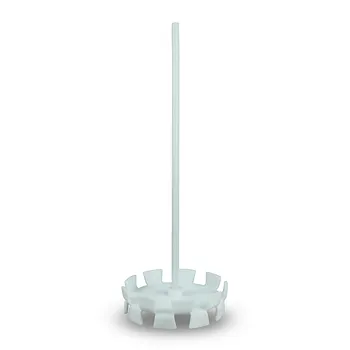
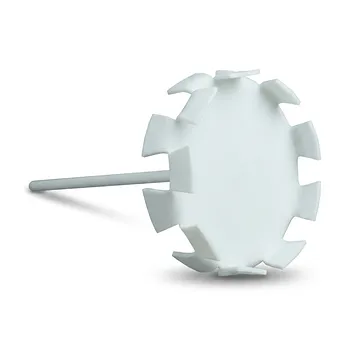
- Corrosion Resistant PTFE Dispersing Disc and High Temperature Propeller Stirring Paddle for Laboratory Chemical Mixing
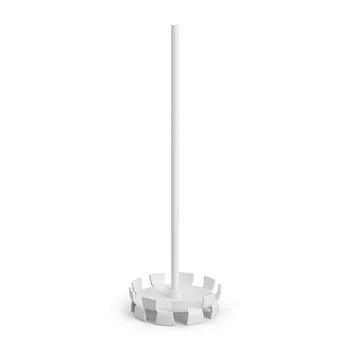
- High Purity Corrosion Resistant PTFE Dispersion Disk and Inert Stirring Paddle for Food Pharmaceutical and Cosmetic Mixing
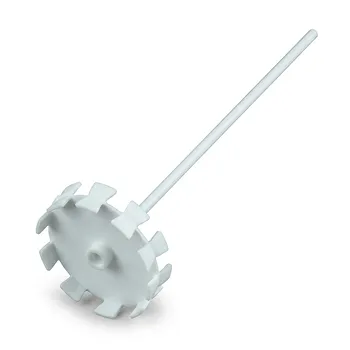
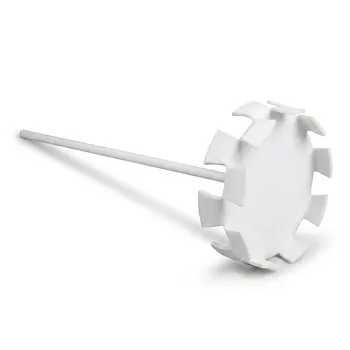
- Custom PTFE Dispersing Disc and Stirring Rod for Chemical Processing and Laboratory Mixing
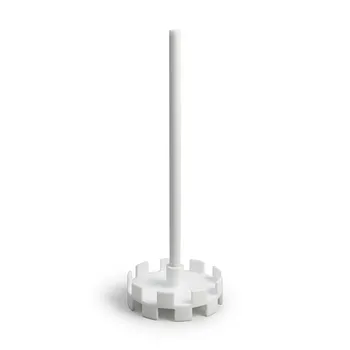
- Corrosion Resistant PTFE Stirring Paddle and Customizable Toothed Dispersion Disk for Chemical Pharmaceutical Mixing
- Corrosion Resistant PTFE Stirring Impeller and Customizable Polytetrafluoroethylene Dispersion Disk
People Also Ask
- How many variations of PTFE disks are available and what parameters do they differ in? Choose the Right Material for Your Application
- Where are PTFE stirrers typically applied? Essential for Chemical, Pharma & Bioprocessing
- What are the benefits of PTFE stirrers? Ensure Chemical Purity and Protect Your Labware
- What is Dispersion PTFE used for? Creating Thin, High-Performance Coatings and Films
- How are PTFE stirrers and shafts typically constructed for industrial use? Choose the Right Method for Your Process