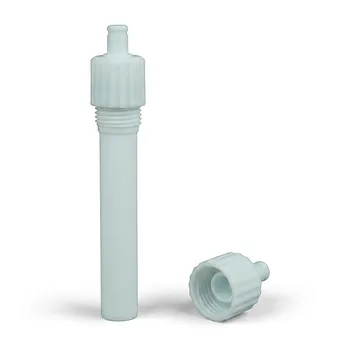
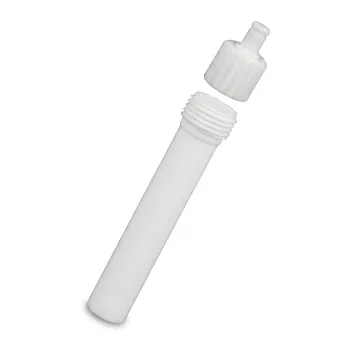
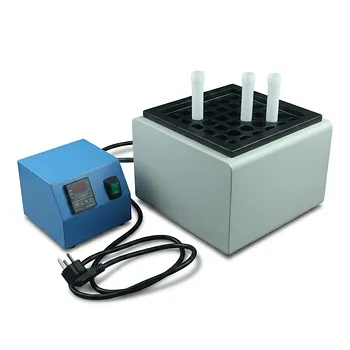
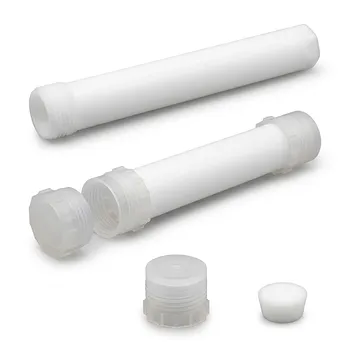
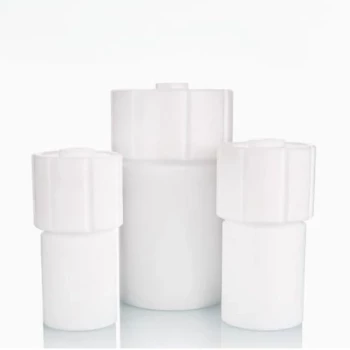
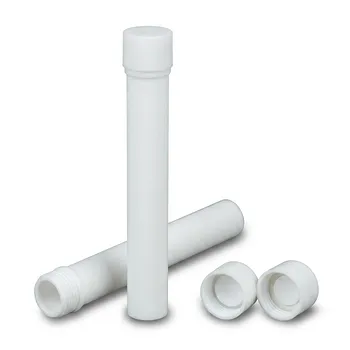
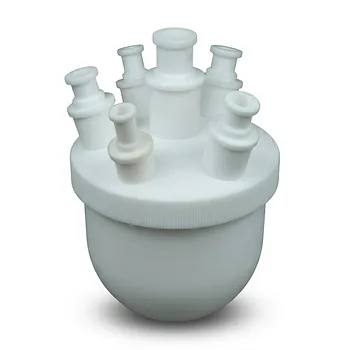
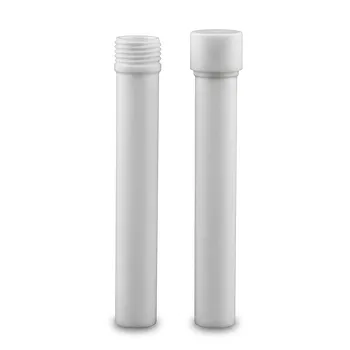
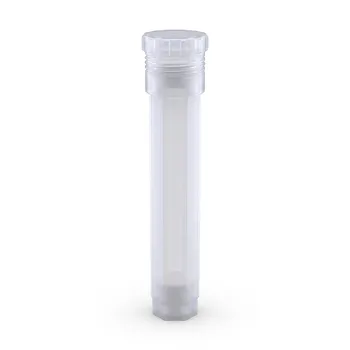
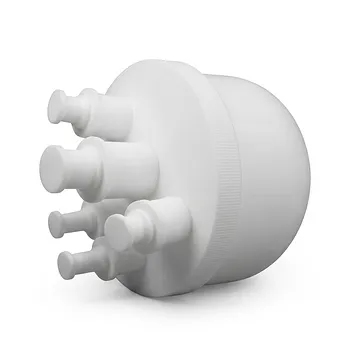
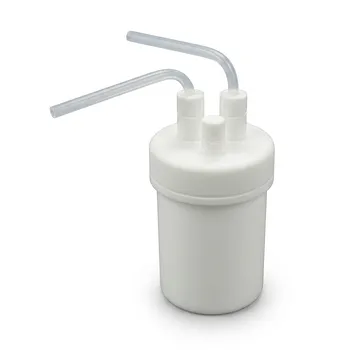
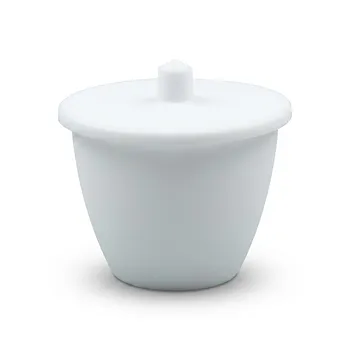
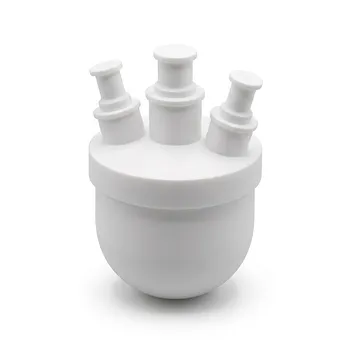
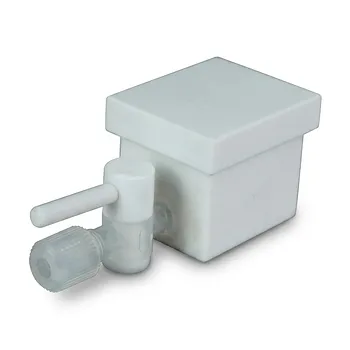
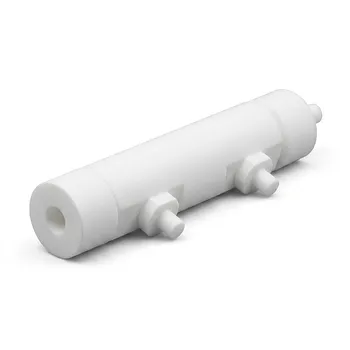
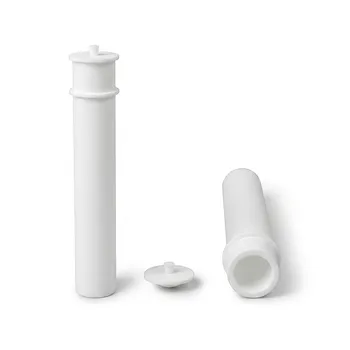
Vessels for microwave-assisted CuO synthesis must be constructed from modified PTFE that is both microwave-transparent and resistant to extreme temperatures and internal pressures. These specialized containers ensure that the electromagnetic energy reaches the precursors directly while safely containing the rapid pressure buildup generated by the heating of solvents or the decomposition of precursors.
To achieve high-purity CuO nanoparticles with controlled morphology, synthesis vessels must act as a chemically inert "pressure cooker" that allows microwave energy to pass through without interference. The success of the reaction depends on the vessel's ability to maintain a stable, high-energy environment while preventing contamination from the container walls.
Mechanical Resilience and Pressure Containment
Managing Rapid Internal Pressurization
The primary function of these vessels is to withstand the immense internal pressure generated by the rapid heating of solvents under microwave radiation. Unlike conventional heating, microwaves cause volumetric heating, leading to near-instantaneous vapor pressure increases within sealed environments.
Integrity Under Sealed Conditions
Because these reactions often occur under sealed conditions, the vessel must safely contain pressure generated by water vapor or decomposition gases. This allows the reaction to proceed at pressures significantly exceeding atmospheric levels, which is vital for creating the specialized environments required for crystal growth.
Resistance to Precursor Decomposition
In specific synthesis routes, such as the decomposition of trifluoroacetate precursors, temperatures can reach up to 280 °C. The vessel must be high-strength to handle the sudden release of gases during these thermal decomposition phases without structural failure.
Electromagnetic and Thermal Properties
Ensuring Microwave Transparency
The material, typically a high-performance fluoropolymer like modified PTFE or PFA, must possess excellent microwave permeability. This transparency ensures that the microwave energy is absorbed by the reagents and solvents rather than the vessel itself.
Maintaining High-Temperature Stability
Vessels must be rated for continuous operation at high temperatures, often requiring a minimum threshold of 140 °C and reaching much higher for specific organic precursors. High-performance liners ensure that the structural integrity of the vessel does not degrade during these intense thermal cycles.
Efficiency in Thermal Distribution
The combination of microwave transparency and high-temperature resistance allows for uniform heating throughout the solution. This uniformity is a critical factor in producing nanoparticles with consistent size distributions and phase purity.
Chemical Inertness and Morphology Control
Preventing Secondary Reactions
The chemical inertness of modified PTFE is non-negotiable, as it prevents secondary reactions between the copper salt solution and the vessel walls. Any leaching from the container could introduce impurities that poison the catalyst or alter the final chemical composition.
Controlling Crystal Morphology
By maintaining a stable and non-reactive environment, these vessels ensure that the morphology of the CuO crystals remains strictly controlled. This allows researchers to achieve specific shapes and surface areas required for applications in electronics or catalysis.
Resistance to Corrosive Media
Synthesis often involves aggressive precursors like copper nitrate or residual plant extracts in green synthesis methods. The fluoropolymer liners provide the necessary resistance against these corrosive media, ensuring a long lifecycle for the equipment and high purity for the output.
Understanding the Trade-offs
Material Fatigue and Wear
While modified PTFE is highly resilient, it is subject to mechanical fatigue over repeated heating and cooling cycles. Users must regularly inspect liners for deformation or "pitting," as a compromised liner can lead to vessel failure or sample contamination.
Safety Risks of Sealed Systems
The strength of these vessels is also their greatest risk; a sealed system under high pressure requires precise monitoring. If the temperature exceeds the solvent's safety limits without a pressure-relief mechanism, the risk of a catastrophic vessel rupture increases.
Cost vs. Performance
High-performance vessels made from specialized fluoropolymers are significantly more expensive than standard labware. This creates a trade-off between the initial capital investment and the ability to perform high-precision, reproducible nanoparticle synthesis.
Selecting the Right Vessel for Your Synthesis
How to Apply This to Your Project
Choosing the correct vessel depends on your specific precursor chemistry and the desired characteristics of your CuO nanoparticles.
- If your primary focus is high-purity morphology control: Prioritize modified PTFE liners to ensure absolute chemical inertness and prevent secondary wall reactions.
- If your primary focus is high-temperature decomposition (up to 280 °C): Select high-strength, reinforced reaction vessels designed specifically for high-pressure thermal decomposition.
- If your primary focus is green synthesis using aqueous plant extracts: Ensure your vessel is rated for high water-vapor pressure and frequent cleaning cycles with ethanol and deionized water.
By matching the vessel's pressure and thermal ratings to your specific reaction kinetics, you ensure both the safety of the laboratory and the quality of the synthesized nanoparticles.
Summary Table:
| Performance Characteristic | Technical Requirement | Benefit for CuO Synthesis |
|---|---|---|
| Microwave Transparency | High-permeability fluoropolymers | Ensures direct energy absorption by reagents, not the vessel. |
| Pressure Resistance | High-strength sealed construction | Safely contains rapid vapor expansion for controlled crystal growth. |
| Thermal Stability | Rated for 140°C to 280°C | Maintains structural integrity during high-temp decomposition. |
| Chemical Inertness | Modified PTFE or PFA liners | Prevents leaching and contamination for high-purity morphology. |
| Mechanical Resilience | Fatigue-resistant material | Withstands repeated cycles of rapid heating and cooling. |
Optimize Your Nanoparticle Synthesis with KINTEK’s High-Performance Fluoropolymers
Achieving precise morphology and high purity in CuO synthesis requires labware that never compromises under pressure. KINTEK provides an exhaustive range of laboratory supplies crafted exclusively from high-performance PTFE and PFA.
From everyday essentials like beakers, reagent bottles, and digestion tubes to specialized microwave digestion vessels and custom-machined reaction apparatus, our products are designed for extreme thermal and chemical resilience. Whether you need standard filtration tools or bespoke electrochemical cells and battery testing fixtures, our end-to-end custom CNC fabrication ensures your lab is equipped for excellence.
Ready to upgrade your research environment? Contact our fluoropolymer experts today to find the perfect solution for your synthesis needs!
References
- Naveed Akhtar, Zakir Ullah. CuO Nanoparticles: Tuning Properties for Energy and Optoelectronic Applications. DOI: 10.1002/nano.70015
This article is also based on technical information from Kintek Knowledge Base .
Related Products
- High Performance PTFE Microwave Digestion Vessel Replacement Bespoke Fluoropolymer Acid Digestion Tank Intelligent Sample Preparation Labware
- High Purity PTFE Microwave Digestion Vessel Replacement Liner for Acid Sample Preparation and Trace Analysis
- High Purity PTFE Microwave Digestion Vessel Replacement for GT-400 Systems Acid Reflux and Sample Preparation
- High Purity Laboratory Microwave Digestion Vessel Customizable PFA PTFE Digestion Tank for Analytical Sample Preparation Trace Metal Analysis
- Custom PTFE Microwave Digestion Vessels for Demanding Applications
People Also Ask
- What are the advantages of using microwave digestion vessels for environmental analysis? Boost speed and sample accuracy.
- What safety features are commonly integrated into microwave digestion vessels? Ensuring High-Pressure Laboratory Safety
- How does the dielectric property of PTFE benefit microwave-assisted digestion? Unlock Rapid and Uniform Sample Heating
- Why is PTFE preferred for microwave-assisted Ln-MOF synthesis? Key Benefits for Purity & Speed
- What are the advantages of using microwave digestion vessels? Optimize EG@MO synthesis with superior thermal control.