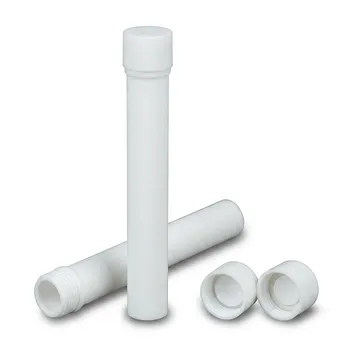
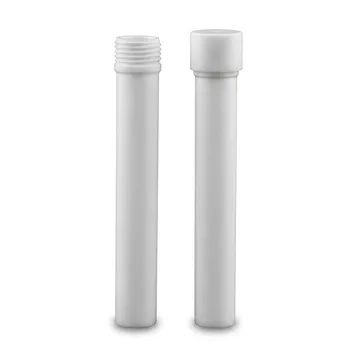
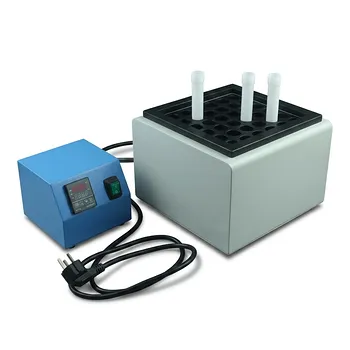
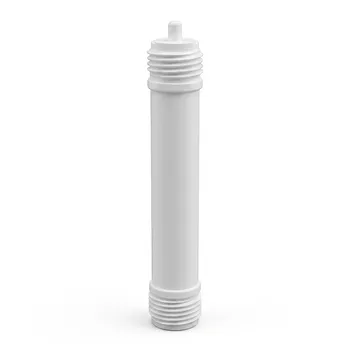
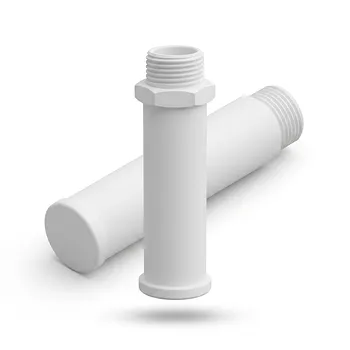
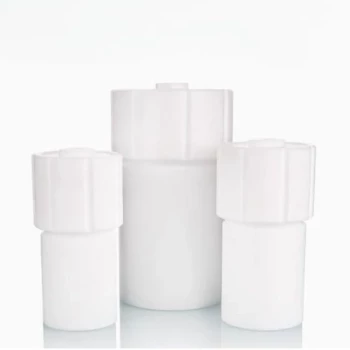
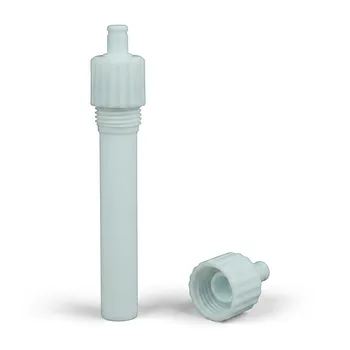
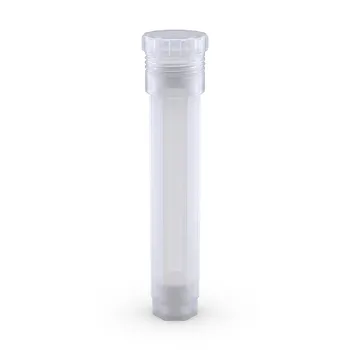
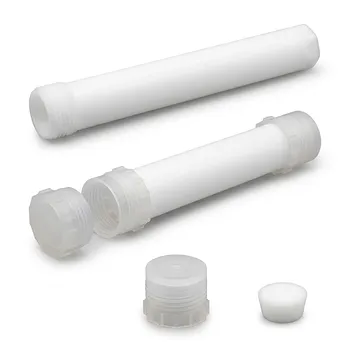
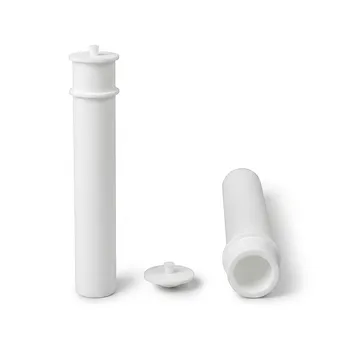
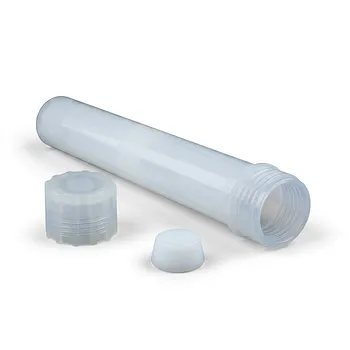
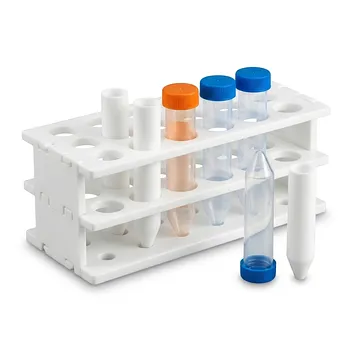
PTFE (Polytetrafluoroethylene) is the gold standard for microwave digestion tubes due to its unique combination of microwave transparency and extreme chemical resilience. It allows for rapid, uniform volumetric heating of the sample-acid mixture while resisting aggressive reagents and high internal pressures (often up to 200 bar). This ensures complete mineralization of complex matrices while maintaining the purity required for sensitive trace element analysis.
PTFE digestion tubes provide a chemically inert and thermally stable environment that enables high-pressure sample decomposition without introducing background contamination. This dual capacity to permit energy transfer while resisting corrosive breakdown makes them the essential choice for high-precision laboratory workflows.
Efficiency and Energy Dynamics
Microwave Transparency and Uniform Heating
Unlike traditional heating vessels, PTFE is microwave-transparent. This allows microwave energy to pass through the tube walls and act directly on the internal reagents and samples.
This results in rapid and uniform volumetric heating. By heating the solution directly rather than the container, laboratories achieve significantly faster digestion times and more consistent thermal profiles.
Facilitating Complete Mineralization
Because the energy is applied directly to the acid-sample mixture, high-energy microwave action is maximized. This facilitates the thorough mineralization of complex biological and organic matrices, such as fats and proteins, which are otherwise difficult to break down.
Chemical Resilience and Sample Purity
Unmatched Corrosion Resistance
PTFE is exceptionally inert, allowing it to withstand the most aggressive strong acids and oxidizing agents. This includes concentrated nitric acid, perchloric acid, hydrogen peroxide, and even hydrofluoric acid.
This resistance prevents the vessel itself from being corroded during the digestion process. Consequently, there is no risk of the digestion solution being contaminated by the material of the vessel.
Minimizing Trace Metal Background
High-purity PTFE features an extremely low trace metal background. This is a critical requirement for high-sensitivity analysis, such as ICP-MS, where even parts-per-billion contamination can ruin results.
By ensuring low metal ion leaching rates, PTFE preserves the integrity of the sample. This is vital when analyzing for 18 or more trace elements or heavy metals like mercury and lead.
Structural Performance Under Stress
High-Pressure Tolerance
Modern PTFE liners are designed to maintain their structural integrity under extreme conditions. They can support internal pressures up to 200 bar, which is necessary for the high-temperature environments required to decompose stubborn samples.
Thermal Stability and Sealing
The material's high thermal stability ensures it does not deform or degrade at the temperatures required for soil or biological digestion. This stability supports excellent sealing performance, which is the first line of defense against the loss of volatile elements.
Maximizing Analytical Recovery
Non-Stick Surface Properties
PTFE possesses superior anti-adhesion properties. This "non-stick" nature effectively reduces sample loss during both the digestion and the subsequent transfer stages.
The surface prevents target elements from adsorbing onto the tube walls. This significantly enhances the recovery rate and reproducibility of trace element analysis across multiple batches.
Retention of Volatile Elements
The ability to maintain a tight seal under high pressure is essential for the quantitative analysis of volatile mercury and other easily lost elements. PTFE vessels ensure these elements remain trapped within the system, leading to higher accuracy in final detections.
Understanding the Trade-offs
Temperature Limitations
While PTFE is highly stable, it does have a lower maximum operating temperature compared to materials like quartz. Exceeding its thermal limits can lead to "memory effects" where contaminants become embedded in the softened plastic.
Wear and Lifespan
PTFE is a relatively soft material. Over time, the high-pressure cycles can cause physical wear, deformation, or "pitting" of the interior surface, which may eventually require the replacement of the liners to maintain safety and purity.
Cleaning Requirements
Because PTFE is porous at a microscopic level, it requires rigorous cleaning protocols between uses to prevent cross-contamination. While its non-stick properties help, high-pressure acid soaking is often necessary to ensure a truly blank background.
Making the Right Choice for Your Goal
To optimize your microwave digestion process, consider your primary analytical objective:
- If your primary focus is high-sensitivity trace analysis (ICP-MS): Utilize high-purity PTFE to ensure the lowest possible metal background and prevent leaching.
- If your primary focus is analyzing volatile elements like Mercury: Ensure your PTFE vessels are rated for high-pressure sealing to prevent the escape of vapors.
- If your primary focus is digesting complex organic matrices: Leverage the high-pressure resistance of PTFE liners to reach the temperatures necessary for total decomposition.
- If your primary focus is laboratory throughput: Take advantage of the microwave transparency of PTFE to achieve faster, more uniform heating cycles.
By aligning the unique material properties of PTFE with your specific sample requirements, you ensure both the safety of your laboratory and the absolute precision of your analytical data.
Summary Table:
| Feature | Analytical Benefit |
|---|---|
| Microwave Transparency | Rapid, uniform volumetric heating and faster digestion cycles. |
| Chemical Inertness | Resists aggressive acids (HF, HNO₃) while preventing contamination. |
| Low Trace Background | Maintains sample integrity for high-sensitivity ICP-MS analysis. |
| High Pressure (200 bar) | Facilitates total mineralization of complex biological/organic matrices. |
| Non-Stick Surface | Maximizes sample recovery rates and retains volatile elements. |
Optimize Your Lab Results with KINTEK’s Fluoropolymer Expertise
Elevate your analytical precision with KINTEK’s high-performance laboratory solutions. From everyday basic labware like beakers, crucibles, and reagent bottles to high-purity trace analysis instruments and cleaning tanks, we manufacture virtually all imaginable laboratory supplies crafted from PTFE and PFA.
Our extensive range includes comprehensive fluid transfer components (tubing, fittings, valves), sample prep and filtration tools (filters, pipettes, tweezers), and advanced reaction apparatus such as microwave digestion vessels, electrochemical cells, and battery testing fixtures. Backed by end-to-end custom CNC fabrication, we are equipped to deliver everything from complex non-standard machined parts to high-volume orders with an absolute focus on high-performance materials.
Contact us today to discover how our bespoke laboratory setups can enhance your workflow efficiency and data accuracy!
Related Products
- High Purity PTFE Digestion Tubes for Microwave Systems Soil and Food Trace Analysis Acid Resistant Customizable
- High Purity PTFE Microwave Digestion Vessels for 44 Position Systems Trace Analysis Acid Digestion and Evaporation
- Custom High Purity PTFE Microwave Digestion Vessels and Graphite Block Compatible Acid Evaporation Tanks for Trace Metal Analysis
- High Purity PTFE Microwave Digestion Vessel Replacement for GT-400 Systems Acid Reflux and Sample Preparation
- High Purity PTFE Microwave Digestion Vessel for Soil and Food Analysis Acid Resistant Fluoropolymer Sample Preparation Liners
People Also Ask
- What are the common capacities and physical configurations available for PTFE digestion tubes? Expert Selection Guide
- How do PTFE digestion tubes assist in pharmaceutical and biological sample preparation? Ensure High Recovery & Purity
- How do PTFE digestion tubes minimize contamination during ultra-trace elemental analysis? Achieve high-purity results.
- What is the primary function of PTFE digestion tubes in a laboratory setting? Essential for Pure Sample Mineralization
- How do PTFE digestion tubes facilitate the analysis of food and agricultural products? Ensure High-Purity Mineralization