Magnetic stirring in hydrothermal synthesis fundamentally shifts the reaction kinetics from a passive crystallization process to a controlled, in-situ growth environment. By maintaining continuous agitation, this method ensures that MoS2 nanosheets nucleate directly onto the g-C3N4 surface rather than forming isolated, inactive clusters in the solution. This results in a highly dispersed heterojunction with maximum exposure of the edge active sites that are essential for high-performance catalytic applications.
The use of a magnetic stirring device during hydrothermal synthesis prevents the self-aggregation of MoS2 by forcing precursors to nucleate directly on the g-C3N4 carrier. This transition from static to dynamic processing is the key to achieving uniform dispersion and superior interface contact in heterojunction materials.
Overcoming the Limitations of Static Environments
Optimized Heat and Mass Transfer
Traditional static hydrothermal methods often suffer from localized temperature and concentration gradients. Continuous dynamic agitation eliminates these inconsistencies, ensuring that every part of the reaction mixture experiences identical thermal and chemical conditions.
Suppression of Independent Self-Nucleation
In a static environment, MoS2 precursors are prone to self-nucleation, where they crystallize into large, bulk particles independently of the carrier. The motion provided by magnetic stirring inhibits this independent growth, effectively "forcing" the MoS2 to seek out the g-C3N4 surface for attachment.
Kinetic Control of Crystal Growth
By maintaining a homogeneous solution, the stirring device allows for more precise control over the rate at which MoS2 nanosheets form. This precision prevents the "runaway" crystallization that typically leads to thick, inefficient layers in static reactors.
Architectural Precision of the MoS2/g-C3N4 Interface
Uniform Dispersion of Nanosheets
The dynamic environment prevents the stacking effect common in MoS2, where individual layers clump together due to natural attractive forces. Instead, the nanosheets are spread thinly and evenly across the carbon nitride carrier, maximizing the effective surface area.
Maximizing Edge Active Sites
The catalytic activity of MoS2 is concentrated almost entirely at its edges rather than its basal planes. By ensuring highly dispersed, non-agglomerated growth, the stirring method keeps these critical edge sites exposed and accessible to reactants.
Enhanced Heterojunction Stability
In-situ growth—where the MoS2 forms directly on the g-C3N4—creates a much stronger physical and electronic bond between the two materials. This superior interface is more robust than the weak attachments formed when pre-crystallized particles are simply mixed together.
Practical Considerations and Trade-offs
Equipment and Maintenance Complexity
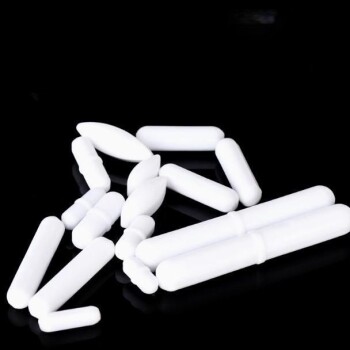
Magnetic stirring autoclaves require specialized high-pressure seals and stir bars capable of withstanding both high temperatures and corrosive chemical environments. This increases the initial setup cost and the complexity of the cleaning process compared to simple static vessels.
Potential for Structural Shear
While agitation is beneficial, excessive stirring speeds can introduce high shear forces that may damage the delicate g-C3N4 carrier structure. Finding the "sweet spot" for agitation speed is a critical step in the experimental design to avoid detaching the newly formed nanosheets.
Scale-up Challenges
Maintaining uniform stirring becomes significantly more difficult as the volume of the hydrothermal reactor increases. What works in a small laboratory autoclave may require sophisticated mechanical engineering to replicate at an industrial scale.
Choosing the Right Synthesis Path
Making the Right Choice for Your Goal
- If your primary focus is maximizing catalytic activity: Utilize magnetic stirring to ensure the highest possible exposure of edge active sites and the most uniform heterojunction interface.
- If your primary focus is rapid material screening: Static methods may be acceptable for initial proof-of-concept tests, provided you account for the likely presence of bulk, non-dispersed MoS2.
- If your primary focus is long-term catalyst stability: Prioritize the dynamic in-situ growth provided by stirring, as it creates a more durable bond between the active component and the carrier.
Mastering the dynamic environment within the autoclave is the definitive way to unlock the full electronic and catalytic potential of high-performance MoS2/g-C3N4 heterojunctions.
Summary Table:
| Feature | Magnetic Stirring Method | Traditional Static Method |
|---|---|---|
| Nucleation | In-situ growth directly on carrier | Prone to independent self-nucleation |
| Dispersion | Highly uniform, non-aggregated | High risk of stacking and clumping |
| Interface Bond | Strong physical and electronic bond | Weak attachment via simple mixing |
| Active Sites | Maximum exposure of edge sites | Reduced due to bulk particle formation |
| Mass Transfer | Homogeneous temperature/concentration | Localized gradients and inconsistencies |
Precision in advanced material synthesis starts with high-performance equipment. KINTEK provides an exhaustive range of laboratory supplies crafted from premium PTFE and PFA, specifically designed to withstand the rigorous conditions of hydrothermal synthesis. From specialized hydrothermal synthesis liners, microwave digestion vessels, and reaction apparatus to essential labware like beakers, crucibles, and high-purity tubing, we ensure your research environment is contamination-free and durable.
Whether you require custom CNC-fabricated non-standard parts, bespoke laboratory setups, or high-volume consumables like O-rings, gaskets, and seal tapes, KINTEK delivers end-to-end solutions tailored to your unique specifications. Empower your lab with our expertise in high-performance fluoropolymers—contact us today to optimize your synthesis process!
References
- Shuai Liu, Guangsuo Yu. Stirring-Assisted In Situ Construction of Highly Dispersed MoS2/g-C3N4 Heterojunctions with Enhanced Edge Exposure for Efficient Photocatalytic Hydrogen Evolution. DOI: 10.3390/catal15090808
This article is also based on technical information from Kintek Knowledge Base .
Related Products
- High Temperature Corrosion Resistant Hydrothermal Synthesis Reactor with TFM Inner Liner and Straight Cylinder Design
- Custom PTFE Teflon Parts Manufacturer PTFE Magnetic Stirring Bar
- PTFE Lined High Pressure Digestion Vessel 50ml High Temperature Hydrothermal Synthesis Tank
- Customizable PTFE Reaction Vessel with Electric Stirring Paddle and Buchner Funnel Vacuum Filtration System
- PTFE 10L Reaction Vessel with Stirring Paddle Customizable Corrosion Resistant High Temperature Reactor for Biopharmaceutical and Chemical Processing
People Also Ask
- What is the role of a corrosion-resistant reactor in the synthesis of lignin-based carbon dots? Ensure Maximum Purity
- What are the technical advantages of using hydrothermal synthesis reactors for advanced electronic & optical nanomaterials?
- How does a hydrothermal synthesis reactor facilitate the production of crystalline materials with tailored morphologies? Precision Crystal Growth
- Why is the sealing reliability of a hydrothermal synthesis reactor critical for 24-hour cycles? Ensure Nano-Precision
- What role do hydrothermal synthesis reactors play in CQD preparation? Achieve High-Purity Nanomaterial Synthesis