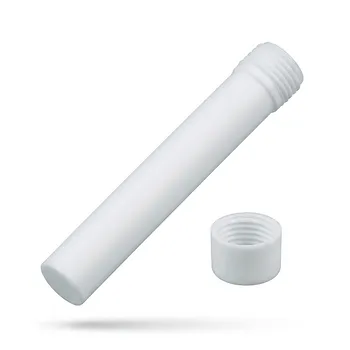
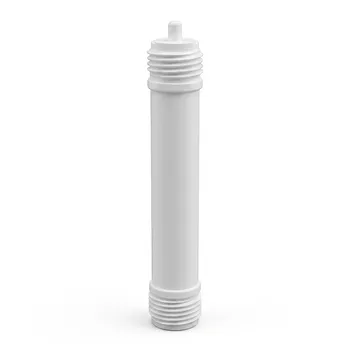
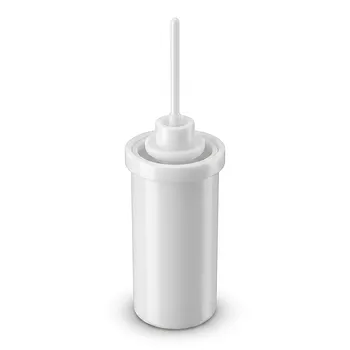
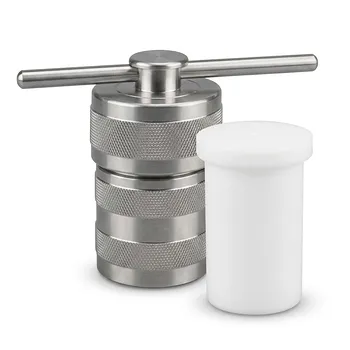
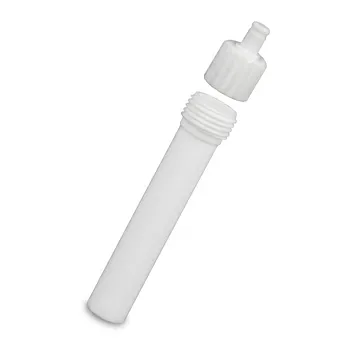
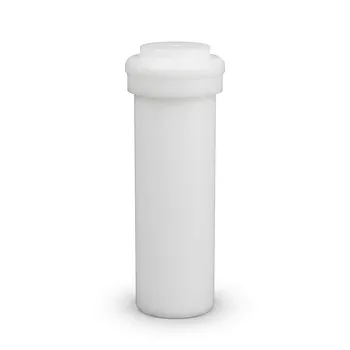
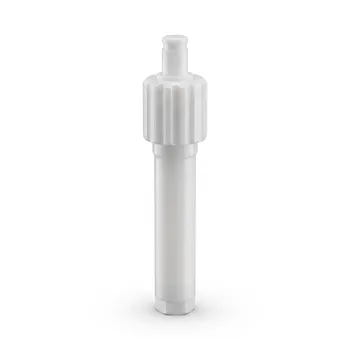
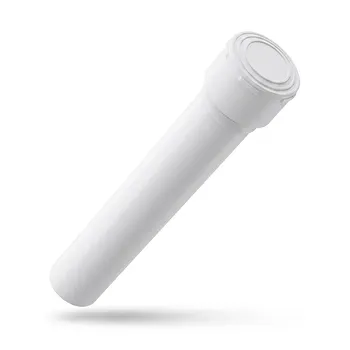
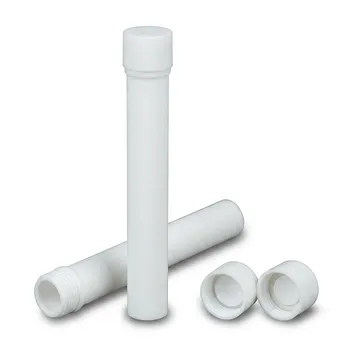
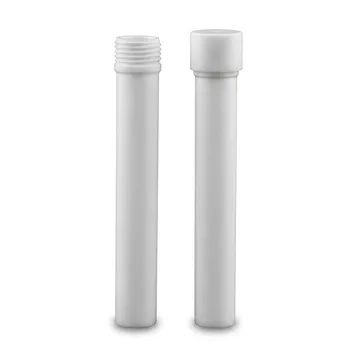
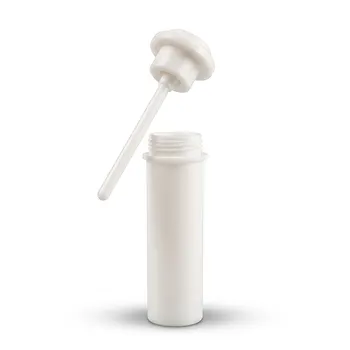
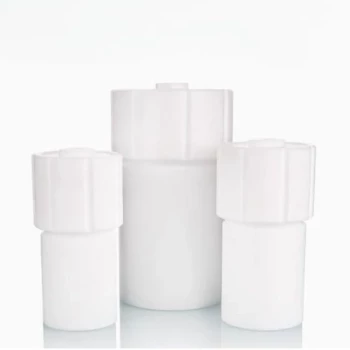
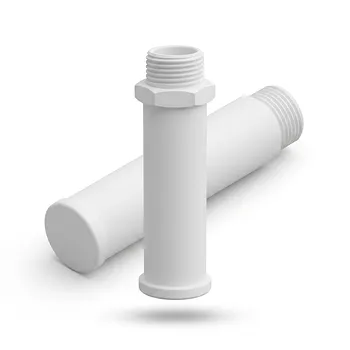
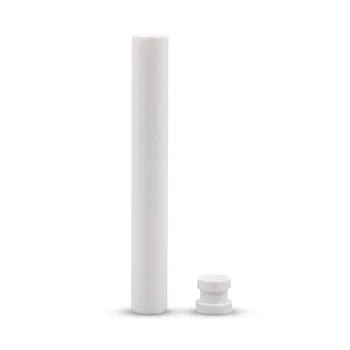
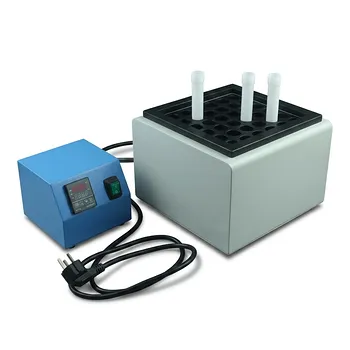
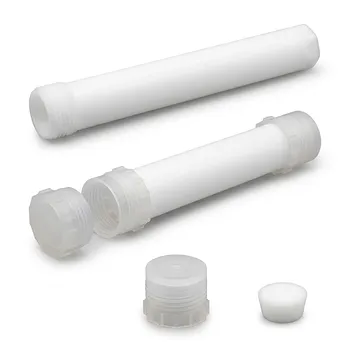
TFM-PTFE is the preferred material for microwave digestion liners because it provides superior mechanical stability and lower porosity compared to standard PTFE. This modified fluoropolymer minimizes deformation under high pressure and temperature (creep) while reducing the risk of sample cross-contamination due to its denser surface structure.
TFM-PTFE is a chemically modified grade of PTFE that offers the same exceptional chemical resistance but with enhanced physical properties. It is the definitive choice for applications requiring high-pressure safety and ultra-trace analytical accuracy.
Superior Mechanical Stability Under Extreme Stress
Reducing Creep and Cold Flow
Standard PTFE is susceptible to "creep," which is the tendency of a material to slowly move or deform under a permanent load. TFM-PTFE incorporates a modifier (perfluoropropyl vinyl ether) that creates a denser polymer structure, significantly reducing this deformation.
Maintaining Integrity at High Temperatures
Microwave digestion relies on rapid heating to accelerate chemical reactions, often reaching temperatures where standard PTFE begins to soften. TFM-PTFE retains its structural rigidity at higher thermal thresholds, ensuring the vessel liner does not warp or leak during intense heating cycles.
Resisting Cyclic Pressure Loads
Digestion processes involve repeated pressurization and depressurization, which can cause fatigue in inferior materials. The improved mechanical strength of TFM-PTFE allows it to withstand these cyclic loads more effectively, leading to a longer lifespan for the digestion tubes and enhanced safety for the laboratory operator.
Enhancing Chemical Purity and Analytical Accuracy
Lower Permeability and Porosity
Standard PTFE has a relatively microporous structure that can allow gases and small ions to migrate into the material. TFM-PTFE features a less porous surface, which acts as a more effective barrier against the permeation of aggressive mineral acids like hydrofluoric acid (HF) and nitric acid.
Minimizing Memory Effects and Cross-Contamination
A major challenge in trace analysis is the "memory effect," where residues from a previous sample stick to the vessel walls. The smoother, denser surface of TFM-PTFE reduces surface adsorption and makes the cleaning process more efficient, ensuring that no interfering elements are introduced into subsequent samples.
Low Trace Metal Background
Maintaining a clean analytical environment is critical for high-precision results. TFM-PTFE exhibits extremely low trace metal backgrounds, ensuring that the liner itself does not leach impurities into the sample solution even under the aggressive conditions of high-pressure acid digestion.
Understanding the Trade-offs
Higher Initial Investment
The primary downside of TFM-PTFE is that it is more expensive to produce than standard PTFE. Laboratories must balance the higher upfront cost of vessel liners against the benefits of increased durability and reduced contamination risks.
Manufacturing Complexity
TFM-PTFE requires more specialized processing techniques during manufacturing to achieve its superior properties. While this does not affect the end-user's experience, it contributes to the limited availability of high-quality components compared to generic plastic alternatives.
Rigidity Limitations
Because TFM-PTFE is engineered for strength, it is slightly less flexible than standard PTFE. In specific applications requiring highly compliant seals, the increased stiffness must be accounted for in the vessel design to ensure a proper hermetic fit.
How to Apply This to Your Project
When selecting vessel materials for your microwave digestion system, consider the specific demands of your sample matrix and the sensitivity of your analysis.
- If your primary focus is high-pressure digestion of inorganic matrices: Choose TFM-PTFE to ensure the vessel can safely withstand the extreme internal pressures and temperatures required for total decomposition.
- If your primary focus is ultra-trace metal analysis: Prioritize TFM-PTFE for its lower porosity and smoother surface to minimize cross-contamination and ensure the lowest possible detection limits.
- If your primary focus is routine, low-pressure organic digestion: Standard PTFE or PFA may be sufficient and more cost-effective if the operating temperatures and pressures remain within moderate limits.
By choosing the right material for the job, you ensure both the safety of your laboratory environment and the uncompromising integrity of your analytical data.
Summary Table:
| Feature | Standard PTFE | TFM-PTFE | Lab Impact |
|---|---|---|---|
| Creep/Cold Flow | Higher | Significantly Lower | Better structural integrity under load |
| Surface Porosity | Microporous | Extremely Low | Reduced acid permeation & contamination |
| Cleaning Efficiency | Standard | Superior (Smoother) | Minimal memory effect between samples |
| Thermal Stability | Standard | Enhanced | Safe operation at higher temperatures |
| Trace Purity | Good | Ultra-Low | Ideal for high-precision trace analysis |
Optimize Your Lab Performance with KINTEK
Ensure the integrity of your trace analysis with KINTEK’s premium fluoropolymer laboratory supplies. We specialize in high-performance PTFE and TFM-PTFE components designed for the most demanding environments, ranging from everyday basic labware like beakers, crucibles, and reagent bottles to advanced microwave digestion vessels and hydrothermal synthesis liners.
Whether you require high-purity fluid transfer components (tubing, valves, fittings), sample prep tools (filters, pipettes, spatulas), or advanced derivative apparatus like custom electrochemical cells and battery testing fixtures, KINTEK has you covered. Backed by our end-to-end custom CNC fabrication, we deliver everything from high-volume consumables (O-rings, gaskets, stirring bars) to complex, non-standard machined parts tailored to your unique research needs.
Experience the KINTEK difference in high-performance fluoropolymers. Contact us today to request a quote or discuss your bespoke laboratory setup!
Related Products
- High Purity TFM Microwave Digestion Vessels PTFE Acid Evaporation Liners Domestic GT-400 Equivalent Laboratory Reaction Containers
- High Purity PTFE Microwave Digestion Vessel for Soil and Food Analysis Acid Resistant Fluoropolymer Sample Preparation Liners
- Custom High Purity TFM Microwave Digestion Vessel 100ml Capacity Compatible Replacement Liner for Professional Analytical Instruments
- 5ml High Pressure PTFE Digestion Vessel for Geological Mineral Analysis Corrosion Resistant Polytetrafluoroethylene TFM Digestion Inner Liner
- High Purity PTFE Microwave Digestion Vessel Replacement Liner for Acid Sample Preparation and Trace Analysis
People Also Ask
- How does the dielectric property of PTFE benefit microwave-assisted digestion? Unlock Rapid and Uniform Sample Heating
- What safety features are commonly integrated into microwave digestion vessels? Ensuring High-Pressure Laboratory Safety
- What are the advantages of using microwave digestion vessels for environmental analysis? Boost speed and sample accuracy.
- How do microwave digestion vessels support pharmaceutical elemental impurity testing? Achieve Precise USP Compliance
- Why is TFM preferred over standard PTFE for microwave digestion liners? Enhance Safety and Trace Analysis Purity