Closed Microwave Synthesis Systems revolutionize silver microsphere production by leveraging volumetric heating to achieve unprecedented speed and structural precision. These systems replace slow, external thermal conduction with direct electromagnetic interaction, reducing synthesis times from hours or days to mere minutes. By providing a uniform thermal environment, they facilitate consistent nucleation and growth, resulting in silver particles with a highly regular spherical morphology and superior purity.
Core Takeaway: Microwave synthesis moves beyond surface heating to provide instantaneous, volumetric energy transfer. This creates a uniform thermal environment that accelerates nucleation and prevents particle agglomeration, resulting in high-purity silver microspheres with superior geometric consistency.
The Physics of Direct Energy Transfer
Instantaneous Volumetric Heating
Unlike traditional methods that rely on thermal conduction from the outside-in, microwave systems utilize electromagnetic radiation to heat the reaction medium directly. This results in volumetric heating, where energy is absorbed simultaneously throughout the entire volume of the solution.
Accelerated Reaction Kinetics
The high-energy environment achieved through microwave radiation allows for extremely rapid temperature rises. This efficiency can compress reaction cycles that typically take days in conventional hydrothermal setups into a few minutes, significantly increasing production rates.
Precision Control of Morphology and Purity
Uniform Nucleation in Specialized Media
When paired with Natural Deep Eutectic Solvents (NADES), microwave systems facilitate the uniform reduction and nucleation of silver ions. This precise energy delivery ensures that the resulting silver particles maintain a highly regular spherical morphology, making them ideal substrates for secondary materials like molybdenum disulfide nanosheets.
Prevention of Particle Agglomeration
Rapid heating mechanisms induce simultaneous reduction and growth, which effectively prevents the overgrowth and agglomeration of particles. This results in composite structures with high specific surface areas and a more uniform distribution than those produced by traditional electric hot plates.
Enhanced Crystallinity and Purity
Microwave-assisted reactions often yield higher purity and crystallinity by minimizing the time available for unwanted side products to form. The precise regulation of the physicochemical environment allows for tighter control over the final size and shape of the hybrid particles.
Advantages of the Closed Vessel Design
Suppression of Volatile Loss
The use of closed high-pressure vessels is critical for maintaining the integrity of the chemical environment. This sealed system prevents the volatile loss of trace elements, which is essential for ensuring the accuracy of the final material composition and any subsequent quantitative analysis.
Mitigation of Environmental Contamination
A closed system minimizes cross-contamination from the laboratory atmosphere. By isolating the reaction, researchers can ensure that the high-sensitivity detection of elements remains uncompromised, leading to a more reliable and reproducible synthesis process.
Understanding the Trade-offs
Equipment Complexity and Cost
While technically superior, closed microwave systems require a higher initial investment compared to traditional furnaces or hot plates. The need for specialized high-pressure digestion vessels and microwave-transparent materials adds to the operational overhead.
Scalability and Penetration Depth
Microwave energy has a finite penetration depth into certain solvents and materials. While highly effective for laboratory-scale synthesis, scaling these processes to industrial volumes requires sophisticated engineering to ensure the microwave field remains uniform across larger reaction vessels.
Making the Right Choice for Your Goal
How to Apply This to Your Project
The decision to utilize a closed microwave system depends on your specific requirements for particle architecture and throughput.
- If your primary focus is Geometric Precision: Utilize microwave synthesis in NADES media to ensure a regular spherical morphology for use as a substrate.
- If your primary focus is Rapid Prototyping: Leverage the volumetric heating effect to reduce synthesis times from days to minutes, allowing for faster iterative testing.
- If your primary focus is Material Purity: Employ closed-vessel microwave digestion to prevent the loss of volatile elements and eliminate environmental contaminants.
By transitioning to a closed microwave synthesis approach, you can achieve a level of morphological control and reaction efficiency that traditional thermal methods simply cannot replicate.
Summary Table:
| Feature | Closed Microwave Synthesis | Traditional Thermal Heating |
|---|---|---|
| Heating Mechanism | Volumetric (Direct Electromagnetic) | External Thermal Conduction |
| Synthesis Time | Minutes | Hours to Days |
| Morphology Control | Uniform Nucleation & Growth | High Risk of Agglomeration |
| Purity & Crystallinity | High (Minimized Side Products) | Lower (Slow Reaction Times) |
| Material Integrity | Sealed (No Volatile Loss) | High Risk of Contamination |
Elevate Your Synthesis with KINTEK’s Precision Fluoropolymer Labware
To achieve the structural precision required for advanced materials like silver microspheres, your laboratory setup must meet the highest standards of purity and thermal stability. KINTEK specializes in manufacturing virtually all imaginable laboratory supplies crafted from high-performance PTFE and PFA—the gold standard for microwave-transparent and chemically inert reaction environments.
From everyday essentials like beakers, crucibles, and centrifuge tubes to specialized microwave digestion vessels, hydrothermal synthesis liners, and custom reaction apparatus, we provide the tools necessary to eliminate contamination and ensure reproducible results. Whether you need comprehensive fluid transfer components or bespoke non-standard machined parts via our end-to-end custom CNC fabrication, KINTEK is your partner in high-performance material science.
Ready to optimize your synthesis workflow? Contact us today to discuss your specific custom fabrication needs or high-volume labware orders!
References
- Furkan Uzcan, Mustafa Soylak. Microwave Synthesis of Ag@MoS2 in NADES medium for the Dispersive Micro Solid Phase Extraction of Atrazine in environmental samples. DOI: 10.1007/s11270-025-07991-3
This article is also based on technical information from Kintek Knowledge Base .
Related Products
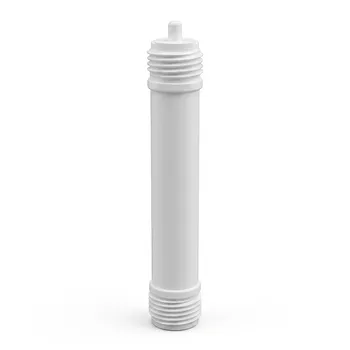
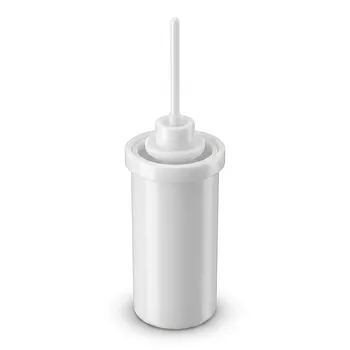
- Custom TFM Microwave Digestion Vessels for ICP-OES Analysis High Purity Fluoropolymer Sample Preparation Labware
- High Temperature Resistant TFM Microwave Digestion Vessel Lids for Trace Analysis and Acid Evaporation Systems
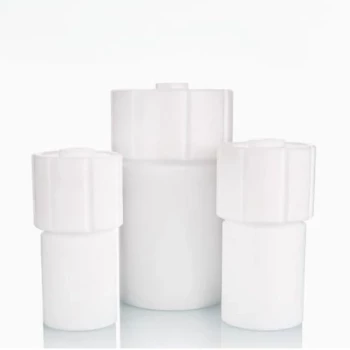
- High Purity PTFE Microwave Digestion Vessels for 44 Position Systems Trace Analysis Acid Digestion and Evaporation
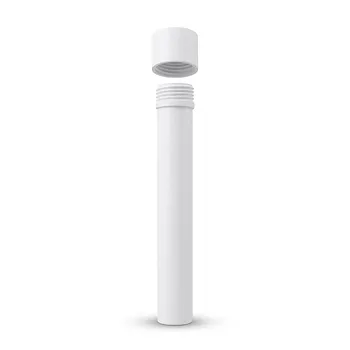
- High Purity TFM Microwave Digestion Vessels for Trace Analysis and Custom Sample Preparation Systems
- High Purity TFM Microwave Digestion Vessels PTFE Acid Evaporation Liners Domestic GT-400 Equivalent Laboratory Reaction Containers
People Also Ask
- What safety features are commonly integrated into microwave digestion vessels? Ensuring High-Pressure Laboratory Safety
- What are the advantages of using microwave digestion vessels for environmental analysis? Boost speed and sample accuracy.
- What are the advantages of using microwave digestion vessels? Optimize EG@MO synthesis with superior thermal control.
- How do microwave digestion vessels support pharmaceutical elemental impurity testing? Achieve Precise USP Compliance
- Which safety mechanisms are typically integrated into high-precision microwave digestion vessels? A Complete Safety Guide