The most effective fillers for improving fluoropolymer wear resistance are hard inorganic materials such as silicon carbide and aluminum oxide. Silicon carbide, especially controlled-particle-size grades, reinforces PTFE, PFA, and related matrices against scratching, abrasion, galling, and mechanical contact while preserving much of their chemical resistance and low-friction behavior. For sensitive applications, high-purity grades are selected by evaluating filler purity, contamination risk, particle characteristics, chemical compatibility, and application-specific regulatory or cleanliness requirements.
Hard ceramic fillers improve durability, but high-purity selection is equally important. Green silicon carbide is generally preferred over black silicon carbide when lower impurity levels are required, including food-contact, laboratory, and other sensitive applications. The final choice should be confirmed through supplier purity data and application qualification rather than color alone.
Why Fluoropolymers Need Reinforcement
Chemical resistance does not guarantee wear resistance
Pure fluoropolymers provide exceptional chemical inertness, non-stick release, and low coefficients of friction. However, materials such as unfilled PTFE can be relatively soft, creep under sustained load, and wear rapidly in sliding or abrasive service.
This creates a design problem for seals, bearings, valves, fittings, and fluid-transfer components: the polymer may resist the process chemicals but still fail mechanically.
Fillers reinforce the polymer matrix
Fillers distribute mechanical loads through the fluoropolymer matrix and reduce direct polymer-to-counterface contact. The result is typically lower wear, improved dimensional stability, greater resistance to creep, and better performance under compression.
Well-selected fillers can substantially reduce wear while leaving the fluoropolymer's low-friction behavior largely intact.
Which Fillers Improve Abrasion and Wear Resistance?
Silicon carbide
Silicon carbide (SiC) is a hard inorganic filler used to improve resistance to scratching, abrasive dust, galling, and mechanical contact. It is suitable for demanding fluoropolymer components exposed to repeated surface abrasion or contact with hard particles.
SiC can be supplied in different particle structures and sizes, including acicular and spherical forms. Particle size must be controlled because it affects reinforcement, surface finish, processability, and counterface wear.
Aluminum oxide
Aluminum oxide (Al2O3), or alumina, provides high hardness and strong abrasion resistance. It is commonly considered for fluoropolymer fittings, labware, fluid-transfer components, and machined parts that must tolerate mechanical handling or contact without sacrificing chemical resistance.
Alumina is particularly useful where a nonconductive mineral reinforcement is preferred.
Glass fiber and glass beads
Glass fiber improves creep resistance, stiffness, and dimensional stability, while also improving wear performance in many moderate-duty applications. Its fibrous structure can wear less rapidly than spherical glass beads under certain operating conditions.
Glass beads can reinforce the material, but their spherical structure may provide different wear behavior than fibers. The operating load, speed, counterface, and surface finish determine which structure is more appropriate.
Carbon, graphite, and bronze
Graphite and carbon-based fillers improve wear resistance and can reduce friction in dynamic applications. Graphite is also useful where dry self-lubrication or electrical conductivity is needed.
Bronze and thermally conductive graphite compounds can perform well under severe wear involving high velocity and load. Their ability to dissipate friction-generated heat can extend the service life of mechanical seals, bearings, and valve components.
PTFE and fluoropolymer powders
Adding PTFE or other fluoropolymer powders, often around 10–15 phr in elastomer formulations, can improve wear resistance and reduce friction in dynamic seals and fluid-transfer components.
These powders are useful when maintaining fluoropolymer-like lubricity is more important than maximizing hardness alone.
Molybdenum disulfide and PPS
Molybdenum disulfide can provide dry-lubrication and tribological benefits in moving components. It is relevant where the part needs reduced friction without relying entirely on external lubrication.
Polyphenylene sulfide (PPS) may also be used as a reinforcing additive in certain fluoropolymer compounds. It should be treated as an engineering polymer additive rather than a ceramic filler, with selection based on the compound's temperature, chemical, and wear requirements.
How High-Purity Grades Are Selected
Start with the contamination risk
High-purity selection is driven by what the part contacts and what contamination could do to the process. Food-contact systems, laboratory fluid paths, semiconductor-related equipment, pharmaceutical processing, and analytical instruments generally require tighter control of metallic, ionic, and particulate impurities than general industrial components.
The acceptable impurity level should be defined before choosing the filler, because “high purity” is application-specific rather than a universal material category.
Use filler grade and purity data
For silicon carbide, green SiC is generally higher purity than black SiC and is therefore preferred for food-contact and high-purity applications. The color is a useful grade indicator, but it should not be the sole qualification criterion.
Request the supplier's certificate of analysis, impurity profile, lot traceability, and stated manufacturing controls. Where contamination is critical, verify the specific limits for metals, free silicon, carbon, ash, and other process-relevant residues.
Match particle characteristics to the component
Particle size affects both reinforcement and processing. Smaller, well-controlled particles can support a smoother finished surface and more consistent compound behavior, while larger or irregular particles may increase surface roughness, tool wear, or counterface damage.
The filler shape also matters. Acicular fillers can provide strong mechanical reinforcement, whereas spherical particles may produce different flow, packing, and wear characteristics.
Confirm chemical compatibility
The filler must remain stable in the process environment and must not introduce an unwanted reaction or extractable contaminant. Alumina, silicon carbide, graphite, barium sulfate, and other fillers should be evaluated against the chemicals, temperatures, pressures, and cleaning agents used in service.
The compound must also preserve the fluoropolymer's essential chemical resistance. A mechanically stronger formulation is not suitable if the filler creates an unacceptable compatibility or purity problem.
Evaluate the complete compound
High filler purity does not by itself guarantee a high-purity finished product. The resin, filler, mixing equipment, processing aids, machining environment, cleaning procedure, packaging, and handling controls can all affect contamination.
For sensitive applications, qualify the complete compound and finished component. Useful checks may include extractables, particulates, ionic contamination, surface cleanliness, dimensional stability, and performance after the actual cleaning or sterilization cycle.
Selecting Fillers by Operating Conditions
General-purpose sealing
For fluoropolymer elastomers, medium thermal carbon black such as N990 or N908 provides a balance of physical strength, heat-aging resistance, and low compression set. It is a practical general-purpose choice when black coloration and electrical behavior are acceptable.
Dynamic sealing and sliding contact
For dynamic seals, bearings, and moving fluid-transfer components, PTFE powder, graphite, carbon, glass fiber, or bronze may be considered. The choice depends on sliding speed, load, temperature, counterface hardness, and whether heat dissipation is important.
Colored or laboratory components
Barium sulfate, also called blanc fixe or barytes, is an inert non-black filler that can provide strong compression-set performance in colored sealing components. It is useful when visual identification or a non-black appearance is required.
Surface-treated silica can improve tensile strength, flow behavior, and moisture resistance in specialized fluid-handling assemblies.
Conductive or self-lubricating parts
Graphite and molybdenum disulfide are candidates when the part requires dry self-lubrication or electrical conductivity. These fillers should be avoided where their electrical properties, extractables, or contamination profile conflict with the application.
Understanding the Trade-offs
More hardness can increase counterface wear
A hard filler improves resistance to abrasion within the fluoropolymer, but it can also increase wear on the opposing surface. This is especially important for seals running against softer metals, polished shafts, or sensitive coatings.
The filler type, concentration, particle size, and surface finish must therefore be evaluated as a tribological system rather than in isolation.
Fillers can reduce chemical purity
Even an inert filler introduces an additional material into the compound. Trace metals, processing residues, or poorly controlled particles may create unacceptable contamination in high-purity service.
A lower-purity filler may be adequate for industrial equipment but unsuitable for food, laboratory, pharmaceutical, or other sensitive fluid paths.
Mechanical improvements may affect processing
High filler loading can increase viscosity, complicate molding or machining, accelerate tool wear, and make thin or intricate components more difficult to produce. It can also affect surface finish, flexibility, compression set, and sealing behavior.
The best formulation is usually a controlled compromise rather than the compound with the highest possible filler content.
Thermal and electrical properties can change
Carbon, graphite, and bronze can improve thermal conductivity and reduce heat buildup, but they may also change electrical conductivity and color. Glass, alumina, and silicon carbide have different thermal and electrical behaviors that must be considered in the final design.
These changes can be beneficial in a bearing or seal but undesirable in an electrically insulating laboratory component.
Making the Right Choice for Your Goal
Select the filler and purity grade against the actual wear mechanism, operating environment, and contamination requirements.
- If your primary focus is maximum abrasion resistance: Evaluate silicon carbide and aluminum oxide with controlled particle size and loading, then test both component wear and counterface wear.
- If your primary focus is high-purity or food-contact service: Prefer a documented high-purity grade, commonly green silicon carbide, and verify impurity limits, traceability, extractables, and finished-part cleanliness.
- If your primary focus is dynamic low-friction performance: Consider PTFE powder, graphite, carbon, or a suitable combination while checking heat generation and counterface compatibility.
- If your primary focus is severe high-speed or high-load wear: Consider thermally conductive fillers such as bronze or graphite to dissipate friction heat.
- If your primary focus is non-black laboratory sealing components: Evaluate barium sulfate or appropriately treated white silica while confirming compression set, moisture resistance, and chemical compatibility.
The right fluoropolymer compound balances wear resistance, purity, processability, chemical stability, and the behavior of the complete component system.
Summary Table:
| Filler | Key Benefits | Typical Applications |
|---|---|---|
| Silicon Carbide | High hardness, excellent abrasion resistance, controlled particle size | Seals, bearings, fluid-handling components in abrasive environments |
| Aluminum Oxide | High hardness, good abrasion resistance, non-conductive | Labware, fittings, machined parts |
| Glass Fiber | Improved creep resistance, stiffness, moderate wear resistance | Bearings, structural components |
| Graphite/Carbon | Low friction, dry self-lubrication, thermal conductivity | Dynamic seals, bearings |
| Bronze | High thermal conductivity, good wear resistance under high load | High-speed seals, valve components |
| PTFE Powder | Lowers friction, improves wear resistance in elastomers | Dynamic seals, fluid-transfer components |
Elevate your fluoropolymer components with fillers optimized for wear and purity. At KINTEK, we specialize in high-performance PTFE and PFA labware, fluid transfer systems, and custom machined parts. Our end-to-end CNC machining ensures precise, contamination-controlled products for sensitive applications. Contact us today to discuss your requirements and benefit from our expertise in high-purity materials.
Related Products
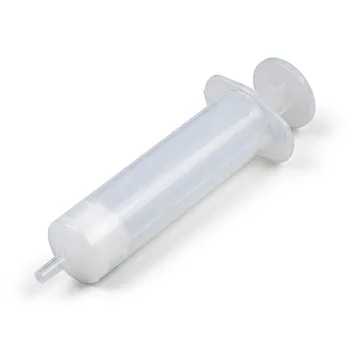
- High Purity PFA Syringe 10ml Corrosion Resistant Translucent Fluoropolymer Sampling Unit for Trace Analysis
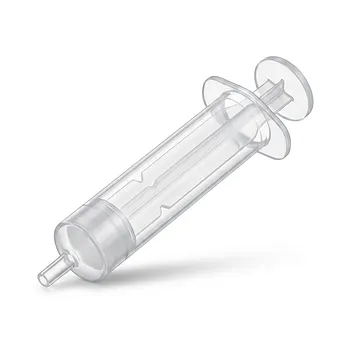
- Corrosion Resistant PFA Syringe Translucent Visual Fluoropolymer Labware 10ml Chemical Handling Tool
- Custom PTFE Reaction Tank Corrosion Resistant Fluoropolymer Chemical Processing Barrel 10L 20L 30L
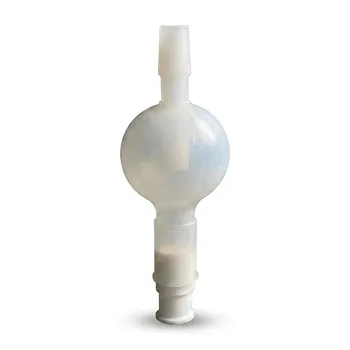
- High Purity PFA Chromatography Column with Collection Bottle Corrosion Resistant Fluoropolymer Filtration System for Trace Analysis
- Custom PFA Tubing 1/4 Inch High Purity Corrosion Resistant Fluoropolymer Tube with Welding and Machining Services
People Also Ask
- How does high-purity PFA tubing maintain reagent purity? Achieve Ultra-Smooth, Zero-Contamination Fluid Transfer
- Why is high-purity PFA trace analysis labware used for sample processing when preparing Mo2CTx@MoS2? Ensure Material Purity
- Why is high-purity PFA trace analysis labware used for MXene? Ensure Superior Material Integrity in Research
- Why is high-purity PFA labware necessary for Znx@LS-2 zeolite ICP-OES analysis? Ensure Trace-Level Precision
- Why is high-purity PFA trace analysis labware recommended for trace element detection? Achieve Gold Standard PPT Accuracy