Microwave-assisted hydrothermal synthesis offers a revolutionary shift from traditional heating by utilizing electromagnetic waves to achieve internal, volumetric heating of the precursor solution. This method dramatically accelerates the production of nickel ferrite ($NiFe_2O_4$) nanoparticles, yielding high crystallinity and a narrow size distribution that ensures performance stability in sensitive applications like solid-phase extraction.
This synthesis technique leverages molecular coupling to transform electromagnetic energy into heat instantly and uniformly across the entire reaction volume. By bypassing the limitations of thermal conduction, it allows for precise control over nucleation and growth, resulting in high-purity nanocrystals in a fraction of the time required by conventional methods.
The Mechanism of Volumetric Heating
Molecular Coupling and Energy Transfer
Unlike traditional furnaces that heat from the outside in, microwave radiation interacts directly with the dipole moments of the solvent and precursor molecules. This dipole polarization and conduction loss cause the entire volume to heat simultaneously, triggering rapid chemical reactions.
Elimination of Thermal Gradients
Traditional hydrothermal methods rely on convection and conduction, which often create "hot spots" or temperature lags within the vessel. Microwave synthesis ensures superior thermal uniformity, which is critical for the consistent nucleation of nickel ferrite particles across the entire batch.
Enhancing $NiFe_2O_4$ Material Properties
Superior Crystallinity and Phase Purity
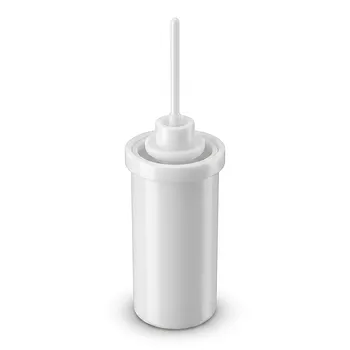
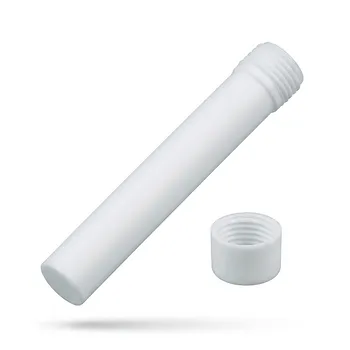
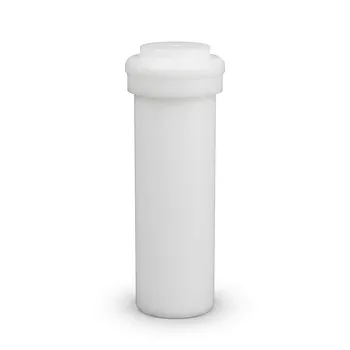
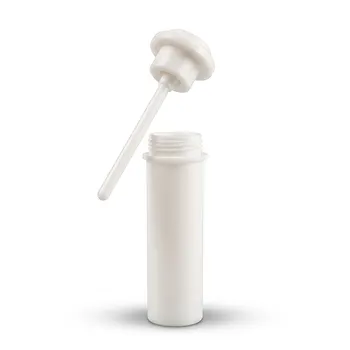
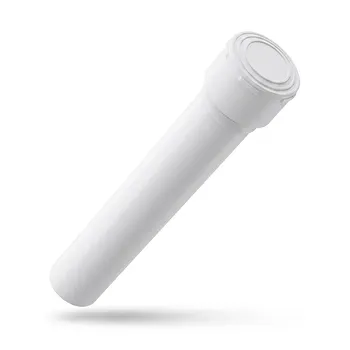
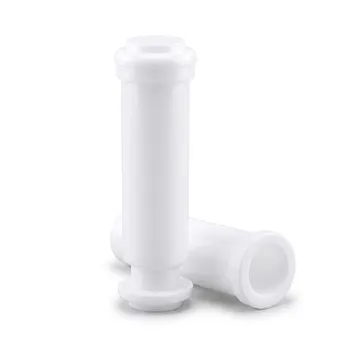
The rapid energy transfer facilitates the formation of defect-minimized, phase-pure nanomaterials with high crystallinity. By using chemically inert PTFE or PFA liners, the process also prevents metal ion contamination, ensuring the nickel ferrite maintains its intended chemical signature.
Precise Control Over Size and Morphology
The instantaneous nature of microwave heating allows for a sharp separation between the nucleation and growth phases. This prevents the excessive agglomeration and overgrowth of particles, leading to a uniform, narrow size distribution and high specific surface area.
Tunable Electrochemical and Magnetic Performance
Because the reaction kinetics are so fast, researchers can more accurately "quench" the reaction at specific stages. This provides a high degree of control over the nanostructure morphology, which directly influences the magnetic and electrochemical activity of the nickel ferrite.
Operational and Economic Efficiency
Drastic Reduction in Synthesis Cycles
What typically takes hours or even days in a conventional hydrothermal autoclave can often be completed in minutes using microwave assistance. This accelerated reaction rate significantly increases overall production throughput and laboratory efficiency.
Energy Efficiency and Sustainability
By heating the reaction medium directly rather than the vessel walls or the air inside an oven, energy loss is minimized. This makes the microwave-assisted approach a lower-energy alternative to vapor deposition or solid-state sintering processes.
Understanding the Trade-offs
Equipment Complexity and Cost
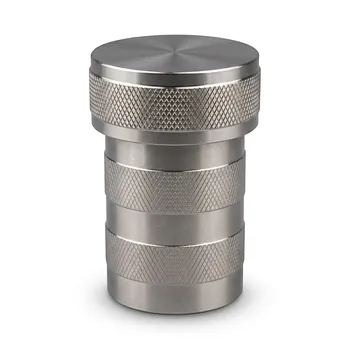
While efficient, microwave-assisted systems require specialized pressure vessels made of microwave-transparent materials like high-purity polymers. These systems often involve higher initial capital expenditures compared to basic stainless steel autoclaves.
Scalability Challenges
Maintaining uniform microwave distribution becomes increasingly difficult as the reaction volume grows. Large-scale industrial application requires sophisticated waveguide engineering to ensure that the volumetric heating benefits are not lost in larger batches.
Sensitivity to Dielectric Properties
The efficiency of the heating is highly dependent on the dielectric constant of the solvent. If the precursor chemistry changes significantly, the heating rate may fluctuate, requiring recalibration of the synthesis parameters to maintain consistency.
How to Apply This to Your Project
Depending on your specific goals for nickel ferrite production, your technical approach should vary:
- If your primary focus is rapid prototyping: Utilize microwave synthesis to shorten your R&D cycles, allowing you to test dozens of stoichiometry variations in the time it would take for one traditional run.
- If your primary focus is high-performance sensors: Prioritize this method for its ability to produce nanoparticles with high crystallinity and narrow size distribution, which are essential for stable signal response.
- If your primary focus is material purity: Ensure your microwave system utilizes high-purity PTFE liners to eliminate leaching and maintain the strict phase purity required for electronic or medical applications.
By transitioning to microwave-assisted hydrothermal synthesis, you replace slow, conduction-based heating with a precise, volumetric energy transfer that redefines the quality and speed of $NiFe_2O_4$ production.
Summary Table:
| Feature | Microwave-Assisted Synthesis | Conventional Hydrothermal |
|---|---|---|
| Heating Mechanism | Internal, Volumetric (Instant) | External, Conductive (Slow) |
| Synthesis Time | Minutes | Hours to Days |
| Thermal Uniformity | Excellent (No gradients) | Poor (Potential hot spots) |
| Particle Size | Narrow distribution, controlled | Broad distribution, agglomerated |
| Energy Efficiency | High (Direct energy transfer) | Low (Significant heat loss) |
Elevate Your Nanomaterial Synthesis with KINTEK
To achieve the precision and purity required for high-performance nickel ferrite production, your laboratory needs equipment that can withstand demanding microwave environments. KINTEK specializes in high-performance fluoropolymer solutions, offering an exhaustive range of labware crafted exclusively from PTFE and PFA.
Whether you need microwave digestion vessels, hydrothermal synthesis liners, or high-purity trace analysis instruments, our products ensure zero contamination and superior chemical resistance. From basic labware like beakers and reagent bottles to advanced custom-machined reactors, electrochemical cells, and fluid transfer components (tubing, valves, and fittings), we provide the tools necessary for cutting-edge R&D.
Ready to optimize your lab's efficiency?
Our end-to-end custom CNC fabrication team is prepared to deliver everything from bespoke laboratory setups to high-volume standard consumables. Contact KINTEK today to discover how our specialized fluoropolymer expertise can support your next breakthrough.
References
- Merve Fırat Ayyıldız, Sezgin Bakırdere. A sensitive determination of lead by hydride generation integrated with micro-sampling gas–liquid separator-FAAS after preconcentration by NiFe2O4 nanoparticles. DOI: 10.1038/s41598-025-87759-1
This article is also based on technical information from Kintek Knowledge Base .
Related Products
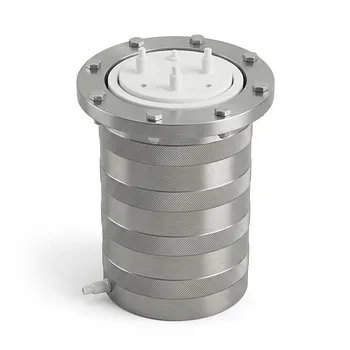
- High Temperature Corrosion Resistant Hydrothermal Synthesis Reactor with TFM Inner Liner and Straight Cylinder Design
- Custom High Purity TFM Microwave Digestion Vessel 100ml Capacity Compatible Replacement Liner for Professional Analytical Instruments
- High Purity TFM Microwave Digestion Vessels PTFE Acid Evaporation Liners Domestic GT-400 Equivalent Laboratory Reaction Containers
- High Purity TFM Microwave Digestion Vessels for Trace Analysis and Custom Sample Preparation Systems
- High Purity PTFE Microwave Digestion Vessel Replacement Liner for Acid Sample Preparation and Trace Analysis
People Also Ask
- What is the role of a corrosion-resistant reactor in the synthesis of lignin-based carbon dots? Ensure Maximum Purity
- What are the technical advantages of using hydrothermal synthesis reactors for advanced electronic & optical nanomaterials?
- How does a hydrothermal synthesis reactor facilitate the production of crystalline materials with tailored morphologies? Precision Crystal Growth
- Why is the sealing reliability of a hydrothermal synthesis reactor critical for 24-hour cycles? Ensure Nano-Precision
- What role do hydrothermal synthesis reactors play in CQD preparation? Achieve High-Purity Nanomaterial Synthesis