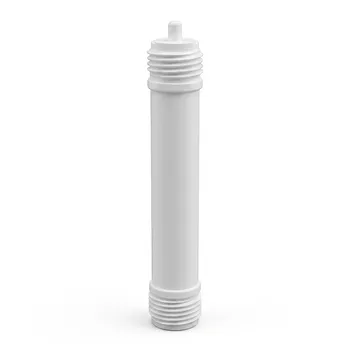
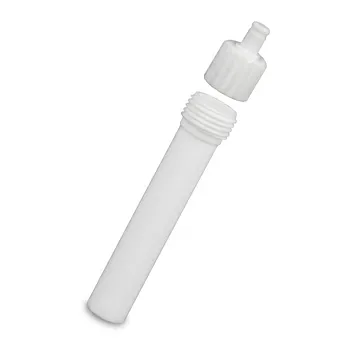
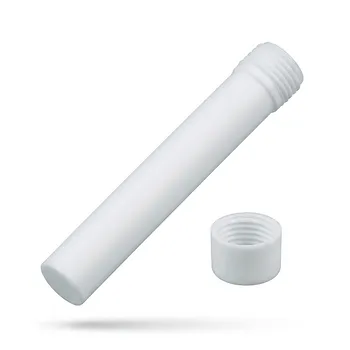
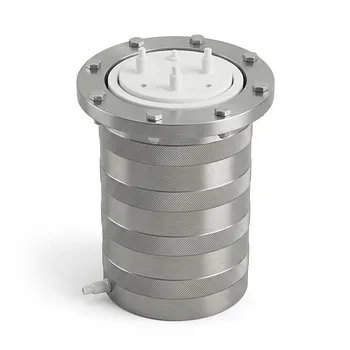
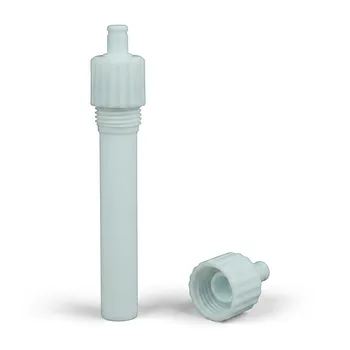
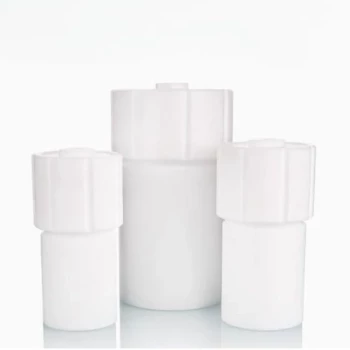
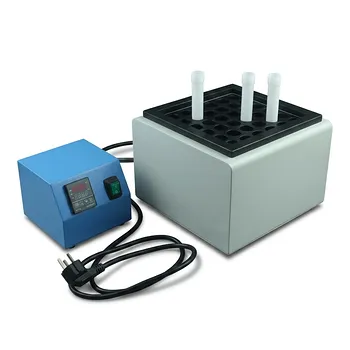
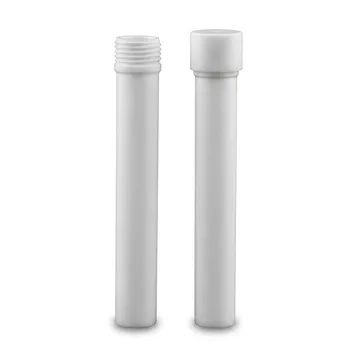
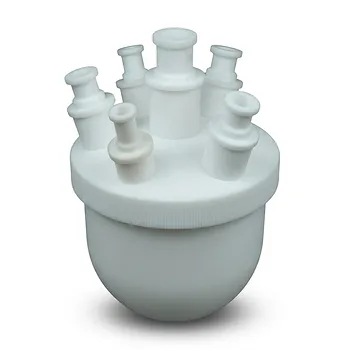
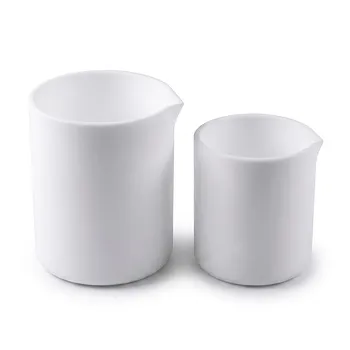
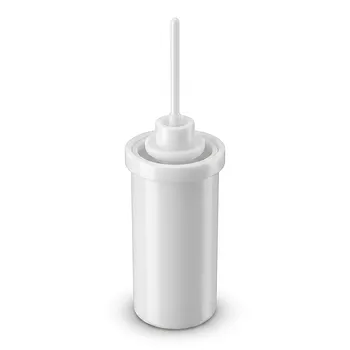
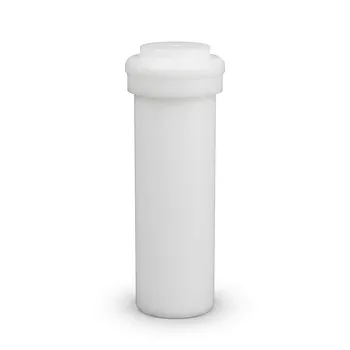
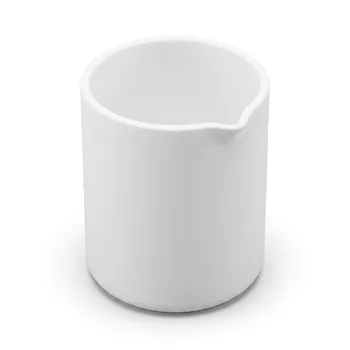
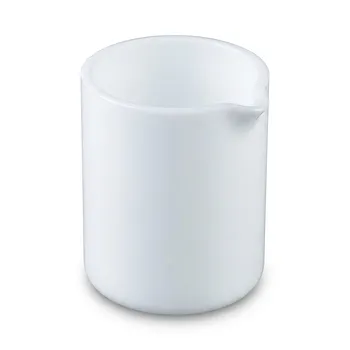
The high-pressure digestion vessel liner must be made of Polytetrafluoroethylene (PTFE) to ensure the successful microwave hydrothermal synthesis of Vanadium-doped niobium oxyphosphate (V-NbOPO4@rGO). This specific material is required to withstand the corrosive environment of phosphoric acid at 130°C while preventing any metal ion contamination from the vessel walls. By using PTFE, researchers ensure that the niobium, phosphorus, and vanadium precursors undergo pure nucleation and growth directly onto the graphene oxide surface.
For the synthesis of V-NbOPO4@rGO, a PTFE liner is the critical interface that maintains chemical purity and thermal stability. It acts as both a protective barrier against aggressive acids and a transparent medium for microwave energy.
Chemical and Thermal Resilience
Resistance to Phosphoric Acid
The synthesis process utilizes strong acid environments, specifically phosphoric acid, which can be highly corrosive at elevated temperatures. PTFE possesses exceptional chemical inertness, meaning it does not react with the acidic precursors during the digestion process.
Thermal Stability at 130°C
The microwave hydrothermal reaction for V-NbOPO4@rGO occurs at 130°C. PTFE is uniquely suited for this range, as it maintains its structural integrity and does not degrade or soften under these specific thermal conditions.
Maintaining Synthesis Purity
Prevention of Metal Ion Leaching
A primary role of the liner is to prevent the infiltration of metal ion impurities from the outer vessel walls into the reaction mixture. This ensures that the final V-NbOPO4@rGO product remains pure and that the doping process is not compromised by stray elements.
Microwave Transparency for Nucleation
PTFE is highly microwave-transparent, allowing electromagnetic energy to pass through the liner and heat the reagents directly. This uniform heating is essential for the controlled nucleation and growth of the vanadium-doped crystals on the reduced graphene oxide (rGO) sheets.
Physical Integrity and Recovery
Non-stick Surface Properties
The low surface energy of fluoropolymers like PTFE prevents the synthesized crystals from adhering strongly to the liner walls. This characteristic facilitates the complete recovery of the product and ensures that the morphology of the synthesized crystals is not damaged during collection.
Structural Integrity Under Pressure
High-pressure digestion requires the liner to maintain a reliable seal under significant internal stress. High-purity plastics like PTFE are engineered to withstand these pressures without leaking, preventing vessel failure and ensuring consistent synthesis efficiency.
Understanding the Trade-offs
PTFE vs. Modified Variants (TFM)
While standard PTFE is the primary requirement for this synthesis, some applications use TFM (modified PTFE) for even higher pressure ratings or lower porosity. However, for a 130°C phosphoric acid reaction, standard PTFE provides the necessary balance of chemical resistance and cost-effectiveness.
Material Limitations
Despite its strengths, PTFE can be prone to "cold flow" or deformation if subjected to extreme pressures beyond its rated capacity over long periods. Additionally, while it is excellent for acids, it cannot be used with certain molten alkali metals or highly reactive fluorinating agents.
Cleaning and Cross-Contamination
Because PTFE is porous at a microscopic level, it requires rigorous cleaning between uses to prevent trace memory effects. If the liner is not thoroughly decontaminated, residual vanadium or niobium ions from a previous batch could skew the stoichiometry of the next synthesis.
How to Apply This to Your Project
When selecting or preparing your digestion vessel for V-NbOPO4@rGO synthesis, prioritize the following criteria based on your specific operational needs:
- If your primary focus is sample purity: Use high-purity PTFE liners to eliminate the risk of heavy metal background contamination during the hydrothermal process.
- If your primary focus is product yield: Leverage the non-stick properties of the liner to ensure all synthesized V-NbOPO4@rGO is easily recovered from the vessel.
- If your primary focus is vessel longevity: Ensure your microwave system monitors pressure accurately to prevent exceeding the mechanical limits of the PTFE liner during the 130°C reaction.
Selecting a high-quality PTFE liner is the foundational step in ensuring the precise chemical architecture and purity of synthesized Vanadium-doped niobium oxyphosphate.
Summary Table:
| Key Requirement | PTFE Liner Benefit | Impact on Synthesis |
|---|---|---|
| Chemical Inertness | Resistance to Phosphoric Acid | Prevents liner degradation and side reactions |
| Thermal Limit | Stable up to 130°C+ | Maintains structural integrity during hydrothermal heating |
| Purity Control | Zero metal ion leaching | Ensures controlled doping without stray contaminants |
| Energy Transfer | Microwave transparent | Facilitates uniform heating for pure nucleation |
| Product Recovery | Low surface energy (non-stick) | Enables complete recovery of synthesized crystals |
Elevate Your Synthesis Precision with KINTEK Fluoropolymer Solutions
Achieving the exact chemical architecture for V-NbOPO4@rGO requires high-performance materials that never compromise your research. At KINTEK, we maintain an exclusive focus on high-performance fluoropolymers, providing the durability and purity essential for advanced microwave hydrothermal synthesis.
From everyday basic labware like beakers, crucibles, and digestion tubes to advanced microwave digestion vessels and hydrothermal synthesis liners, our products are crafted from premium PTFE and PFA. We support your most complex projects with:
- Comprehensive Components: High-purity trace analysis instruments, fluid transfer tubing, fittings, and valves.
- Specialized Apparatus: Battery testing fixtures, electrochemical cells, and microchannel reactors.
- Bespoke Fabrication: End-to-end custom CNC machining for non-standard parts and unique laboratory setups.
Don’t let material impurities or vessel failure hinder your breakthroughs. Contact KINTEK today to secure the high-performance laboratory supplies your high-pressure applications demand!
References
- Zhongteng Chen, Zhipeng Sun. Tuning the Electronic Structure of Niobium Oxyphosphate/Reduced Graphene Oxide Composites by Vanadium‐Doping for High‐Performance Na<sup>+</sup> Storage Application. DOI: 10.1002/cnl2.70010
This article is also based on technical information from Kintek Knowledge Base .
Related Products
- PTFE Lined High Pressure Digestion Vessel 50ml High Temperature Hydrothermal Synthesis Tank
- High Purity PTFE Microwave Digestion Vessel for Soil and Food Analysis Acid Resistant Fluoropolymer Sample Preparation Liners
- High Purity PTFE Microwave Digestion Vessel Replacement Liner for Acid Sample Preparation and Trace Analysis
- High Purity TFM Microwave Digestion Vessels PTFE Acid Evaporation Liners Domestic GT-400 Equivalent Laboratory Reaction Containers
- High Pressure Custom TFM Reactor Stainless Steel Outer Vessel PTFE Inner Cup for Corrosive Synthesis
People Also Ask
- What are the benefits of using a PTFE-lined vessel for carbon-sulfur cathode treatment? Maximize Purity & Performance
- Why are PTFE-lined pressure digestion vessels required for the preparation of Ag/CeO2 catalysts? Purity & Performance
- What is the function of high-pressure PTFE digestion vessels in mineral analysis? Optimize Sample Mineralization
- What safety features are typically incorporated into high-pressure PTFE digestion vessel designs? Ensure Lab Safety
- What is the function of PTFE lined high-pressure vessels in g-C3N4 synthesis? Achieve High-Purity Material Growth