Industrial microwave hydrothermal synthesis represents a significant technological shift from traditional conductive heating. For the synthesis of zinc fluoride hydroxide (Zn(OH)F), this system provides direct energy coupling with polar molecules, resulting in nearly instantaneous, volumetric heating. This precision allows for the specific regulation of the Pna21 space group and ensures high product purity by eliminating the thermal gradients common in traditional ovens.
Microwave-assisted systems outperform traditional ovens by utilizing volumetric heating to achieve superior thermal uniformity and rapid reaction kinetics. This allows for precise control over the crystal structure and morphology of Zn(OH)F while drastically reducing production time and energy consumption.
The Mechanism of Volumetric Heating
Direct Energy Coupling
Unlike traditional ovens that rely on slow heat conduction from the vessel walls to the solution, microwave systems interact directly with polar molecules. This coupling mechanism converts electromagnetic energy into heat throughout the entire volume of the reaction medium simultaneously.
Elimination of Thermal Gradients
In a traditional oven, the exterior of the solution often reaches the target temperature long before the core. Microwave synthesis achieves thermal uniformity, ensuring that every part of the Zn(OH)F precursor solution experiences the exact same conditions at the same time.
Rapid Nucleation and Growth
The high heating rates triggered by microwave radiation accelerate the nucleation process. This speed prevents the overgrowth and agglomeration of particles, leading to a more uniform particle size distribution than is possible with slow-heating methods.
Structural Precision and Purity
Regulating the Pna21 Space Group
The precision of microwave heating is critical for promoting the formation of the non-centrosymmetric Pna21 space group in Zn(OH)F. Because the system can maintain exact parameters, such as 180°C and 10 bar of pressure, it guides the crystallization process with high fidelity.
Minimizing Unwanted Side Products
Traditional heating often results in localized "hot spots" or "cold spots," which can lead to the formation of secondary, undesirable phases. The uniform thermal field of a microwave system minimizes side products, ensuring the final material is chemically pure and structurally consistent.
Enhanced Crystallinity
The efficient energy transfer of microwave radiation allows for the preparation of materials with high crystallinity in a fraction of the time. This is particularly important for Zn(OH)F, where structural integrity directly impacts the material's functional performance.
Operational Efficiency and Kinetic Control
Drastic Reduction in Reaction Time
Processes that typically take several days in a conventional hydrothermal oven can often be completed in minutes or a few hours using microwave assistance. This rapid cycle increases overall production efficiency and allows for higher throughput in industrial settings.
Real-Time Kinetic Monitoring
Advanced microwave systems allow for precise sampling and monitoring at specific time intervals. This enables researchers to observe the evolution of particle size and morphology in real-time, providing insights into the kinetics of Zn(OH)F formation.
Energy Conservation
Because the energy acts directly on the reaction medium rather than heating the entire air volume of an oven, microwave systems are significantly more energy-efficient. This reduces the carbon footprint and operational costs of large-scale material synthesis.
Understanding the Trade-offs
Initial Capital Investment
Industrial microwave systems generally require a higher initial investment compared to traditional convection ovens. The sophisticated magnetrons, pressure sensors, and specialized reaction vessels contribute to a higher upfront cost.
Penetration Depth Limitations
Microwaves have a finite penetration depth into materials, which can become a challenge when scaling up to extremely large reaction volumes. Engineers must carefully design the reactor geometry to ensure the electromagnetic field remains uniform across the entire batch.
Material Compatibility
Not all solvents or precursors interact efficiently with microwave radiation. If the reaction medium lacks polar molecules or high dielectric loss, the heating efficiency may drop, requiring the addition of microwave-absorbing "susceptors" to achieve the desired temperatures.
Applying This Technology to Your Synthesis
Choosing between a microwave system and a traditional oven depends on your specific production requirements and the sensitivity of your material's crystal structure.
- If your primary focus is structural precision: Use an industrial microwave system to strictly control the formation of the Pna21 space group and ensure a non-centrosymmetric structure.
- If your primary focus is high-throughput production: Opt for microwave synthesis to reduce reaction cycles from days to minutes, significantly increasing your daily yield.
- If your primary focus is material uniformity: Leverage the volumetric heating of microwaves to prevent nanoparticle agglomeration and achieve a narrow size distribution.
- If your primary focus is minimizing operational costs: Traditional ovens may be suitable for simple, less sensitive reactions where time and structural precision are not critical factors.
By aligning your heating method with the specific kinetic needs of Zn(OH)F, you can achieve a level of material consistency that traditional methods simply cannot match.
Summary Table:
| Feature | Microwave Hydrothermal System | Traditional Convection Oven |
|---|---|---|
| Heating Mechanism | Volumetric (Direct molecular coupling) | Conductive (Wall to core) |
| Reaction Time | Minutes to hours | Several days |
| Thermal Uniformity | High (No thermal gradients) | Low (Prone to hot/cold spots) |
| Structural Control | High (Precise Pna21 space group) | Lower (Risk of secondary phases) |
| Energy Efficiency | High (Direct energy transfer) | Low (Heats entire air volume) |
Elevate Your Synthesis Precision with KINTEK Fluoropolymer Solutions
Achieving high-purity Zn(OH)F and precise Pna21 space group regulation requires laboratory components that can withstand rigorous hydrothermal conditions without compromising sample integrity. KINTEK specializes in high-performance PTFE and PFA labware, providing the chemical inertness and thermal stability essential for advanced microwave-assisted systems.
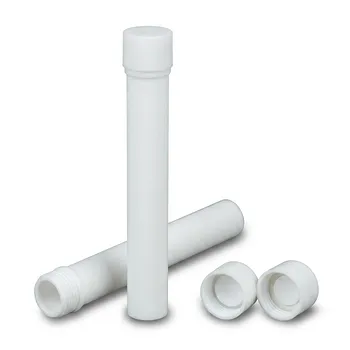
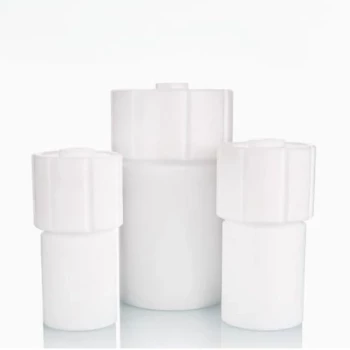
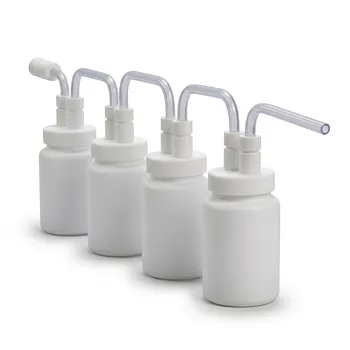
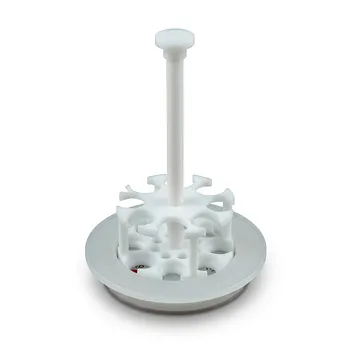
From essential basics like beakers, crucibles, and reagent bottles to specialized microwave digestion vessels and hydrothermal synthesis liners, we manufacture virtually all imaginable laboratory supplies. Our expertise extends to complex fluid transfer components—including tubing, valves, and fittings—and custom CNC-machined parts tailored to your specific reactor geometry. Whether you need high-volume consumables like O-rings and stirring bars or bespoke laboratory setups, KINTEK delivers end-to-end excellence in fluoropolymer fabrication.
Ready to optimize your material synthesis? Contact us today to discuss how our custom high-performance labware can enhance your production efficiency.
References
- Helies Hyrondelle, Alain Demourgues. Decoding Anionic Organization of Hydroxide-Fluorides in a Diaspore-Type Network. DOI: 10.1021/acs.inorgchem.4c03794
This article is also based on technical information from Kintek Knowledge Base .
Related Products
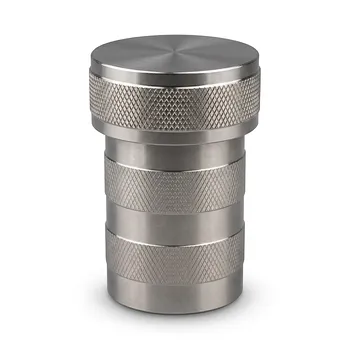
- High Temperature Corrosion Resistant Hydrothermal Synthesis Reactor with TFM Inner Liner and Straight Cylinder Design
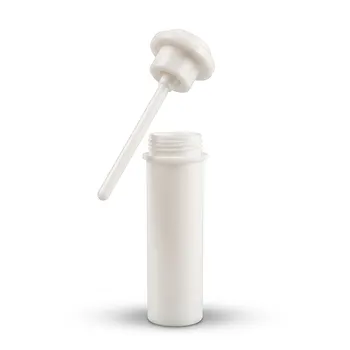
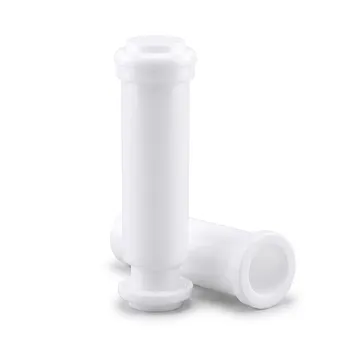
- High Purity TFM Microwave Digestion Vessels PTFE Acid Evaporation Liners Domestic GT-400 Equivalent Laboratory Reaction Containers
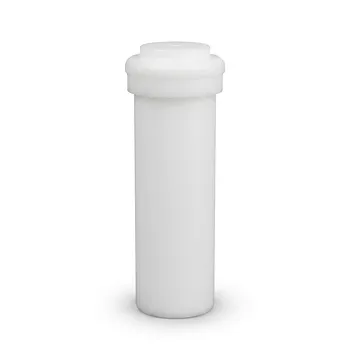
- High Purity PTFE Microwave Digestion Vessel Replacement for GT-400 Systems Acid Reflux and Sample Preparation
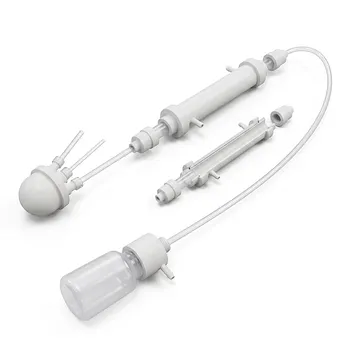
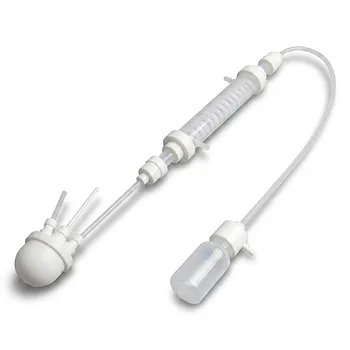
- High Temperature Corrosion Resistant PTFE Hydrogen Fluoride Condensation Reflux System with Separatory Funnel and PFA Collection Bottle
- Custom TFM Microwave Digestion Vessels for ICP-OES Analysis High Purity Fluoropolymer Sample Preparation Labware
People Also Ask
- What is the role of a corrosion-resistant reactor in the synthesis of lignin-based carbon dots? Ensure Maximum Purity
- What are the technical advantages of using hydrothermal synthesis reactors for advanced electronic & optical nanomaterials?
- How does a hydrothermal synthesis reactor facilitate the production of crystalline materials with tailored morphologies? Precision Crystal Growth
- Why is the sealing reliability of a hydrothermal synthesis reactor critical for 24-hour cycles? Ensure Nano-Precision
- What role do hydrothermal synthesis reactors play in CQD preparation? Achieve High-Purity Nanomaterial Synthesis