Automated microwave reaction systems revolutionize the synthesis of amino acid-loaded cuprous oxide ($Cu_2O$) hybrid particles by replacing slow thermal conduction with instantaneous volumetric heating. This method drastically reduces reaction times from hours or days to mere minutes while providing superior control over the physical and chemical environment. The result is a more uniform, high-purity hybrid particle with precisely regulated size, morphology, and crystallinity.
The central advantage of automated microwave systems lies in their ability to deliver uniform, rapid energy transfer directly to the reaction medium. This accelerates nucleation and growth phases while providing the precise feedback control necessary to ensure high-purity crystal structures and consistent particle morphology.
The Mechanics of Volumetric Heating
Accelerated Reaction Kinetics
Unlike traditional hydrothermal methods that rely on thermal conduction from the vessel walls, microwave radiation achieves instantaneous volumetric heating. This direct energy transfer significantly shortens the induction period for crystal growth.
By acting directly on polar solvent molecules, the system triggers the reduction of metal ions and completes the nucleation process in a fraction of the time required by conventional methods. This efficiency allows for high-crystallinity powders to be produced in minutes rather than hours.
Uniform Thermal Field Distribution
Traditional heating often creates temperature gradients within the reaction vessel, leading to inconsistent particle growth. Microwave systems ensure a uniform thermal field throughout the entire solution.
This uniformity is critical for maintaining a narrow size distribution of $Cu_2O$ particles. It prevents the localized "hot spots" that typically cause some particles to grow larger than others, ensuring a homogenous final product.
Precision Control and Material Quality
Morphological and Size Regulation
The precise regulation of the physicochemical environment in a microwave system enables accurate control over the size and shape of hybrid particles. This is essential when loading sensitive molecules like amino acids onto the $Cu_2O$ surface.
By controlling the energy input, researchers can prevent the overgrowth and agglomeration of nanoparticles. This results in composite structures with high specific surface areas and well-defined nanomorphologies, such as nanocolumns or nanospheres.
Structural Purity and Yield
Automated systems utilize precise temperature feedback control to maintain the reaction at the optimal threshold. This prevents local overheating, which is a primary cause of unwanted side products and chemical impurities.
In the synthesis of complex hybrids, this precision ensures that the final powder maintains a high-purity crystal structure. It minimizes the formation of byproducts, such as metal hydroxides, which can degrade the performance of the $Cu_2O$ hybrid.
Understanding the Trade-offs
Solvent and Material Limitations
Microwave heating depends heavily on the dielectric properties of the reaction medium. If the solvent or reagents lack sufficient polarity to couple with electromagnetic waves, the heating efficiency drops significantly.
Equipment Complexity and Cost
While traditional hydrothermal synthesis can be performed with simple autoclaves and ovens, automated microwave systems require specialized, high-performance equipment. The initial capital investment and the need for microwave-transparent pressure vessels can be higher than traditional setups.
How to Apply This to Your Project
Choosing between microwave and traditional heating depends on your specific requirements for throughput, precision, and material characteristics.
- If your primary focus is high-throughput production: Use automated microwave systems to reduce reaction cycles and significantly increase overall production efficiency.
- If your primary focus is precise particle engineering: Leverage the uniform thermal field of microwave radiation to achieve a narrow size distribution and specific nanomorphologies.
- If your primary focus is maximizing structural purity: Utilize the precise feedback mechanisms of microwave reactors to eliminate local overheating and minimize the formation of chemical byproducts.
The transition to automated microwave synthesis empowers researchers to move beyond the limitations of thermal conduction, unlocking a new level of precision in the development of functional hybrid nanomaterials.
Summary Table:
| Feature | Traditional Thermal Heating | Automated Microwave System |
|---|---|---|
| Heating Method | Surface-to-core conduction | Instantaneous volumetric heating |
| Reaction Time | Hours to days | Minutes |
| Thermal Uniformity | Temperature gradients / Hot spots | Uniform thermal field |
| Particle Size | Wide distribution | Narrow, controlled distribution |
| Structural Purity | Risk of byproducts | High-purity crystal structures |
| Control | Manual/Lagging feedback | Precise automated feedback |
Elevate Your Research with High-Performance Labware
Precision in nanoparticle synthesis requires equipment that can withstand demanding chemical and thermal environments. At KINTEK, we specialize in manufacturing high-performance laboratory supplies crafted exclusively from PTFE and PFA to ensure the highest purity for your experiments.
Whether you need everyday basics like beakers, measuring cylinders, and digestion tubes, or advanced reaction apparatus such as microwave digestion vessels and custom electrochemical cells, we have you covered. Backed by end-to-end custom CNC fabrication, KINTEK can deliver everything from complex non-standard machined parts to high-volume orders for:
- Sample Prep: Separatory funnels, filters, and pipettes.
- Fluid Transfer: High-purity tubing, fittings, and valves.
- Custom Solutions: Bespoke laboratory setups and reaction vessels tailored to your specific project.
Experience the KINTEK difference in high-performance fluoropolymers. Contact us today to optimize your lab setup!
References
- Yuki Tsuda, Nobuhiko Takeichi. Microwave-assisted hydrothermal synthesis of amino acid-loaded Cu<sub>2</sub>O hybrid particles for CO<sub>2</sub> reduction electrocatalysis. DOI: 10.1039/d5ra02252e
This article is also based on technical information from Kintek Knowledge Base .
Related Products
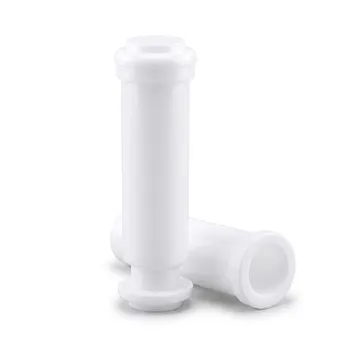
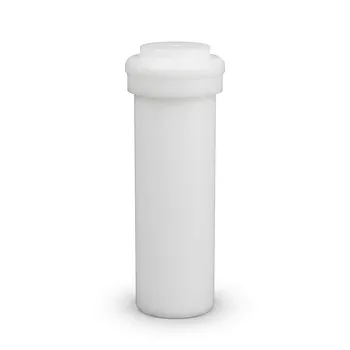
- High Purity TFM Microwave Digestion Vessels PTFE Acid Evaporation Liners Domestic GT-400 Equivalent Laboratory Reaction Containers
- Custom High Purity TFM Microwave Digestion Vessel 100ml for Analytical Laboratory Sample Preparation
- High Temperature Resistant TFM Microwave Digestion Vessel Lids for Trace Analysis and Acid Evaporation Systems
- High Purity TFM Microwave Digestion Vessels for Trace Analysis and Custom Sample Preparation Systems
- High Purity PTFE Microwave Digestion Vessel Replacement for GT-400 Systems Acid Reflux and Sample Preparation
People Also Ask
- How does the dielectric property of PTFE benefit microwave-assisted digestion? Unlock Rapid and Uniform Sample Heating
- What safety features are commonly integrated into microwave digestion vessels? Ensuring High-Pressure Laboratory Safety
- What are the advantages of using microwave digestion vessels for environmental analysis? Boost speed and sample accuracy.
- What are the advantages of using microwave digestion vessels? Optimize EG@MO synthesis with superior thermal control.
- How do microwave digestion vessels support pharmaceutical elemental impurity testing? Achieve Precise USP Compliance