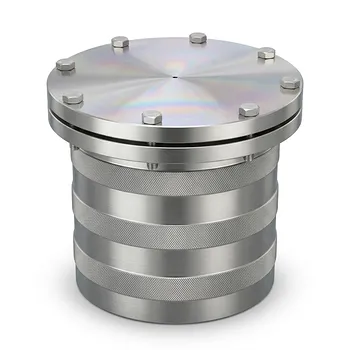
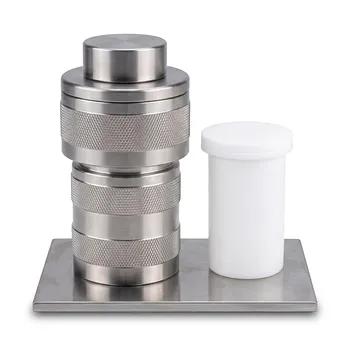
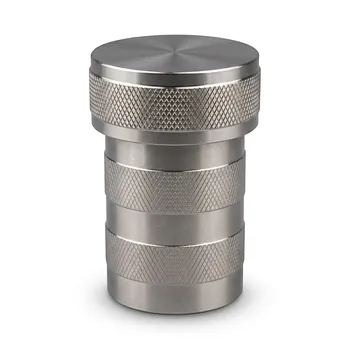
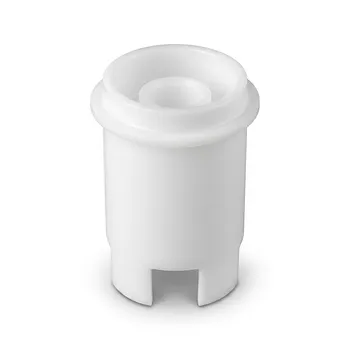
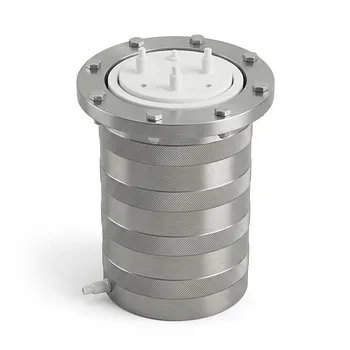
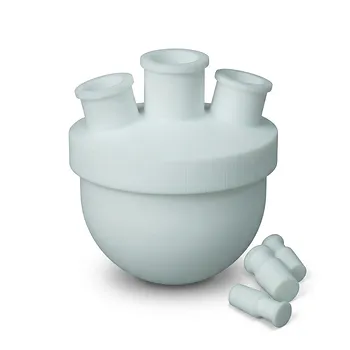
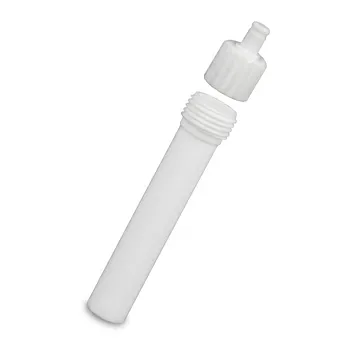
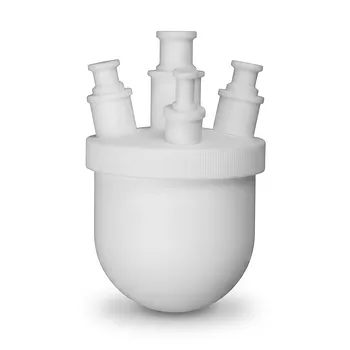
The Teflon-lined stainless steel high-pressure autoclave serves as the indispensable reactor for the solvothermal synthesis of amino-functionalized mesh frameworks (NH2-RF). It provides a strictly controlled, high-pressure, and high-temperature environment that enables the uniform nucleation and tight growth of the framework structure directly onto carbon fiber surfaces. This specific vessel configuration ensures that the chemical precursors react thoroughly while protecting the sample from metallic contamination and structural instability.
The autoclave functions as a dual-purpose system: the stainless steel shell provides the mechanical strength to maintain high internal pressure, while the Teflon liner ensures a chemically inert environment for the solvothermal reaction. This synergy is critical for achieving the precise crystallization and adhesion required for NH2-RF frameworks.
Creating the Solvothermal Environment
High-Pressure Containment
The outer stainless steel sleeve is engineered to withstand the significant internal pressures generated during prolonged heating. This structural strength is vital for maintaining a stable environment, which allows the framework to nucleate uniformly across the substrate.
Thermal Energy and Reaction Kinetics
By maintaining a constant high temperature, the autoclave facilitates the necessary redox and sulfurization processes—or in the case of NH2-RF, the polymerization and crystallization of the framework. This thermal energy ensures that the reaction precursors, such as metal acetates or acidic reagents, react completely.
Ensuring Chemical Integrity and Purity
The Protective Role of the PTFE Liner
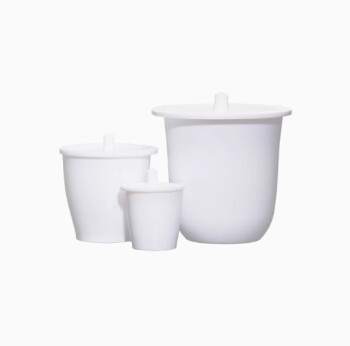
The Teflon (PTFE) liner is highly resistant to corrosive reagents, such as the acetic acid often used in NH2-RF synthesis. It prevents the acidic or alkaline reaction liquid from eroding the metal walls of the autoclave, which would otherwise lead to equipment failure.
Prevention of Metallic Contamination
Because the reaction occurs entirely within the inert Teflon liner, the synthesized nano-precursors are shielded from the stainless steel body. This ensures that no unwanted metal impurities are introduced into the amino-functionalized mesh framework, preserving its intended chemical properties.
Facilitating Uniform Growth
The smooth surface properties of the Teflon liner help manage the distribution of the reaction solution. This controlled contact between the liquid phase and the solid substrate (like carbon fiber) ensures that the framework grows tightly and consistently, rather than forming irregular clusters.
Understanding the Trade-offs
Temperature Limitations of PTFE
While Teflon is exceptionally inert, it has specific thermal limits, typically becoming unstable above 250°C. If a synthesis requires higher temperatures, alternative liners or vessel materials must be considered to avoid liner deformation and leakage.
Maintenance and Sealing Risks
The effectiveness of the autoclave depends entirely on the integrity of the seal between the liner and the steel cap. Repeated use at high pressures can wear down the Teflon material, potentially leading to pressure drops that disrupt the crystallization of the NH2-RF.
Scalability and Monitoring
Autoclave synthesis is generally a "black box" process where the reaction cannot be observed in real-time. Additionally, scaling the production of NH2-RF is limited by the physical size of the high-pressure vessels, making it more suitable for precision batch manufacturing than continuous flow production.
How to Apply This to Your Project
Maximizing Success in Framework Synthesis
The choice of autoclave and how it is utilized directly impacts the quality of the NH2-RF. Follow these guidelines based on your specific synthesis requirements:
- If your primary focus is material purity: Ensure the Teflon liner is pristine and free of micro-scratches to prevent any precursor interaction with the outer steel shell.
- If your primary focus is structural adhesion: Maintain a constant, uninterrupted heating cycle to allow the framework to nucleate and grow tightly on the carbon fiber surface without pressure fluctuations.
- If your primary focus is morphological control: Use the autoclave to maintain saturated steam pressure, which is critical for forming complex, hollow, or mesh-like structures.
By mastering the balance between the mechanical strength of the steel and the chemical inertness of the Teflon, you can consistently produce high-performance, functionalized frameworks for advanced applications.
Summary Table:
| Component | Function | Impact on NH2-RF Synthesis |
|---|---|---|
| Stainless Steel Shell | High-pressure containment | Provides mechanical strength for stable solvothermal environments. |
| Teflon (PTFE) Liner | Chemical inertness | Prevents metallic contamination and resists corrosive reaction precursors. |
| Thermal Control | Kinetic facilitation | Provides energy for uniform nucleation and framework crystallization. |
| Sealing System | Pressure maintenance | Ensures consistent growth and prevents structural defects in the mesh. |
Optimize Your Synthesis with High-Performance Fluoropolymers
Achieving precise crystallization in NH2-RF frameworks requires reactors that guarantee purity and durability. KINTEK specializes in high-performance PTFE and PFA laboratory supplies, specifically designed to withstand the rigors of advanced chemical research.
From everyday basic labware like digestion tubes, beakers, and reagent bottles to advanced components such as high-purity trace analysis instruments and custom-machined autoclave liners, we provide everything you need for contamination-free results. Whether you require standard consumables—like stirring bars and O-rings—or bespoke, CNC-fabricated reaction vessels and electrochemical cells, KINTEK is your end-to-end partner for high-performance fluoropolymer solutions.
Ready to elevate your lab's performance? Contact our experts today to discuss your custom project or volume order!
References
- Bincheng Xu, Ying Wang. Local O <sub>2</sub> concentrating boosts the electro-Fenton process for energy-efficient water remediation. DOI: 10.1073/pnas.2317702121
This article is also based on technical information from Kintek Knowledge Base .
Related Products
- Custom TFM Reaction Vessel with Stainless Steel Jacket and PTFE Inner Cup for High Corrosion Resistance
- PTFE Lined High Pressure Digestion Vessel 50ml High Temperature Hydrothermal Synthesis Tank
- High Temperature Corrosion Resistant Hydrothermal Synthesis Reactor with TFM Inner Liner and Straight Cylinder Design
- High Pressure PTFE Digestion Vessel Inner Cup Holder Custom Corrosion Resistant Low Background Teflon
- Customizable PTFE Crucibles for Laboratory and Industrial Applications
People Also Ask
- Why are high-performance pressure-resistant reaction vessels required for oxygen-assisted hydrothermal conversion at 150 °C?
- How do magnetic stirring and reaction vessels impact MOF-derived carbon quality? Optimize Your Composite Performance
- Why are high-quality fluoropolymer-lined reaction vessels required for alk-Ti3C2Tx MXene? Ensure Purity & HF Resistance
- Why are PTFE-lined reaction vessels necessary for forced degradation studies? Ensure high-purity results and accuracy.
- Why is a high-purity PTFE lined reaction vessel required for the acidic etching of MXenes? Ensure Material Purity.