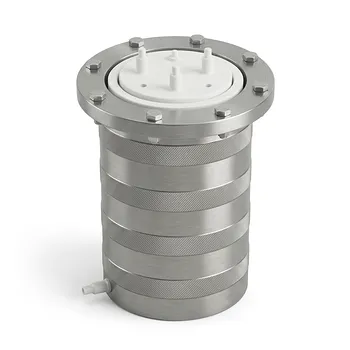
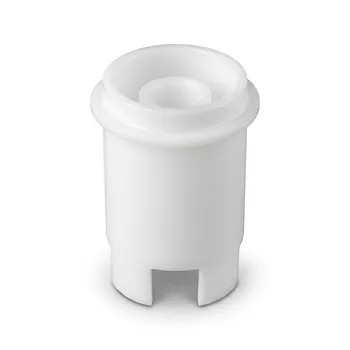
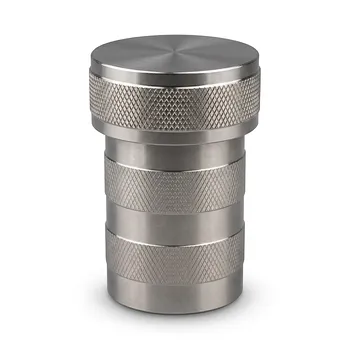
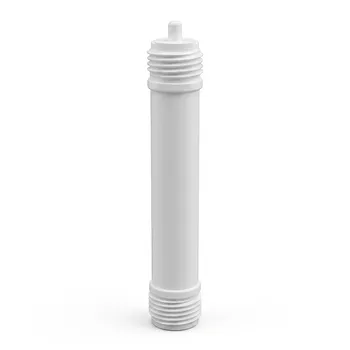
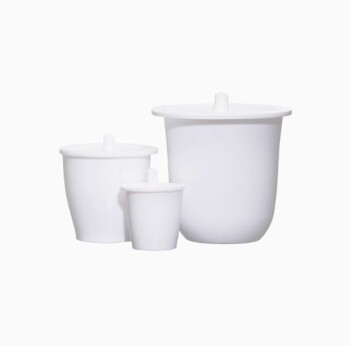
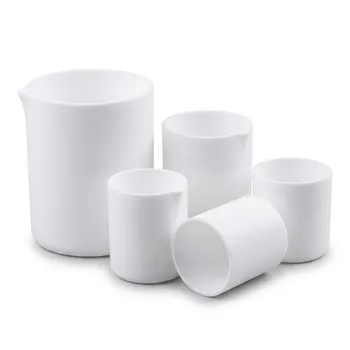
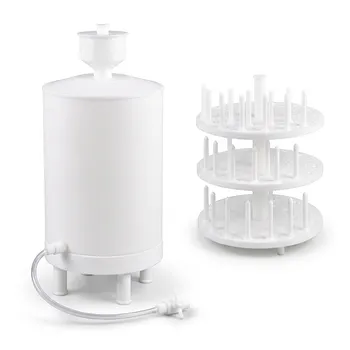
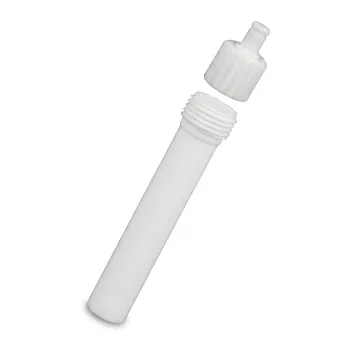
The PTFE-lined stainless steel high-pressure autoclave serves as the primary reactor for the hydrothermal synthesis and post-synthetic modification of TS-1 molecular sieves. This specialized vessel creates a controlled, high-temperature, and high-pressure environment necessary for transforming silicon and titanium precursors into a crystalline framework. By combining the mechanical strength of steel with the chemical inertness of Polytetrafluoroethylene (PTFE), it ensures the structural integrity and catalytic purity of the resulting material.
The autoclave acts as a dual-function system: the stainless steel shell provides the structural support to withstand intense internal pressures, while the PTFE liner creates a chemically shielded environment that prevents contamination and facilitates the formation of active binuclear titanium sites.
Enabling Hydrothermal Crystallization
Maintaining High-Pressure Environments
The stainless steel outer shell of the autoclave provides the critical mechanical strength required to withstand autogenous pressure generated during heating. This pressure is essential for driving the hydrothermal crystallization process, where silicon and titanium sources are reorganized from a gel phase into a solid molecular sieve structure.
Facilitating Phase Transformation
By maintaining stable temperatures—often ranging from 150°C to 175°C—the autoclave enables the solvothermal synthesis required for TS-1. This heat facilitates the chemical reaction between precursors and organic ligands, ensuring the thorough mixing and precise formation of the sieve's nanostructure.
Optimizing Gas-Liquid Contact
The internal PTFE liner can be used to adjust the effective working volume of the reaction vessel. By tailoring the headspace, researchers can optimize the contact between gas and liquid phases, which is a vital factor in the efficiency of the crystallization process.
Facilitating Chemical Modification
Formation of Active Catalytic Sites
During the modification phase, the autoclave provides the necessary conditions for reagents like tetrapropylammonium bromide and ethanolamine to interact with the molecular sieve framework. This interaction at high temperatures induces the formation of binuclear titanium sites (Ti-O-Ti), which are the primary drivers of high catalytic activity in TS-1.
Ensuring Chemical Inertness
The PTFE lining is exceptionally stable and resistant to the highly alkaline reaction gels typically used in TS-1 synthesis. This inertness ensures that the reaction liquid does not erode the metallic outer shell, preventing the introduction of metal impurities that could compromise the catalyst's performance.
Streamlining Catalyst Recovery
The extremely smooth surface of the PTFE liner prevents the synthesized powder sediments from adhering strongly to the vessel walls. This characteristic facilitates the easy recovery and collection of solid precipitates once the reaction is complete.
Understanding the Trade-offs and Limitations
Temperature Constraints
While PTFE is highly chemical-resistant, it has a lower thermal threshold than stainless steel. Exceeding its safe operating temperature (typically around 220°C–250°C) can cause the liner to soften, deform, or release toxic vapors, potentially ruining the synthesis.
Thermal Lag and Gradient Issues
The thick walls of the stainless steel shell combined with the insulating properties of the PTFE liner can create a thermal lag. This means the internal reaction temperature may take significant time to reach the set point of the external oven, requiring careful calibration to ensure consistent crystallization.
Pressure Limitations of the Liner
If the seal between the PTFE lid and the liner body is not perfect, high-pressure steam can migrate between the liner and the steel wall. This "creeping" effect can cause the liner to collapse inward or trap corrosive liquids against the stainless steel, leading to hidden corrosion.
Applying This to Your Synthesis Goals
Strategic Recommendations for TS-1 Production
To achieve the best results in your molecular sieve synthesis, align your autoclave usage with your specific technical objectives:
- If your primary focus is maximizing catalytic activity: Ensure the autoclave remains sealed at high temperatures during the modification phase to promote the formation of Ti-O-Ti binuclear sites.
- If your primary focus is catalyst purity: Use a high-quality PTFE liner to shield the reaction from the stainless steel walls, preventing metal ions from catalyzing unwanted side reactions like hydrogen peroxide decomposition.
- If your primary focus is high yield and recovery: Rely on the non-stick properties of the PTFE surface to ensure all solid precipitates are easily harvested without loss or contamination.
- If your primary focus is experimental accuracy: Use the liner volume to precisely control the gas-liquid ratio, ensuring that your results reflect the performance of the catalyst rather than the limitations of the vessel.
The PTFE-lined autoclave is more than just a container; it is a precision tool that defines the structural and catalytic success of TS-1 molecular sieves.
Summary Table:
| Component | Primary Function | Key Benefit |
|---|---|---|
| Stainless Steel Shell | Mechanical support & pressure containment | Maintains safety during high-pressure hydrothermal growth |
| PTFE Liner | Chemical shielding & inertness | Prevents metal contamination and facilitates catalyst recovery |
| Internal Volume | Gas-liquid phase regulation | Optimizes contact for efficient crystallization and site formation |
Elevate Your Molecular Sieve Synthesis with KINTEK
Maximize the precision and purity of your TS-1 production with KINTEK’s industry-leading fluoropolymer solutions. From everyday basic labware like beakers, crucibles, and reagent bottles to high-purity trace analysis instruments and cleaning tanks, we provide the tools necessary for rigorous scientific environments.
Our expertise extends to comprehensive fluid transfer components (tubing, fittings, valves), sample prep tools (filters, pipettes, tweezers), and general consumables (O-rings, gaskets, seal tapes). For specialized research, we offer advanced reaction apparatus, including hydrothermal synthesis liners, microwave digestion vessels, and custom electrochemical cells.
Backed by end-to-end custom CNC fabrication, KINTEK is equipped to deliver everything from complex non-standard machined parts to high-volume orders, maintaining an absolute focus on high-performance PTFE and PFA.
Achieve superior synthesis results — Contact KINTEK today!
References
- K. Kim, Ja Hun Kwak. Self-driven propylene epoxidation on modified titanium silicalite-1 by in situ generated hydrogen peroxide. DOI: 10.1038/s41467-025-63828-x
This article is also based on technical information from Kintek Knowledge Base .
Related Products
- Custom TFM Reaction Vessel with Stainless Steel Jacket and PTFE Inner Cup for High Corrosion Resistance
- PTFE Lined High Pressure Digestion Vessel 50ml High Temperature Hydrothermal Synthesis Tank
- High Pressure Custom TFM Reactor Stainless Steel Outer Vessel PTFE Inner Cup for Corrosive Synthesis
- High Pressure PTFE Digestion Vessel Inner Cup Holder Custom Corrosion Resistant Low Background Teflon
- High Temperature Corrosion Resistant Hydrothermal Synthesis Reactor with TFM Inner Liner and Straight Cylinder Design
People Also Ask
- Why is a Polytetrafluoroethylene (PTFE) lined reaction vessel an ideal choice for preparing PtNPs/FeSAC tandem catalysts?
- Why are high-performance pressure-resistant reaction vessels required for oxygen-assisted hydrothermal conversion at 150 °C?
- Why are PTFE-lined reaction vessels necessary for forced degradation studies? Ensure high-purity results and accuracy.
- Why are high-quality fluoropolymer-lined reaction vessels required for alk-Ti3C2Tx MXene? Ensure Purity & HF Resistance
- How do magnetic stirring and reaction vessels impact MOF-derived carbon quality? Optimize Your Composite Performance