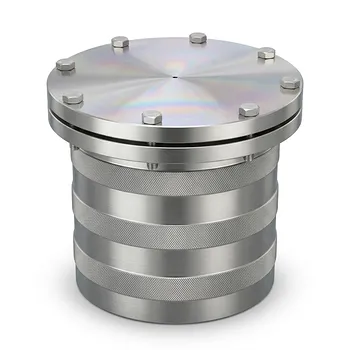
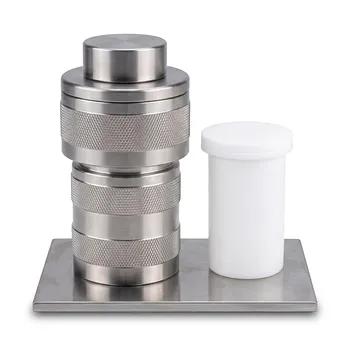
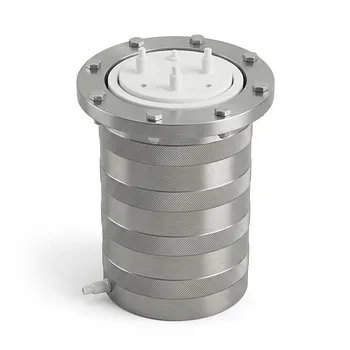
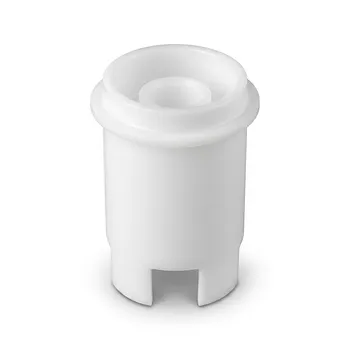
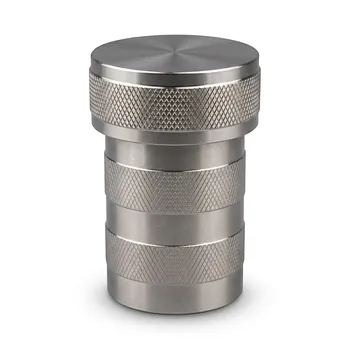
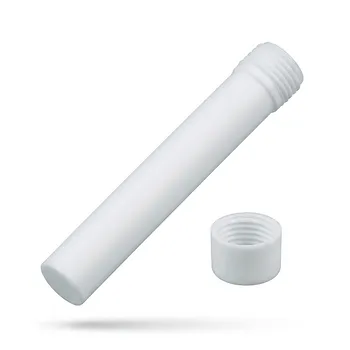
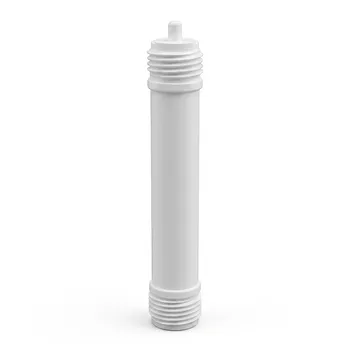
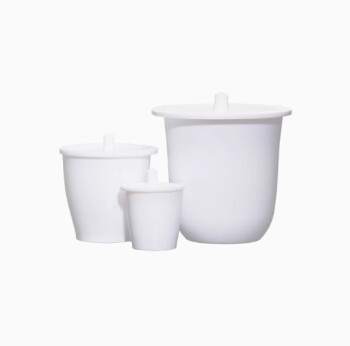
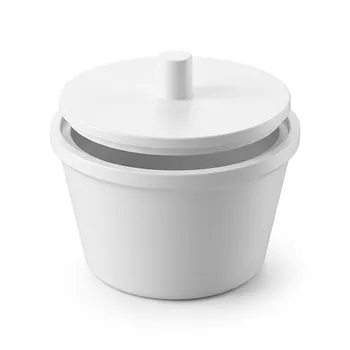
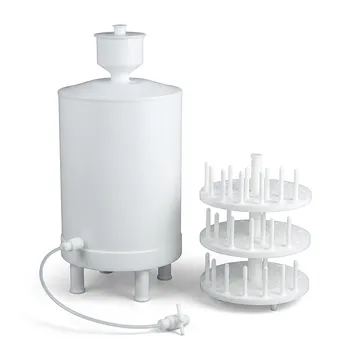
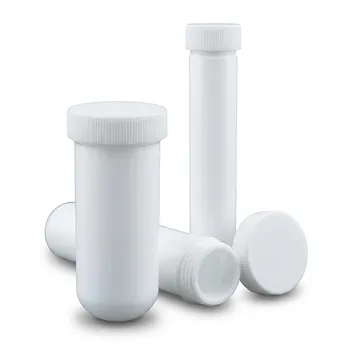
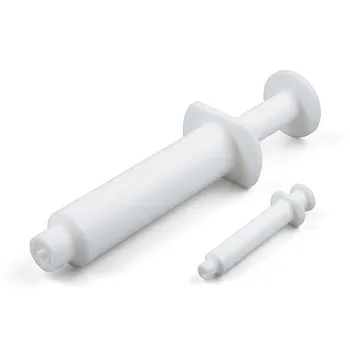
The PTFE-lined stainless steel high-pressure autoclave serves as a specialized reaction vessel that creates the high-temperature, high-pressure "hydrothermal" environment necessary for the carbonization of precursors into Yellow Fluorescent Carbon Dots (Y-CDs). By isolating the reaction within a chemically inert chamber, it allows for sufficient dehydration and doping while preventing metallic contamination that would otherwise degrade the dots' optical properties.
The autoclave provides a synergistic environment where the stainless steel shell maintains mechanical integrity under pressure, while the PTFE liner ensures chemical purity. This combination is essential for achieving the subcritical conditions required to transform organic precursors into high-purity, fluorescent nanostructures.
The Mechanical and Chemical Architecture of the Vessel
The Stainless Steel Shell as a Pressure Vessel
The outer stainless steel body provides the necessary mechanical strength to withstand the autogenous pressure generated as the internal liquid is heated. This pressure allows the reaction to occur at temperatures well above the normal boiling point of the solvent, a state known as a hydrothermal or solvothermal environment.
The PTFE Liner as a Chemical Shield
The Polytetrafluoroethylene (PTFE) liner is prized for its extreme chemical inertness and high-temperature stability. It acts as a barrier, preventing corrosive precursors—such as ammonia solutions or acidic components—from attacking the metal walls of the autoclave and compromising the vessel's structural integrity.
Facilitating Material Recovery
The extremely smooth surface of the PTFE lining plays a practical role in the laboratory. It prevents synthesized carbon dots and solid precipitates from adhering to the walls, which facilitates the efficient recovery and collection of the final Y-CD powder.
Facilitating the Chemical Transformation of Y-CDs
Achieving Subcritical Reaction Conditions
By sealing the precursors in a closed system, the autoclave enables temperatures (such as 180°C to 220°C) that facilitate heterogeneous reactions. These conditions promote the dissolution and recrystallization of precursors, which is vital for achieving the uniform morphology required for stable fluorescence.
Promoting Dehydration and Carbonization
The high-pressure environment forces the synergistic interaction between chemical components, driving the dehydration and polycondensation of organic precursors. This intensive process is what allows the molecular building blocks to reorganize into the carbonized core of the Y-CDs.
Enabling Precise Doping
For yellow-emitting dots, the autoclave environment ensures that doping reactions occur thoroughly. The controlled heat and pressure allow dopants to integrate into the carbon lattice, which is the primary mechanism for tuning the electronic structure to produce a yellow fluorescent signal.
Maintaining Purity and Optical Integrity
Preventing Metallic Contamination
Direct contact between the reaction mixture and the stainless steel walls can introduce metal ion impurities into the carbon dots. The PTFE liner eliminates this risk, ensuring that the synthesized Y-CDs remain high-purity and free from unintended metallic influences.
Protecting Optical Stability
The purity maintained by the PTFE liner is directly linked to the photophysical properties of the Y-CDs. Even trace amounts of metallic impurities can quench fluorescence or shift the emission wavelength, making the inert environment of the autoclave critical for consistent optical performance.
Understanding the Trade-offs
Temperature and Pressure Limitations
While highly effective, PTFE has a thermal threshold (typically around 250°C) beyond which it can deform or release toxic vapors. Researchers must carefully balance the need for high-temperature carbonization with the material limits of the liner to avoid vessel failure.
The "Black Box" Nature of the Reaction
Hydrothermal synthesis in an autoclave is a "closed-door" process, meaning researchers cannot observe the reaction in real-time. This requires precise pre-calculation of precursor concentrations and heating durations, as the internal dynamics are governed entirely by the autogenous pressure generated during the cycle.
How to Apply This to Your Project
Making the Right Choice for Your Goal
- If your primary focus is High Quantum Yield: Ensure the PTFE liner is pristine and free of scratches to prevent any trace metal leaching that could quench fluorescence.
- If your primary focus is Morphological Uniformity: Prioritize the "fill degree" of the autoclave (usually 60-80%) to maintain optimal autogenous pressure for consistent nanoparticle growth.
- If your primary focus is Scalability: Recognize that hydrothermal synthesis is a batch process; consistent heating rates across multiple autoclaves are required to ensure batch-to-batch reproducibility of the Y-CDs.
The PTFE-lined autoclave is the indispensable engine of hydrothermal synthesis, transforming simple organic precursors into sophisticated fluorescent nanomaterials through controlled high-energy environments.
Summary Table:
| Component | Primary Function | Impact on Y-CD Synthesis |
|---|---|---|
| Stainless Steel Shell | Mechanical Strength | Withstands high pressure for subcritical reaction conditions. |
| PTFE Liner | Chemical Inertness | Prevents metallic contamination and protects optical properties. |
| Smooth Interior | Low Adhesion | Ensures high material recovery rates of synthesized nanopowders. |
| Sealed System | Autogenous Pressure | Drives the dehydration, carbonization, and precise doping of precursors. |
Elevate Your Nanomaterial Synthesis with KINTEK Precision
High-performance fluoropolymers are critical to the success of hydrothermal synthesis and trace analysis. At KINTEK, we specialize in the engineering and fabrication of premium PTFE and PFA laboratory solutions designed to withstand the most demanding chemical environments.
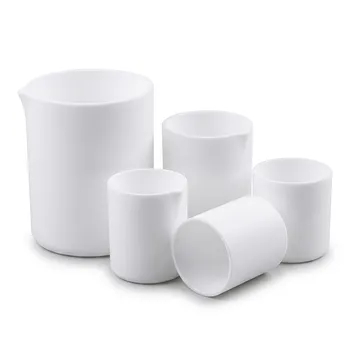
Whether you require everyday essentials like beakers, crucibles, and reagent bottles, or advanced reaction apparatus such as hydrothermal synthesis liners, microwave digestion vessels, and custom electrochemical cells, our end-to-end CNC fabrication ensures your equipment meets exact specifications. From complex non-standard machined parts to high-volume consumables like O-rings, gaskets, and tubing, we provide the absolute focus on material purity that your research demands.
Ready to optimize your lab's performance? Contact KINTEK today to discuss your custom project or browse our comprehensive catalog of high-performance labware.
References
- Hongyuan Zhang, Ce Han. Portable Bacterial Cellulose-Based Fluorescent Sensor for Rapid and Sensitive Detection of Copper in Food and Environmental Samples. DOI: 10.3390/molecules30173633
This article is also based on technical information from Kintek Knowledge Base .
Related Products
- Custom TFM Reaction Vessel with Stainless Steel Jacket and PTFE Inner Cup for High Corrosion Resistance
- PTFE Lined High Pressure Digestion Vessel 50ml High Temperature Hydrothermal Synthesis Tank
- High Pressure Custom TFM Reactor Stainless Steel Outer Vessel PTFE Inner Cup for Corrosive Synthesis
- High Pressure PTFE Digestion Vessel Inner Cup Holder Custom Corrosion Resistant Low Background Teflon
- High Temperature Corrosion Resistant Hydrothermal Synthesis Reactor with TFM Inner Liner and Straight Cylinder Design
People Also Ask
- Why are high-performance pressure-resistant reaction vessels required for oxygen-assisted hydrothermal conversion at 150 °C?
- How do magnetic stirring and reaction vessels impact MOF-derived carbon quality? Optimize Your Composite Performance
- Why are high-quality fluoropolymer-lined reaction vessels required for alk-Ti3C2Tx MXene? Ensure Purity & HF Resistance
- Why are PTFE-lined reaction vessels necessary for forced degradation studies? Ensure high-purity results and accuracy.
- Why is a high-purity PTFE lined reaction vessel required for the acidic etching of MXenes? Ensure Material Purity.