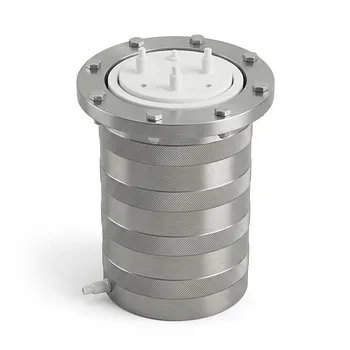
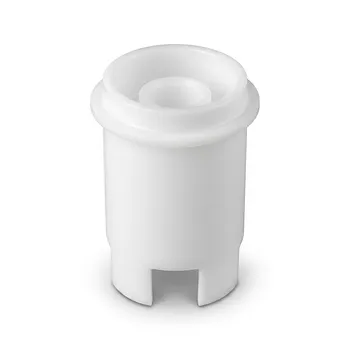
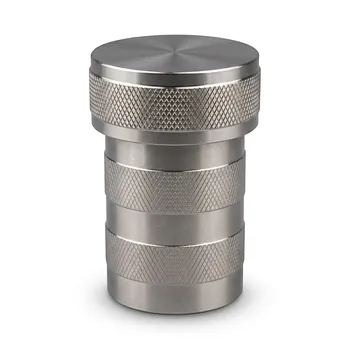
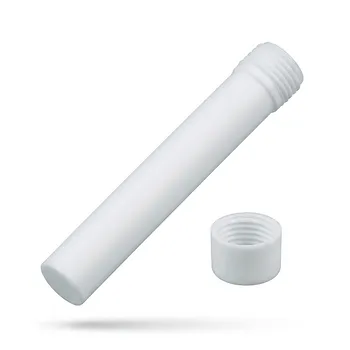
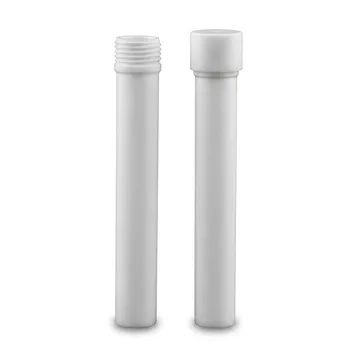
The role of a PTFE-lined stainless steel high-pressure autoclave in nanobelt synthesis is to provide a sealed, chemically inert environment capable of sustaining high temperatures and autogenous pressures. This specialized vessel allows precursor solutions to undergo controlled thermal decomposition and steady reaction, facilitating the precise nucleation and growth of one-dimensional (1D) nanostructures like nanobelts while preventing contamination.
A PTFE-lined autoclave functions as a micro-reactor that leverages the mechanical strength of steel and the chemical resistance of Teflon to create extreme conditions. This combination is essential for driving the hydrothermal reactions necessary to form high-purity, crystalline nanostructures that cannot be synthesized at ambient pressure.
The Structural Synergy of the Autoclave Components
The Stainless Steel Shell as a Pressure Vessel
The outer stainless steel shell serves as the primary mechanical support for the system. It is designed to withstand the significant autogenous pressure—the pressure generated naturally by the heating of a liquid in a sealed space—that occurs during hydrothermal synthesis.
The PTFE Liner as a Chemical Shield
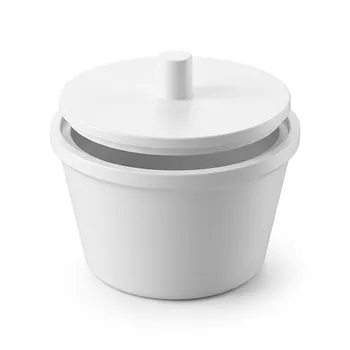
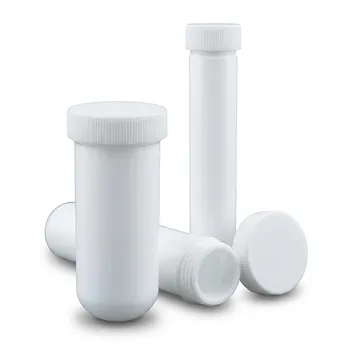
The Polytetrafluoroethylene (PTFE) liner, often called a Teflon liner, provides exceptional chemical inertness. It acts as a barrier that prevents acidic, alkaline, or corrosive precursors from attacking the metallic walls of the autoclave.
Maintaining System Purity
By isolating the reaction from the steel shell, the PTFE liner ensures that no metallic impurities are introduced into the synthesis system. This is critical for maintaining the high purity of nanobelts, which directly impacts their subsequent electronic or catalytic performance.
Creating the Physical Conditions for Nanobelt Growth
Generating Necessary Thermal Energy
The autoclave allows reactions to proceed at elevated temperatures, often reaching 150 °C to 230 °C. This high-temperature environment provides the energy required for precursor molecules to decompose and reorganize into complex structures like Zn-doped molybdenum trioxide nanobelts.
Promoting Precise Nucleation
The high-pressure environment within the sealed vessel is the physical basis for promoting the nucleation and growth of nanocrystals. Under these conditions, the solubility of precursors changes, allowing for a more thorough mixing and uniform growth of the 1D nanostructure.
Controlling Morphological Development
The stable reaction space provided by the autoclave is essential for achieving high-crystallinity single-phase products. The consistent pressure and temperature allow the nanobelts to grow along a specific axis, ensuring a regular and predictable morphology.
Understanding the Trade-offs and Limitations
Temperature Constraints of PTFE
While PTFE is highly inert, it has a clear thermal limit, typically losing structural integrity above 250 °C. Using the autoclave beyond its rated temperature can lead to liner deformation or the release of toxic vapors, potentially ruining the synthesis.
The Critical Filling Ratio
The pressure inside the vessel is highly dependent on the filling ratio (the volume of liquid relative to the total volume of the liner). Overfilling the autoclave can lead to an exponential increase in pressure as the liquid expands, creating a significant safety risk or mechanical failure.
Heat Transfer Delays
Because both the stainless steel shell and the PTFE liner are thick, there is a thermal lag between the oven temperature and the internal solution temperature. Researchers must account for this "ramp-up" time to ensure the reaction proceeds for the intended duration at the target temperature.
How to Apply This to Your Synthesis Project
Making the Right Choice for Your Goal
- If your primary focus is high-purity electronic materials: Ensure your PTFE liner is thoroughly cleaned with aqua regia or acid washes between uses to prevent cross-contamination of ions.
- If your primary focus is morphology control (e.g., nanobelts): Closely monitor the filling ratio and reaction temperature, as these two factors dictate the autogenous pressure that drives 1D growth.
- If your primary focus is safety and equipment longevity: Never exceed the manufacturer's maximum temperature rating for the PTFE liner, usually 200-220 °C for standard units.
By mastering the balance of pressure, temperature, and chemical isolation, you can consistently produce high-quality nanobelts with precise structural properties.
Summary Table:
| Component/Factor | Primary Role in Synthesis | Key Benefit for Nanobelts |
|---|---|---|
| Stainless Steel Shell | Mechanical pressure containment | Withstands autogenous pressure for growth |
| PTFE (Teflon) Liner | Chemical isolation & inertness | Prevents metallic contamination; high purity |
| High Temperature | Thermal decomposition energy | Drives precursor reorganization into 1D shapes |
| Autogenous Pressure | Solubility & nucleation control | Promotes single-phase crystalline morphology |
| Sealed Environment | Stable reaction micro-reactor | Ensures uniform growth along a specific axis |
Elevate Your Synthesis Precision with KINTEK Fluoropolymer Solutions
Achieving high-purity nanostructures requires equipment that never compromises on chemical integrity. KINTEK specializes in high-performance fluoropolymer manufacturing, providing the essential tools for advanced hydrothermal synthesis and trace analysis.
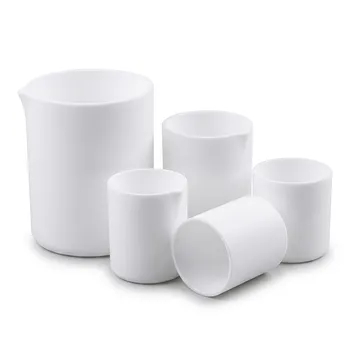
From everyday basic labware—including beakers, crucibles, reagent bottles, and digestion tubes—to comprehensive fluid transfer components (tubing, fittings, valves) and sample prep tools (filters, pipettes, tweezers), we cover every stage of your workflow. Our expertise extends to advanced reaction apparatus such as hydrothermal synthesis liners, microwave digestion vessels, and custom electrochemical cells.
Why choose KINTEK?
- Comprehensive Range: We manufacture virtually all laboratory supplies crafted from PTFE and PFA, including O-rings, gaskets, and stirring bars.
- Custom Engineering: Backed by end-to-end custom CNC fabrication, we deliver everything from high-volume orders to complex, non-standard machined parts tailored to your specific research needs.
- Material Excellence: Our absolute focus on high-performance fluoropolymers ensures your reactions remain free from contamination.
Ready to optimize your laboratory setup with bespoke fluoropolymer components? Contact KINTEK today to discuss your custom requirements!
References
- Linjie Zhang, Lili Han. A Hydrazine‒Water Galvanic Cell‐Inspired Self‐Powered High‐Rate Hydrogen Production via Overall Hydrazine Electrosplitting. DOI: 10.1002/adfm.202420163
This article is also based on technical information from Kintek Knowledge Base .
Related Products
- Custom TFM Reaction Vessel with Stainless Steel Jacket and PTFE Inner Cup for High Corrosion Resistance
- PTFE Lined High Pressure Digestion Vessel 50ml High Temperature Hydrothermal Synthesis Tank
- High Pressure Custom TFM Reactor Stainless Steel Outer Vessel PTFE Inner Cup for Corrosive Synthesis
- High Pressure PTFE Digestion Vessel Inner Cup Holder Custom Corrosion Resistant Low Background Teflon
- High Temperature Corrosion Resistant Hydrothermal Synthesis Reactor with TFM Inner Liner and Straight Cylinder Design
People Also Ask
- Why are high-performance pressure-resistant reaction vessels required for oxygen-assisted hydrothermal conversion at 150 °C?
- Why are PTFE-lined reaction vessels necessary for forced degradation studies? Ensure high-purity results and accuracy.
- Why are high-quality fluoropolymer-lined reaction vessels required for alk-Ti3C2Tx MXene? Ensure Purity & HF Resistance
- How do magnetic stirring and reaction vessels impact MOF-derived carbon quality? Optimize Your Composite Performance
- Why is a high-purity PTFE lined reaction vessel required for the acidic etching of MXenes? Ensure Material Purity.