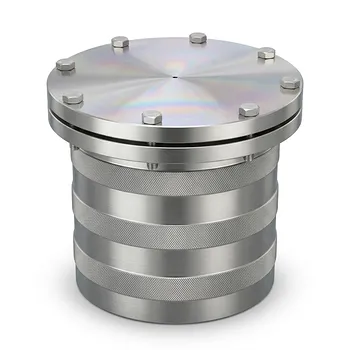
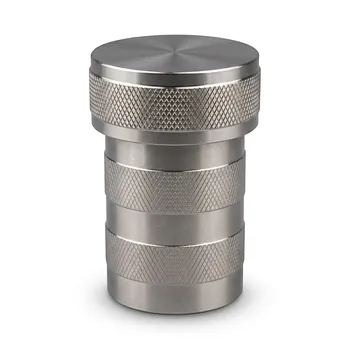
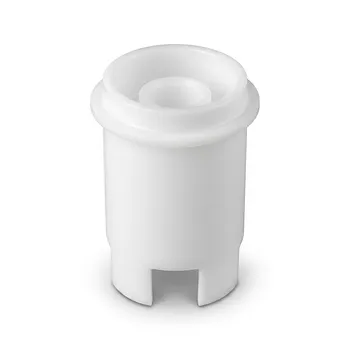
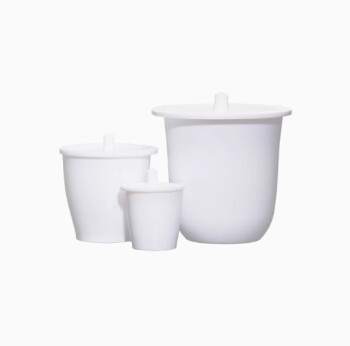
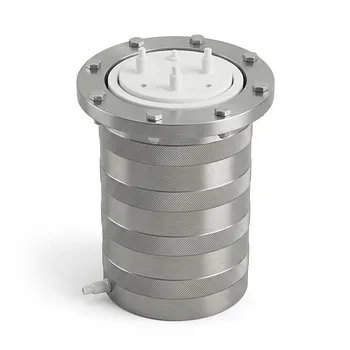
The Teflon-lined stainless steel high-pressure autoclave serves as the primary reactor for the solvothermal synthesis of Cox-Sub-CuS catalysts. It provides a strictly controlled, high-pressure environment at 140 °C that is essential for driving the necessary redox and sulfurization processes. This specific environment enables the precise introduction of cobalt atoms into the sub-surface of the copper sulfide (CuS) lattice and the creation of abundant sulfur vacancy defects.
Core Takeaway: The autoclave acts as a specialized chemical pressure cooker, utilizing high autogenous pressure to force atomic-level transformations, such as cobalt doping and defect engineering, while protecting the material from contamination.
The Physical Drivers of Catalyst Customization
Driving Redox and Sulfurization Chemistry
The high-pressure environment within the autoclave is the core physical condition required for the redox and sulfurization processes. These reactions allow the precursors to interact at energy levels that are unattainable at standard atmospheric boiling points.
By maintaining a sealed state, the solvent remains liquid well above its normal boiling point, facilitating a more thorough and efficient reaction between the metal sources and sulfur precursors.
Inducing Structural Defects and Atomic Integration
The autoclave environment is specifically tuned to induce abundant sulfur vacancy defects within the catalyst structure. These vacancies are critical for enhancing the catalytic activity of the resulting nanosheets.
Furthermore, the pressurized conditions ensure the successful introduction of cobalt atoms into the sub-surface of the CuS lattice. This sub-surface integration is a key step in customizing the catalyst’s electronic structure and improving its overall performance.
The Synergistic Design of the Reactor
Stainless Steel for Mechanical Containment
The external stainless steel casing provides the mechanical strength necessary to withstand the high internal autogenous pressures generated at synthesis temperatures. Without this rigid outer shell, the reactor would be unable to maintain the pressure levels required for crystalline growth and phase formation.
This containment allows the internal temperature to reach 140 °C or higher, ensuring that the kinetic energy of the reactants is sufficient for efficient coordination self-assembly.
Teflon (PTFE) for Chemical Inertness and Purity
The Polytetrafluoroethylene (PTFE) liner is utilized for its exceptional chemical stability and corrosion resistance. It acts as a barrier that prevents the reaction liquid—often consisting of corrosive salts and organic solvents—from eroding the metal walls of the autoclave.
This prevents the introduction of metal impurities from the stainless steel into the catalyst. Ensuring high purity is vital for maintaining the integrity of the Cox-Sub-CuS nanosheets and preventing unwanted side reactions.
Facilitating Material Recovery
The extremely smooth surface of the Teflon lining is a practical advantage for researchers. It facilitates the recovery and collection of the synthesized solid precipitates (powder sediments) after the reaction is complete.
Understanding the Trade-offs and Constraints
Temperature and Pressure Limitations
While Teflon is highly inert, it has a functional temperature ceiling, typically around 250 °C. Operating the autoclave beyond its rated temperature can lead to the deformation of the liner or the release of toxic vapors.
Similarly, the pressure within the vessel is "autogenous," meaning it is generated by the heating of the solvent. Users must be careful with the filling degree (usually 60-80%); overfilling can lead to extreme pressure spikes that may compromise the safety seals of the stainless steel shell.
Complexity of Defect Control
While the autoclave facilitates the creation of sulfur vacancies, the process is highly sensitive. Slight variations in temperature stability or ramp rates can lead to inconsistent defect densities, which may result in variability between different batches of the Cox-Sub-CuS catalyst.
How to Apply This to Your Project
Recommendations for Catalyst Synthesis
- If your primary focus is maximizing catalyst purity: Ensure the Teflon liner is free of scratches or degradation, as any exposure of the stainless steel to the precursors will introduce iron, nickel, or chromium impurities.
- If your primary focus is engineering specific defects: Maintain strict control over the reaction temperature (e.g., exactly 140 °C) and the cooling rate, as these parameters directly dictate the concentration of sulfur vacancies.
- If your primary focus is equipment longevity: Never exceed the recommended filling volume and thoroughly clean the PTFE liner with an appropriate solvent after each run to prevent the buildup of residual precursors.
By mastering the high-pressure environment of the autoclave, researchers can precisely dictate the atomic architecture of advanced catalysts for superior performance.
Summary Table:
| Component | Material | Primary Function | Synthesis Benefit |
|---|---|---|---|
| External Casing | Stainless Steel | Mechanical Containment | Supports high-pressure redox & sulfurization |
| Internal Liner | PTFE (Teflon) | Chemical Inertness | Prevents metal contamination & aids recovery |
| Reaction Space | Sealed Cavity | Pressure Generation | Facilitates Co-doping & defect engineering |
Elevate Your Material Synthesis with KINTEK’s Precision Fluoropolymer Engineering
Looking to optimize your solvothermal synthesis or high-pressure catalyst research? KINTEK is your premier partner for high-performance laboratory supplies crafted from premium PTFE and PFA.
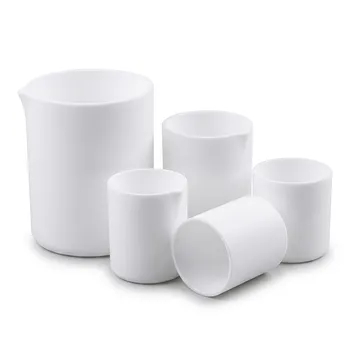
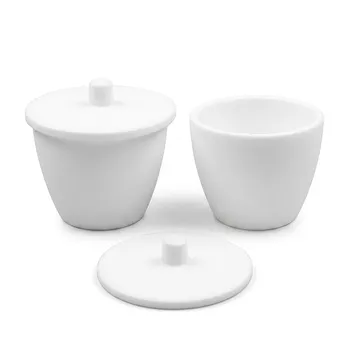
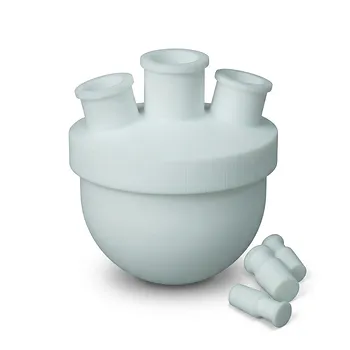
From everyday basic labware like beakers, crucibles, and reagent bottles to advanced reaction apparatus such as hydrothermal synthesis liners, microwave digestion vessels, and custom electrochemical cells, we deliver the precision your science demands. Backed by end-to-end custom CNC fabrication, we are equipped to deliver everything from complex non-standard machined parts and bespoke laboratory setups to high-volume orders, maintaining an absolute focus on high-performance materials.
Ready to customize your lab setup for superior results?
Contact KINTEK Today to source everything from standard tubing and fittings to bespoke reaction vessels tailored to your specific research needs.
References
- Ming-Zheng Gu, Guangfeng Wang. Subsurface engineering for directional-selective CO₂-to-ethanol electrocatalysis at industrial-level. DOI: 10.1038/s41467-025-67176-8
This article is also based on technical information from Kintek Knowledge Base .
Related Products
- Custom TFM Reaction Vessel with Stainless Steel Jacket and PTFE Inner Cup for High Corrosion Resistance
- PTFE Lined High Pressure Digestion Vessel 50ml High Temperature Hydrothermal Synthesis Tank
- High Temperature Corrosion Resistant Hydrothermal Synthesis Reactor with TFM Inner Liner and Straight Cylinder Design
- High Pressure PTFE Digestion Vessel Inner Cup Holder Custom Corrosion Resistant Low Background Teflon
- Customizable PTFE Crucibles for Laboratory and Industrial Applications
People Also Ask
- Why are high-performance pressure-resistant reaction vessels required for oxygen-assisted hydrothermal conversion at 150 °C?
- Why are high-quality fluoropolymer-lined reaction vessels required for alk-Ti3C2Tx MXene? Ensure Purity & HF Resistance
- How do magnetic stirring and reaction vessels impact MOF-derived carbon quality? Optimize Your Composite Performance
- Why are PTFE-lined reaction vessels necessary for forced degradation studies? Ensure high-purity results and accuracy.
- Why is a high-purity PTFE lined reaction vessel required for the acidic etching of MXenes? Ensure Material Purity.