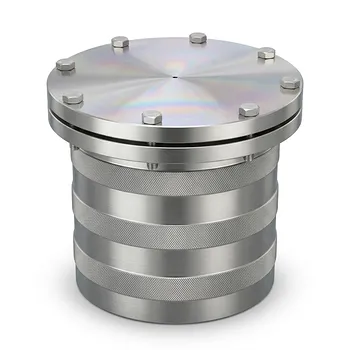
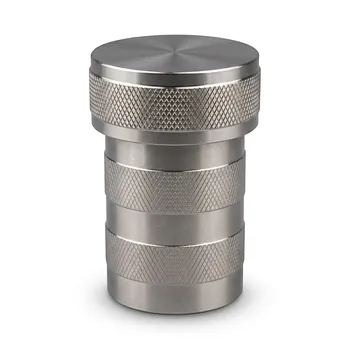
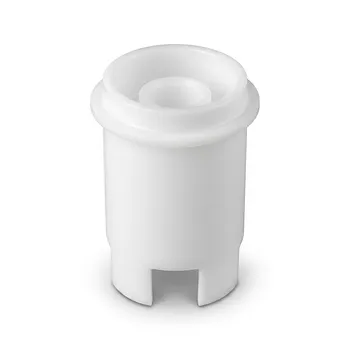
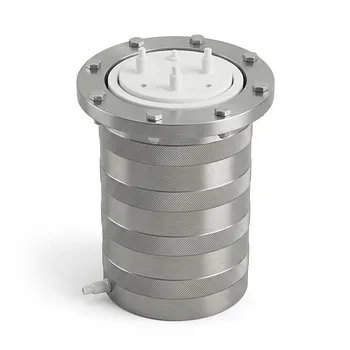
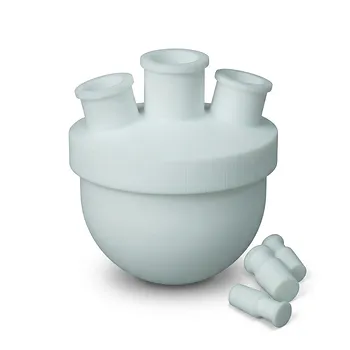
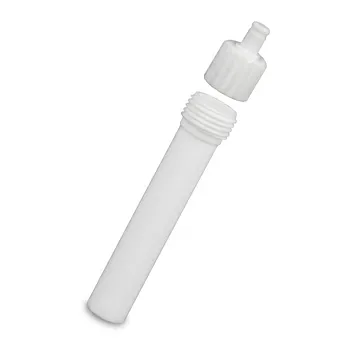
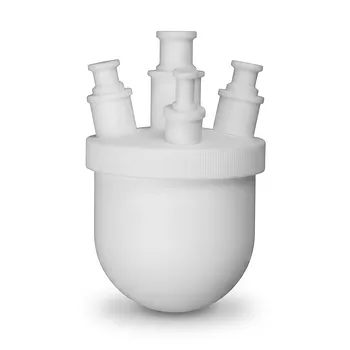
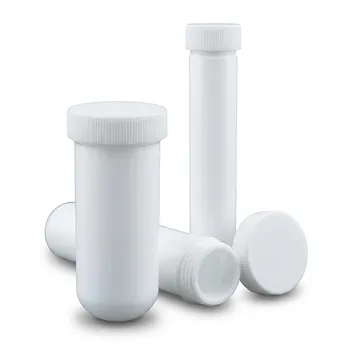
The primary function of a Teflon-lined stainless steel autoclave is to create a controlled, high-pressure environment for the crystallization of high-entropy layered double hydroxide (HE-LDH) precursors. This device provides the thermal energy and autogenous pressure necessary for metal acetate components to react thoroughly, while the internal lining prevents chemical contamination from the outer metal shell.
Core Takeaway: The autoclave acts as a specialized pressure vessel that balances mechanical strength with chemical inertness, enabling the synthesis of high-purity, crystalline nano-precursors that would be impossible to produce under standard atmospheric conditions.
Creating the High-Pressure Hydrothermal Environment
Achieving Supercritical Conditions for Metal Acetates
In the synthesis of HE-LDH, the autoclave allows the precursor solution to reach temperatures well above the boiling point of the solvent. This high-temperature and high-pressure environment is essential for the deep reaction and subsequent crystallization of complex metal acetate components.
Providing Necessary Mechanical Strength
The external stainless steel casing serves as the structural backbone of the system. It provides the mechanical integrity required to safely contain the high internal autogenous pressures generated during the heating process, which can reach significant levels at temperatures like 180°C or higher.
Facilitating Uniform Crystal Growth
By maintaining a sealed and constant-pressure environment, the autoclave ensures that the nucleation and growth of HE-LDH particles occur uniformly. This stability is vital for achieving the specific structural characteristics and structural stability required for high-entropy materials.
The Critical Role of the Teflon (PTFE) Liner
Preventing Chemical Corrosion
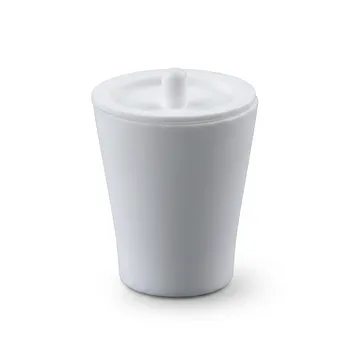
The internal polytetrafluoroethylene (PTFE) lining is chosen for its exceptional chemical inertness. It acts as a sacrificial barrier that prevents the aggressive reaction liquid—which may contain corrosive acetates or alkaline agents—from eroding the stainless steel walls of the pressure vessel.
Ensuring High Purity of Nano-Precursors
Without the Teflon liner, metal ions from the stainless steel shell could leach into the reaction solution. The liner ensures an ultra-high purity environment, preventing the introduction of unwanted metal impurities that would otherwise degrade the performance and structural integrity of the HE-LDH.
Resisting Extreme Chemical Environments
Teflon is uniquely suited to withstand the strong alkaline or acidic conditions often required for hydrothermal synthesis. This resistance allows researchers to utilize a wide range of precursors and pH levels without risking damage to the expensive high-pressure equipment.
Understanding the Trade-offs and Limitations
Temperature and Pressure Thresholds
While Teflon is highly inert, it has a physical limit; it typically cannot be used for reactions exceeding 240°C to 260°C. Beyond these temperatures, the liner may soften or deform, compromising the seal and potentially leading to a dangerous release of pressure.
Thermal Lag and Heating Rates
PTFE is an effective thermal insulator, which creates a thermal lag between the laboratory oven and the actual reaction solution. This means the internal temperature may rise more slowly than the external environment, requiring precise calibration for time-sensitive synthesis protocols.
Maintenance and Wear
Repeated exposure to high-pressure cycles can lead to "creeping" or slight deformation of the Teflon liner over time. Regular inspection is necessary to ensure the airtight seal remains intact, as even minor leaks can disrupt the crystallization process and result in failed HE-LDH batches.
How to Apply This to Your Project
Recommendations for HE-LDH Synthesis
- If your primary focus is Maximum Purity: Always inspect the Teflon liner for staining or pitting before use to ensure no cross-contamination from previous synthesis cycles occurs.
- If your primary focus is High-Crystallinity: Ensure the stainless steel bolts are tightened evenly in a cross-pattern to maintain a perfect seal, allowing autogenous pressure to reach its maximum theoretical value.
- If your primary focus is Safety and Longevity: Never exceed the manufacturer's maximum temperature rating for the Teflon liner, and allow the autoclave to cool naturally to room temperature before opening.
By mastering the balance between the structural strength of steel and the chemical resistance of Teflon, you can consistently produce high-quality, high-entropy materials for advanced applications.
Summary Table:
| Component | Primary Function | Key Benefit |
|---|---|---|
| Stainless Steel Shell | Mechanical containment | Safety under high autogenous pressure |
| Teflon (PTFE) Liner | Chemical barrier | Prevents corrosion & ensures high purity |
| Sealing System | Pressure maintenance | Enables uniform nucleation & crystal growth |
Elevate your hydrothermal synthesis with KINTEK’s high-performance fluoropolymer solutions. From everyday basic labware like beakers, crucibles, and reagent bottles to specialized hydrothermal synthesis liners and microwave digestion vessels, we provide the purity and precision your research demands.
Our expertise extends from comprehensive fluid transfer components (tubing, fittings, valves) and sample prep tools to advanced custom-machined electrochemical cells and reaction apparatus. Backed by end-to-end custom CNC fabrication, KINTEK maintains an absolute focus on high-performance PTFE and PFA materials to deliver everything from high-volume consumables to bespoke laboratory setups.
Ready to optimize your lab's performance? Contact us today to discuss your custom requirements!
References
- Jiayao Fan, Wei Huang. Defect‐Rich High‐Entropy Spinel Oxide as an Efficient and Robust Oxygen Evolution Catalyst for Seawater Electrolysis. DOI: 10.1002/sus2.70010
This article is also based on technical information from Kintek Knowledge Base .
Related Products
- Custom TFM Reaction Vessel with Stainless Steel Jacket and PTFE Inner Cup for High Corrosion Resistance
- PTFE Lined High Pressure Digestion Vessel 50ml High Temperature Hydrothermal Synthesis Tank
- High Temperature Corrosion Resistant Hydrothermal Synthesis Reactor with TFM Inner Liner and Straight Cylinder Design
- High Pressure PTFE Digestion Vessel Inner Cup Holder Custom Corrosion Resistant Low Background Teflon
- Customizable PTFE Crucibles for Laboratory and Industrial Applications
People Also Ask
- Why are high-performance pressure-resistant reaction vessels required for oxygen-assisted hydrothermal conversion at 150 °C?
- Why are PTFE-lined reaction vessels necessary for forced degradation studies? Ensure high-purity results and accuracy.
- How do magnetic stirring and reaction vessels impact MOF-derived carbon quality? Optimize Your Composite Performance
- Why are high-quality fluoropolymer-lined reaction vessels required for alk-Ti3C2Tx MXene? Ensure Purity & HF Resistance
- Why is a high-purity PTFE lined reaction vessel required for the acidic etching of MXenes? Ensure Material Purity.