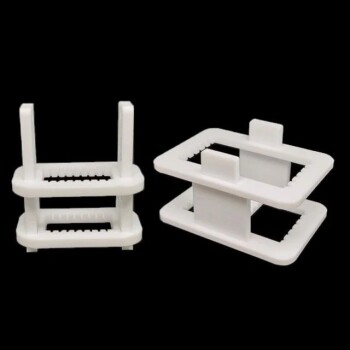
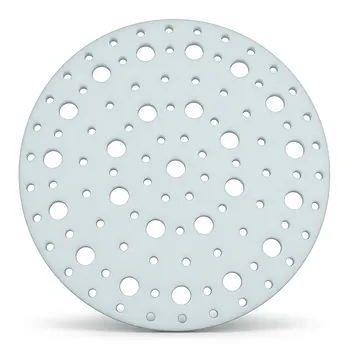
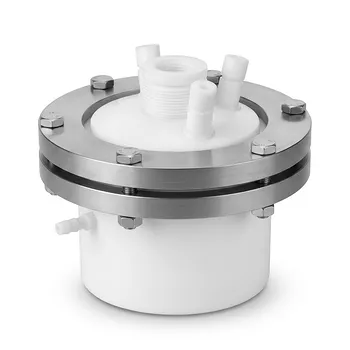
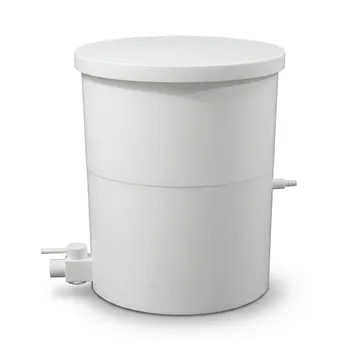
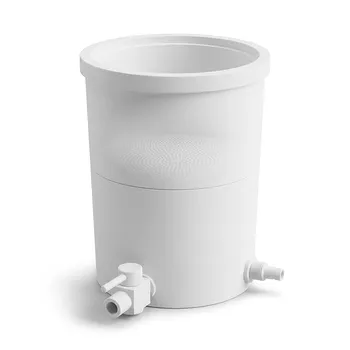
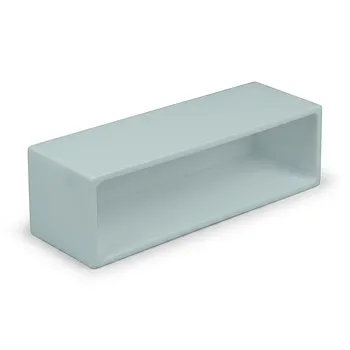
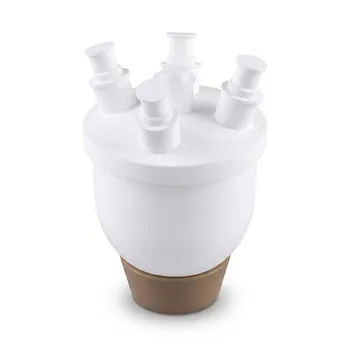
The Polytetrafluoroethylene (PTFE) substrate fixture is a specialized positioning tool used to isolate and stabilize growth surfaces during hydrothermal synthesis. It functions by suspending a single-crystal substrate at a precise orientation within a precursor solution, ensuring that thin film growth occurs through uniform ion diffusion rather than random precipitation. This spatial control is the primary mechanism for achieving epitaxial films with high surface flatness, continuity, and purity.
The PTFE fixture acts as both a physical spacer and a chemical shield, balancing mass transfer kinetics while protecting the growth environment from contamination. It is the critical hardware component that transforms a bulk chemical reaction into a controlled, high-precision epitaxial growth process.
Optimizing Film Morphology and Uniformity
Prevention of Sediment Interference
The primary role of the fixture is to suspend the substrate vertically, horizontally, or at a specific angle to avoid contact with the vessel floor. This prevents bulk precipitates and debris that settle at the bottom from adhering to the substrate surface. By isolating the growth area, the fixture eliminates physical obstructions that would otherwise cause "pinholes" or uneven thickness.
Facilitating Uniform Ion Diffusion
By holding the substrate in a fixed position within the solution, the fixture ensures that precursor ions reach the surface at a consistent rate. This controlled diffusion is essential for the nucleation of Barium Titanate and other epitaxial films. The result is a film with high surface flatness and structural continuity across the entire substrate.
Managing Kinetic Competition
Precise positioning, such as placing a substrate exactly 15mm from the bottom, allows researchers to balance mass transfer and reaction kinetics. Controlling the flow field distribution between the substrate and the vessel walls can even be used to drive specific outcomes, such as creating a continuous compositional gradient within the film.
Chemical Stability and Material Purity
Resistance to Aggressive Precursors
Hydrothermal growth often requires extreme environments, such as 8 mol dm-3 NaOH solutions at temperatures reaching 200 °C. PTFE is selected for its exceptional chemical inertness, allowing it to withstand these strong alkalis without degrading or participating in the reaction.
Eliminating Metallic Contamination
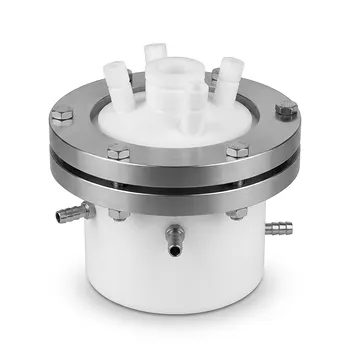
In high-pressure autoclaves, the metal body of the vessel can leach ions into the solution, which degrades the ferroelectric performance of the thin film. The PTFE fixture, often used in conjunction with a PTFE liner, acts as a barrier that ensures the chemical purity of the epitaxial layer. This is vital for maintaining the electrical and structural integrity of the synthesized material.
Non-Stick Surface Integrity
The inherent non-stick properties of PTFE prevent the film or the substrate from adhering to the fixture itself. This ensures that once the reaction is complete, the sample can be removed without tearing or structural damage. This property is also used in broader applications, such as casting biodegradable films, to ensure a smooth surface upon demolding.
Understanding the Trade-offs
Temperature and Pressure Limitations
While PTFE is highly versatile, it has a lower thermal ceiling than metal or ceramic fixtures, typically losing structural rigidity above 260 °C. In ultra-high-temperature hydrothermal processes, a PTFE fixture may soften or warp, leading to a loss of precise substrate alignment.
Mechanical Softness
PTFE is a relatively soft polymer, meaning it can be prone to "creep" or deformation under the high-pressure conditions of an autoclave over long reaction times. Design thickness must be carefully calculated to ensure the fixture maintains its geometry and continues to hold the substrate at the intended angle throughout the growth cycle.
Optimizing Your Fixture Configuration
The design of your PTFE fixture should be dictated by the specific requirements of your thin film's morphology and chemistry.
- If your primary focus is maximum chemical purity: Use high-purity PTFE fixtures to prevent any metallic leaching from the autoclave walls from reaching your growth solution.
- If your primary focus is surface flatness and continuity: Orient the fixture to hold the substrate vertically, which minimizes the risk of sediment settling on the growth face.
- If your primary focus is controlling compositional gradients: Utilize a horizontal mounting bracket at a precisely calibrated height to manipulate the flow field and mass transfer kinetics.
Mastering the spatial and chemical properties of the PTFE fixture is the key to unlocking consistent, high-performance epitaxial thin film synthesis.
Summary Table:
| Key Function | Benefit to Thin Film | Mechanism of Action |
|---|---|---|
| Spatial Positioning | Uniformity & Flatness | Suspends substrate to allow even ion diffusion |
| Sediment Isolation | Prevents Surface Defects | Keeps substrate away from bulk precipitates at the bottom |
| Chemical Inertness | High Material Purity | Resists harsh alkalis (e.g., NaOH) and prevents metal leaching |
| Non-Stick Surface | Structural Integrity | Ensures easy sample removal without tearing or damage |
| Kinetic Management | Controlled Growth Rate | Maintains precise distance from vessel walls to regulate flow |
Elevate Your Research Precision with KINTEK
Achieve uncompromising results in your hydrothermal synthesis and thin film applications with KINTEK’s high-performance fluoropolymer solutions. We specialize in an extensive range of laboratory supplies crafted exclusively from PTFE and PFA—materials chosen for their unmatched chemical inertness and purity.
From everyday basic labware (beakers, measuring cylinders, crucibles, and reagent bottles) to specialized tools like high-purity trace analysis instruments, sample prep filtration tools, and comprehensive fluid transfer components (tubing, valves, and fittings), KINTEK is your one-stop partner. We also offer advanced derivative apparatus, including custom electrochemical cells, battery testing fixtures, and microwave digestion vessels.
Why choose KINTEK?
- End-to-End Customization: Our advanced CNC fabrication allows us to deliver everything from complex non-standard machined parts to bespoke laboratory setups.
- High-Volume Reliability: We maintain an absolute focus on high-performance materials to support both niche research and high-volume industrial orders.
- Expert Support: Our team understands the unique demands of epitaxial growth and aggressive chemical environments.
Ready to optimize your lab setup? Contact us today to discuss your requirements!
References
- Tatsuya Masuda, Yoshitaka Ehara. Concentration-driven densification and hydroxyl-induced lattice expansion in hydrothermal BaTiO<sub>3</sub> epitaxial films. DOI: 10.35848/1347-4065/ae062c
This article is also based on technical information from Kintek Knowledge Base .
Related Products
- PTFE Lined High Pressure Digestion Vessel 50ml High Temperature Hydrothermal Synthesis Tank
- Custom PTFE Acid Resistant Support Rack for PFA Hydrogen Absorption Systems Multi Hole Configurations
- Custom PTFE Continuous Reaction Bottles Virgin Fluoropolymer High Purity Low Background Synthesis Vessels
- Custom PTFE Acid Resistant Support Rack Multi Hole PFA Hydrogen Absorption System Bracket
- High Temperature Resistant PTFE Thermal Insulation Board Corrosion Resistant Metal Free Fluoropolymer Stand for Ultra Clean Laboratories
People Also Ask
- What are the benefits of using a PTFE-lined vessel for carbon-sulfur cathode treatment? Maximize Purity & Performance
- Why are PTFE-lined pressure digestion vessels required for the preparation of Ag/CeO2 catalysts? Purity & Performance
- What is the function of high-pressure PTFE digestion vessels in mineral analysis? Optimize Sample Mineralization
- What safety features are typically incorporated into high-pressure PTFE digestion vessel designs? Ensure Lab Safety
- What is the function of PTFE lined high-pressure vessels in g-C3N4 synthesis? Achieve High-Purity Material Growth