The solvothermal synthesis of $NH_4V_4O_{10}$ flower-like structures requires a precise synergy between mechanical containment and chemical isolation. The stainless steel autoclave functions as a high-pressure reactor that lowers reaction activation energy by vaporizing organic solvents at 180°C, while the PTFE or PFA liner serves as a critical barrier against contamination and corrosion. These combined roles ensure that $NH_4V_4O_{10}$ nanocrystals can successfully self-assemble into complex, three-dimensional morphologies without interference from metallic impurities.
Core Takeaway: The autoclave provides the thermodynamic environment (high pressure and heat) necessary to drive the chemical reaction, while the high-purity liner maintains the chemical integrity required for the delicate self-assembly of $NH_4V_4O_{10}$ into its signature flower-like architecture.
The Mechanical Role of the Stainless Steel Autoclave
Creating a High-Pressure Environment
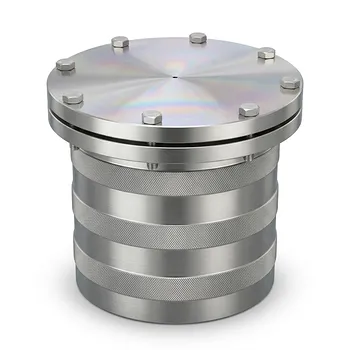
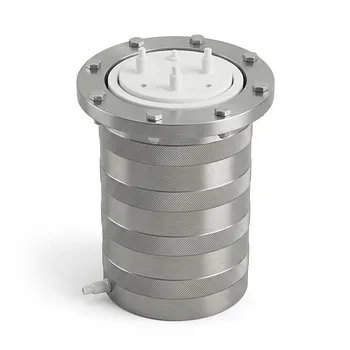
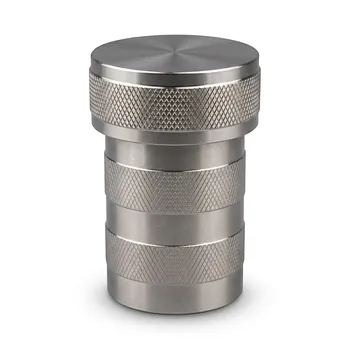
The primary function of the stainless steel shell is to provide the mechanical strength required to contain autogenous pressure. During the synthesis, solvents such as ethanol, propanol, or butanol are heated to a constant 180°C within the sealed system.
As these solvents vaporize, they generate significant internal pressure. This environment is essential because it reduces the activation energy of the reaction, allowing the precursors to transform into $NH_4V_4O_{10}$ at lower temperatures than would be possible under atmospheric pressure.
Facilitating Kinetic Control
The autoclave acts as a thermal stabilizer, maintaining the constant temperature needed for steady crystal growth. This controlled heating facilitates the synergistic interaction between precursors, ensuring the uniform formation of nanocrystals.
By providing a closed system, the autoclave also prevents the loss of volatile solvents. This ensures that the stoichiometry of the reaction remains consistent throughout the duration of the solvothermal process.
The Chemical Role of PTFE and PFA Liners
Shielding Against Corrosion
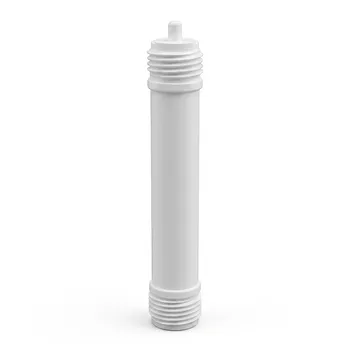
The high-purity PTFE (Polytetrafluoroethylene) or PFA (Perfluoroalkoxy) liners are chemically inert, meaning they do not react with the precursors. This is vital because the synthesis often involves acidic precursors that would otherwise corrode the stainless steel outer shell.
By acting as a protective barrier, the liner prevents the reaction liquid from eroding the metal walls. This extends the lifespan of the equipment and ensures the safety of the high-pressure operation.
Preventing Metal Ion Contamination
A critical requirement for the formation of flower-like structures is chemical purity. The liner prevents metallic ions from the stainless steel shell from leaching into the reaction mixture.
If metal impurities were present, they could disrupt the self-assembly process of the $NH_4V_4O_{10}$ nanocrystals. The liner ensures that the growth environment remains "clean," allowing the crystals to orient themselves into the desired three-dimensional shapes.
Assisting in Product Recovery
The extremely smooth and non-stick surface of PTFE and PFA facilitates the collection of the synthesized powder. After the reaction is complete, the flower-like structures can be fully recovered from the liner without significant loss or sticking.
Understanding the Trade-offs
Temperature and Pressure Limitations
While PTFE is highly resistant to chemicals, it has a thermal ceiling (typically around 250°C) beyond which it may begin to deform or release toxic fumes. For $NH_4V_4O_{10}$ synthesis at 180°C, this is well within safety limits, but it restricts the use of the same liner for much higher-temperature reactions.
Heat Transfer Inefficiency
Polymers like PTFE are poor thermal conductors compared to the stainless steel shell. This creates a slight lag between the temperature of the oven and the temperature of the reaction liquid, requiring careful calibration of heating times to ensure the internal environment reaches the target 180°C.
How to Apply This to Your Project
Recommendations for Successful Synthesis
- If your primary focus is Morphological Precision: Ensure your PTFE/PFA liner is thoroughly cleaned with acid before use to eliminate any residual nucleation sites that could distort the flower-like structure.
- If your primary focus is Safety and Longevity: Never exceed the fill-level recommendations (typically 60-80%) of the liner to allow sufficient head-space for solvent vaporization without over-pressurizing the vessel.
- If your primary focus is High Yield: Utilize the non-stick properties of the liner by using a gentle centrifuge or filtration process to recover the maximum amount of precipitated $NH_4V_4O_{10}$ powder from the vessel.
By balancing the structural integrity of the autoclave with the chemical inertness of the liner, researchers can reliably produce high-purity $NH_4V_4O_{10}$ with the specific surface area and morphology required for advanced applications.
Summary Table:
| Component | Key Role | Impact on Synthesis |
|---|---|---|
| SS Autoclave | Thermodynamic Control | Provides high pressure/heat to lower activation energy |
| PTFE/PFA Liner | Chemical Barrier | Prevents corrosion and metal ion contamination |
| Internal Surface | Non-stick Interface | Ensures high recovery and yield of delicate structures |
Optimize Your High-Pressure Reactions with KINTEK
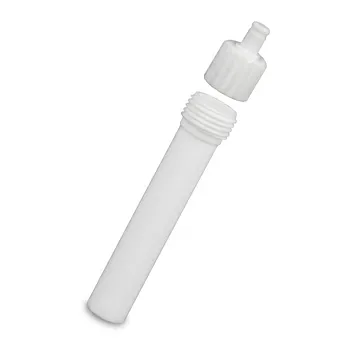
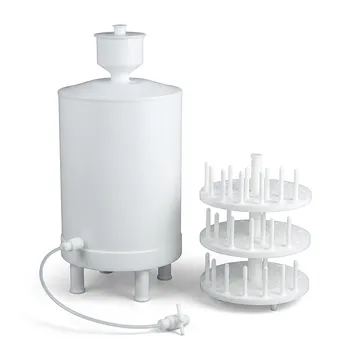
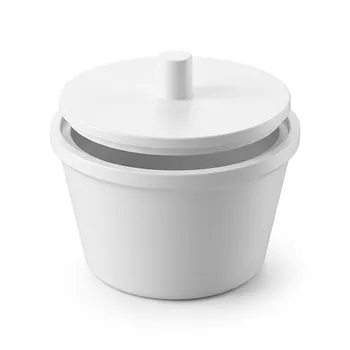
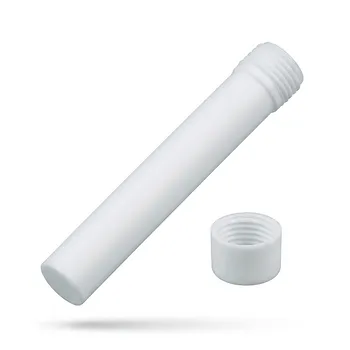
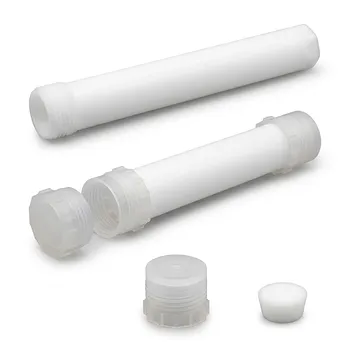
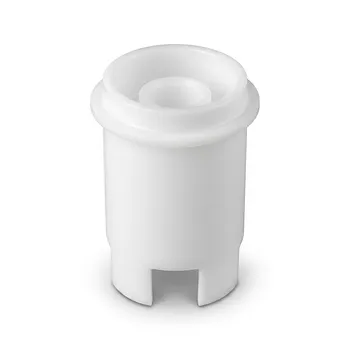
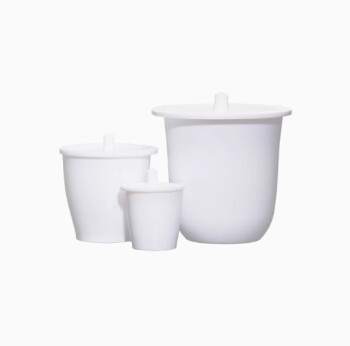
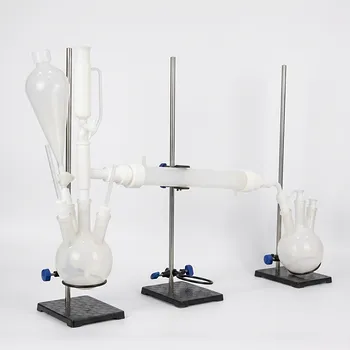
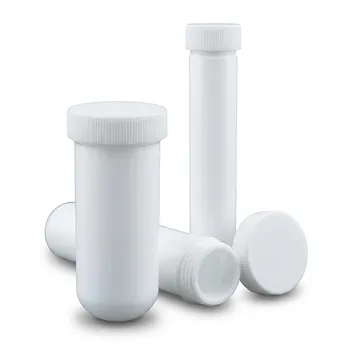
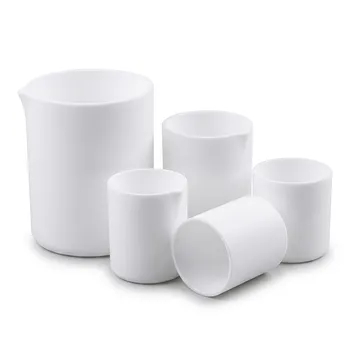
Precision in solvothermal synthesis starts with material integrity. KINTEK specializes in high-performance fluoropolymer solutions, offering an exhaustive range of PTFE and PFA laboratory supplies. Whether you need everyday labware like beakers, crucibles, and digestion tubes, or advanced reaction apparatus such as hydrothermal synthesis liners and microwave digestion vessels, we provide the chemical inertness your research requires.
Our capabilities extend from comprehensive fluid transfer components (tubing, fittings, valves) and sample prep tools (filters, spatulas) to custom CNC-fabricated parts designed for your specific experimental setups. By choosing KINTEK, you eliminate the risk of metallic contamination, ensuring the successful self-assembly of complex nanocrystals like $NH_4V_4O_{10}$.
Discover the KINTEK Advantage:
- High-Purity Materials: Exclusive focus on PTFE and PFA for zero-interference results.
- Custom Fabrication: End-to-end CNC machining for bespoke lab equipment and high-volume orders.
- Complete Catalog: From O-rings and gaskets to sophisticated battery testing fixtures and electrochemical cells.
Achieve superior morphology and yield in your next synthesis. Contact us today for high-quality, custom-engineered laboratory solutions!
References
- Maryam Ghiyasiyan-Arani. Effect of different alcoholic solvents on the structural and electrochemical characteristics of NH4V4O10/carbon sphere composites for hydrogen storage application. DOI: 10.1007/s13201-025-02496-0
This article is also based on technical information from Kintek Knowledge Base .
Related Products
- Custom TFM Reaction Vessel with Stainless Steel Jacket and PTFE Inner Cup for High Corrosion Resistance
- PTFE Lined High Pressure Digestion Vessel 50ml High Temperature Hydrothermal Synthesis Tank
- High Pressure Custom TFM Reactor Stainless Steel Outer Vessel PTFE Inner Cup for Corrosive Synthesis
- High Temperature Corrosion Resistant Hydrothermal Synthesis Reactor with TFM Inner Liner and Straight Cylinder Design
- High Purity PTFE Microwave Digestion Vessel for Soil and Food Analysis Acid Resistant Fluoropolymer Sample Preparation Liners
People Also Ask
- Why are high-performance pressure-resistant reaction vessels required for oxygen-assisted hydrothermal conversion at 150 °C?
- Why are high-quality fluoropolymer-lined reaction vessels required for alk-Ti3C2Tx MXene? Ensure Purity & HF Resistance
- How do magnetic stirring and reaction vessels impact MOF-derived carbon quality? Optimize Your Composite Performance
- Why are PTFE-lined reaction vessels necessary for forced degradation studies? Ensure high-purity results and accuracy.
- Why is a high-purity PTFE lined reaction vessel required for the acidic etching of MXenes? Ensure Material Purity.