Microwave-assisted hydrothermal reaction systems improve efficiency by utilizing instantaneous volumetric heating, which fundamentally changes how energy is transferred to the reaction medium. Unlike traditional methods that rely on slow thermal conduction from the vessel walls inward, microwave energy couples directly with molecules to trigger rapid nucleation and crystal growth, reducing synthesis times from days to mere minutes.
This technology replaces slow, gradient-heavy conduction with direct electromagnetic coupling, allowing for precise control over nanostructure morphology while significantly lowering energy consumption. It transforms the kinetic landscape of material synthesis, enabling high-quality production at a fraction of the traditional time.
The Physics of Volumetric Heating
Direct Molecular Coupling
Traditional heating relies on thermal conduction, where heat must travel through the reactor wall and then through the fluid. In contrast, microwave-assisted systems use electromagnetic waves to act directly on the reaction medium. This molecular coupling transfers energy instantly to the reactants, leading to extremely rapid temperature increases.
Eliminating Temperature Gradients
In conventional hydrothermal reactors, the liquid near the walls is hotter than the center, creating temperature gradients that lead to uneven particle growth. Microwave radiation achieves uniform heat distribution throughout the entire volume simultaneously. This uniformity ensures that all precursor molecules experience the same thermal environment, which is critical for consistent chemical reactions.
Acceleration of Chemical Kinetics
Rapid Nucleation and Growth
The efficiency of nanostructured material synthesis depends on how quickly nucleation begins. Microwave systems trigger the reduction of metal ions and the formation of nuclei in a very short time. This acceleration allows materials like carbon quantum dots or copper nanoparticles to be synthesized in minutes rather than hours.
Shortened Crystallization Cycles
Traditional solvothermal methods for complex materials, such as Lithium Iron Phosphate (LiFePO4) or Layered Double Hydroxides (LDHs), often require days of heating. Microwave-assisted systems significantly shorten these crystallization times. By providing precise thermal energy, the system facilitates faster diffusion kinetics and crystal lattice formation.
Enhancing Material Quality and Control
Precision in Morphology and Size
Because heating is uniform and rapid, researchers can achieve a narrow size distribution and smaller particle sizes. This level of control is vital for producing nanosheets or vanadium-based cathodes with specific surface areas. The ability to accurately regulate temperatures, often between 150 °C and 210 °C, allows for the fine-tuning of porosity and crystallinity.
Increased Purity and Activity
Microwave heating often maintains higher purity by reducing the time available for unwanted side reactions to occur. For materials like Bi2MoO6 nanosheets, the rapid synthesis enhances electrochemical activity. This results in final products that are not only produced faster but also perform better in their intended applications.
Understanding the Trade-offs
Equipment and Material Limitations
While highly efficient, microwave-assisted systems require specialized microwave-transparent vessels (like quartz or specific polymers) that can also withstand high pressures. Furthermore, the reaction medium must have a dielectric loss tangent high enough to couple with microwave radiation; non-polar solvents may require "lossy" additives to heat effectively.
Scale-up Challenges
The penetration depth of microwaves is limited, which can present challenges when moving from laboratory-scale vials to large industrial reactors. Unlike traditional conduction, which scales by increasing surface area, microwave scaling requires sophisticated engineering to ensure the electromagnetic field remains uniform across larger volumes.
Making the Right Choice for Your Project
Recommendations Based on Synthesis Goals
- If your primary focus is rapid prototyping: Utilize microwave-assisted systems to reduce your experimental feedback loop from days to minutes.
- If your primary focus is particle uniformity: Choose this method to eliminate temperature gradients and achieve a tighter control over nanostructure size distribution.
- If your primary focus is energy conservation: Implement microwave heating to minimize "lost" heat energy typically spent warming the reactor vessel and the surrounding environment.
By shifting from external conduction to internal volumetric heating, microwave-assisted hydrothermal systems provide a definitive path toward faster, cleaner, and more precise nanomaterial fabrication.
Summary Table:
| Feature | Traditional Hydrothermal | Microwave-Assisted Hydrothermal |
|---|---|---|
| Heating Mechanism | External conduction (wall-to-fluid) | Internal volumetric (molecular coupling) |
| Time Efficiency | Hours to days | Minutes to hours |
| Thermal Gradient | High (uneven distribution) | Negligible (uniform distribution) |
| Nucleation Rate | Slow and sequential | Rapid and simultaneous |
| Control | Hard to regulate precisely | High precision in morphology and size |
| Energy Use | High (vessel and air loss) | Low (direct energy transfer) |
Elevate Your Synthesis with High-Performance Fluoropolymer Labware
To achieve the precision and efficiency of microwave-assisted hydrothermal reactions, you need high-quality, chemically inert equipment. KINTEK specializes in high-performance fluoropolymer solutions tailored for the most demanding laboratory environments.
From everyday basic labware like PTFE beakers, digestion tubes, and reagent bottles to advanced components such as microwave digestion vessels, hydrothermal synthesis liners, and custom-machined electrochemical cells, we provide the tools necessary for high-purity trace analysis and complex fluid transfer.
Why choose KINTEK?
- End-to-End Customization: Our absolute focus on PTFE and PFA materials, backed by full custom CNC fabrication, allows us to deliver everything from bespoke laboratory setups to high-volume standard orders.
- Unmatched Material Purity: Ideal for nanomaterial synthesis where contamination is not an option.
- Comprehensive Range: We supply all fluid transfer components (tubing, valves, fittings) and sample prep tools (filters, pipettes, tweezers) your lab requires.
Ready to optimize your experimental results with durable, high-performance labware? Contact KINTEK today to discuss your standard or non-standard fabrication needs!
References
- Mariam M. Abady, Fathi A. Sakr. Sustainable synthesis of nanomaterials using different renewable sources. DOI: 10.1186/s42269-025-01316-4
This article is also based on technical information from Kintek Knowledge Base .
Related Products
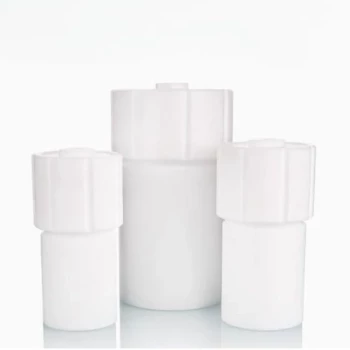
- High Temperature Corrosion Resistant Hydrothermal Synthesis Reactor with TFM Inner Liner and Straight Cylinder Design
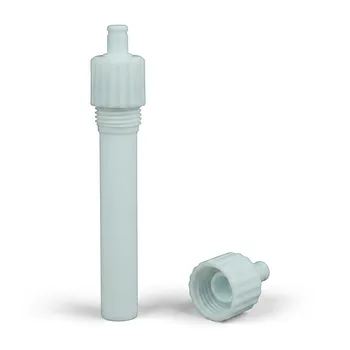
- Custom TFM Microwave Digestion Vessels for ICP-OES Analysis High Purity Fluoropolymer Sample Preparation Labware
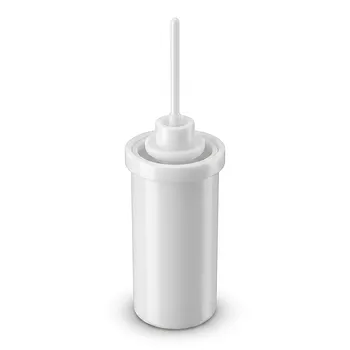
- High Purity TFM Microwave Digestion Vessels PTFE Acid Evaporation Liners Domestic GT-400 Equivalent Laboratory Reaction Containers
- PTFE Lined High Pressure Digestion Vessel 50ml High Temperature Hydrothermal Synthesis Tank
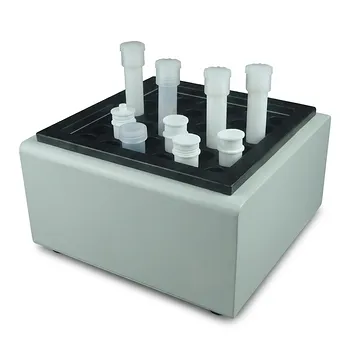
- High Performance TFM Microwave Digestion Vessel Rack 15 Position Customizable Sample Preparation Support
People Also Ask
- What is the role of a corrosion-resistant reactor in the synthesis of lignin-based carbon dots? Ensure Maximum Purity
- What are the technical advantages of using hydrothermal synthesis reactors for advanced electronic & optical nanomaterials?
- How does a hydrothermal synthesis reactor facilitate the production of crystalline materials with tailored morphologies? Precision Crystal Growth
- Why is the sealing reliability of a hydrothermal synthesis reactor critical for 24-hour cycles? Ensure Nano-Precision
- What role do hydrothermal synthesis reactors play in CQD preparation? Achieve High-Purity Nanomaterial Synthesis