Heterocyclic rings generally lower the glass transition temperature while affecting thermo-oxidative stability in opposite ways. In fluorinated aromatic polymers, pyridine and thiophene units alter backbone geometry and chain packing, increasing conformational freedom compared with corresponding all-phenyl structures. The resulting heterocyclic polymers may show Tg values roughly 70–80°C lower than their all-phenyl analogs, while thiophene incorporation can substantially reduce stability in hot air.
Core takeaway: Heterocyclic rings create a trade-off between processability and high-temperature durability. Pyridine usually provides higher Tg and better thermal-oxidative performance than thiophene, whereas thiophene can become an oxidation-sensitive weak point because it forms thiophene dioxide under severe thermal stress.
How Ring Structure Changes Glass Transition Temperature
Backbone geometry reduces chain restriction
A polymer’s Tg reflects how readily its backbone segments move. More linear, rigid, and efficiently packed backbones generally require more thermal energy to undergo the cooperative motions associated with the glass transition.
Pyridine and thiophene introduce ring geometries that produce a less linear effective backbone than a corresponding all-phenyl architecture. This creates bends or kinks and reduces the degree of continuous backbone restriction.
The practical result is typically greater segmental mobility and a lower Tg.
The 70–80°C reduction is a comparative trend
According to the referenced comparison, pyridine- and thiophene-containing fluorinated polymers can exhibit Tg values approximately 70–80°C below those of corresponding all-phenyl polymers.
This should be treated as a structural trend rather than a universal constant. The actual Tg also depends on molecular weight, copolymer composition, linkage type, fluorinated side-group size, branching, and packing efficiency.
Pyridine generally gives a higher Tg than thiophene
Pyridine contains a nitrogen atom that increases ring polarity. This can strengthen dipolar interactions between neighboring chains and partially offset the mobility introduced by the heterocyclic geometry.
Consequently, pyridine-containing fluorinated polymers generally show slightly higher Tg values than analogous thiophene-containing materials, assuming comparable backbone structures and substitution patterns.
Side groups can outweigh the ring effect
The heterocycle is only one contributor to Tg. Bulky fluorinated groups such as –CF₃ and –OCF₃ increase steric hindrance and restrict internal rotation, which can raise Tg.
Rigid units such as binaphthyl, terphenyl, sulfone, or pyridine structures can also elevate Tg by limiting backbone motion. Conversely, flexible ether or pendant chains increase free volume and may lower Tg.
How the Rings Affect Thermo-Oxidative Stability
Fluorination provides an important stability advantage
Strong C–F bonds reduce the likelihood of radical attack relative to C–H bonds. This is one reason fluorinated aromatic polymers can maintain high decomposition temperatures and chemical resistance under demanding conditions.
However, fluorination does not make every backbone component equally resistant to oxidation. The chemical identity of the aromatic or heteroaromatic ring remains important.
Thiophene creates an oxidation-sensitive site
Thiophene is particularly vulnerable under prolonged thermal exposure in air. Its sulfur-containing ring can oxidize to thiophene dioxide, disrupting the original aromatic structure.
Once aromaticity is destroyed, the affected backbone segment becomes more susceptible to degradation. This explains why thiophene-containing fluorinated polymers can show significantly lower thermo-oxidative stability than comparable non-heterocyclic or all-aromatic systems.
The cited thiophene-containing materials show 5% weight-loss decomposition temperatures of approximately 444–486°C, depending on composition and structure.
Pyridine offers a more favorable compromise
Pyridine does not introduce the same sulfur-based oxidation pathway associated with thiophene dioxide formation. Its polar nitrogen can also improve intermolecular interactions and contribute to a somewhat higher Tg.
Thus, pyridine is generally the more favorable heterocyclic choice when a design requires a balance of thermal rigidity, polarity, and thermo-oxidative resistance.
This does not mean that every pyridine polymer will outperform every thiophene polymer. Linkages, substituents, defects, and test atmosphere remain decisive.
Why These Effects Matter in Polymer Design
Tg determines the usable mechanical regime
Below Tg, the polymer is generally glassy and dimensionally rigid. Near or above Tg, segmental motion increases, which can reduce modulus and dimensional stability even before chemical decomposition begins.
A lower Tg can therefore improve flexibility and processability, but it may also reduce resistance to creep or deformation at operating temperature.
Decomposition temperature is not the same as service temperature
The 5% weight-loss temperature, Td,5%, is a useful comparative metric, but it is not a direct maximum-use temperature.
Long-term service can be limited by gradual oxidation, embrittlement, creep, or loss of mechanical properties well below the temperature at which 5% mass loss occurs. Both Tg and thermo-oxidative aging data should therefore be considered.
Backbone packing influences both mobility and processability
Heterocyclic-induced kinks and reduced symmetry can disrupt efficient chain packing. This often improves solubility and solution processability, which is valuable for film formation and custom component fabrication.
The same structural disorder can increase free volume and mobility, contributing to a lower Tg. The design benefit is easier processing; the cost may be reduced dimensional stability at elevated temperature.
Understanding the Trade-offs
Lower Tg can be beneficial
A lower Tg may provide improved toughness, flexibility, and resistance to brittle fracture. It can also make the polymer easier to process from solution or shape into complex components.
These advantages are relevant when flexibility and manufacturability matter more than maximum high-temperature rigidity.
Thiophene can compromise long-term air stability
The primary limitation of thiophene is not simply its effect on Tg. Its sulfur-containing aromatic structure can undergo oxidation in air, creating a chemical degradation pathway that may limit long-term performance under thermal stress.
This makes thiophene-containing systems less attractive for continuously hot, oxidative environments unless their performance has been specifically validated.
All-phenyl structures are not always the most processable
All-aromatic fluorinated structures generally maximize rigidity and thermo-oxidative integrity, but their high symmetry and strong packing can reduce solubility and make processing more difficult.
Introducing heterocycles can improve solubility and reduce excessive rigidity, but this benefit must be weighed against the corresponding loss in Tg or oxidation resistance.
Test conditions can change the ranking
Thermal behavior measured in nitrogen does not necessarily predict behavior in air. A material may show excellent inert-atmosphere stability while undergoing substantially faster degradation under thermo-oxidative conditions.
Comparisons should therefore use the same atmosphere, heating rate, sample history, and decomposition criterion.
Making the Right Choice for Your Goal
The appropriate ring structure depends on whether the priority is maximum thermal durability, polarity, flexibility, or processing.
- If your primary focus is maximum thermo-oxidative stability: Favor non-heterocyclic or all-aromatic fluorinated backbones, particularly for prolonged exposure to hot air.
- If your primary focus is a balance of Tg and oxidation resistance: Consider pyridine-containing structures, while optimizing fluorinated side-group size and backbone rigidity.
- If your primary focus is flexibility or solution processability: A heterocyclic backbone may be advantageous because its kinked geometry can increase mobility and disrupt tight packing.
- If your primary focus is thiophene-based functionality: Treat thiophene as a potential oxidation-sensitive unit and validate long-term performance under the actual temperature and air exposure conditions.
The best polymer architecture is the one that balances heterocycle-enabled processability against the Tg and thermo-oxidative stability required by the application.
Summary Table:
| Property | Pyridine | Thiophene |
|---|---|---|
| Effect on Tg | Lowers Tg by ~70-80°C vs all-phenyl | Lowers Tg by ~70-80°C vs all-phenyl |
| Tg relative to each other | Higher than thiophene | Lower than pyridine |
| Thermo-oxidative stability | Better than thiophene | Reduced due to thiophene dioxide formation |
| Typical Td,5% (in air) | Not specified | 444–486°C |
| Key advantage | Balance of rigidity and stability | Improved solubility and processability |
| Main risk | Possible Tg reduction | Oxidation-sensitive sulfur site |
Optimize your high-performance polymer materials with KINTEK's expert solutions. Our PTFE and PFA products, including labware, custom machined parts, and fluid handling components, are engineered for demanding applications requiring superior thermal and chemical resistance. Whether you are developing new fluorinated polymers or need reliable components for high-temperature processes, our team can help. Contact us today to discuss your specific requirements and discover how our fluoropolymer expertise can enhance your lab's efficiency and reliability. Get in touch now!
Related Products
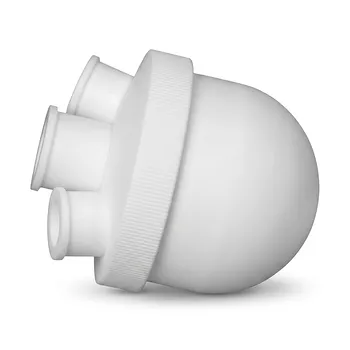
- Custom Multi Neck PTFE Round Bottom Flask for High Purity Chemical Laboratory Experiments and Industrial Synthesis
- Custom Corrosion Resistant PFA PTFE Multi Neck Laboratory Reaction Flask GL Standard Mouth Fluoropolymer Flasks
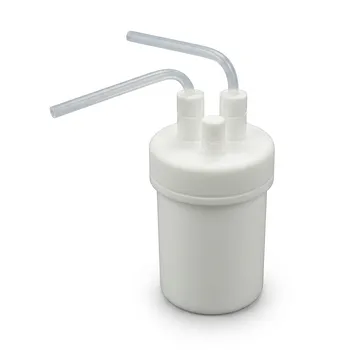
- 2L High Purity PTFE Reagent Bottle for Trace Analysis and Chemical Extraction with Customizable Specifications
- Large Capacity PTFE Reaction Flask 20L Custom Multi Neck Laboratory Boiling Flask Fluoropolymer Chemical Processing Vessel
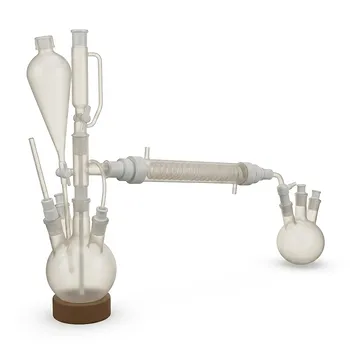
- PTFE Distillation Condensation Apparatus High Temperature Hydrofluoric Acid Resistant Fluorination Reaction Flask
People Also Ask
- What are the three ingredients used to synthesize TFE, and under what conditions are they combined? Master the High-Temp Pyrolysis Process
- What key thermal, optical, and hydrophobic characteristics make trifluoroethoxy-functionalized fluoropolymers suitable for high-durability laboratory coatings and protective components?
- What is the monomer used in the preparation of PTFE? Mastering the Synthesis of Tetrafluoroethylene
- Why is the use of high-precision volumetric flasks critical in chemical reagent preparation and dilution processes?
- How does introducing steam as a diluent enhance the efficiency of TFE synthesis for PTFE? Boost yields to 95% with optimized steam ratios.