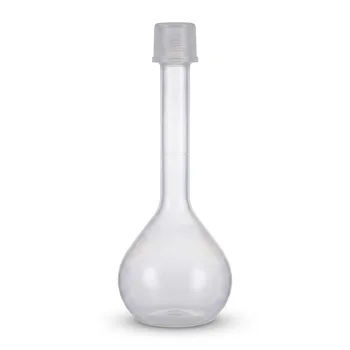
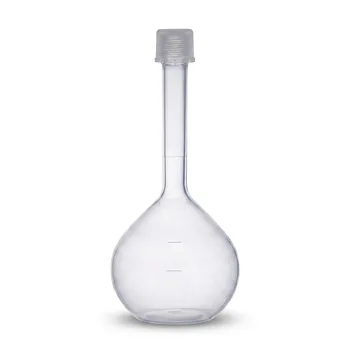
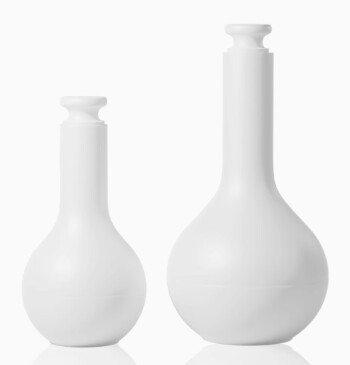
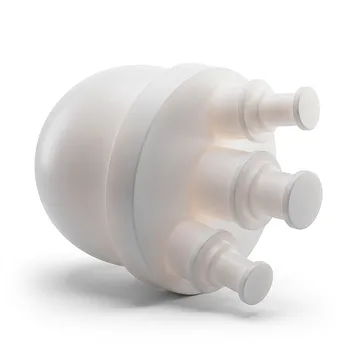
High-precision volumetric flasks are the foundation of quantitative chemistry, providing the "fixed point" upon which all concentration-based calculations rely. They ensure that a solution’s total volume is exactly what the analytical method assumes it to be, preventing systematic errors from propagating through complex laboratory workflows and compromising the integrity of final data.
The core utility of a high-precision volumetric flask lies in its ability to establish a defined, traceable volume that bridges the gap between instrumental detection and real-world mass concentration. Without this accuracy, every subsequent calculation—from standard curves to final sample quantification—becomes fundamentally unreliable.
The Foundation of Quantitative Accuracy
Establishing Metrological Traceability
High-precision volumetric flasks use calibrated graduation lines to guarantee that a solution's volume is precise at a specific temperature. This creates a standard reference point that allows researchers to maintain metrological traceability, ensuring that element concentrations measured by instruments like ICP-OES are accurate and reproducible.
Converting Liquid Phase to Solid Mass
In many workflows, such as soil or seed analysis, a solid sample is digested into a liquid. The volumetric flask allows this liquid to be diluted to an exact final volume (e.g., 50 mL or 100 mL), which is critical for correctly calculating the mass concentration (mg/kg) of heavy metals in the original solid sample.
Ensuring Experimental Repeatability
By using standardized, high-precision labware, laboratories can eliminate dilution factor deviations between different experimental batches. This consistency ensures that all analytical data are based on a unified mass concentration standard, which is the prerequisite for scientific repeatability.
Impact on Instrumental Analysis
Reliability of Standard Curves
The precision of a standard curve—such as those used in mercury or selenium analysis—is entirely dependent on the accuracy of the initial dilutions. High-precision flasks ensure the linear reliability of these curves, allowing instruments to provide accurate readings across a wide range of concentrations.
Preventing Error Propagation in Trace Analysis
In trace analysis involving mg/kg levels or lower, even a minor volume error is significantly amplified by the time the final result is calculated. High-precision flasks minimize these systematic errors, ensuring that the absorbance values read by Spectrometers (AAS) can be accurately converted into mass per unit volume.
Minimizing Surface Interference
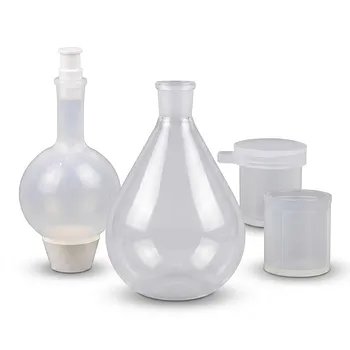
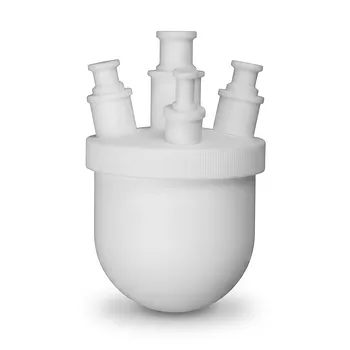
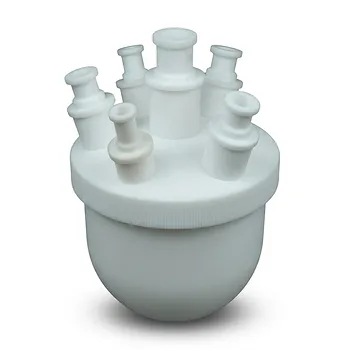
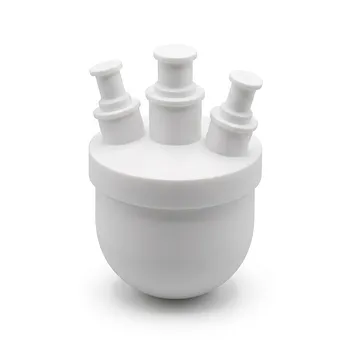
Modern high-precision flasks, particularly those made from PFA (Perfluoroalkoxy) or specialized glass, help eliminate interference caused by ion adsorption on the inner walls. This ensures that the trace elements remain in the solution rather than sticking to the container, preserving the integrity of the sample.
Understanding the Trade-offs and Limitations
Temperature Sensitivity and Calibration
Volumetric flasks are calibrated to be accurate at a specific reference temperature (usually 20°C). Using them with hot or cold solutions can cause the material to expand or contract, rendering the graduation line inaccurate and introducing significant measurement bias.
Material Selection vs. Chemical Compatibility
While glass is standard, it may not be suitable for all trace analyses due to potential leaching or adsorption of certain metallic ions. In these cases, PFA flasks are superior but significantly more expensive, requiring a balance between budgetary constraints and the required detection limits.
The Human Element in Precision
Even the highest quality flask is subject to user error, specifically regarding the "meniscus" reading. Failure to align the bottom of the liquid curve exactly with the graduation line can negate the precision of the flask entirely, making consistent technique as important as the hardware itself.
How to Apply This to Your Laboratory Workflow
Strategic Selection for Your Goals
- If your primary focus is trace element analysis (ppb levels): Utilize PFA or high-purity glass flasks to minimize adsorption and ensure the highest possible linear reliability for standard curves.
- If your primary focus is routine reagent preparation: Standard Class A glass volumetric flasks provide the necessary balance of precision and cost-effectiveness for maintaining repeatable results.
- If your primary focus is high-throughput digestion workflows: Ensure all digested residues are cooled to room temperature before volume adjustment to prevent temperature-induced volume errors.
Precision in the flask is the only way to ensure that the numbers on your instrument screen reflect the reality of your sample.
Summary Table:
| Key Factor | Critical Benefit | Impact on Analytical Results |
|---|---|---|
| Metrological Traceability | Established Standard Reference | Guarantees accurate conversion from liquid phase to solid mass concentration. |
| Linear Reliability | Precise Standard Curves | Essential for accurate quantification in instrumental analysis (ICP-OES/AAS). |
| Material Integrity | Low Adsorption (e.g., PFA) | Minimizes ion loss on container walls, preserving trace element integrity. |
| Repeatability | Consistent Dilution Factors | Eliminates batch-to-batch deviations for reliable scientific replication. |
Maximize Analytical Accuracy with KINTEK High-Performance Labware
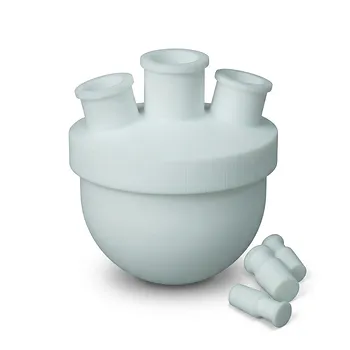
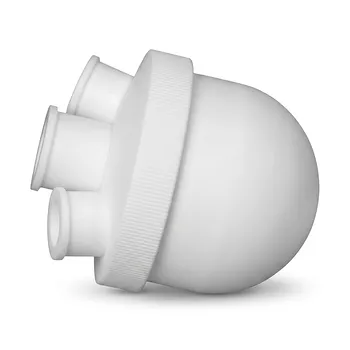
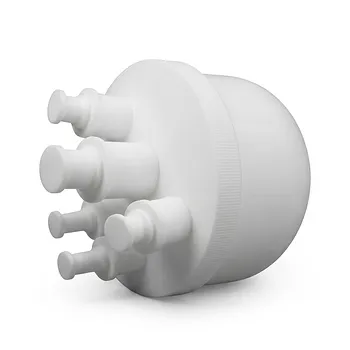
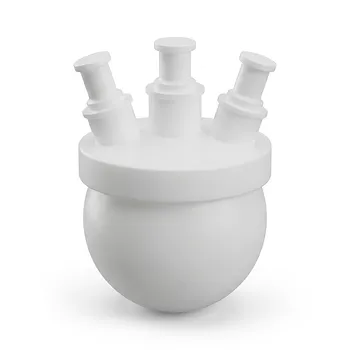
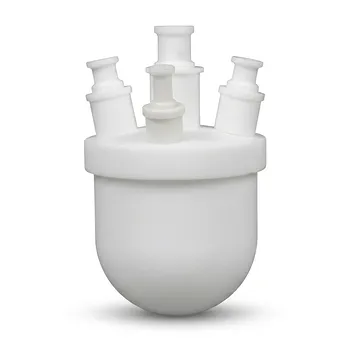
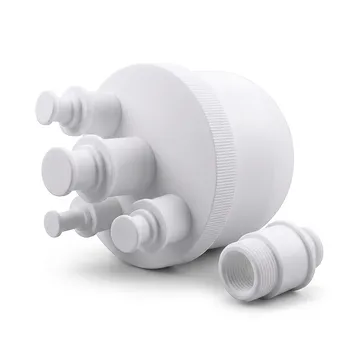
Precise results begin with high-quality materials. KINTEK specializes in manufacturing virtually all imaginable laboratory supplies crafted from high-performance PTFE and PFA. From everyday basic labware like beakers, measuring cylinders, and high-precision volumetric flasks to advanced reaction apparatus such as custom electrochemical cells and microwave digestion vessels, we ensure your lab is equipped for excellence.
Whether you need comprehensive fluid transfer components (tubing, valves), sample prep tools (filters, pipettes), or high-purity trace analysis instruments, KINTEK offers end-to-end custom CNC fabrication for complex non-standard parts and high-volume orders.
Eliminate systematic errors and ensure metrological traceability in your lab. Contact us today to discover how our bespoke fluoropolymer solutions can enhance your laboratory workflow!
References
- Shuteng Wang, Jingwei Chen. In Situ Polymerized Polyaniline Coating on Na <sub>5</sub> V <sub>12</sub> O <sub>32</sub> Nanobelts for Enhanced Cycling Stability in Aqueous Zinc‐Ion Batteries. DOI: 10.1002/batt.202500583
This article is also based on technical information from Kintek Knowledge Base .
Related Products
- High Purity PFA Volumetric Flask 1000ml 2000ml Constant Volume Bottle Acid Resistant Trace Analysis Custom Laboratory Labware
- High Purity PFA Volumetric Flask Acid Resistant Perfluoroalkoxy Trace Analysis Container Custom Mold Fabrication 1000ml 2000ml
- Custom PTFE Volumetric Flasks for Advanced Scientific and Industrial Use
- High Purity Custom PTFE Large Volume 15L Flask Corrosion Resistant Low Trace Background Fluoropolymer Reaction Vessel
- Large Volume Custom PTFE Flask 10L Corrosion Resistant Low Background Trace Analysis Laboratory Vessel
People Also Ask
- What are the advantages of using high-purity PFA vs. glassware? Achieve Unmatched Accuracy in Trace Analysis
- Why use high-purity PFA bottles for Carbon Quantum Dots? Ensure Ink Stability and Prevent Fluorescence Quenching
- Why is high-purity PFA trace analysis labware used for MXene? Ensure Superior Material Integrity in Research
- Why is high-purity PFA trace analysis labware used for sample processing when preparing Mo2CTx@MoS2? Ensure Material Purity
- Why is high-purity PFA labware necessary for Znx@LS-2 zeolite ICP-OES analysis? Ensure Trace-Level Precision