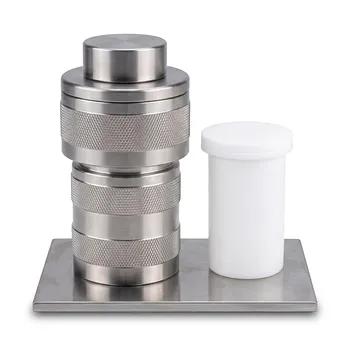
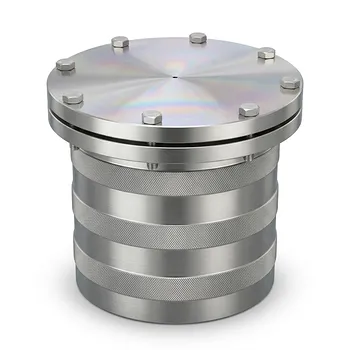
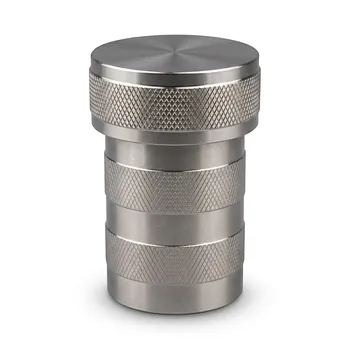
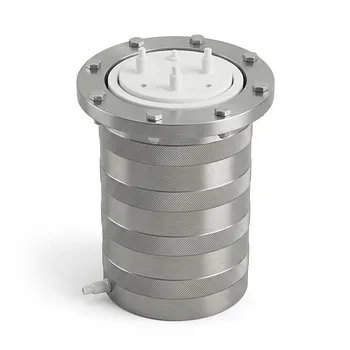
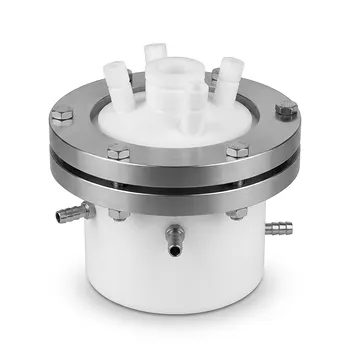
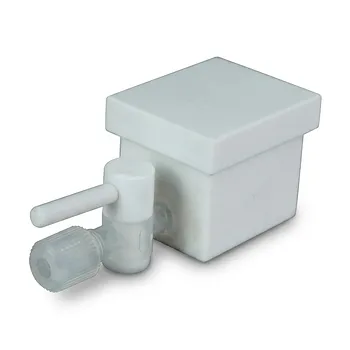
The synthesis of GO@BiBTC MOFs requires a PTFE-lined stainless steel autoclave to create a high-pressure, chemically inert environment that facilitates controlled crystal growth. This specific configuration allows the reaction to occur at 120°C—exceeding the ambient boiling points of the solvents—while protecting the sample from metallic contamination and resisting the corrosive effects of the N,N-Dimethylformamide (DMF) and methanol mixture.
Core Takeaway: The autoclave functions as a specialized pressure vessel where the stainless steel provides the mechanical strength to contain high internal pressures, while the PTFE liner ensures chemical purity and resistance, both of which are essential for the orderly assembly of MOF crystals.
The Role of the PTFE Liner in Chemical Integrity
Resisting Aggressive Organic Solvents
The synthesis of GO@BiBTC utilizes a mixture of DMF and methanol, which can become highly reactive at elevated temperatures. Polytetrafluoroethylene (PTFE) is chosen for its exceptional chemical inertness, ensuring it does not degrade or react with these organic solvents during the heating cycle.
Preventing Metallic Ion Contamination
Without a liner, the solvent mixture would come into direct contact with the stainless steel walls, potentially leaching metal ions into the reaction. The PTFE liner acts as a barrier, ensuring that the BiBTC MOF crystals grow in a pure environment, which is critical for maintaining their specific structural and electrochemical properties.
Ensuring High Product Purity
By preventing corrosion and side reactions with the vessel walls, the PTFE liner ensures that the resulting GO@BiBTC composite is free from impurities. This purity is vital for the material’s performance in downstream applications, where even trace metal contaminants can alter the MOF's surface area or catalytic activity.
The Role of Stainless Steel in Pressure Management
Withstanding Autogenous Pressure
As the solvents are heated to 120°C within a sealed volume, they generate autogenous pressure—pressure created by the thermal expansion of the liquids and vapors. The external stainless steel body provides the necessary structural integrity to safely contain this pressure without deforming or rupturing.
Maintaining a Subcritical State
The high-strength steel casing allows the reaction environment to reach a subcritical state. In this state, the solvents remain in a liquid-like phase even above their typical boiling points, which significantly increases the solubility of the precursors and facilitates the complete growth of the BiBTC MOF crystals.
Facilitating Ordered Crystal Assembly
The combination of high temperature and high pressure within the sealed vessel provides the energy required for the bismuth ions and BTC ligands to assemble into an ordered framework. This controlled environment is necessary to achieve the high crystallinity and phase purity required for high-quality MOFs.
Understanding the Trade-offs and Limitations
Temperature Constraints of PTFE
While PTFE is highly inert, it has a physical temperature limit, typically around 250°C. Exceeding this temperature can cause the liner to soften or "creep," leading to potential leaks or the permanent deformation of the internal seal.
Pressure Safety and Filling Ratios
The effectiveness of the autoclave depends heavily on the filling ratio (usually between 60% and 80%). Overfilling the liner can lead to extreme pressure spikes during heating, which may exceed the safety ratings of the stainless steel exterior and lead to equipment failure.
Thermal Lag During Heating
The thick walls of the stainless steel autoclave and the insulating properties of the PTFE liner create a thermal lag. This means the internal reaction temperature may take significantly longer to reach the set point of the oven, requiring precise timing for consistent MOF synthesis.
How to Apply This to Your Project
Making the Right Choice for Your Goal
To ensure successful synthesis and safety, consider the following recommendations based on your specific objectives:
- If your primary focus is Phase Purity: Always use a pristine, unscratched PTFE liner to prevent any localized corrosion or leaching of metal ions from the autoclave body.
- If your primary focus is Safety and Reproducibility: Never exceed an 80% filling ratio and ensure the stainless steel bolts are tightened evenly to maintain a consistent seal against autogenous pressure.
- If your primary focus is Large Crystal Growth: Utilize the high-pressure capabilities of the stainless steel jacket to extend reaction times at 120°C, ensuring the solvents remain in a subcritical state.
The synergy between the chemical resistance of PTFE and the physical strength of stainless steel is what makes the hydrothermal autoclave an indispensable tool for advanced MOF fabrication.
Summary Table:
| Component | Primary Function | Key Benefit |
|---|---|---|
| Stainless Steel Body | Pressure Management | Safely contains high autogenous pressure at 120°C |
| PTFE Liner | Chemical Inertness | Prevents metal ion leaching and resists DMF/Methanol |
| Sealed System | Reaction Environment | Enables subcritical solvent states for MOF crystallization |
Elevate your research and synthesis precision with KINTEK, your expert partner in high-performance fluoropolymer laboratory supplies. From everyday basic labware like beakers, crucibles, and reagent bottles to specialized high-purity trace analysis instruments and cleaning tanks, we provide the tools necessary for zero-contamination results.
Our comprehensive range includes fluid transfer components (tubing, valves), sample prep tools (filtration, pipettes), and advanced reaction apparatus like hydrothermal synthesis liners, microwave digestion vessels, and custom electrochemical cells. Backed by end-to-end custom CNC fabrication, we deliver everything from standard consumables to complex, bespoke non-standard machined parts crafted exclusively from PTFE and PFA.
Discover how our absolute focus on high-performance materials can optimize your GO@BiBTC MOF production and laboratory efficiency—contact us today to discuss your custom requirements!
References
- Van Cuong Nguyen, Hoang Ai Le Pham. Hierarchical structures of GO-supported BiBTC MOFs for efficient RhB photodegradation. DOI: 10.1039/d4ra08337g
This article is also based on technical information from Kintek Knowledge Base .
Related Products
- PTFE Lined High Pressure Digestion Vessel 50ml High Temperature Hydrothermal Synthesis Tank
- Custom TFM Reaction Vessel with Stainless Steel Jacket and PTFE Inner Cup for High Corrosion Resistance
- High Temperature Corrosion Resistant Hydrothermal Synthesis Reactor with TFM Inner Liner and Straight Cylinder Design
- High Pressure Custom TFM Reactor Stainless Steel Outer Vessel PTFE Inner Cup for Corrosive Synthesis
- High Purity TFM Microwave Digestion Vessels PTFE Acid Evaporation Liners Domestic GT-400 Equivalent Laboratory Reaction Containers
People Also Ask
- What are the benefits of using a PTFE-lined vessel for carbon-sulfur cathode treatment? Maximize Purity & Performance
- Why are PTFE-lined pressure digestion vessels required for the preparation of Ag/CeO2 catalysts? Purity & Performance
- What is the function of high-pressure PTFE digestion vessels in mineral analysis? Optimize Sample Mineralization
- What safety features are typically incorporated into high-pressure PTFE digestion vessel designs? Ensure Lab Safety
- What is the function of PTFE lined high-pressure vessels in g-C3N4 synthesis? Achieve High-Purity Material Growth