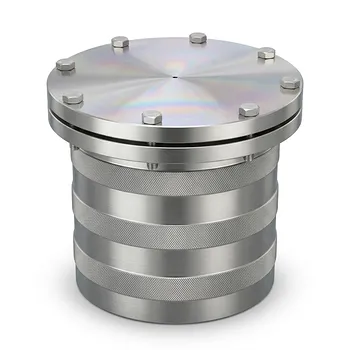
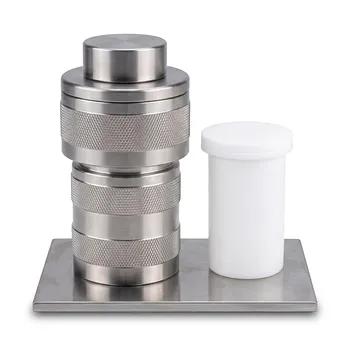
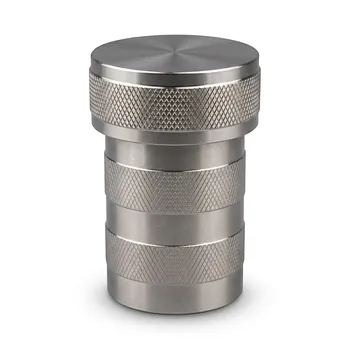
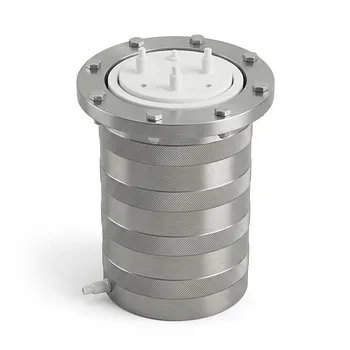
The use of a stainless steel autoclave with a PTFE liner is a fundamental requirement for TiO2-rGO synthesis because it provides a chemically inert, high-pressure environment. The PTFE liner resists the aggressive chemical erosion caused by strong alkaline or acidic precursors, while the stainless steel outer shell provides the mechanical strength necessary to contain the autogenous pressure generated at high temperatures. This combination ensures that the reduction of graphene oxide and the crystallization of titanium dioxide occur without the introduction of metallic impurities.
Core Takeaway: To successfully synthesize TiO2-rGO composites, the reactor must simultaneously withstand high internal pressures and extreme chemical corrosion; the stainless steel body provides the structural safety, while the PTFE liner maintains the chemical purity required for high-performance nanomaterials.
The Necessity of Chemical Inertness
Resisting Extreme Chemical Corrosion
Hydrothermal synthesis of TiO2-rGO often involves highly corrosive environments, such as high-concentration sodium hydroxide (NaOH) or hydrochloric acid. These substances are used to facilitate the reduction of graphene oxide and the growth of TiO2 nanostructures at temperatures typically ranging from 120°C to 200°C. Polytetrafluoroethylene (PTFE) is used because it is exceptionally resistant to high-temperature erosion from these strong bases and acids.
Eliminating Metallic Ion Contamination
If these corrosive precursors were in direct contact with the stainless steel reactor walls, they would leach metal ions into the reaction solution. Even trace amounts of iron, chromium, or nickel can act as unwanted dopants in the TiO2-rGO composite, significantly altering its electronic and photocatalytic properties. The PTFE liner provides a chemically inert surface that isolates the reaction, ensuring the final material's structural and chemical integrity.
Structural Integrity and High-Pressure Environments
Harnessing Autogenous Pressure
The synthesis of TiO2-rGO requires a sealed environment to reach subcritical water states, where water acts as both a solvent and a catalyst. At temperatures exceeding 100°C, the liquid inside the vessel generates significant autogenous pressure. This pressure is essential for facilitating the atomic-level reorganization required to form strong chemical bonds between the TiO2 nanoparticles and the rGO nanosheets.
Mechanical Strength of the Stainless Steel Outer Shell
While PTFE is chemically resilient, it is a soft material that cannot withstand high pressures on its own. The stainless steel autoclave body provides the necessary mechanical framework to contain this internal pressure safely. This allows the reaction to be maintained at constant, elevated temperatures for long durations—often up to 24 hours—without the risk of vessel deformation or explosion.
Understanding the Trade-offs and Limitations
Temperature Constraints of PTFE
One critical limitation of the PTFE liner is its thermal stability, which generally caps the safe operating temperature at approximately 250°C. Exceeding this limit can cause the liner to soften or undergo thermal decomposition, potentially leading to a breach and subsequent damage to the stainless steel vessel. For reactions requiring higher temperatures, more specialized liners like PPL (Polyphenylene polymers) or quartz are necessary.
Thermal Expansion Mismatch
PTFE and stainless steel have significantly different coefficients of thermal expansion. When heating or cooling the autoclave, the liner may expand or contract at a different rate than the shell. Cooling the reactor too quickly can cause the liner to deform or crack, which compromises the seal and risks contaminating future experiments.
How to Apply This to Your Project
Recommendations for Material Synthesis
The choice of equipment must be dictated by your specific precursors and target temperatures.
- If your primary focus is high-purity photocatalysts: Always utilize a virgin PTFE liner to ensure no cross-contamination from previous reactions occurs during the high-pressure hydrothermal phase.
- If your primary focus is using strong alkaline precursors (e.g., NaOH): Verify that the PTFE liner is thick and free of surface scratches, as concentrated bases can exploit minor imperfections to reach and corrode the outer steel shell.
- If your primary focus is temperatures above 250°C: Move away from standard PTFE-lined autoclaves and select a PPL liner or a custom-designed high-temperature alloy reactor.
Choosing the right combination of structural strength and chemical resistance is the only way to ensure the reliable and reproducible growth of advanced TiO2-rGO composites.
Summary Table:
| Component | Function | Key Benefit for TiO2-rGO Synthesis |
|---|---|---|
| Stainless Steel Body | Structural Support | Safely contains high autogenous pressure at 120°C–200°C. |
| PTFE Liner | Chemical Barrier | Prevents metallic ion leaching and resists corrosive NaOH/HCl. |
| Sealed System | Reaction Environment | Enables subcritical water states for atomic-level bond reorganization. |
| Thermal Limits | Temperature Control | Prevents liner decomposition (safe up to 250°C) and material failure. |
Achieve Unmatched Purity in Your Material Synthesis with KINTEK
Precision in nanomaterial synthesis starts with the right equipment. At KINTEK, we understand that even trace metallic contamination can compromise your research. That’s why we offer an extensive range of high-performance labware crafted exclusively from high-purity PTFE and PFA.
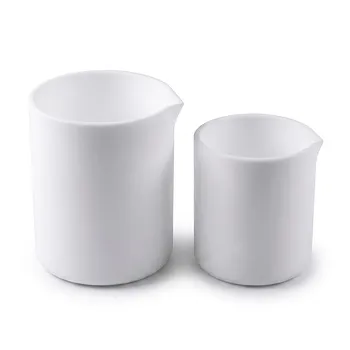
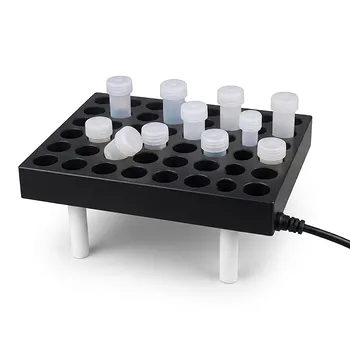
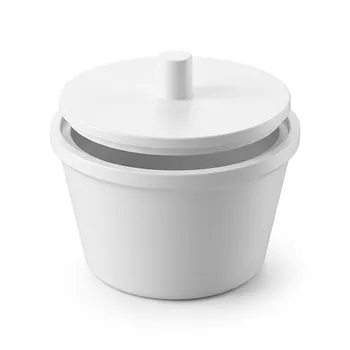
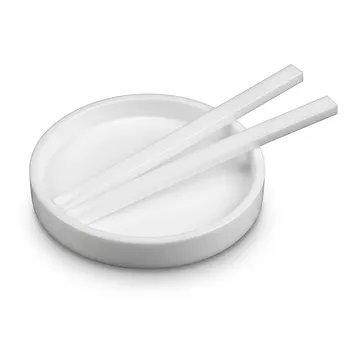
From everyday essentials like beakers, crucibles, and reagent bottles to specialized hydrothermal synthesis liners, microwave digestion vessels, and custom electrochemical cells, our products provide the ultimate chemical inertness your work demands. Whether you need standard consumables—such as centrifuge tubes, filters, and stirring bars—or complex, bespoke CNC-fabricated components and fluid transfer systems (tubing, valves, fittings), KINTEK is your end-to-end partner for fluoropolymer excellence.
Don’t let equipment limitations stall your innovation. Contact KINTEK today to discuss your specific laboratory requirements and discover how our custom high-performance solutions can enhance your results!
References
- Cristian Martínez-Perales, Francisco Márquez. From Pollutant Removal to Renewable Energy: MoS2-Enhanced P25-Graphene Photocatalysts for Malathion Degradation and H2 Evolution. DOI: 10.3390/ma18112602
This article is also based on technical information from Kintek Knowledge Base .
Related Products
- Custom TFM Reaction Vessel with Stainless Steel Jacket and PTFE Inner Cup for High Corrosion Resistance
- PTFE Lined High Pressure Digestion Vessel 50ml High Temperature Hydrothermal Synthesis Tank
- High Temperature Corrosion Resistant Hydrothermal Synthesis Reactor with TFM Inner Liner and Straight Cylinder Design
- High Pressure Custom TFM Reactor Stainless Steel Outer Vessel PTFE Inner Cup for Corrosive Synthesis
- PTFE Acid Steam Cleaning System HF Resistant Trace Analysis Beaker Digestion Tank Customizable
People Also Ask
- Why are high-performance pressure-resistant reaction vessels required for oxygen-assisted hydrothermal conversion at 150 °C?
- Why are high-quality fluoropolymer-lined reaction vessels required for alk-Ti3C2Tx MXene? Ensure Purity & HF Resistance
- How do magnetic stirring and reaction vessels impact MOF-derived carbon quality? Optimize Your Composite Performance
- Why are PTFE-lined reaction vessels necessary for forced degradation studies? Ensure high-purity results and accuracy.
- Why is a high-purity PTFE lined reaction vessel required for the acidic etching of MXenes? Ensure Material Purity.