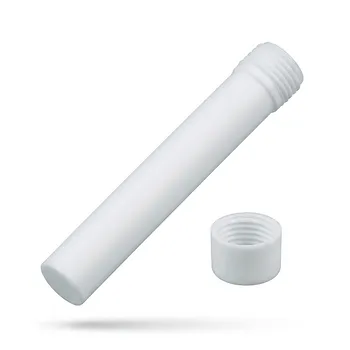
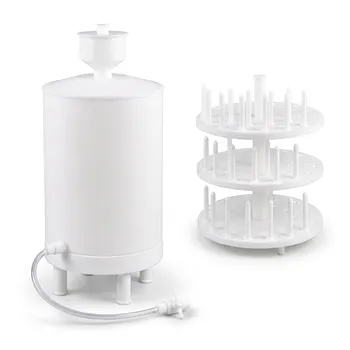
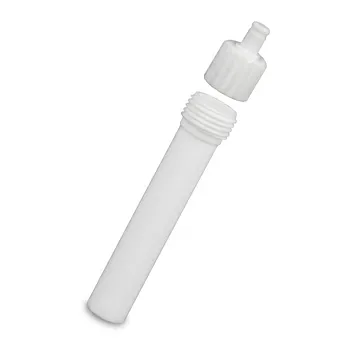
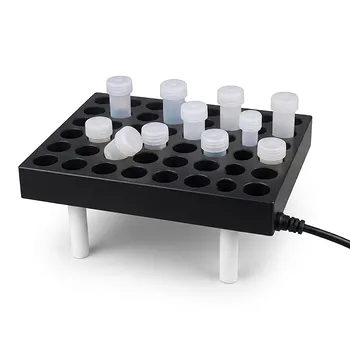
The synthesis of Gallic Acid-based Carbon Dots (GA-DMF CDs) requires a PTFE-lined stainless steel autoclave to provide a controlled, high-pressure environment for carbonization. This specific setup allows the reaction to reach the necessary 200°C in N,N-Dimethylformamide (DMF) while protecting the sample from metallic impurities. The combination of structural strength and chemical inertness ensures the resulting carbon dots achieve the desired green fluorescence and chemical purity.
Core Takeaway: A PTFE-lined autoclave is essential because it facilitates the high-temperature solvothermal reaction required for carbonization while preventing solvent-driven corrosion and metal ion contamination that would otherwise degrade the carbon dots' optical properties.
Creating the Necessary Solvothermal Environment
Achieving Subcritical Conditions
The synthesis of GA-DMF CDs requires a temperature of 200°C, which is significantly higher than the boiling point of the DMF solvent. A sealed stainless steel autoclave creates the autogenous pressure required to keep the solvent in a subcritical state. This high-pressure environment facilitates the dehydration and carbonization of Gallic Acid into nano-sized carbon dots.
Structural Integrity Under Stress
The stainless steel outer shell provides the mechanical strength necessary to withstand the intense internal pressures generated during the heating process. Without this reinforced shell, the reactor would fail as the volatile solvents expand at 200°C. This allows for the safe "in-situ" growth of carbon structures that would be impossible at atmospheric pressure.
The Critical Role of the PTFE Liner
Superior Chemical Inertness
Polytetrafluoroethylene (PTFE) is used as an internal liner because it is almost entirely non-reactive with organic solvents like DMF. At elevated temperatures, highly polar solvents can become aggressive, but the PTFE liner acts as a barrier that prevents the solvent from attacking the metal walls. This ensures that the chemical reaction remains confined to the precursors and the solvent.
Preventing Metal Ion Contamination
If the reaction medium were to contact the stainless steel directly, metal ions such as iron, nickel, or chromium could leach into the solution. These metallic impurities can quench fluorescence or alter the surface chemistry of the carbon dots. The PTFE liner blocks this leaching, preserving the optical consistency and purity of the green fluorescent product.
Ensuring Optical and Chemical Precision
Maintaining Surface Chemistry
The fluorescence of GA-DMF CDs is highly dependent on the specific functional groups on their surface. By preventing side reactions with the reactor walls, the PTFE liner ensures that the carbonization pathway remains predictable and repeatable. This stability is vital for applications in sensing or imaging where specific emission wavelengths are required.
Thermal Stability Limits
While PTFE is highly effective, it has a functional limit, typically performing reliably up to 220°C. In the synthesis of GA-DMF CDs, operating at 200°C stays within this safety margin while providing enough energy for the precursors to react. This balance between thermal stability and chemical resistance is what makes the PTFE-lined autoclave the industry standard for this synthesis.
Understanding the Trade-offs and Pitfalls
Temperature Constraints
The primary limitation of PTFE is its thermal ceiling; exceeding 250°C can cause the liner to soften or release toxic fumes. For reactions requiring higher temperatures, researchers must switch to more expensive materials like PPL (para-polyphenylene) liners. For GA-DMF CDs, however, the 200°C threshold makes PTFE the most cost-effective and efficient choice.
Pressure and Sealing Risks
Improperly sealing the autoclave or overfilling the liner can lead to pressure spikes that may deform the PTFE. If the liner becomes "cretted" or distorted, it can lead to leaks that expose the stainless steel shell to corrosive precursors. Regular inspection of the liner for thinning or discoloration is necessary to maintain the integrity of the carbon dot synthesis.
How to Apply This to Your Project
When selecting or operating an autoclave for carbon dot synthesis, consider the following requirements based on your specific research goals:
- If your primary focus is optical purity: Always use a high-purity PTFE liner to eliminate metal ion quenching and ensure consistent fluorescence.
- If your primary focus is high-yield carbonization: Ensure the stainless steel shell is rated for at least 10 MPa to safely handle the autogenous pressure of DMF at 200°C.
- If your primary focus is long-term durability: Never exceed a 70-80% fill volume in the PTFE liner to allow for liquid expansion and prevent seal failure.
Utilizing a PTFE-lined stainless steel autoclave is the only reliable way to synthesize high-quality Gallic Acid-based Carbon Dots without compromising their chemical structure or optical performance.
Summary Table:
| Component | Core Function | Benefit for GA-DMF CDs |
|---|---|---|
| Stainless Steel Shell | Structural Integrity | Withstands high autogenous pressure at 200°C |
| PTFE Liner | Chemical Inertness | Prevents DMF solvent from corroding the reactor |
| Contamination Barrier | Ion Protection | Blocks Fe/Ni/Cr leaching to preserve fluorescence |
| Sealed Environment | Pressure Control | Enables subcritical carbonization of Gallic Acid |
| Thermal Stability | Heat Management | Safely operates within the 200°C synthesis threshold |
Elevate your material synthesis with KINTEK’s high-performance fluoropolymer solutions. Whether you require everyday basic labware like PTFE beakers and crucibles, or specialized hydrothermal synthesis liners and microwave digestion vessels, we provide the purity your research demands. From high-purity trace analysis instruments and fluid transfer components (tubing, valves, fittings) to advanced custom electrochemical cells and bespoke CNC-machined parts, KINTEK manufactures virtually every laboratory supply imaginable from premium PTFE and PFA. Ensure your GA-DMF Carbon Dots maintain perfect optical consistency by eliminating metallic impurities. Contact KINTEK today for standard high-volume orders or complex, non-standard machined setups tailored to your lab's exact specifications.
References
- Hardeep Kaur, Ibrahim A. Darwısh. Highly Green Fluorescent Carbon Dots from Gallic Acid: A Turn-On Sensor toward Pb<sup>2+</sup> Ions. DOI: 10.1021/acsomega.4c10796
This article is also based on technical information from Kintek Knowledge Base .
Related Products
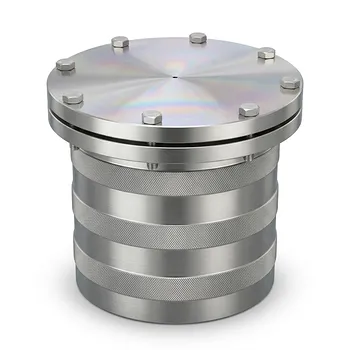
- Custom TFM Reaction Vessel with Stainless Steel Jacket and PTFE Inner Cup for High Corrosion Resistance
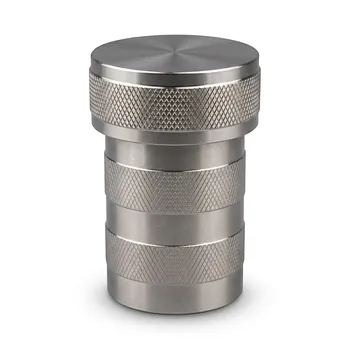
- PTFE Lined High Pressure Digestion Vessel 50ml High Temperature Hydrothermal Synthesis Tank
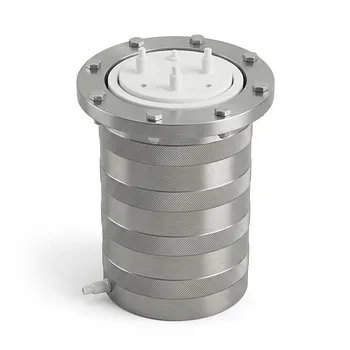
- High Temperature Corrosion Resistant Hydrothermal Synthesis Reactor with TFM Inner Liner and Straight Cylinder Design
- High Pressure Custom TFM Reactor Stainless Steel Outer Vessel PTFE Inner Cup for Corrosive Synthesis
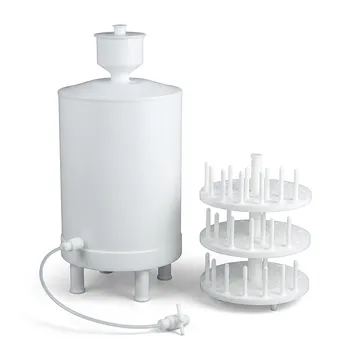
- PTFE Acid Steam Cleaning System HF Resistant Trace Analysis Beaker Digestion Tank Customizable
People Also Ask
- Why are high-performance pressure-resistant reaction vessels required for oxygen-assisted hydrothermal conversion at 150 °C?
- How do magnetic stirring and reaction vessels impact MOF-derived carbon quality? Optimize Your Composite Performance
- Why are high-quality fluoropolymer-lined reaction vessels required for alk-Ti3C2Tx MXene? Ensure Purity & HF Resistance
- Why are PTFE-lined reaction vessels necessary for forced degradation studies? Ensure high-purity results and accuracy.
- Why is a high-purity PTFE lined reaction vessel required for the acidic etching of MXenes? Ensure Material Purity.