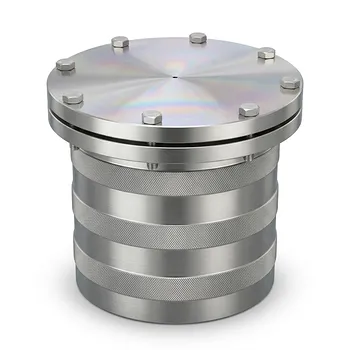
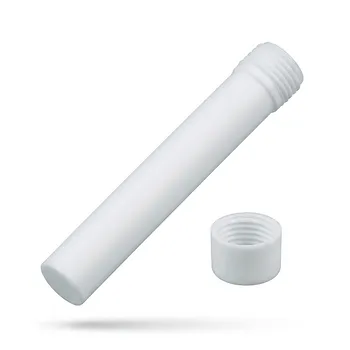
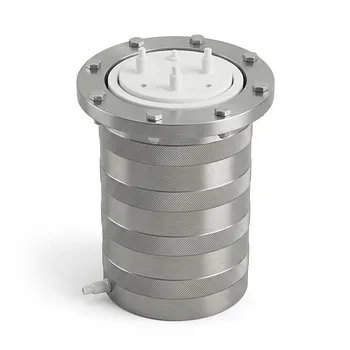
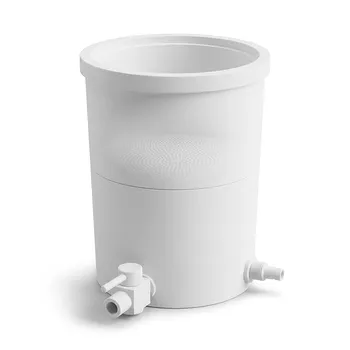
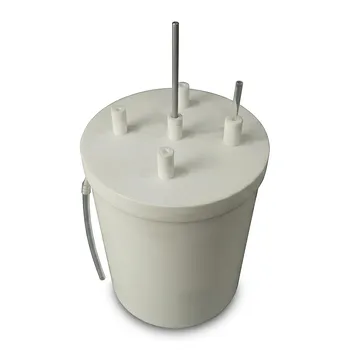
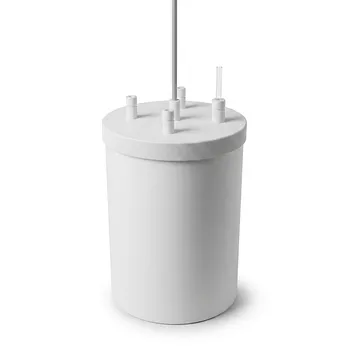
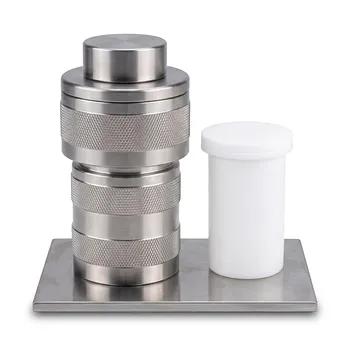
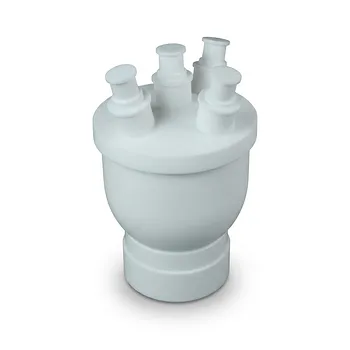
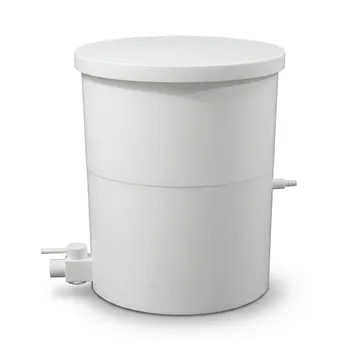
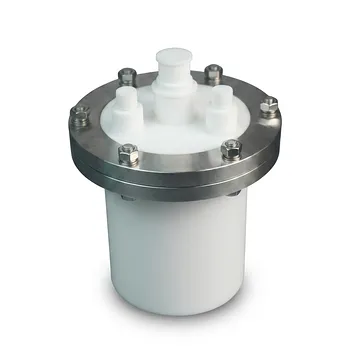
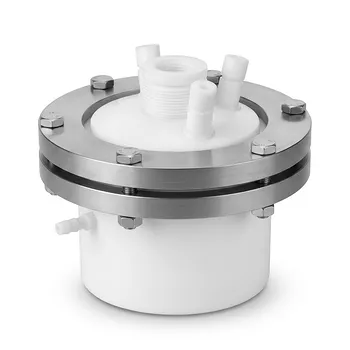
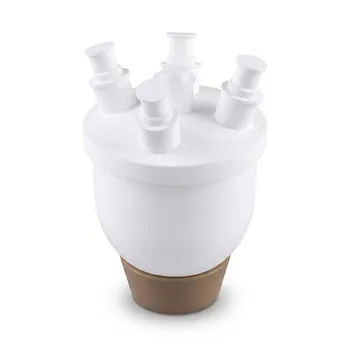
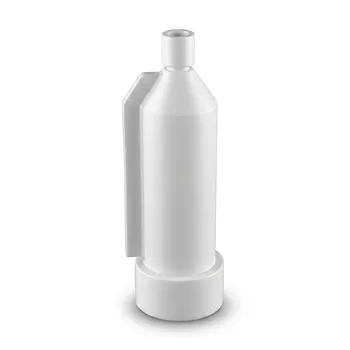
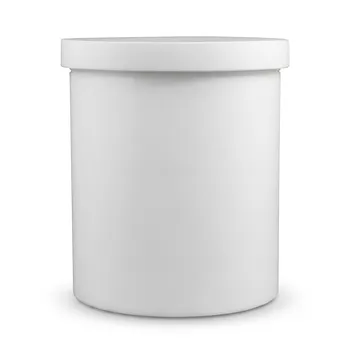
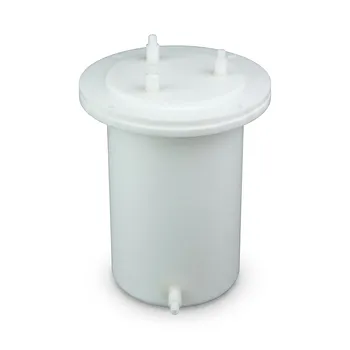
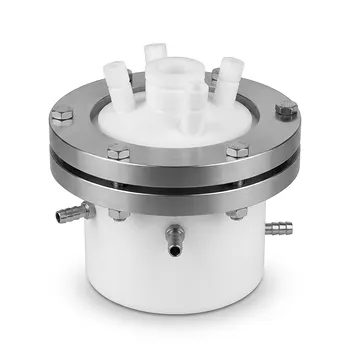
The PTFE reactor liner serves as the essential internal barrier in hydrothermal synthesis. It provides a chemically inert environment capable of withstanding the high temperatures (typically up to 220°C) and autogenous pressures required to transform chemical precursors into precise nanostructures. By isolating corrosive reactants from the metal autoclave, it simultaneously ensures the purity of the synthesized nanomaterials and protects the structural integrity of the pressure vessel.
The PTFE liner acts as a "clean room" within the reactor, preventing metallic contamination and resisting corrosive chemistry to enable the controlled growth of high-purity nanocrystals and quantum dots.
Maintaining Chemical Purity and Isolation
Eliminating Metal Ion Leaching
The most critical role of the PTFE liner is providing total chemical isolation between the reaction solution and the stainless steel autoclave wall. Without this barrier, the high-pressure environment would cause metal ions from the reactor shell to leach into the system, poisoning the reaction. This isolation is vital for achieving the crystalline phase purity required for high-performance nanomaterials.
Stability in Aggressive pH Environments
Hydrothermal synthesis often requires the use of strong acids or alkalis to dissolve precursors. PTFE is naturally resistant to nearly all chemical solvents, allowing researchers to safely process solutions with extreme pH levels, such as the acidic precursors (pH ~2) used in vanadium pentoxide (V2O5) synthesis.
Facilitating Controlled Nanomaterial Growth
Enabling High-Pressure Transformations
The liner creates a sealed interface that maintains the autogenous pressure generated during heating. This pressure is the driving force that induces the chemical transformation of precursors into specific morphologies like nanosheets, nanotubes, or nanorods. By providing a stable pressure environment, the liner ensures that these transformations occur uniformly throughout the batch.
Supporting Subcritical Synthesis
In the synthesis of materials like titanium dioxide (TiO2), the liner allows the reaction to proceed at subcritical temperatures (130-140°C). The controlled thermal stability of the PTFE ensures that the internal environment remains clean and consistent. This consistency is what allows for the repeatable production of specific microstructural frameworks.
Protecting Equipment and Ensuring Practicality
Preventing Autoclave Corrosion
Hydrothermal reactors are typically made of high-strength stainless steel, which is susceptible to pitting and stress corrosion when exposed to salts and acids at high temperatures. The PTFE liner acts as a sacrificial but durable shield, extending the lifespan of the expensive outer pressure vessel by preventing direct contact with corrosive media.
Optimizing Product Recovery
PTFE is known for its excellent non-stick properties, which are highly beneficial after the synthesis is complete. This characteristic facilitates the complete recovery of the synthesized powder or crystals from the liner walls. Furthermore, the non-stick surface makes the liners easy to clean, reducing the risk of cross-contamination between different experimental runs.
Understanding the Trade-offs and Limitations
Thermal Temperature Ceilings
While PTFE is highly resilient, it has a definitive thermal limit, generally recommended not to exceed 220°C to 250°C. Beyond these temperatures, the material begins to soften and can undergo thermal decomposition, potentially releasing toxic fluorinated gases and contaminating the sample.
Mechanical Deformation (Creep)
Under the extreme pressures of hydrothermal synthesis, PTFE is subject to mechanical creep or deformation over time. If a liner is reused too many times or subjected to excessive heat, it may lose its shape or develop thin spots. This degradation can lead to seal failure, which risks damaging the metal autoclave or causing a sudden loss of pressure.
Recommendations for Successful Synthesis
How to Apply This to Your Project
- If your primary focus is high-purity quantum dots: Always use a high-purity PTFE or PFA liner to ensure zero metallic contamination from the reactor walls.
- If your primary focus is extreme temperature synthesis (above 250°C): Avoid standard PTFE liners and instead consider specialized PPL (Polyphenylene polymers) or quartz liners that offer higher thermal stability.
- If your primary focus is corrosive acid synthesis: Regularly inspect the liner for "clouding" or pitting, as even PTFE can eventually show wear under repeated exposure to aggressive acidic precursors at high pressure.
The PTFE liner is the silent enabler of hydrothermal chemistry, bridging the gap between aggressive chemical requirements and the need for high-purity material output.
Summary Table:
| Feature | Benefit for Hydrothermal Synthesis | Critical Limitation |
|---|---|---|
| Chemical Inertness | Prevents metal ion leaching; ensures crystalline phase purity. | Max temp: 220°C - 250°C |
| pH Resistance | Safely handles aggressive acids and alkalis (pH 2-14). | Pitting under extreme use |
| Non-Stick Surface | Maximizes product recovery and prevents cross-contamination. | Subject to mechanical creep |
| Pressure Stability | Maintains autogenous pressure for morphology control. | Seal failure risk if deformed |
| Thermal Isolation | Protects the stainless steel autoclave from corrosive media. | Potential for thermal decomposition |
Elevate Your Research with KINTEK’s High-Performance Fluoropolymer Solutions
At KINTEK, we specialize in the absolute focus on high-performance fluoropolymers to empower your most demanding laboratory processes. Whether you are synthesizing high-purity quantum dots or performing complex fluid transfers, our precision-engineered PTFE and PFA products ensure zero contamination and maximum chemical resistance.
Our extensive range covers every laboratory need:
- Everyday Basic Labware: Beakers, measuring cylinders, crucibles, dishes, and reagent/wash bottles.
- Sample Prep & Filtration: Separatory funnels, burettes, filters, pipettes, tweezers, and spatulas.
- Fluid Transfer & Consumables: Tubing, fittings, valves, stirring bars, O-rings, and gaskets.
- Advanced Reaction Apparatus: Custom PTFE reactor liners, electrochemical cells, battery testing fixtures, and microwave digestion vessels.
With our end-to-end custom CNC fabrication, KINTEK can deliver everything from high-volume standard orders to complex, non-standard bespoke laboratory setups tailored to your specific research requirements.
Ready to optimize your synthesis workflow? Contact KINTEK today to discuss your custom labware needs!
References
- Jusheng Bao, You Liu. Hydrothermal Synthesis of Single‐Crystal Europium Tungstate Hydroxide Nanobelts for Enhanced Humidity Sensing. DOI: 10.1002/asia.202401933
This article is also based on technical information from Kintek Knowledge Base .
Related Products
- Custom TFM Reaction Vessel with Stainless Steel Jacket and PTFE Inner Cup for High Corrosion Resistance
- High Purity TFM Microwave Digestion Vessels PTFE Acid Evaporation Liners Domestic GT-400 Equivalent Laboratory Reaction Containers
- High Pressure Custom TFM Reactor Stainless Steel Outer Vessel PTFE Inner Cup for Corrosive Synthesis
- Large Scale PTFE Double Layer Reaction Tank with Integrated Filter Plate for Chemical Processing
- PTFE 10L Reaction Vessel with Stirring Paddle Customizable Corrosion Resistant High Temperature Reactor for Biopharmaceutical and Chemical Processing
People Also Ask
- Why are high-performance pressure-resistant reaction vessels required for oxygen-assisted hydrothermal conversion at 150 °C?
- Why are high-quality fluoropolymer-lined reaction vessels required for alk-Ti3C2Tx MXene? Ensure Purity & HF Resistance
- How do magnetic stirring and reaction vessels impact MOF-derived carbon quality? Optimize Your Composite Performance
- Why are PTFE-lined reaction vessels necessary for forced degradation studies? Ensure high-purity results and accuracy.
- Why is a high-purity PTFE lined reaction vessel required for the acidic etching of MXenes? Ensure Material Purity.