Commercial PTFE resins are unsuitable for standard melt processing because their extremely high molecular weight creates an exceptionally high melt viscosity. Even above PTFE’s melting point, the resin does not flow like a conventional thermoplastic, so it cannot normally be injection molded or melt-extruded into laboratory components. Instead, high-purity PTFE parts are typically made through compression molding, sintering, paste extrusion, and precision CNC machining, while materials such as PFA and FEP can be processed using conventional melt techniques.
The key distinction is molecular mobility: standard PTFE preserves exceptional chemical and thermal performance by using very long, tightly packed polymer chains, but those same characteristics prevent the molten resin from flowing through ordinary processing equipment.
Why Standard PTFE Does Not Flow Normally
Extremely high molecular weight
Commercial PTFE homopolymers commonly have molecular weights in the millions. The long chains provide structural integrity and help the finished material withstand aggressive chemicals, elevated temperatures, and demanding mechanical service.
The trade-off is exceptionally high melt viscosity. When heated above its melting point, PTFE softens and becomes crystalline-melted, but it still does not flow readily enough for standard injection molding or extrusion.
Tight molecular packing
PTFE’s tetrafluoroethylene backbone forms a rigid, highly fluorinated structure that packs tightly and exhibits high crystallinity. This structure contributes to its low friction, chemical inertness, dielectric performance, and thermal stability.
It also restricts chain movement. The polymer chains cannot rearrange and flow as easily as those in conventional thermoplastics or melt-processible fluoropolymers.
Melting is not the same as processable flow
A material can have a measurable melting point without behaving like a conventional injection-molding resin. For PTFE, heating above approximately 327°C reduces crystalline order, but the resulting material remains too viscous for ordinary melt flow.
This is why simply raising the processing temperature does not solve the problem. Excessive heat can damage the resin or the surrounding equipment without producing the controlled flow required to fill a mold.
How Other Fluoropolymers Differ
Lower molecular weight enables melt processing
Melt-processible fluoropolymers, including PFA and FEP, are designed with molecular structures that allow sufficient chain mobility when heated. Their melt viscosities are low enough for extrusion, injection molding, and related thermal fabrication methods.
This makes it possible to manufacture complex geometries directly from the resin rather than machining them from a previously molded blank.
Copolymerization disrupts tight packing
PFA incorporates perfluoroalkoxy comonomers into the TFE polymer structure. These comonomers introduce side groups that disrupt the tight packing characteristic of pure PTFE.
The resulting material has lower crystallinity and improved melt flow while retaining very high chemical resistance and thermal stability.
Processing flexibility changes the available designs
PFA can be molded or extruded into smooth-bore tubing, fittings, valves, bottles, digestion vessels, and other intricate laboratory components. It can also be heat-welded to create seamless or leak-tight fluidic assemblies.
Standard PTFE can provide comparable chemical resistance, but its fabrication route is more constrained. Complex parts generally require molding or sintering followed by machining, joining, or other secondary operations.
How High-Purity PTFE Parts Are Manufactured
Compression molding and sintering
Granular PTFE resin is commonly compacted in a mold and then heated through a sintering cycle. The process consolidates the powder into a solid shape without requiring the resin to flow through the mold like an injection-molding compound.
The resulting stock shape can be used directly for simpler components or prepared for further machining.
Paste extrusion
Fine-powder PTFE can be mixed with a processing lubricant and formed through paste extrusion. After shaping, the lubricant is removed and the material is sintered.
This method is especially useful for producing certain tubing and long profiles, but it is fundamentally different from conventional melt extrusion.
Precision CNC machining
PTFE blanks and molded shapes can be machined into custom manifolds, electrochemical cells, reaction vessels, and specialized laboratory apparatus. CNC machining provides dimensional control and design flexibility for low-volume or highly customized equipment.
It also avoids introducing melt-processing modifiers that could affect purity or performance.
Why This Matters for Laboratory Supplies
Purity and chemical resistance
High-molecular-weight PTFE is valued in laboratory environments because it offers exceptional resistance to acids, bases, solvents, and other aggressive reagents. It also has strong thermal stability and a very low coefficient of friction.
For demanding applications, preserving these properties may be more important than achieving the simplest manufacturing process.
Surface and fluid-handling requirements
PFA’s melt-processability allows manufacturers to produce smooth, continuous surfaces and complex fluid paths with fewer secondary machining operations. Its optical clarity can also help operators inspect fluids, interfaces, and contamination inside a component.
These characteristics are valuable in trace analysis, reagent handling, and low-dead-volume fluid systems.
Component geometry determines the material choice
PTFE is well suited to robust, custom-machined parts such as heavy-duty labware, seals, apparatus, and electrochemical components. PFA is often more practical when the design requires intricate molded geometry, transparency, welded connections, or repeatable high-volume production.
The choice is therefore not based on chemical resistance alone. Manufacturing method, geometry, purity requirements, inspection needs, and production volume all matter.
Understanding the Trade-offs
PTFE’s processing difficulty is linked to its performance
The same long-chain structure that makes PTFE difficult to melt-process helps deliver its exceptional service properties. Selecting a melt-processible alternative may improve manufacturability, but it can change mechanical behavior, optical properties, crystallinity, or high-temperature performance.
Material selection should therefore evaluate the complete operating environment rather than treating processing convenience as the only criterion.
Melt-processible PTFE compositions are not standard PTFE
Some specialized PTFE compositions use lower-molecular-weight PTFE micropowders or other formulation strategies to improve processing behavior. These materials should not be confused with standard high-molecular-weight PTFE homopolymers used for demanding high-purity applications.
Additives or modified compositions may affect mechanical integrity, wear behavior, cleanliness, or extractables. Their suitability must be verified for the intended laboratory use.
Secondary operations can affect performance
Compression molding and machining provide reliable routes for PTFE fabrication, but machining marks, joints, dimensional variation, and post-processing contamination must be controlled.
For ultra-trace applications, manufacturing qualification should include cleaning procedures, surface characterization, dimensional inspection, and testing for extractables or leachables where relevant.
“Melt-processible” does not mean interchangeable
PFA and FEP can be processed using conventional thermal methods, but they are not identical to PTFE. Their temperature limits, stiffness, permeability, wear response, transparency, and welding behavior differ.
A component that is easy to mold may still be unsuitable if its operating conditions require the specific performance envelope of standard PTFE.
Making the Right Choice for Your Goal
The practical decision should begin with the required performance and geometry, then identify the manufacturing route that can deliver both.
- If your primary focus is maximum chemical and thermal resistance: Use standard high-molecular-weight PTFE and plan for compression molding, sintering, paste extrusion, or precision machining.
- If your primary focus is complex molded geometry: Consider a melt-processible fluoropolymer such as PFA or FEP, provided its performance meets the application requirements.
- If your primary focus is transparent, weldable fluid handling: PFA is generally better suited to molded and heat-welded tubing, fittings, valves, and vessels.
- If your primary focus is customized low-volume laboratory apparatus: PTFE blanks or molded stock followed by CNC machining can provide the required design flexibility.
- If your primary focus is ultra-trace cleanliness: Evaluate resin grade, processing aids, machining, cleaning, and extractables together rather than selecting solely on the basis of melt-processability.
The central engineering principle is simple: standard PTFE is difficult to melt-process because its molecular structure prioritizes extreme performance over melt flow, while PFA and related fluoropolymers trade some structural characteristics for conventional manufacturing flexibility.
Summary Table:
| Feature | PTFE | PFA/FEP |
|---|---|---|
| Melt processability | Not suitable (high viscosity) | Suitable (lower viscosity) |
| Molecular structure | High molecular weight, tightly packed | Lower molecular weight, copolymers |
| Common manufacturing | Compression molding, sintering, paste extrusion, machining | Injection molding, extrusion, welding |
| Typical lab applications | Custom-machined parts, high-purity labware | Tubing, fittings, valves, transparent vessels |
Need expert guidance on selecting the right fluoropolymer for your lab application? Trust KINTEK's high-performance PTFE and PFA products. With over 30 years of custom machining experience, we deliver precision parts tailored to your exact specifications. Contact us today to discuss your requirements and receive a free consultation. Get in touch with our specialists.
Related Products
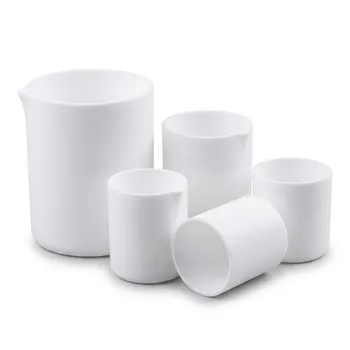
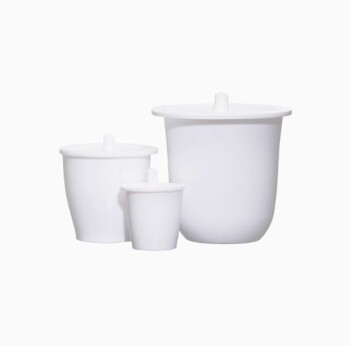
- High Purity PFA Crucible and Corrosion Resistant PTFE Beaker for Trace Analysis and Custom Laboratory Applications
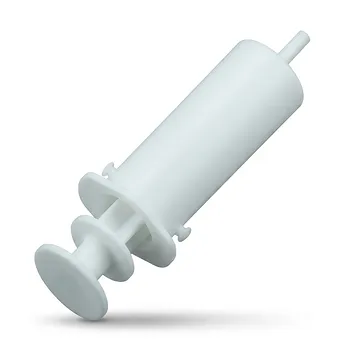
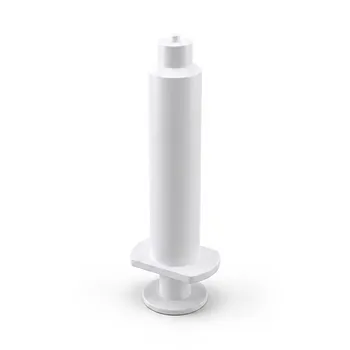
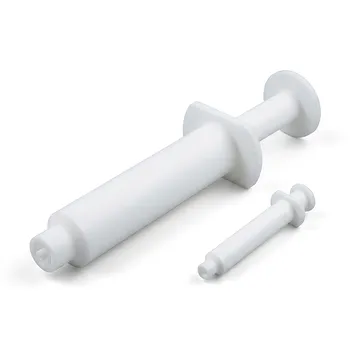
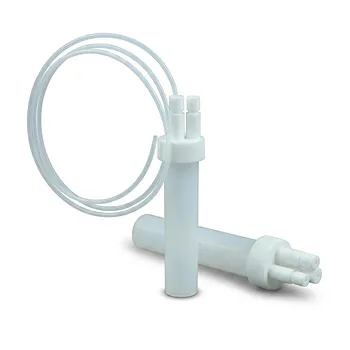
- High Purity Laboratory Grade PTFE Syringe Chemical Resistant Fluoropolymer Injector for Trace Analysis
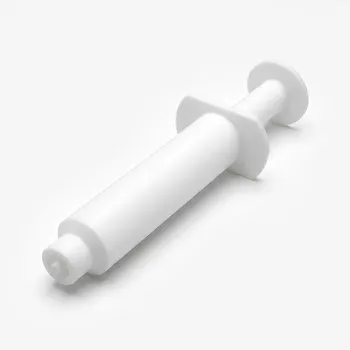
- Corrosion Resistant White PTFE Syringe for Laboratory Sampling Low Background Trace Analysis
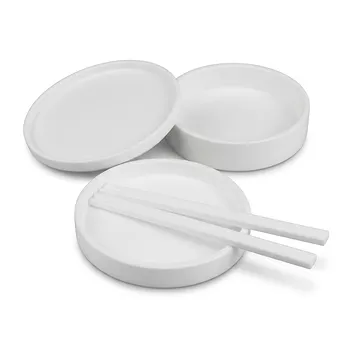
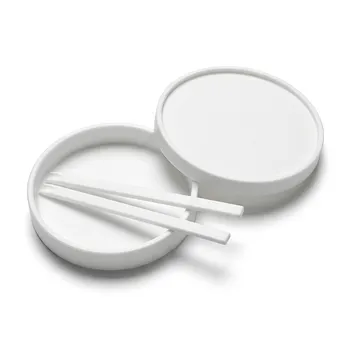
- Custom PTFE Petri Dish 200mm High Purity Corrosion Resistant Low Background Laboratory Ware
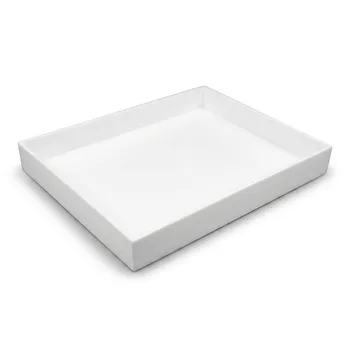
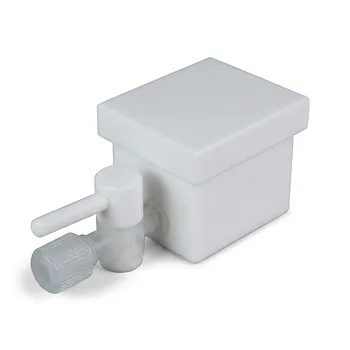
- High Purity PTFE Trays Corrosion Resistant Laboratory Labware Customizable Square Round Fluoropolymer Trays
People Also Ask
- Why are high-purity vessels critical for BiFeO3 synthesis? Ensuring Phase Purity
- Why is the use of high-purity PFA or PTFE labware critical during TiO2 nanoparticle purification? Protect Sample Purity
- Why is high-purity PFA trace analysis labware recommended for trace element detection? Achieve Gold Standard PPT Accuracy
- Why is high-purity PFA trace analysis labware used for MXene? Ensure Superior Material Integrity in Research
- Why is high-purity PFA labware necessary for Znx@LS-2 zeolite ICP-OES analysis? Ensure Trace-Level Precision