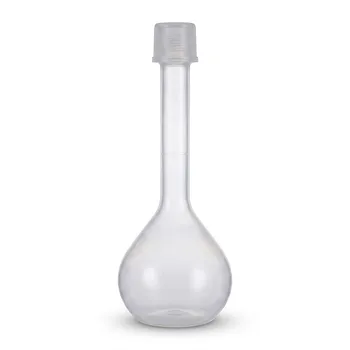
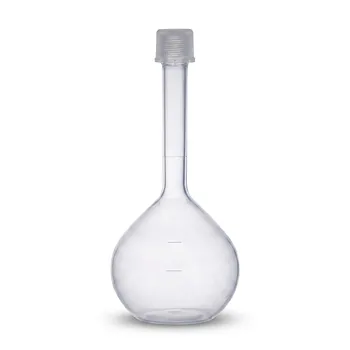
High-precision volumetric flasks are the primary tools used to establish exact dilution factors during the quantitative analysis of furfural. By diluting reaction solutions to a specific, fixed volume, these flasks ensure that the concentrations measured via High-Performance Liquid Chromatography (HPLC) can be accurately converted into total yield. This precision is fundamental to determining the efficiency of the catalysts used in the furfural production process.
Core Takeaway: Volumetric flasks serve as the "mathematical anchor" in furfural analysis, providing a fixed volume limit that allows researchers to reliably convert instrument-detected concentrations into absolute yield percentages and catalytic efficiency metrics.
The Role of Precision in Concentration Control
Establishing Accurate Standard Curves
In quantitative analysis, furfural concentrations are determined by comparing sample signals against a standard curve. High-precision volumetric flasks are used to prepare these standards at exact increments, ensuring the linear relationship between signal and concentration is mathematically sound. Any error at this stage propagates through every subsequent calculation.
Normalizing Samples for HPLC Analysis
Reaction mixtures often contain high concentrations of reactants or byproducts that must be thinned to fit within the optimal linear range of the HPLC detector. Volumetric flasks allow for the precise dilution of these raw samples. This normalization ensures that the detector is neither saturated nor under-sensing, providing a clear and representative reading of the furfural present.
Ensuring Experimental Reproducibility
The use of high-grade glassware, such as Class A volumetric flasks, minimizes the margin of error across different laboratory sessions. By maintaining a constant volume (e.g., 25 mL or 50 mL) for every sample, researchers ensure that data is comparable over time. This repeatability is essential for verifying whether changes in furfural yield are due to catalytic performance or merely volumetric inconsistency.
Impact on Yield and Efficiency Calculations
The Critical Role of the Dilution Factor
The "yield" of furfural is not measured directly; it is calculated by multiplying the detected concentration by the dilution factor. If a 1 mL sample is diluted in a volumetric flask to 50 mL, the flask defines that 50x multiplier. A minor deviation in that volume—even a few microliters—results in a significant miscalculation of the total mass of furfural produced.
Converting Relative Signals to Absolute Content
Analytical instruments like HPLC or Spectrophotometers provide a concentration value (mass per unit volume). To determine the absolute content or "heavy metal flux" in related biomass studies, the total volume must be a known constant. The volumetric flask acts as the fixed variable that allows for the back-calculation from a liquid concentration to the original dry matter or raw material weight.
Assessing Catalytic Efficiency
In chemical research, the success of a reaction is judged by its percent yield. High-precision volumetric measurements ensure that the "final assessment of catalytic efficiency" is based on factual data. Without this precision, a researcher might incorrectly conclude that a catalyst is more or less effective than it truly is, leading to wasted resources in downstream development.
Understanding the Trade-offs and Risks
Temperature Sensitivity and Calibration
Volumetric flasks are calibrated to contain a specific volume at a standard temperature (usually 20°C). If a furfural reaction solution is added while still hot from the reactor, the glass will expand, and the resulting volume will be inaccurate. Analysts must ensure samples are cooled to room temperature before final volume adjustment to maintain high-precision standards.
Human Error in Meniscus Reading
Despite the high precision of the flask itself, the accuracy of the dilution depends entirely on the technician's ability to read the meniscus. Parallax errors or failing to align the bottom of the liquid curve with the graduation mark can introduce "hidden" variables. These manual errors can undermine the benefits of using high-grade volumetric equipment.
Material Compatibility and Residual Loss
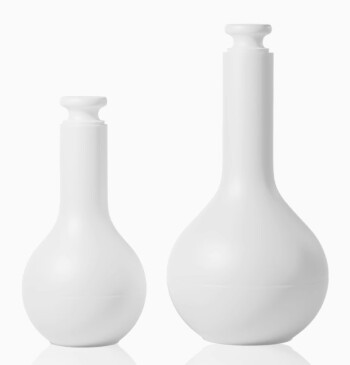
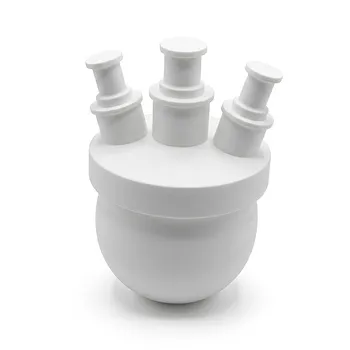
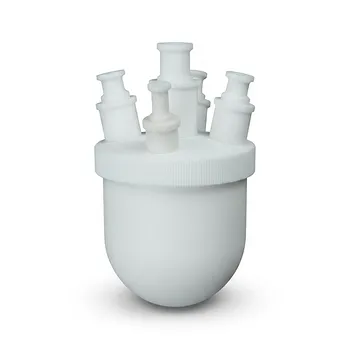
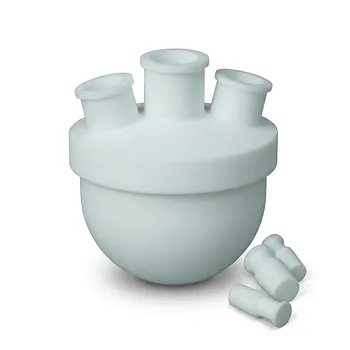
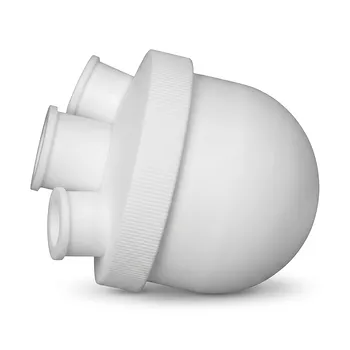
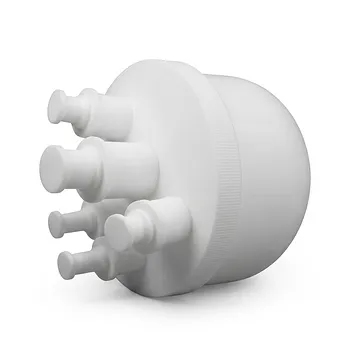
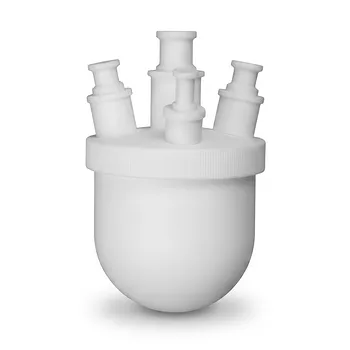
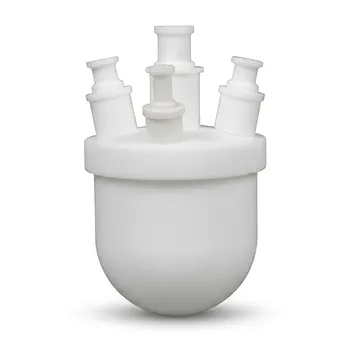
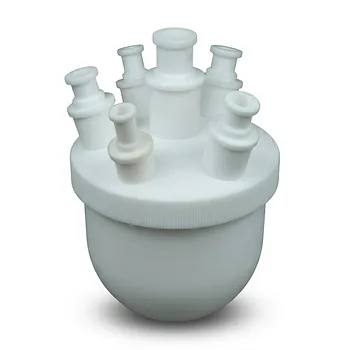
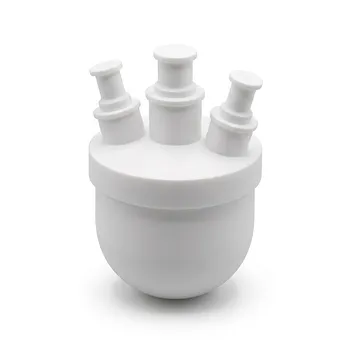
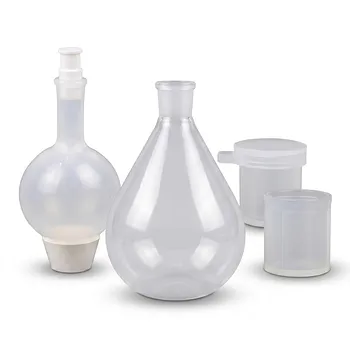
While glass is standard, some highly alkaline or specialized reaction environments might require fluoropolymer (PTFE/PFA) flasks to prevent leaching or adsorption. Additionally, the quantitative transfer process—moving the sample into the flask—must be meticulous. Any residue left in the original vessel means the final volume in the flask no longer represents the total product of the reaction.
How to Ensure Precision in Your Furfural Analysis
To achieve the highest level of accuracy in your quantitative research, follow these guidelines based on your specific analytical goals:
- If your primary focus is Maximum Yield Accuracy: Always use Class A glass volumetric flasks and allow all solutions to equilibrate to 20°C before performing the final volume adjustment.
- If your primary focus is Trace Analysis/Impurity Profiling: Consider using high-performance plastic (PFA) flasks to minimize ion leaching and ensure that the furfural signal remains uncontaminated.
- If your primary focus is High-Throughput Screening: Utilize calibrated mechanical pipettes in conjunction with volumetric flasks to speed up the initial sample transfer while maintaining the fixed-volume integrity of the flask for the final dilution.
The integrity of your furfural yield data depends entirely on the transition from raw reaction liquid to a precisely defined volume.
Summary Table:
| Role in Analysis | Key Benefit | Impact on Results |
|---|---|---|
| Dilution Control | Establishes fixed multipliers | Accurate concentration-to-yield conversion |
| Standardization | Creates reliable curves | Sound linear relationship in HPLC/Spectra |
| Reproducibility | Minimizes margin of error | Ensures data is comparable across lab sessions |
| Material Integrity | PFA/PTFE prevents leaching | High purity for trace impurity profiling |
Elevate Your Analytical Precision with KINTEK Fluoropolymer Solutions
In furfural analysis, even a microliter of volume error or trace contamination can skew your catalytic efficiency data. KINTEK provides the ultimate precision tools crafted from high-performance PTFE and PFA to ensure your results are beyond reproach. From everyday basics like beakers, measuring cylinders, and reagent bottles to high-purity trace analysis instruments and PFA volumetric flasks, we deliver the chemical inertness your research demands.
Our expertise extends from fluid transfer components (tubing, fittings, valves) and sample prep tools (filters, pipettes, spatulas) to advanced custom CNC-fabricated reaction apparatus, such as electrochemical cells and microwave digestion vessels. Whether you require high-volume standard consumables or a bespoke laboratory setup tailored to your specific biomass processing needs, KINTEK offers end-to-end solutions with an exclusive focus on high-performance materials.
Ready to optimize your lab’s accuracy? Contact us today to discuss your custom requirements!
References
- Ting Huang, Wan‐Ming Xiong. Preparation of Furfural From Xylose Catalyzed by Diimidazole Hexafluorophosphate in Microwave. DOI: 10.3389/fchem.2021.727382
This article is also based on technical information from Kintek Knowledge Base .
Related Products
- High Purity PFA Volumetric Flask 1000ml 2000ml Constant Volume Bottle Acid Resistant Trace Analysis Custom Laboratory Labware
- High Purity PFA Volumetric Flask Acid Resistant Perfluoroalkoxy Trace Analysis Container Custom Mold Fabrication 1000ml 2000ml
- Custom PTFE Volumetric Flasks for Advanced Scientific and Industrial Use
- High Purity Custom PTFE Large Volume 15L Flask Corrosion Resistant Low Trace Background Fluoropolymer Reaction Vessel
- Large Volume Custom PTFE Flask 10L Corrosion Resistant Low Background Trace Analysis Laboratory Vessel
People Also Ask
- What are the advantages of using high-purity PFA vs. glassware? Achieve Unmatched Accuracy in Trace Analysis
- Why are high-purity PFA volumetric flasks and storage bottles preferred over glass? Prevent KOH Catalyst Poisoning
- Why use high-purity PFA bottles for Carbon Quantum Dots? Ensure Ink Stability and Prevent Fluorescence Quenching
- Why is high-purity PFA trace analysis labware recommended for trace element detection? Achieve Gold Standard PPT Accuracy
- Why is high-purity PFA trace analysis labware used for MXene? Ensure Superior Material Integrity in Research