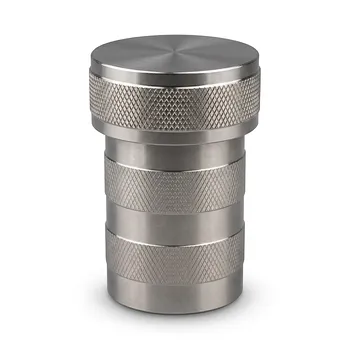
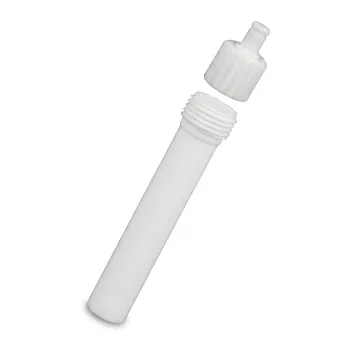
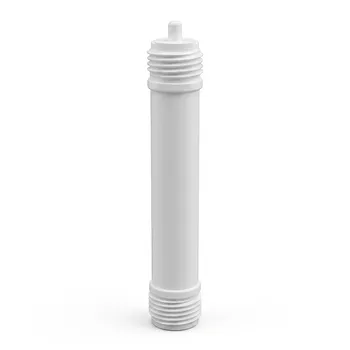
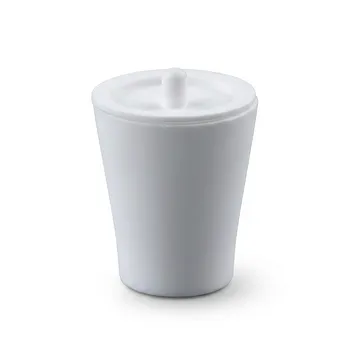
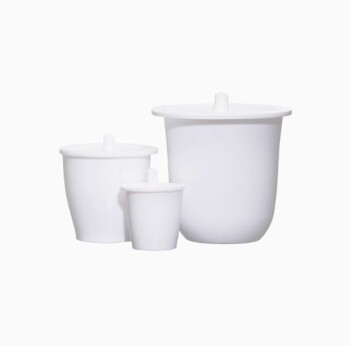
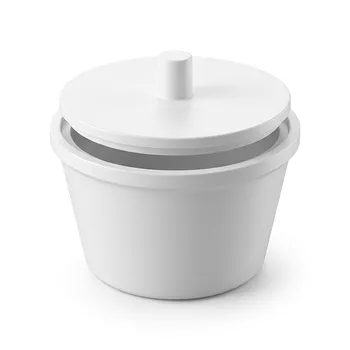
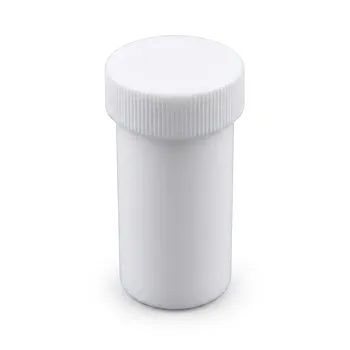
The primary purpose of using a PTFE-lined stainless steel autoclave is to create a high-pressure, high-temperature reaction environment that remains chemically inert. This specific configuration allows for hydrothermal synthesis to occur under "autogenous pressure"—pressure generated by heating the liquid in a sealed space—while ensuring the reaction remains free from metallic contamination and the equipment remains protected from corrosive reagents.
Core Takeaway: This dual-layered system leverages the mechanical strength of stainless steel to withstand high internal pressures and the chemical resilience of Polytetrafluoroethylene (PTFE) to prevent corrosion and sample contamination, ensuring the synthesis of high-purity nanomaterials.
The Synergy of Strength and Inertness
Stainless Steel as the Pressure Vessel
The stainless steel outer shell serves as the mechanical foundation of the autoclave. During hydrothermal synthesis, temperatures often exceed the boiling point of the solvent, creating significant autogenous pressure within the sealed chamber.
Without the structural integrity of the steel shell, the internal pressure would cause the reactor to fail. This high-pressure environment is critical because it facilitates the synergistic interaction between chemical components, promoting phenomena like the in-situ growth of nanoclusters on substrates like Graphene Oxide.
PTFE as the Chemical Shield
The Polytetrafluoroethylene (PTFE) liner acts as a chemically inert barrier between the reaction medium and the metal walls. Many hydrothermal reactions involve strong alkaline environments (such as NaOH) or acidic precursors that would rapidly corrode stainless steel.
By containing the reaction within the PTFE liner, the system prevents the introduction of metallic impurities into the active materials. This is vital for maintaining the high purity, stoichiometric ratios, and electrochemical activity required for advanced materials like bioceramics or metal-organic frameworks (MOFs).
Impact on Material Synthesis
Facilitating Homogeneous Growth
The sealed, high-pressure environment within the autoclave allows reactions to proceed in ways that are impossible at atmospheric pressure. This setup enables the thorough mixing of precursors and the precise formation of complex structures, such as one-dimensional nanobelts or flower-like crystals.
The stability of the environment ensures that nucleation and growth happen consistently. This leads to excellent crystallinity and the successful anchoring of particles, such as iron oxide nanoclusters, onto larger surfaces.
Ensuring Chemical Purity
In sensitive applications like the synthesis of Hydroxyapatite (HAp) or tin dioxide (SnO2), even trace amounts of metal ions from the reactor walls can ruin the batch. The PTFE liner eliminates this risk by preventing the reaction solution from ever contacting the metal walls.
By isolating the reaction, the liner ensures that the resulting powders and crystals are single-phase and high-purity. This is essential for materials intended for medical implants or high-performance battery electrodes.
Understanding the Trade-offs
Temperature and Pressure Limitations
While highly versatile, PTFE has a thermal limit; it is generally used for reactions up to 180°C to 200°C. Exceeding these temperatures can cause the liner to soften or deform, potentially compromising the seal or leading to failure.
Thermal Lag and Cooling
The dual-material design introduces a thermal lag because heat must pass through the steel shell and then the insulating PTFE liner. This means the internal reaction temperature may take longer to reach equilibrium and longer to cool down compared to unlined vessels.
Solvent Compatibility
Although PTFE is resistant to most chemicals, including organic solvents like DMF and methanol, it is not universal. Certain specialized chemicals or extreme conditions may still degrade the liner over time, necessitating regular inspection for wear or "pitting."
How to Apply This to Your Project
Making the Right Choice for Your Goal
- If your primary focus is high-purity crystal growth: Utilize a high-purity PTFE liner to ensure no metal ions interfere with the stoichiometric ratio of your crystals.
- If your primary focus is reactions involving strong bases or acids: The PTFE liner is mandatory to prevent the reaction media from corroding the stainless steel structural shell.
- If your primary focus is synthesizing nanostructures on substrates: Use the autogenous pressure generated by the steel shell to facilitate uniform anchoring and in-situ growth on materials like Graphene Oxide.
- If your primary focus is operating above 220°C: You must look beyond standard PTFE liners and consider PPL (polyphenylene polymer) liners or gold-lined autoclaves to handle the higher thermal stress.
By balancing mechanical pressure containment with chemical isolation, the PTFE-lined autoclave remains the definitive tool for precision hydrothermal synthesis.
Summary Table:
| Component | Material | Primary Function |
|---|---|---|
| Outer Shell | Stainless Steel | Provides structural integrity to withstand high autogenous pressure |
| Inner Liner | PTFE (Teflon) | Acts as a chemically inert barrier to prevent corrosion and metal leaching |
| Temp Range | Up to 200°C | Facilitates high-purity crystallization and nucleation in a stable environment |
| Key Benefit | Purity & Safety | Ensures stoichiometric accuracy and protects equipment from harsh reagents |
Elevate Your Material Synthesis with KINTEK Precision
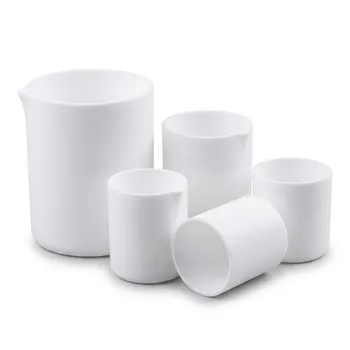
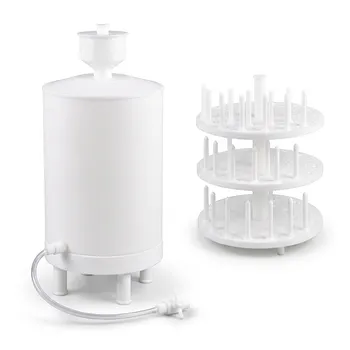
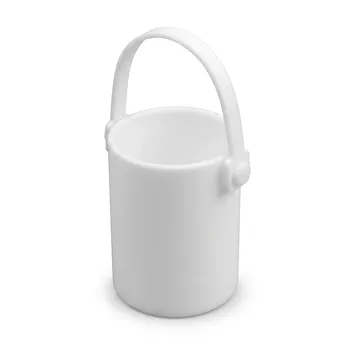
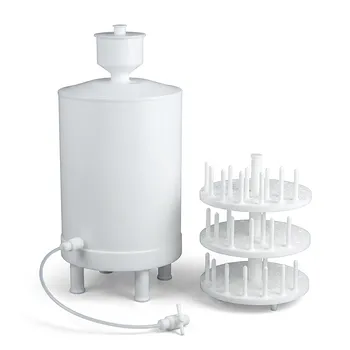
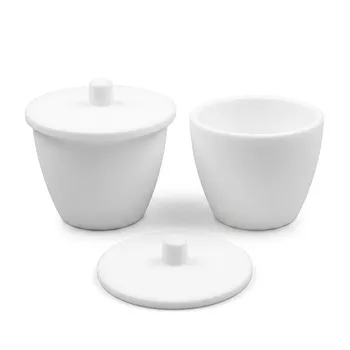
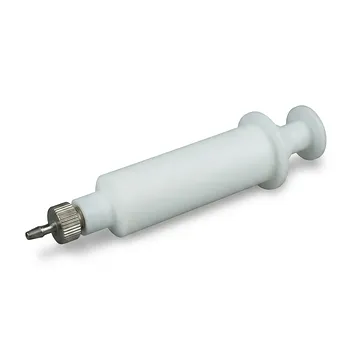
Maximize your research accuracy with laboratory solutions designed for the most demanding environments. At KINTEK, we specialize in high-performance fluoropolymer materials, offering an unparalleled range of supplies from everyday basic labware like beakers, crucibles, and reagent bottles to advanced hydrothermal synthesis liners and microwave digestion vessels.
Whether you need standard high-purity trace analysis instruments, complex fluid transfer components (tubing, valves, and fittings), or bespoke, non-standard machined parts, our end-to-end custom CNC fabrication ensures you receive the exact tools your project requires. From high-volume orders of general consumables to custom-engineered electrochemical cells and battery testing fixtures, we deliver everything you need with an exclusive focus on PTFE and PFA performance.
Ready to upgrade your lab's capabilities? Contact us today to discuss your custom requirements!
References
- S. Shams, B. Bindhu. Enhancing the electrochemical performance of Boron Nitride@ Hematite/Graphene Oxide (BN@α-Fe2O3/GO) hybrid composites for next-generation supercapacitors. DOI: 10.15251/jor.2025.216.799
This article is also based on technical information from Kintek Knowledge Base .
Related Products
- Custom TFM Reaction Vessel with Stainless Steel Jacket and PTFE Inner Cup for High Corrosion Resistance
- PTFE Lined High Pressure Digestion Vessel 50ml High Temperature Hydrothermal Synthesis Tank
- High Pressure Custom TFM Reactor Stainless Steel Outer Vessel PTFE Inner Cup for Corrosive Synthesis
- High Temperature Corrosion Resistant Hydrothermal Synthesis Reactor with TFM Inner Liner and Straight Cylinder Design
- High Purity PTFE Microwave Digestion Vessel Replacement Liner for Acid Sample Preparation and Trace Analysis
People Also Ask
- Why is a Polytetrafluoroethylene (PTFE) lined reaction vessel an ideal choice for preparing PtNPs/FeSAC tandem catalysts?
- Why are high-performance pressure-resistant reaction vessels required for oxygen-assisted hydrothermal conversion at 150 °C?
- How do magnetic stirring and reaction vessels impact MOF-derived carbon quality? Optimize Your Composite Performance
- Why are high-quality fluoropolymer-lined reaction vessels required for alk-Ti3C2Tx MXene? Ensure Purity & HF Resistance
- Why are PTFE-lined reaction vessels necessary for forced degradation studies? Ensure high-purity results and accuracy.