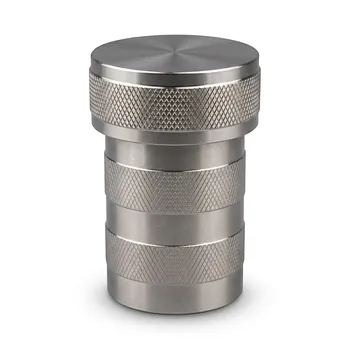
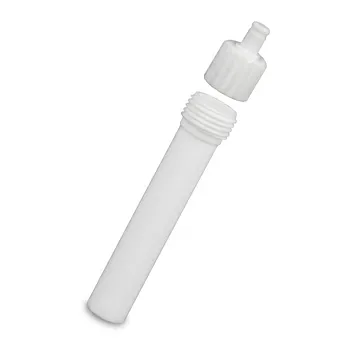
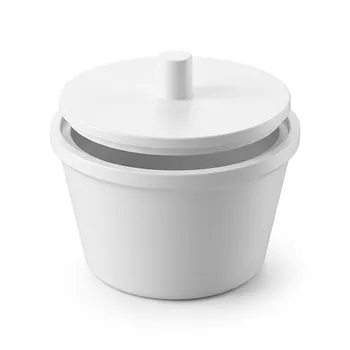
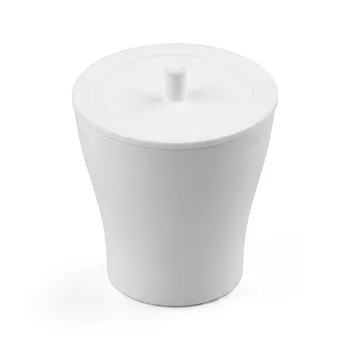
The PTFE-lined stainless steel autoclave serves as a specialized pressure vessel that enables the hydrothermal synthesis of Vanadium Disulfide ($VS_2$) nanosheets. By creating a sealed, high-pressure environment through controlled heating, the autoclave lowers the activation energy required for chemical reactions, allowing precursors to transform into $VS_2$ structures that would not form under atmospheric conditions. The dual-material construction ensures that the process is both physically contained and chemically uncontaminated.
Core Takeaway: The autoclave provides the high-temperature and high-pressure conditions necessary to drive the chemical conversion of precursors into $VS_2$ while using a PTFE liner to ensure chemical purity and a stainless steel shell to maintain structural safety.
Engineering the High-Pressure Environment
Lowering Reaction Activation Energy
The primary role of the autoclave is to facilitate reactions at temperatures significantly higher than the boiling point of the solvent. This high-energy environment effectively lowers the activation energy barrier, allowing precursors to undergo thermal decomposition and release active species. In $VS_2$ synthesis, this enables the thorough mixing and reaction of precursors that are otherwise stable at lower temperatures.
Structural Integrity of the Stainless Steel Shell
The stainless steel outer shell acts as the structural "exoskeleton" of the system. It is designed to withstand the immense internal pressure generated as the liquid precursors expand upon heating. This containment is vital for maintaining the steady-state conditions required for the duration of the synthesis process.
The Critical Role of Chemical Inertness
Preventing Corrosion and Contamination
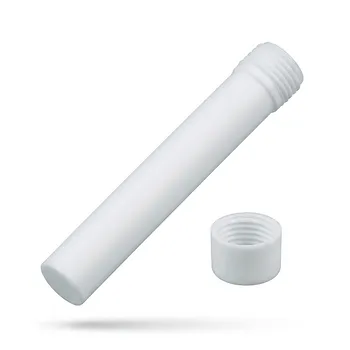
High-purity Polytetrafluoroethylene (PTFE) is used as an internal liner because of its exceptional chemical inertness. During $VS_2$ synthesis, corrosive media such as ammonia or sulfur-containing precursors are often present. The PTFE liner prevents these aggressive chemicals from attacking the metallic autoclave walls, which would otherwise introduce unwanted impurity ions into the reaction.
Maintaining a High-Purity Reaction Environment
By shielding the stainless steel from the reaction liquid, the PTFE liner ensures that the resulting $VS_2$ nanosheets remain pure. This is critical for electronic and catalytic applications where even trace metallic impurities from the vessel could degrade the material's performance. The liner also facilitates easier cleaning and recovery of the synthesized product.
Guiding Nanosheet Morphology
Promoting Dissolution and Recrystallization
The high-pressure environment mimics natural mineralization processes, promoting the dissolution of poorly soluble precursor substances. Once dissolved, these substances can recrystallize onto specific planes. This process is essential for achieving the precise, two-dimensional morphology characteristic of $VS_2$ nanosheets.
Ensuring Uniform Nucleation and Growth
The sealed environment provides stable, uniform heating throughout the vessel. This stability allows for controlled nucleation, guiding the $VS_2$ crystals to grow into highly developed, ultrathin structures rather than irregular bulk particles. The consistency of temperature and pressure directly dictates the final thickness and lateral size of the nanosheets.
Understanding the Trade-offs and Limitations
Thermal Limitations of PTFE
While PTFE is highly inert, it has a strict upper temperature limit, typically around 200°C to 240°C. Exceeding these temperatures can cause the liner to soften or undergo thermal decomposition, potentially releasing toxic fumes and compromising the seal. For reactions requiring higher temperatures, more expensive PPL (Polyphenylene polymers) liners or gold-lined vessels are often necessary.
Pressure Risks and Safety Protocols
The extreme pressures generated within the autoclave pose significant safety risks if the vessel is overfilled or heated too rapidly. Most autoclaves have a "filling degree" limit (usually 60% to 80%) to allow for the expansion of the liquid phase. Failure to adhere to these limits can lead to catastrophic vessel failure or the "blowing" of the safety rupture disk.
Thermal Lag and Reaction Timing
Stainless steel is a relatively poor thermal conductor compared to other metals, leading to a "thermal lag" between the oven temperature and the internal reaction temperature. This means the actual reaction time at the target temperature is shorter than the total time the vessel spends in the furnace. Researchers must account for this heating and cooling ramp to ensure reproducible results.
Applying Autoclave Technology to Your Synthesis
When utilizing a PTFE-lined autoclave for nanomaterial synthesis, your choice of operational parameters should align with your specific material goals.
- If your primary focus is material purity: Ensure the PTFE liner is free of scratches or pitting and avoid using precursors that exceed the liner's chemical resistance rating.
- If your primary focus is specific nanosheet thickness: Precisely control the filling degree of the autoclave, as the internal pressure directly influences the rate of crystal growth and nucleation.
- If your primary focus is safety and longevity: Never exceed 80% of the vessel’s volume and regularly inspect the stainless steel threads and the PTFE gasket for signs of wear or deformation.
By mastering the balance between the structural strength of the steel shell and the chemical protection of the PTFE liner, you can reliably synthesize high-quality $VS_2$ nanosheets for advanced applications.
Summary Table:
| Component | Primary Function | Key Benefit for $VS_2$ Synthesis |
|---|---|---|
| Stainless Steel Shell | Structural containment | Withstands high internal pressure for safe, steady-state reactions. |
| PTFE Liner | Chemical insulation | Prevents metallic contamination and resists corrosive sulfur precursors. |
| High-Pressure Env | Energy barrier reduction | Lowers activation energy to allow 2D recrystallization of precursors. |
| Sealed System | Morphology control | Ensures uniform nucleation for consistent nanosheet thickness and size. |
Elevate Your Material Synthesis with KINTEK’s High-Performance Fluoropolymer Solutions
Precision in $VS_2$ nanosheet synthesis demands equipment that balances extreme pressure resilience with absolute chemical purity. At KINTEK, we specialize in manufacturing a comprehensive range of laboratory supplies crafted exclusively from high-performance PTFE and PFA to meet the rigorous demands of trace analysis and advanced material science.
From everyday basic labware (beakers, crucibles, reagent bottles, and digestion tubes) to advanced reaction apparatus like hydrothermal synthesis liners, microwave digestion vessels, and custom electrochemical cells, our products are engineered for excellence. Backed by end-to-end custom CNC fabrication, we deliver everything from complex non-standard machined parts to high-volume orders of standard consumables like stirring bars, O-rings, and filtration tools.
Ready to optimize your lab’s performance and ensure uncontaminated results? Contact us today to discuss your bespoke laboratory setups and discover the value of KINTEK’s absolute focus on high-performance fluoropolymers.
References
- Hafiz Khurram Shahzad, C.Y. Chung. Systematic analysis of reaction parameters driving the hydrothermal growth of layered VS<sub>2</sub>. DOI: 10.1039/d4ce01161a
This article is also based on technical information from Kintek Knowledge Base .
Related Products
- Custom TFM Reaction Vessel with Stainless Steel Jacket and PTFE Inner Cup for High Corrosion Resistance
- PTFE Lined High Pressure Digestion Vessel 50ml High Temperature Hydrothermal Synthesis Tank
- High Temperature Corrosion Resistant Hydrothermal Synthesis Reactor with TFM Inner Liner and Straight Cylinder Design
- High Pressure Custom TFM Reactor Stainless Steel Outer Vessel PTFE Inner Cup for Corrosive Synthesis
- PTFE Acid Steam Cleaning System HF Resistant Trace Analysis Beaker Digestion Tank Customizable
People Also Ask
- Why are high-performance pressure-resistant reaction vessels required for oxygen-assisted hydrothermal conversion at 150 °C?
- How do magnetic stirring and reaction vessels impact MOF-derived carbon quality? Optimize Your Composite Performance
- Why are high-quality fluoropolymer-lined reaction vessels required for alk-Ti3C2Tx MXene? Ensure Purity & HF Resistance
- Why are PTFE-lined reaction vessels necessary for forced degradation studies? Ensure high-purity results and accuracy.
- Why is a high-purity PTFE lined reaction vessel required for the acidic etching of MXenes? Ensure Material Purity.