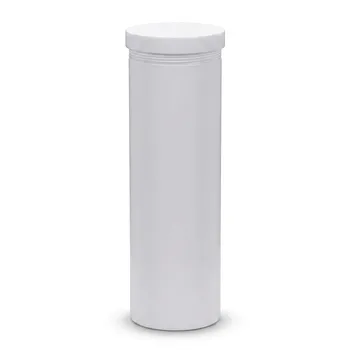
The primary function of a Teflon-lined pressure vessel in Bi@C synthesis is to provide a chemically inert, sealed environment that facilitates high-pressure reactions at elevated temperatures. This specialized reactor allows bismuth nitrate, PVP, and glucose to react completely at 180°C while preventing any metal contamination from the vessel's outer shell, ensuring the high purity required for effective catalysts.
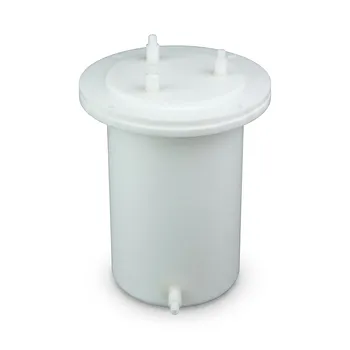
The Teflon-lined vessel acts as both a physical containment system and a chemical barrier. It enables the precise hydrothermal conditions necessary for precursor polymerization and carbonization while protecting the integrity of the chemical composition.
Creating the Necessary Hydrothermal Environment
Achieving High-Pressure Solubility
Hydrothermal synthesis requires temperatures well above the boiling point of the solvent. The sealed nature of the vessel allows the internal pressure to rise as it is heated to 180°C, which significantly increases the solubility and reactivity of the bismuth nitrate and glucose precursors.
Facilitating Complete Reaction Kinetics
The stable, high-pressure environment is critical for the polymerization and carbonization processes. This "pressure cooker" effect ensures that the precursors undergo deep reactions, leading to the proper formation of the Bi@C core-shell structure that would be impossible under ambient pressure.
Maintaining Constant Thermal Stability
The vessel provides a controlled thermal environment where the temperature remains uniform throughout the solution. This consistency is vital for the uniform growth of the bismuth nanoparticles and the consistent coating of the carbon layer.
Ensuring Chemical Purity and Integrity
The Role of PTFE Chemical Inertness
The internal liner is made of Polytetrafluoroethylene (PTFE), a material known for its extreme resistance to chemical attack. Because it does not react with the acidic or basic components of the precursor solution, it ensures the synthesized Bi@C catalyst remains free from unwanted side products.
Preventing Metal Ion Contamination
Standard stainless steel autoclaves can leach metal ions into the solution when exposed to corrosive precursors like nitric acid or nitrates. The Teflon liner acts as a physical shield, preventing the reaction liquid from touching the metal walls and guaranteeing the high purity of the catalyst precursor.
Facilitating Efficient Material Recovery
PTFE has notable non-stick properties, which are beneficial during the post-synthesis phase. This allows researchers to easily collect the synthesized powders from the liner without significant loss of material or cross-contamination from previous batches.
Understanding the Trade-offs
Temperature Limitations of PTFE
While highly effective, Teflon liners have a definitive thermal ceiling, typically around 220°C to 250°C. Exceeding these temperatures can cause the liner to soften or deform, potentially compromising the seal and leading to dangerous pressure leaks.
Pressure Stress and Creep
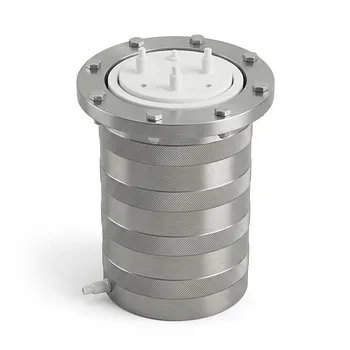
Over time, repeated heating and cooling cycles can cause the Teflon to undergo "creep" or permanent deformation. This requires regular inspection of the liner to ensure it still fits snugly within the stainless steel jacket to prevent the liner from bursting under high internal pressure.
Heat Transfer Resistance
Teflon is an insulator, meaning it does not conduct heat as efficiently as the outer metal shell. This creates a slight lag in temperature equalization, requiring users to factor in "soaking time" to ensure the internal solution has actually reached the target 180°C.
How to Apply This to Your Project
Recommendations Based on Your Synthesis Goals
- If your primary focus is Maximum Catalyst Purity: Ensure the Teflon liner is cleaned with an acid wash between uses to remove any embedded trace elements that could migrate into your Bi@C structure.
- If your primary focus is Structural Consistency: Use a digital controller to manage the heating ramp rate, allowing the insulated Teflon liner to reach 180°C gradually and maintain a stable internal environment.
- If your primary focus is Safety and Longevity: Never fill the liner to more than 80% of its total capacity to allow sufficient "headspace" for gas expansion and to prevent the liner from deforming against the vessel cap.
The successful synthesis of high-performance Bi@C catalysts depends entirely on maintaining the delicate balance between the aggressive pressures required for reaction and the strict chemical purity provided by the Teflon barrier.
Summary Table:
| Key Function | Role in Bi@C Synthesis | Critical Benefit |
|---|---|---|
| Chemical Inertness | Prevents reactions between precursors and vessel walls | Ensures zero metal ion contamination |
| Pressure Containment | Facilitates reactions at 180°C (above boiling point) | Enables precursor polymerization & carbonization |
| Thermal Stability | Maintains a uniform internal temperature | Ensures consistent Bi@C core-shell structure |
| Non-Stick Surface | Simplifies material collection post-synthesis | Maximizes material recovery and prevents loss |
Elevate Your Synthesis with KINTEK’s High-Performance Fluoropolymers
Precise research requires materials that never compromise your results. At KINTEK, we specialize in high-performance fluoropolymer solutions designed for the most demanding laboratory environments. From everyday basic labware (beakers, measuring cylinders, crucibles, dishes, reagent/wash bottles, centrifuge and digestion tubes) and high-purity trace analysis instruments to comprehensive fluid transfer components (tubing, fittings, valves), we ensure your chemical integrity remains intact.
Our expertise extends to advanced reaction apparatus, including hydrothermal synthesis liners, microwave digestion vessels, microchannel reactors, and custom electrochemical cells. Whether you need standard consumables like stirring bars, O-rings, and filters, or complex, end-to-end custom CNC-fabricated parts and bespoke laboratory setups, KINTEK delivers with an absolute focus on PTFE and PFA excellence.
Ready to optimize your catalyst synthesis? Contact KINTEK today to discuss your custom requirements or high-volume orders and experience the benefits of high-performance labware tailored to your exact specifications.
References
- Weijian Guo, Jintao Zhang. Thermal‐Driven Dispersion of Bismuth Nanoparticles among Carbon Matrix for Efficient Carbon Dioxide Reduction. DOI: 10.1002/anie.202401333
This article is also based on technical information from Kintek Knowledge Base .
Related Products
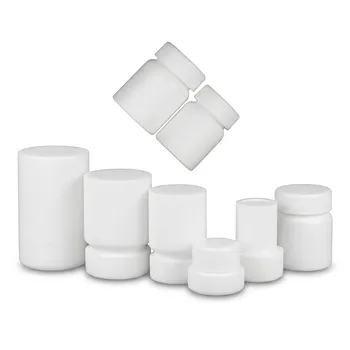
- High Pressure PTFE Digestion Vessel Inner Cup Holder Custom Corrosion Resistant Low Background Teflon
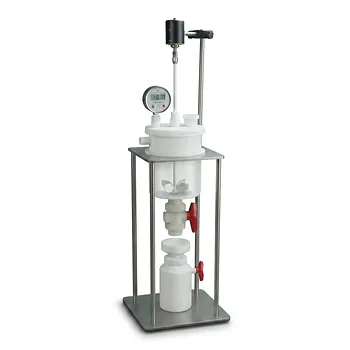
- High Purity PTFE Reaction Vessel with Electric Stirring System and Customizable 5L Tank including Buchner Funnel Filtration Assembly
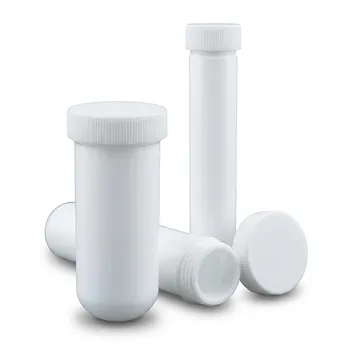
- Custom PTFE Wide Mouth Reagent Reaction Bottle Corrosion Resistant High Temperature Large Capacity Straight Body Laboratory Vessel
- High Performance Customizable PTFE Reaction Vessel and Corrosion Resistant Polytetrafluoroethylene Flask for Chemical Laboratory Use
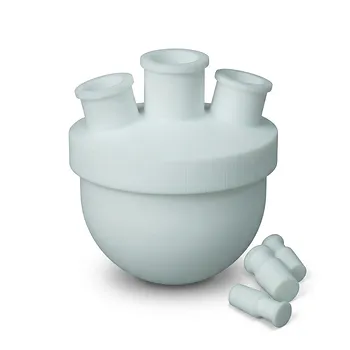
- High Purity Large Capacity PTFE Flask Custom Multi Neck Chemical Reaction Vessel for Corrosive Laboratory Synthesis and Industrial Processing
People Also Ask
- What safety features are typically incorporated into high-pressure PTFE digestion vessel designs? Ensure Lab Safety
- What role do high-pressure digestion vessels and PTFE liners play in the intercalation of expandable graphite?
- What role do Teflon Bombs play in ICP-MS verification? Achieving total digestion for high-precision trace analysis.
- What technical advantages do high-pressure digestion vessels offer for meteorite digestion? Achieve Total Dissolution.
- What is the function of a high-pressure digestion vessel and its PTFE liner? Achieve High-Purity S@Mo2C Synthesis