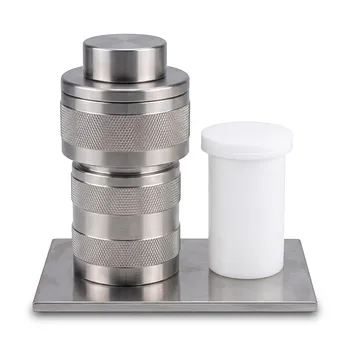
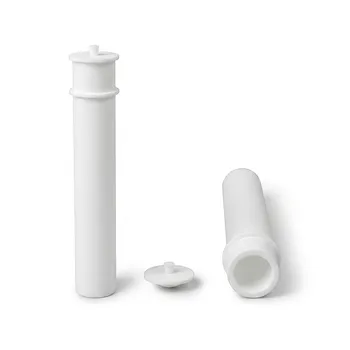
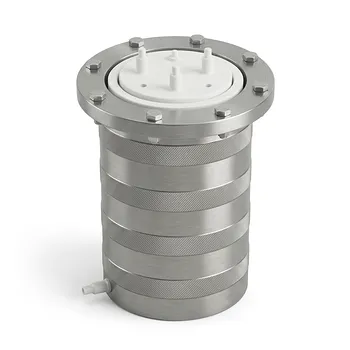
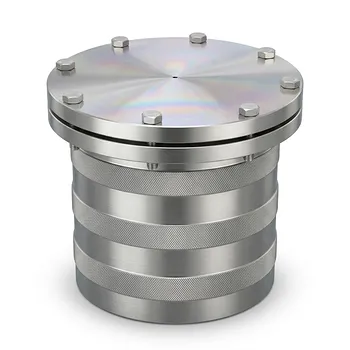
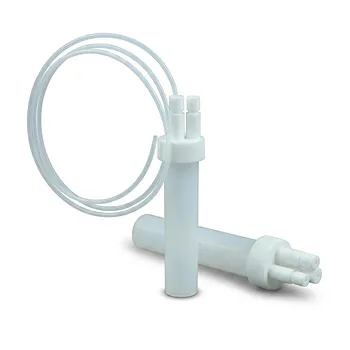
The Teflon-lined hydrothermal synthesis vessel is the primary high-pressure reactor used to facilitate the chemical transformation of organic precursors into functionalized nanomaterials. It provides a sealed, chemically inert environment that allows precursors—such as citric acid and thiourea—to undergo dehydration, polymerization, and carbonization at temperatures typically reaching 180°C. By isolating the reaction from the metallic outer shell, the vessel prevents corrosion and ensures that no metal ion impurities contaminate the resulting nitrogen and sulfur co-doped carbon dots (N,S-CDs).
The core function of a Teflon-lined vessel is to provide a stable, non-reactive, and pressurized environment that enables the deep reaction of precursors while maintaining high chemical purity. This isolation is critical for ensuring the consistent optical properties and fluorescence performance of the synthesized carbon dots.
Maintaining Chemical Purity and System Integrity
Preventing Metal Ion Contamination
The Polytetrafluoroethylene (PTFE) liner serves as a physical barrier between the reaction solution and the stainless steel outer vessel. This isolation is vital because it prevents metal ions from leaching into the system, which could otherwise quench fluorescence or alter the electronic structure of the N,S-CDs.
Resistance to Corrosive Reagents
Hydrothermal synthesis often involves aggressive reagents, such as thiourea or alkaline substances, which can be highly corrosive at elevated temperatures. The chemical inertness of the Teflon material allows it to withstand these conditions without degrading, protecting the structural integrity of the autoclave.
Facilitating the Hydrothermal Transformation
Enabling High-Temperature and Pressure Conditions
The sealed nature of the vessel allows the internal pressure to rise as the temperature increases, creating a superheated aqueous environment. This specific physical state is necessary to drive the deep reactions required for molybdenum, sulfur, or nitrogen sources to integrate into the carbon matrix.
Supporting Multi-Step Chemical Processes
Within this pressurized environment, precursors undergo a sequence of dehydration, polymerization, and carbonization. The stable temperature profile provided by the vessel ensures that the nitrogen and sulfur heteroatoms are effectively doped into the carbon dot structure during these stages.
Ensuring Fluorescence Purity
The low impurity leaching rate of high-purity PTFE or PFA liners directly correlates to the fluorescence purity of the product. By preventing the introduction of external contaminants, the vessel helps maintain high batch-to-batch consistency in the optical performance of the synthesized N,S-CDs.
Understanding the Technical Limitations
Temperature Constraints
Standard PTFE liners are generally limited to operating temperatures below 220°C to avoid thermal decomposition of the plastic. Exceeding these limits can lead to liner deformation or the release of toxic fluorinated gases, compromising both the experiment and safety.
Pressure and Cooling Rates
Rapid heating or cooling can cause the Teflon liner to lose its shape or develop cracks due to the difference in thermal expansion rates between the liner and the steel shell. Users must follow strict controlled cooling protocols to ensure the longevity of the vessel and the stability of the synthesized nanoparticles.
Optimizing Vessel Use for Your Synthesis Goals
When selecting or operating a hydrothermal vessel for N,S-CD production, consider the specific requirements of your precursors and desired outcomes.
- If your primary focus is Maximum Fluorescence Yield: Ensure the use of high-purity PFA or PTFE liners to minimize metal ion quenching and maintain a pristine electronic environment.
- If your primary focus is Structural Doping Efficiency: Operate at the highest safe temperature allowed by the liner (typically 180°C–200°C) to maximize the kinetic energy available for heteroatom integration.
- If your primary focus is Batch Consistency: Standardize the filling ratio of the vessel (usually 60%–80% of capacity) to ensure reproducible internal pressure across different synthesis runs.
The Teflon-lined hydrothermal vessel remains the gold standard for producing high-purity carbon dots by providing the unique combination of chemical isolation and high-pressure stability.
Summary Table:
| Key Feature | Functional Role in N,S-CD Synthesis | Primary Benefit |
|---|---|---|
| PTFE/PFA Liner | Barrier against metal ions | Prevents fluorescence quenching; ensures purity |
| Sealed System | Creates superheated aqueous environment | Facilitates deep carbonization & doping |
| Chemical Inertness | Resists aggressive precursors (thiourea) | Maintains system integrity & batch consistency |
| Thermal Stability | Supports reactions up to 200°C-220°C | Enables efficient heteroatom integration |
Elevate Your Synthesis Precision with KINTEK
Achieving consistent optical properties in N,S-CDs requires labware that guarantees absolute chemical purity. KINTEK specializes in high-performance fluoropolymer solutions designed for the most demanding hydrothermal environments.
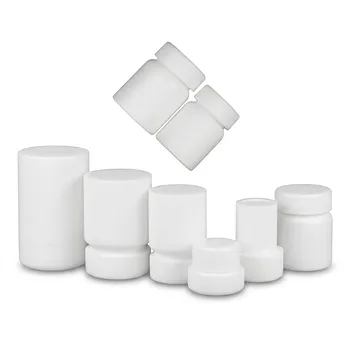
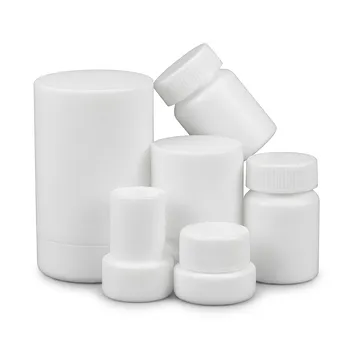
From everyday essentials like beakers, reagent bottles, and digestion tubes to advanced hydrothermal synthesis liners, microwave digestion vessels, and custom-machined electrochemical cells, we manufacture virtually all laboratory supplies from premium PTFE and PFA. Whether you require standard components or bespoke laboratory setups via our end-to-end custom CNC fabrication, KINTEK provides the inertness and durability your research demands.
Ready to optimize your synthesis yields? Contact our fluoropolymer experts today to secure high-purity components tailored to your specific laboratory requirements.
References
- Maryam Saleh Mohammadnia, Salar Hemmati. A Modified Electrochemical Sensor Based on N,S-Doped Carbon Dots/Carbon Nanotube-Poly(Amidoamine) Dendrimer Hybrids for Imatinib Mesylate Determination. DOI: 10.3390/bios13050547
This article is also based on technical information from Kintek Knowledge Base .
Related Products
- PTFE Lined High Pressure Digestion Vessel 50ml High Temperature Hydrothermal Synthesis Tank
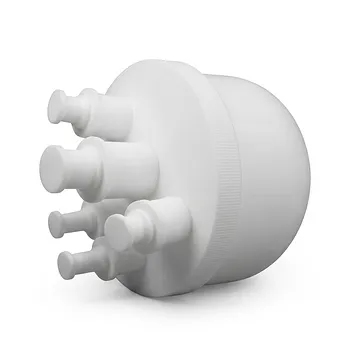
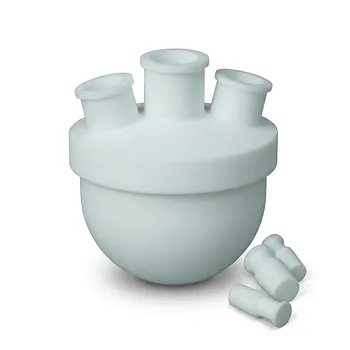
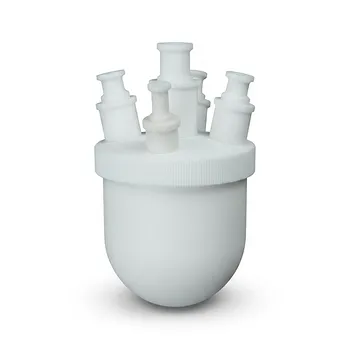
- Custom Multi Neck PTFE Flask for Chemical Engineering and High Purity Laboratory Synthesis Applications
- High Temperature PTFE Reaction Flask 1000ml Single Neck Round and Flat Bottom Laboratory Bottle
- High Purity Large Capacity PTFE Flask Custom Multi Neck Chemical Reaction Vessel for Corrosive Laboratory Synthesis and Industrial Processing
- High Purity PTFE Reaction Vessel with Electric Stirring System and Customizable 5L Tank including Buchner Funnel Filtration Assembly
People Also Ask
- What are the benefits of using a PTFE-lined vessel for carbon-sulfur cathode treatment? Maximize Purity & Performance
- Why are PTFE-lined pressure digestion vessels required for the preparation of Ag/CeO2 catalysts? Purity & Performance
- What safety features are typically incorporated into high-pressure PTFE digestion vessel designs? Ensure Lab Safety
- What is the function of high-pressure PTFE digestion vessels in mineral analysis? Optimize Sample Mineralization
- What is the function of PTFE lined high-pressure vessels in g-C3N4 synthesis? Achieve High-Purity Material Growth