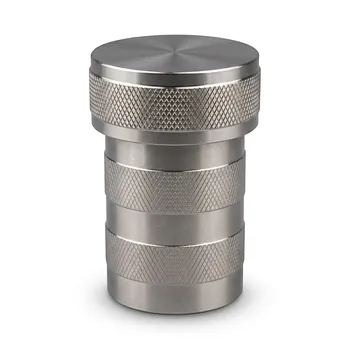
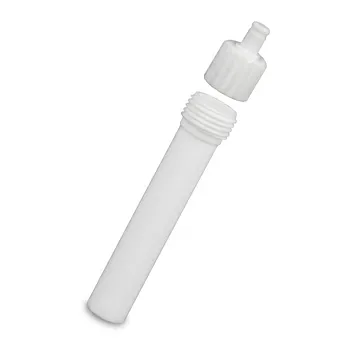
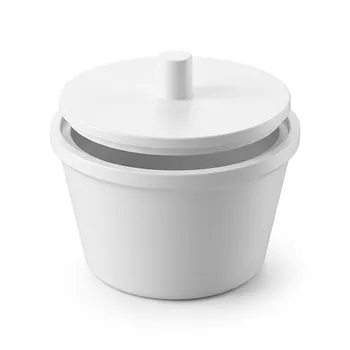
The PTFE-lined stainless steel autoclave is the indispensable reactor for hydrothermal synthesis, providing a controlled, high-pressure environment. In the production of ZnO@Fe3O4 magnetic nanoparticles, it facilitates the reaction of precursors at temperatures exceeding the solvent's boiling point. This setup ensures the formation of high-purity nanocrystals by isolating the chemical process from the metallic vessel and maintaining the precise pressure required for uniform growth.
Core Takeaway: The autoclave functions as a specialized pressure vessel where the stainless steel shell provides structural integrity against high autogenous pressure, while the PTFE liner ensures chemical inertness and prevents metal ion contamination, which is critical for maintaining the magnetic and structural properties of the nanoparticles.
Creating the High-Pressure Reaction Environment
Generating Autogenous Pressure
The autoclave creates a sealed environment where the liquid precursors are heated beyond their atmospheric boiling points. As the temperature rises within the confined space, autogenous pressure is generated, which significantly increases the solubility of the precursors.
Promoting Nucleation and Growth
This high-pressure state is the physical basis for promoting the nucleation and growth of nanocrystals. It allows for the synthesis of single-phase products with high crystallinity, which would be impossible to achieve at standard atmospheric pressure.
Facilitating Heterogeneous Reactions
The hydrothermal environment allows for dissolution and recrystallization of poorly soluble substances. This is essential for achieving uniform morphologies, such as the core-shell structure of ZnO@Fe3O4, and ensuring consistent nanoparticle size.
The Role of the PTFE Liner in Purity and Protection
Chemical Resistance to Aggressive Reagents
The Polytetrafluoroethylene (PTFE) liner is characterized by exceptional chemical inertness. In the synthesis of ZnO@Fe3O4, it protects the stainless steel shell from aggressive alkaline reagents like sodium hydroxide (NaOH) and organic solvents like ethylene glycol.
Prevention of Metal Ion Contamination
By acting as an internal protective barrier, the PTFE liner prevents the reaction solution from eroding the metal shell. This isolation eliminates the risk of introducing metal ion impurities (like iron or chromium from the steel) into the Fe3O4 crystal lattice.
Preserving Magnetic Performance
Maintaining a high level of purity is critical for the final application of the nanoparticles. Preventing contamination ensures that the magnetic response performance and the specific semiconductor properties of the ZnO layer remain uncompromised.
Understanding the Trade-offs and Limitations
Temperature Constraints
While PTFE is highly stable, it has a functional limit, typically around 200 °C to 240 °C. Exceeding these temperatures can cause the liner to deform or "creep," potentially breaking the seal or contaminating the sample with polymer degradation products.
Thermal Lag and Cooling Rates
The thickness of the stainless steel and the PTFE liner creates a thermal lag between the oven temperature and the actual reaction temperature. Rapid cooling is often difficult, which can lead to continued grain growth and variations in the final nanoparticle size if not carefully monitored.
Pressure Safety Limits
Hydrothermal reactions are inherently dangerous due to the high pressures involved. If the autoclave is filled beyond its safe filling capacity (usually 60-80%), the pressure can exceed the structural limits of the stainless steel shell, leading to mechanical failure.
How to Apply This to Your Synthesis Goals
The choice of autoclave parameters directly dictates the quality of your ZnO@Fe3O4 magnetic nanoparticles.
- If your primary focus is Maximum Magnetic Saturation: Ensure the PTFE liner is pristine and free of scratches to prevent any iron leaching from the shell, which can disrupt the Fe3O4 lattice symmetry.
- If your primary focus is Uniform ZnO Coating: Prioritize precise temperature control and longer reaction times to allow for the slow, uniform deposition of ZnO onto the Fe3O4 cores under stable autogenous pressure.
- If your primary focus is Small Particle Size: Use a lower filling ratio (around 60%) to moderate the pressure and consider a shorter "soak" time at the peak temperature to limit crystal growth.
By mastering the balance between the structural strength of the steel and the chemical protection of the PTFE, you ensure a reproducible and high-quality nanostructure.
Summary Table:
| Component | Key Function | Benefit to ZnO@Fe3O4 Synthesis |
|---|---|---|
| Stainless Steel Shell | Structural Integrity | Safely contains high autogenous pressure for nucleation. |
| PTFE Liner | Chemical Inertness | Prevents metal ion leaching; resists aggressive alkaline reagents. |
| Sealed Environment | Solubility Enhancement | Facilitates dissolution of poorly soluble precursors for uniform growth. |
| Thermal Isolation | Controlled Reaction | Promotes specific core-shell morphologies and magnetic consistency. |
Elevate Your Nanomaterial Synthesis with KINTEK’s Precision Fluoropolymers
At KINTEK, we understand that the success of your research—from magnetic nanoparticles to advanced catalysts—depends on uncompromising material purity and structural reliability. We manufacture a comprehensive range of laboratory supplies crafted exclusively from high-performance PTFE and PFA.
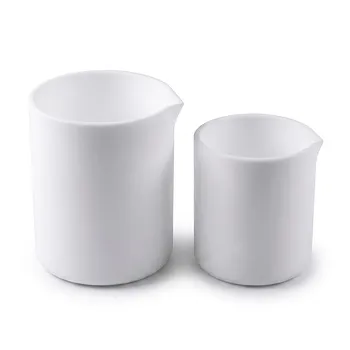
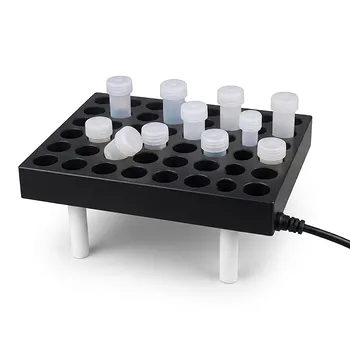
Whether you need standard hydrothermal synthesis liners, microwave digestion vessels, and reagent bottles, or specialized components like high-purity trace analysis instruments, fluid transfer tubing, and custom electrochemical cells, we have you covered. Our capabilities extend from everyday essentials—beakers, crucibles, centrifuge tubes, and stirring bars—to complex, bespoke laboratory setups engineered through our end-to-end custom CNC fabrication.
Why choose KINTEK?
- Absolute Purity: Eliminate metal ion contamination with our premium fluoropolymer materials.
- Custom Engineering: We deliver non-standard machined parts tailored to your specific reaction parameters.
- Full-Spectrum Catalog: Everything from O-rings and gaskets to advanced battery testing fixtures.
Don't let equipment impurities compromise your results. Contact our expert team today to secure high-performance labware tailored to your synthesis goals!
References
- Şeyma Korkmaz, Cemile Özcan. Magnetic Solid Phase Extraction of Lead (II) and Cadmium (II) From Water Samples Using ZnO@Fe<sub>3</sub>O<sub>4</sub> Nanoparticles Combined With Flame Atomic Absorption Spectrometry Determination. DOI: 10.1002/jssc.70115
This article is also based on technical information from Kintek Knowledge Base .
Related Products
- Custom TFM Reaction Vessel with Stainless Steel Jacket and PTFE Inner Cup for High Corrosion Resistance
- PTFE Lined High Pressure Digestion Vessel 50ml High Temperature Hydrothermal Synthesis Tank
- High Temperature Corrosion Resistant Hydrothermal Synthesis Reactor with TFM Inner Liner and Straight Cylinder Design
- High Pressure Custom TFM Reactor Stainless Steel Outer Vessel PTFE Inner Cup for Corrosive Synthesis
- PTFE Acid Steam Cleaning System HF Resistant Trace Analysis Beaker Digestion Tank Customizable
People Also Ask
- Why are high-performance pressure-resistant reaction vessels required for oxygen-assisted hydrothermal conversion at 150 °C?
- How do magnetic stirring and reaction vessels impact MOF-derived carbon quality? Optimize Your Composite Performance
- Why are PTFE-lined reaction vessels necessary for forced degradation studies? Ensure high-purity results and accuracy.
- Why are PTFE-lined reaction vessels necessary for alkali stability tests? Ensure accurate ionomer degradation data.
- Why is a PTFE-lined reactor required for Mn2O3 synthesis? Achieve High Purity & Corrosion Resistance