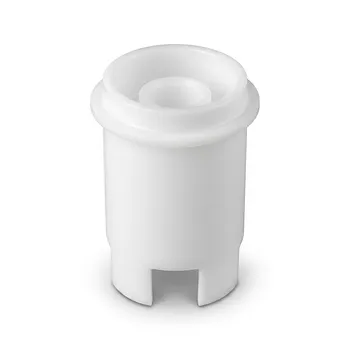
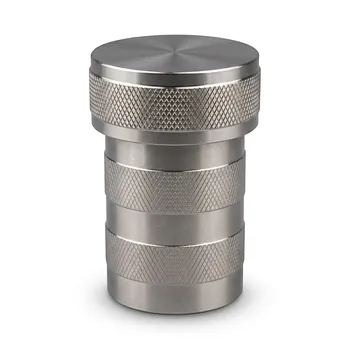
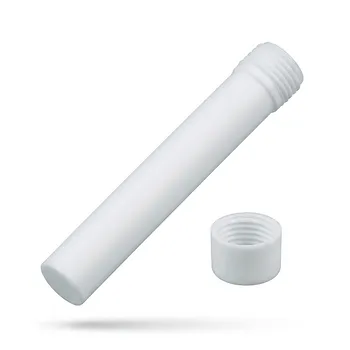
The synthesis of high-purity copper tungstate (CuWO4) nanopowders relies on the specific synergy between chemical inertness and structural integrity provided by a PTFE-lined autoclave. This equipment creates the high-temperature (e.g., 180 °C) and high-pressure environment necessary for subcritical hydrothermal synthesis. By isolating the reaction within a non-reactive liner, the system ensures the purity and structural stability of the CuWO4 precursor self-assembly process while protecting the vessel from corrosion.
The critical role of this equipment is to facilitate controlled chemical transformations at pressures and temperatures exceeding the atmospheric boiling point. The PTFE liner acts as a protective barrier that prevents metal ion contamination and corrosion, ensuring the resulting nanopowders maintain their intended crystalline structure and morphology.
The Mechanics of Subcritical Hydrothermal Synthesis
Achieving High Pressure and Temperature
The autoclave allows the reaction solution to be heated well above its normal boiling point while remaining in a liquid state. This subcritical environment increases the solubility of precursor salts, which is essential for the dissolution and subsequent recrystallization of CuWO4.
Facilitating Precursor Self-Assembly
At temperatures such as 180 °C, the sealed environment provides the energy required for the precursors to organize into nanopowders. This controlled thermal energy ensures the structural stability of the copper tungstate crystals as they grow from the solution.
Promoting Homogeneous Reactions
The enclosed, high-pressure nature of the vessel allows for thorough mixing and uniform heat distribution. This leads to the formation of nanoparticles with consistent morphology, preventing the irregular growth that often occurs in open-air heating.
The Dual-Layer Protection System
The Chemical Inertness of the PTFE Liner
Polytetrafluoroethylene (PTFE) is chosen for its exceptional resistance to chemical attack. In the synthesis of CuWO4, it prevents acidic or corrosive precursors from reacting with the stainless steel outer shell, which would otherwise degrade the equipment.
Preventing Metal Ion Contamination
Without a liner, the high-pressure reaction would likely leach chromium, nickel, or iron ions from the steel vessel into the product. The PTFE barrier ensures that the CuWO4 nanopowder remains pure, which is vital for its performance in applications like photocatalysis or sensing.
Facilitating Product Recovery
The smooth, anti-adhesive surface of the PTFE liner is a significant practical advantage. It prevents the synthesized powder sediments from sticking to the walls, allowing for the efficient recovery of the final solid precipitates after the reaction is cooled.
Understanding the Trade-offs and Limitations
Temperature Constraints
While PTFE is highly inert, it has a thermal limit (typically around 200 °C to 250 °C). Exceeding these temperatures can cause the liner to soften or deform, potentially compromising the seal and risking a dangerous pressure release.
Thermal Expansion Disparity
PTFE and stainless steel have different coefficients of thermal expansion. If the autoclave is heated or cooled too rapidly, the liner may expand or contract at a different rate than the shell, leading to liner "creep" or making the vessel difficult to open.
Pressure Limitations
The stainless steel shell provides the necessary tensile strength to withstand high internal pressures. However, users must strictly adhere to filling ratios (typically 60-80% of volume) to prevent excessive pressure buildup that could exceed the vessel's safety rating.
Making the Right Choice for Your Goal
When using a PTFE-lined autoclave for nanopowder synthesis, your operational parameters should align with your specific material requirements:
- If your primary focus is maximum purity: Ensure the PTFE liner is thoroughly cleaned with dilute acid between runs to remove any residual trace elements that could seed the next reaction.
- If your primary focus is morphology control: Strictly regulate the ramp-up and cool-down rates of the oven, as the insulation properties of the PTFE liner can cause a slight lag in internal temperature changes.
- If your primary focus is equipment longevity: Never exceed 200 °C for extended periods, and always inspect the liner for "pitting" or discoloration, which indicates the PTFE is reaching the end of its functional life.
The careful management of this controlled environment is what transforms simple precursor salts into the precise, high-performance nanostructures required for modern materials science.
Summary Table:
| Feature | Function in CuWO4 Synthesis | Key Benefit |
|---|---|---|
| PTFE Liner | Chemical barrier against corrosive precursors | Prevents metal ion contamination & ensures purity |
| Stainless Steel Shell | Provides structural tensile strength | Maintains high-pressure subcritical environments |
| Thermal Stability | Controlled energy for self-assembly | Consistent crystalline morphology and structure |
| Anti-Adhesive Surface | Smooth interior wall | High recovery rate of synthesized nanopowders |
Elevate Your Nanomaterial Synthesis with KINTEK
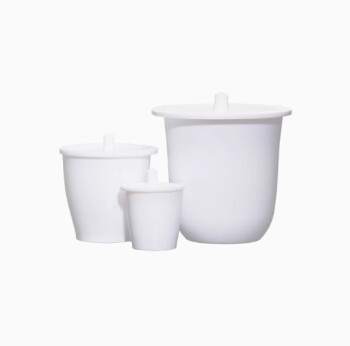
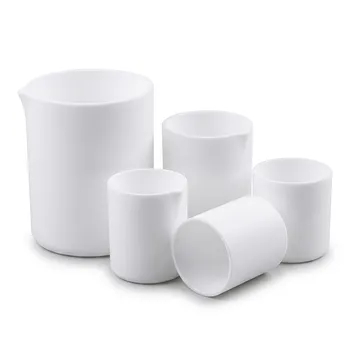
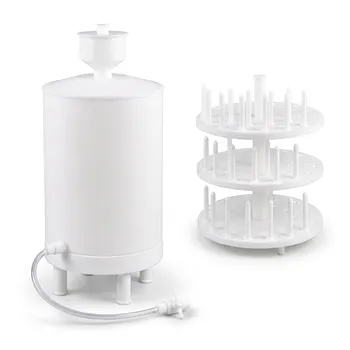
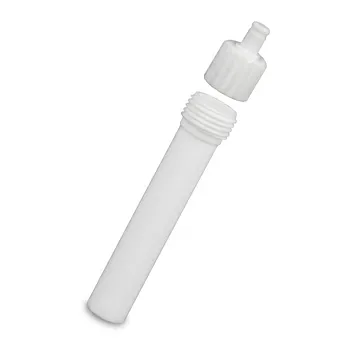
Precision in hydrothermal synthesis starts with superior equipment. KINTEK specializes in high-performance fluoropolymer solutions tailored for the most demanding laboratory environments. From everyday basic labware (beakers, crucibles, centrifuge tubes) and sample prep tools to advanced reaction apparatus like hydrothermal synthesis liners, microwave digestion vessels, and custom-machined electrochemical cells, we provide the tools you need for absolute purity.
Our end-to-end custom CNC fabrication allows us to deliver everything from high-volume consumables to complex, non-standard bespoke setups. Whether you are synthesizing high-purity nanopowders or conducting trace analysis, trust KINTEK’s exclusive focus on PTFE and PFA materials to protect your research integrity.
Ready to optimize your lab's performance? Contact KINTEK today to discuss your custom project!
References
- Pietro Ostellari, Francesco Lamberti. Fe(III)‐Mediated Formation of Cu Nanoinclusions and Local Heterojunctions in CuWO<sub>4</sub> Photoanodes. DOI: 10.1002/admi.202500610
This article is also based on technical information from Kintek Knowledge Base .
Related Products
- Custom TFM Reaction Vessel with Stainless Steel Jacket and PTFE Inner Cup for High Corrosion Resistance
- PTFE Lined High Pressure Digestion Vessel 50ml High Temperature Hydrothermal Synthesis Tank
- High Pressure Custom TFM Reactor Stainless Steel Outer Vessel PTFE Inner Cup for Corrosive Synthesis
- High Pressure PTFE Digestion Vessel Inner Cup Holder Custom Corrosion Resistant Low Background Teflon
- High Temperature Corrosion Resistant Hydrothermal Synthesis Reactor with TFM Inner Liner and Straight Cylinder Design
People Also Ask
- Why are high-performance pressure-resistant reaction vessels required for oxygen-assisted hydrothermal conversion at 150 °C?
- Why are high-quality fluoropolymer-lined reaction vessels required for alk-Ti3C2Tx MXene? Ensure Purity & HF Resistance
- How do magnetic stirring and reaction vessels impact MOF-derived carbon quality? Optimize Your Composite Performance
- Why are PTFE-lined reaction vessels necessary for forced degradation studies? Ensure high-purity results and accuracy.
- Why is a high-purity PTFE lined reaction vessel required for the acidic etching of MXenes? Ensure Material Purity.