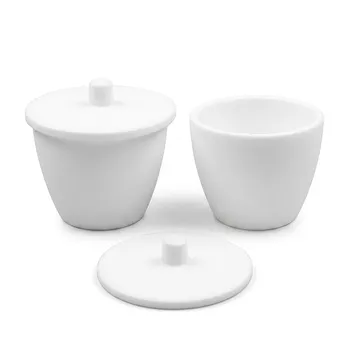
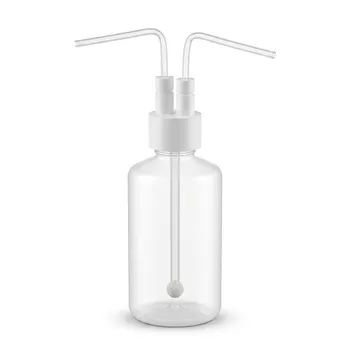
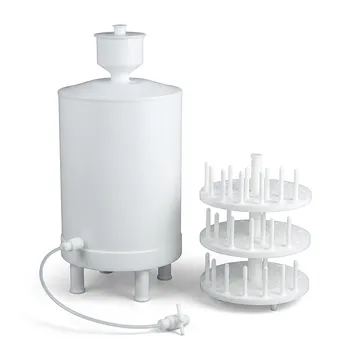
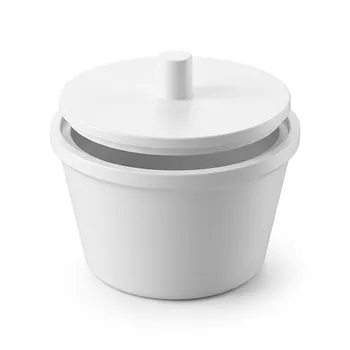
High-pressure stainless steel autoclaves and PTFE gaskets provide the essential environment for solvothermal synthesis. These components work in tandem to create a sealed, high-pressure, and high-temperature system (typically 180°C) that reduces reaction activation energy. This allows for the precise coordination self-assembly and morphology control required to produce high-performance cobalt-nitrogen catalyst precursors.
The autoclave acts as a robust pressure vessel, while the PTFE gaskets ensure a leak-proof, inert seal that prevents contamination. Together, they enable the stable, long-duration chemical reactions necessary for the formation of complex catalyst structures.
The Role of the Stainless Steel Autoclave
Providing a High-Pressure Reaction Environment
The primary function of the stainless steel autoclave is to provide a sealed, high-pressure environment for solvothermal treatment. When solvents such as ethanol or propanol are heated within this closed system to temperatures like 180°C, they vaporize and generate significant internal pressure.
Facilitating Kinetic Energy and Reaction Completion
This pressurized state is critical because it lowers the reaction activation energy required for the chemical synthesis. The elevated pressure facilitates the efficient coordination of cobalt ions and nitrogen-containing ligands, ensuring that the reaction reaches completion over extended periods.
Mechanical Strength and Safety
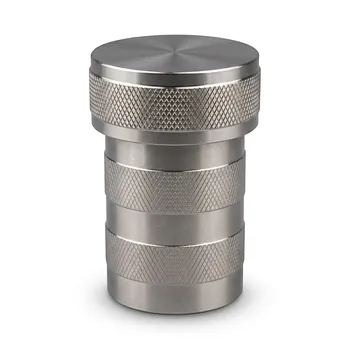
The stainless steel outer shell is chosen for its high mechanical strength. It must withstand the intense internal stress generated by vaporized solvents at high temperatures without deforming or failing.
The Role of PTFE Gaskets and Liners
Chemical Inertness and Purity
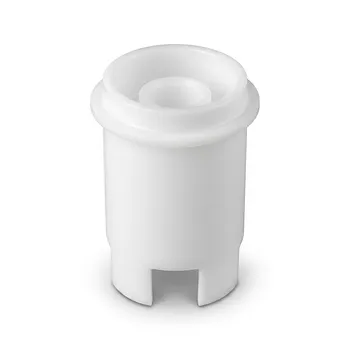
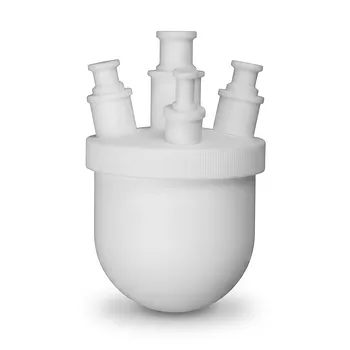
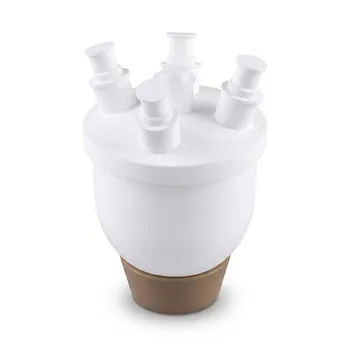
Polytetrafluoroethylene (PTFE) gaskets and liners are used because of their exceptional chemical inertness. They prevent the reaction precursors, which are often acidic or corrosive, from coming into direct contact with the stainless steel shell.
Preventing Metal Ion Contamination
By shielding the metal vessel, PTFE prevents metal ion impurities from leaching into the reaction liquid. This is vital for maintaining the high purity of the cobalt-nitrogen catalyst and ensuring that the catalytic activity is not compromised by unintended elements.
Morphology and Structure Control
The stable, leak-proof environment created by PTFE components allows for precise morphology control. This ensures that the catalyst precursors self-assemble into the desired three-dimensional structures, such as flower-like or regular dodecahedral shapes, which are essential for maximizing specific surface area.
Understanding the Trade-offs
Temperature Limitations
While PTFE is highly resistant to heat, it has a thermal ceiling, typically around 200°C–250°C. Exceeding these temperatures can lead to the deformation of the gasket or liner, resulting in leaks or the release of toxic fluorinated vapors.
Thermal Expansion Disparity
Stainless steel and PTFE have different rates of thermal expansion. If the autoclave is heated or cooled too rapidly, the seal may fail, leading to pressure loss and incomplete precursor formation.
Maintenance and Wear
PTFE is a relatively soft material and can be prone to mechanical deformation over multiple high-pressure cycles. Gaskets must be inspected frequently for "creep" or thinning to ensure the system remains completely leak-proof and prevents the introduction of atmospheric impurities.
How to Apply This to Your Project
Recommendations for Catalyst Synthesis
- If your primary focus is Maximum Purity: Ensure the use of high-purity PTFE or PFA liners and gaskets to completely isolate the reaction from the stainless steel shell and prevent metal ion leaching.
- If your primary focus is Structural Consistency: Maintain a constant temperature (e.g., 180°C) and use a high-pressure autoclave to ensure the self-assembly of the precursors into uniform 3D structures.
- If your primary focus is Operational Safety: Regularly inspect PTFE gaskets for signs of thinning or discoloration and never exceed the rated temperature and pressure limits of your specific autoclave model.
Choosing the right combination of autoclave strength and PTFE inertness is the foundation of reproducible and high-activity catalyst synthesis.
Summary Table:
| Component | Primary Role | Key Advantage for Synthesis |
|---|---|---|
| Stainless Steel Autoclave | Pressure Containment | Provides high-strength vessel for 180°C solvothermal reactions. |
| PTFE Gaskets & Liners | Chemical Inertness | Prevents metal ion contamination and ensures high precursor purity. |
| Sealed System | Kinetic Enhancement | Lowers activation energy for precise morphology and self-assembly. |
| Solvent Environment | Morphology Control | Facilitates the formation of uniform 3D/flower-like catalyst structures. |
Elevate Your Synthesis with KINTEK’s High-Performance Fluoropolymers
Precision in catalyst synthesis requires materials that never compromise on purity or performance. KINTEK specializes in manufacturing a comprehensive range of laboratory supplies crafted from premium PTFE and PFA, specifically designed for demanding environments like solvothermal synthesis.
Whether you need standard hydrothermal synthesis liners, O-rings, and gaskets, or custom electrochemical cells and microwave digestion vessels, our end-to-end CNC fabrication ensures every part meets your exact specifications. From everyday basic labware (beakers, flasks, and tubing) to complex, non-standard machined components and high-purity trace analysis instruments, we deliver the absolute focus on fluoropolymer performance your research demands.
Ready to optimize your lab setup with bespoke high-purity components?
Contact KINTEK Today to Discuss Your Custom Project
References
- Arseniy Y. Kalnin, Elena V. Alekseeva. Impact of Metal Source Structure on the Electrocatalytic Properties of Polyacrylonitrile-Derived Co-N-Doped Oxygen Reduction Reaction Catalysts. DOI: 10.3390/nano14231924
This article is also based on technical information from Kintek Knowledge Base .
Related Products
- Custom TFM Reaction Vessel with Stainless Steel Jacket and PTFE Inner Cup for High Corrosion Resistance
- PTFE Lined High Pressure Digestion Vessel 50ml High Temperature Hydrothermal Synthesis Tank
- High Pressure Custom TFM Reactor Stainless Steel Outer Vessel PTFE Inner Cup for Corrosive Synthesis
- High Pressure PTFE Digestion Vessel Inner Cup Holder Custom Corrosion Resistant Low Background Teflon
- High Temperature Corrosion Resistant Hydrothermal Synthesis Reactor with TFM Inner Liner and Straight Cylinder Design
People Also Ask
- Why are high-performance pressure-resistant reaction vessels required for oxygen-assisted hydrothermal conversion at 150 °C?
- Why are high-quality fluoropolymer-lined reaction vessels required for alk-Ti3C2Tx MXene? Ensure Purity & HF Resistance
- Why are PTFE-lined reaction vessels necessary for forced degradation studies? Ensure high-purity results and accuracy.
- How do magnetic stirring and reaction vessels impact MOF-derived carbon quality? Optimize Your Composite Performance
- Why is a high-purity PTFE lined reaction vessel required for the acidic etching of MXenes? Ensure Material Purity.