Thermal and microstructural characterization is essential because it reveals whether a fluoropolymer can maintain its dimensions, strength, purity, and sealing performance during machining and service. Thermal analysis identifies glass transition behavior, decomposition limits, heat distortion, thermal expansion, and creep risk. Microstructural methods such as multidimensional 19F NMR reveal molecular architecture, monomer sequences, molecular end groups, and other structural features that govern the material’s macroscopic behavior.
Precision machining cannot compensate for an inconsistent raw material. Characterizing the fluoropolymer before fabrication connects its molecular structure and thermal response to the dimensional accuracy, chemical reliability, and service life required from the finished laboratory component.
Why Raw-Material Characterization Matters
Machining Accuracy Depends on Material Stability
Fluoropolymers can expand, deform, or relax internal stresses during cutting and subsequent use. These effects can alter machined threads, sealing surfaces, bores, valve seats, and microfluidic interfaces.
Thermal characterization helps determine whether the selected grade will remain dimensionally stable during machining, heat treatment, sterilization, chemical exposure, or elevated-temperature operation.
Molecular Structure Controls Performance
Fluoropolymer properties depend on molecular weight, chain architecture, monomer sequence, stereochemical features, and end-group chemistry. Small structural differences can influence crystallinity, density, toughness, creep resistance, chemical resistance, and thermal behavior.
This is why a resin designation alone may not provide enough information for a critical CNC-machined component. Two materials within the same broad polymer family can behave differently under load, heat, or aggressive chemical conditions.
Laboratory Components Have Little Tolerance for Variability
Custom laboratory parts often operate as integrated elements of a larger analytical or fluid-handling system. A small dimensional change can cause leakage, poor alignment, inconsistent fluid volume, or contamination of a measurement.
For trace-analysis vessels, microwave digestion components, electrochemical cells, and precision valves, raw-material verification is therefore part of the component’s quality assurance process.
What Thermal Characterization Reveals
Continuous Service Temperature
Continuous service temperature indicates the approximate upper operating range in which a material can perform for extended periods. PTFE and PFA are commonly associated with service temperatures near 260 °C, while ETFE and PVDF have lower typical ratings.
This value is only one selection criterion. A material may tolerate a high temperature chemically while still deforming under mechanical load or experiencing unacceptable dimensional expansion.
Heat Distortion Under Load
Heat distortion temperature shows how a polymer responds to elevated temperature while carrying a specified load. It is particularly relevant to valve bodies, supports, fittings, and components with compressed seals.
For example, PVDF can provide higher heat-distortion resistance under the cited test condition, while PTFE and PFA may offer greater continuous-temperature capability but require careful mechanical and geometric design.
Coefficient of Thermal Expansion
The coefficient of thermal expansion predicts how much a component changes size as temperature changes. PTFE and PFA generally exhibit relatively high expansion compared with many engineering materials.
This matters when a fluoropolymer part interfaces with metal, glass, ceramics, or another polymer. Differential expansion can change clamp loads, close clearances, distort alignment, or compromise a zero-leak seal.
Glass Transition and Decomposition Behavior
Glass transition temperature helps describe changes in polymer mobility and stiffness. Thermal decomposition temperature indicates when chemical breakdown begins under a defined test method.
These values should not be treated as operating temperatures. They are characterization indicators that help engineers understand thermal margins and compare candidate formulations.
What Microstructural Characterization Reveals
Polymer Network and Chain Arrangement
Advanced characterization can show how polymer chains and structural units are arranged. This information helps explain differences in density, crystallinity, toughness, stiffness, and resistance to long-term deformation.
A consistent microstructure is especially important when the finished part must hold tight tolerances after machining and repeated thermal cycling.
Monomer Sequences and Structural Defects
Multidimensional 19F NMR spectroscopy can identify fluorinated structural elements and quantify relevant features of the polymer chain. It can also help verify whether the synthesized material matches its intended molecular design.
This provides a stronger basis for material qualification than relying only on nominal grade, supplier documentation, or a limited set of bulk properties.
End Groups and Molecular Weight Effects
End groups, including carboxyl or halide terminations, can affect chemical behavior, processing response, and long-term stability. Molecular weight and chain architecture also influence mechanical strength, melt or deformation behavior, and resistance to stress cracking.
Understanding these features helps identify whether a resin is suitable for thin walls, threaded parts, pressurized fluid paths, or components exposed to repeated assembly.
Purity and Leachability Risk
Microstructural verification can support evaluation of chemical purity and potential leachability. This is critical when a part contacts analytical samples, aggressive reagents, or high-purity process fluids.
Low leachability is not guaranteed by fluorination alone. The specific polymer structure, additives, processing history, surface condition, and cleaning process must all be considered.
Connecting Characterization to CNC Machining
Stress Relief Before Machining
Fluoropolymer stock can contain residual stresses from molding, extrusion, cooling, or prior handling. Stress-relief heat treatment can reduce the risk of post-machining distortion when it is compatible with the selected material and validated process.
The treatment should be controlled using the material’s thermal data. Excessive heating can introduce degradation or unwanted dimensional change.
Tooling and Cutting Conditions
Fluoropolymers have low surface friction and can behave differently from rigid metallic materials during cutting. Sharp tooling, suitable feeds and speeds, adequate workholding, and controlled heat generation help reduce tearing, smearing, and dimensional drift.
The correct machining process depends on the polymer grade, geometry, stock condition, and required surface finish. Characterization informs these decisions but does not replace process validation.
Surface Integrity and Chemical Performance
Microscopic cracks, torn surfaces, or smeared material can create locations where chemicals or particles accumulate. They can also reduce sealing performance and compromise cleaning.
For laboratory components, surface quality is therefore both a dimensional concern and a contamination-control concern.
Selecting Between Thermal and Mechanical Priorities
High-Temperature Dimensional Stability
High-glass-transition or high-temperature formulations may provide better resistance to deformation and creep in demanding environments. They are candidates for load-bearing components exposed to sustained heat.
However, the relevant property is the material’s behavior under the actual combination of temperature, load, geometry, and exposure time, not Tg alone.
Toughness and Stress-Crack Resistance
Materials with a useful balance of tensile strength and elongation can better tolerate impact, assembly stress, and pressure cycling. The cited reference range includes tensile strengths of approximately 78–148 MPa and elongation values of 4–31%, depending on the fluoropolymer structure and formulation.
A strong but brittle material may be unsuitable for thin sections or seal-tight components that experience assembly or impact stresses.
Chemical and Analytical Reliability
For trace analysis and fluid-handling applications, chemical resistance must be evaluated alongside thermal and mechanical performance. A material that machines accurately but introduces unacceptable extractables or degrades in a reagent is not fit for the application.
The final selection should therefore connect molecular verification, thermal analysis, chemical compatibility testing, and machining trials.
Understanding the Trade-offs
PTFE and PFA Are Not Interchangeable
PTFE and PFA can both support high-temperature and chemically demanding applications, but their processing behavior, stiffness, thermal expansion, and dimensional response differ. A design qualified for one should not automatically be transferred to the other.
The polymer family, grade, filler content, processing history, and component geometry all affect the result.
High Service Temperature Does Not Mean No Deformation
A high continuous service rating does not guarantee dimensional stability under load. Heat distortion, creep, thermal expansion, and clamp stress may determine whether a part remains functional.
Engineers should evaluate the complete thermal-mechanical profile rather than selecting solely by the highest temperature number.
More Characterization Does Not Eliminate Process Variation
NMR and thermal analysis describe the material, but they do not fully capture machining-induced stresses, tool wear, operator technique, or post-processing effects. Finished-part inspection remains necessary.
Dimensional measurement, surface inspection, leak testing, and, where appropriate, extractables testing should confirm that the machined component meets its actual specification.
Published Ranges Are Not Universal Guarantees
Reported values vary with test method, specimen preparation, polymer grade, crystallinity, additives, and supplier formulation. Values such as Tg, decomposition temperature, tensile strength, and elongation should be used for comparison and screening, then confirmed using supplier data or application-specific testing.
Making the Right Choice for Your Goal
Characterization should be selected around the component’s failure risks and operating conditions.
- If your primary focus is dimensional accuracy: Prioritize thermal expansion, heat distortion, creep behavior, residual-stress evaluation, and machining trials across the expected temperature range.
- If your primary focus is chemical purity: Combine microstructural verification with extractables, leachability, cleaning, and surface-integrity assessments.
- If your primary focus is sealing reliability: Evaluate elongation, tensile strength, stress-crack resistance, thermal cycling, compression behavior, and finished-part leak performance.
- If your primary focus is high-temperature service: Compare continuous service temperature, decomposition behavior, heat distortion, creep resistance, and interface expansion rather than relying on a single thermal value.
- If your primary focus is material consistency: Use thermal analysis and 19F NMR to verify that the resin’s molecular structure and thermal response match the qualified material specification.
The right characterization program turns fluoropolymer selection from a nominal grade decision into an evidence-based assurance of precision, purity, and long-term component reliability.
Summary Table:
| Characterization Technique | Key Insight | Impact on Machined Component |
|---|---|---|
| Thermal Analysis | Continuous service temperature, heat distortion, CTE, Tg, decomposition | Determines dimensional stability, thermal limits, and load-bearing capability |
| 19F NMR Spectroscopy | Molecular structure, monomer sequence, end groups, molecular weight | Ensures material consistency, purity, and mechanical/chemical performance |
| Stress-Relief Heat Treatment | Reduces residual stresses | Prevents post-machining distortion and improves long-term stability |
| Surface Integrity Assessment | Detects cracks, tears, smearing | Ensures sealing performance, cleanliness, and chemical resistance |
Ready to ensure your precision CNC machined fluoropolymer components meet the highest standards? Trust KINTEK's expertise. We specialize in PTFE and PFA lab supplies, offering comprehensive characterization support, custom machining, and a full range of products from basic labware to complex reaction apparatus. Our team ensures material consistency and performance, backed by our end-to-end CNC machining capabilities. Contact us today to discuss your application and get a tailored solution.
Related Products
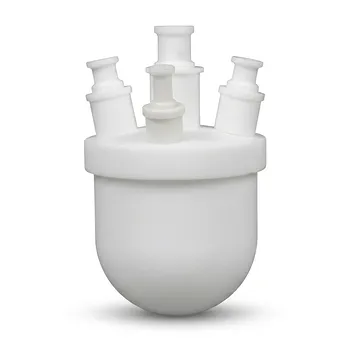
- Custom PTFE Flask 250ml High Purity Fluoropolymer Laboratory Vessel for Chemical Research
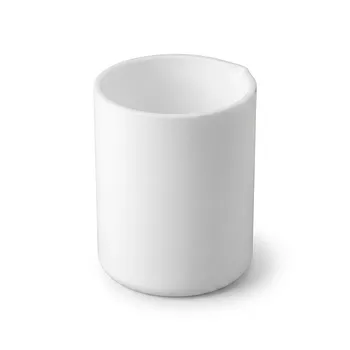
- High Temperature Resistant Thickened PTFE Beaker 2000ml for Chemical Processing and Laboratory Trace Analysis
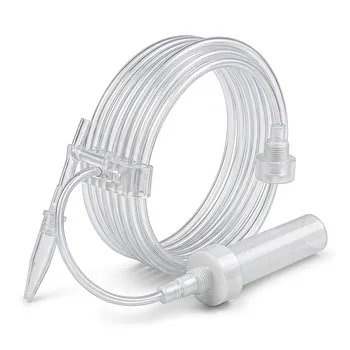
- Custom PFA Tubing 1/4 Inch High Purity Corrosion Resistant Fluoropolymer Tube with Welding and Machining Services
- High Purity PFA Chromatography Column with Collection Bottle Corrosion Resistant Fluoropolymer Filtration System for Trace Analysis
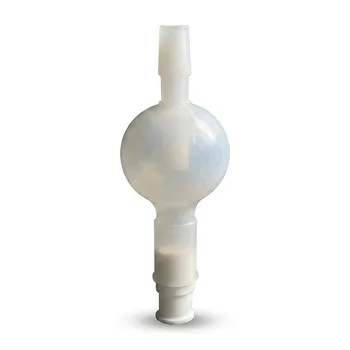
- Corrosion Resistant PFA Syringe Translucent Visual Fluoropolymer Labware 10ml Chemical Handling Tool
People Also Ask
- What are the key steps for structural integrity in molded PTFE lab reaction vessels? Master fine powder processing.
- When synthesizing TFVE monomers involving reactive organometallic reagents and aggressive polar solvents, what material performance characteristics are required? Ensure purity with PTFE/PFA.
- Why Are High-Purity Fluoropolymer Vessels and Tubing Critical for Trace Analysis? Prevent Contamination Reliably
- Why do PTFE fluoropolymer laboratory vessels and containers exhibit superior chemical resistance against harsh solvents and corrosive acids compared to standard plastic labware? Discover the molecular secrets
- How do choice of solvent and chain transfer activity affect molecular weight during vinylidene fluoride (VDF) radical polymerization? Learn Key Factors for High-MW PVDF