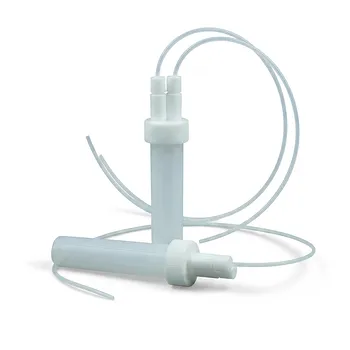
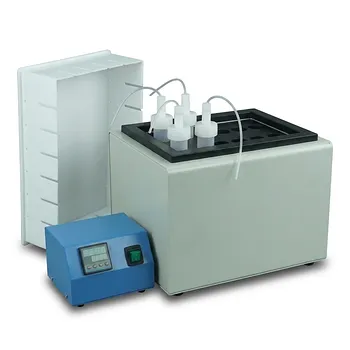
Precise volumetric control is the non-negotiable anchor of Inductively Coupled Plasma (ICP) quantification. Because ICP instruments measure the mass concentration of ions in a liquid, any inaccuracy in the final volume of a pretreated sample propagates directly into the final calculation of metal loading. Without an exact volumetric baseline, it becomes impossible to distinguish between actual catalyst degradation and simple measurement error.
Accurate catalyst stability assessment depends entirely on the mathematical relationship between liquid concentration and solid mass. If the final dilution volume is not strictly controlled, the resulting mass fraction calculations will be fundamentally flawed, leading to incorrect conclusions about catalyst leaching or durability.
The Mathematical Link Between Volume and Stability
Concentration as the Measured Proxy
ICP-OES and ICP-MS do not measure the absolute mass of a metal in a sample; they measure the mass concentration of ions in solution. To determine how much metal was originally on a catalyst, you must multiply this concentration by the exact final volume of the prepared sample.
Calculating Mass Loading and Leaching
When evaluating catalyst stability, researchers compare the metal content before and after electrolysis. Even a minor deviation in volume dilution shifts the baseline, which can falsely suggest that a catalyst is stable when it is actually leaching, or vice versa.
The Role of Mass Fractions
The final volume serves as the denominator for calculating mass fractions. High-precision volumetric labware is therefore a fundamental requirement for ensuring that the data reflects the chemical reality of the material rather than a procedural oversight.
Material Integrity and Trace Analysis
The Role of PP and PFA Containers
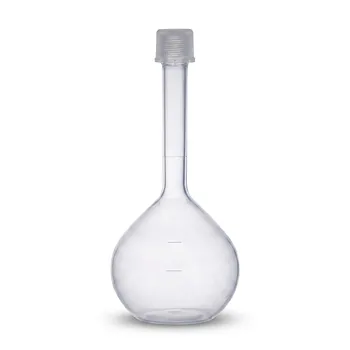
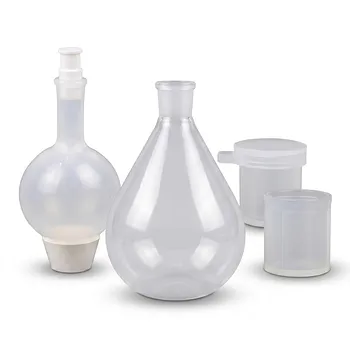
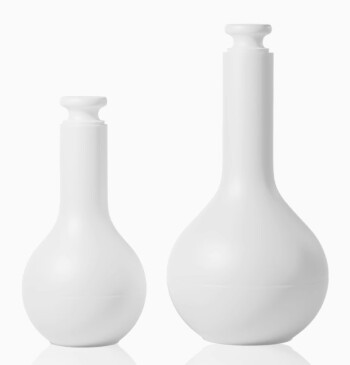
Beyond mere volume, the physical material of the volumetric container is critical for maintaining sample integrity. High-purity containers made from Polypropylene (PP) or Perfluoroalkoxy (PFA) are used to ensure that the volume remains stable and the sample remains uncontaminated.
Mitigating Leaching Backgrounds
ICP analysis is highly sensitive to trace elements, making the background profile of the labware a vital concern. Using high-purity materials prevents the leaching of minerals like manganese or molybdenum from the container walls into the sample, which would cause negative deviations in quantification.
Establishing a Physical Reference
In a lab setting, these high-purity volumetric containers act as the physical reference for the entire analytical chain. They ensure that the concentration measured by the instrument can be accurately mapped back to the original solid catalyst sample.
Understanding the Trade-offs and Pitfalls
Dilution Errors and Error Propagation
The primary pitfall in sample pretreatment is volumetric error propagation, where a 1% error in volume leads to a 1% error in the final stability metric. While automated pipettes offer speed, they require frequent calibration to match the reliability of Class A volumetric flasks.
Contamination vs. Precision
There is often a trade-off between using glass for extreme volumetric precision and using plastic to avoid ion leaching. While glass is traditionally more precise, the chemical inertness of PFA is often preferred in trace catalyst analysis to prevent the container from altering the sample's elemental profile.
Evaporation Risks
During long pretreatment processes or digestion steps, evaporation can silently alter the volume of a sample. If this loss is not accounted for by refilling to a precise volumetric mark, the resulting concentration data will be artificially inflated.
How to Apply This to Your Project
Recommendations for Success
- If your primary focus is trace element quantification: Prioritize PFA or PP labware to ensure the lowest possible elemental background and prevent contamination.
- If your primary focus is determining leaching rates: Utilize Class A volumetric glassware or calibrated digital dispensers to ensure the final volume is exact for mass fraction calculations.
- If your primary focus is high-throughput screening: Implement internal standards within your ICP method to correct for minor volumetric fluctuations during the dilution process.
Achieving high-precision volumetric control transforms ICP from a simple detection tool into a definitive method for verifying catalyst longevity.
Summary Table:
| Key Factor | Impact on ICP Analysis | Recommended Solution |
|---|---|---|
| Volumetric Accuracy | Essential for calculating mass fractions and leaching rates. | Use Class A labware or calibrated digital dispensers. |
| Material Purity | Prevents leaching of trace minerals (Mn, Mo) into samples. | Use high-purity PFA or PP volumetric containers. |
| Evaporation Control | Prevents artificial inflation of ion concentration data. | Ensure vessels are sealed or refilled to precise marks. |
| Chemical Inertness | Eliminates background noise in sensitive trace analysis. | Prioritize PFA labware for high-sensitivity ICP-MS. |
Elevate Your Analytical Precision with KINTEK
Don't let volumetric errors or material contamination compromise your catalyst stability research. KINTEK specializes in high-performance fluoropolymer solutions designed specifically for the rigorous demands of trace analysis.
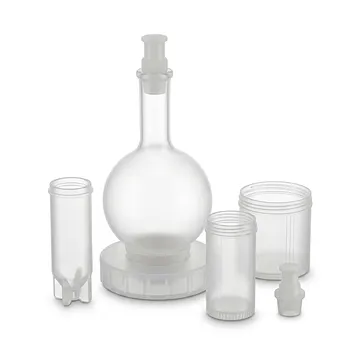
From everyday basic labware like beakers, measuring cylinders, and reagent bottles to specialized digestion tubes, PFA volumetric flasks, and sample prep tools, we provide the inert environment your samples require. Whether you need standard consumables like stirring bars and filters or complex, bespoke laboratory setups crafted via end-to-end custom CNC fabrication, KINTEK delivers unmatched material purity.
Ready to safeguard your ICP results? Contact our experts today to discuss how our PTFE and PFA laboratory supplies can enhance your lab's accuracy and efficiency.
References
- Pandi Muthukumar, Chundong Wang. Unlocking a Water Coordination Environment in Co-Based Metal–Organic Frameworks for Advanced Nitrate-to-Ammonia Electroreduction. DOI: 10.1021/jacs.5c07066
This article is also based on technical information from Kintek Knowledge Base .
Related Products
- High Purity PFA Volumetric Flask 1000ml 2000ml Constant Volume Bottle Acid Resistant Trace Analysis Custom Laboratory Labware
- High Purity PFA Volumetric Flask Acid Resistant Perfluoroalkoxy Trace Analysis Container Custom Mold Fabrication 1000ml 2000ml
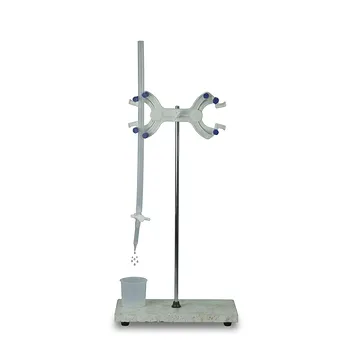
- High Purity PFA Translucent Volumetric Burette with PTFE Valve for Acid Base Titration and Corrosive Reagent Handling
- High Purity PFA Crucible and Corrosion Resistant PTFE Beaker for Trace Analysis and Custom Laboratory Applications
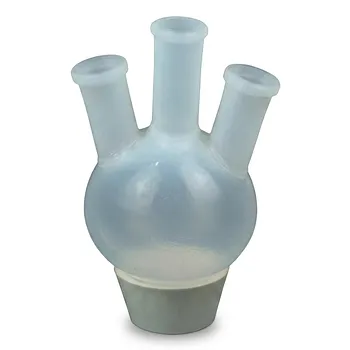
- Custom PFA Pear Shaped Flask High Purity Corrosion Resistant Labware Custom Molded Fluoropolymer Flask Glass Replacement Solution
People Also Ask
- What are the advantages of using high-purity PFA vs. glassware? Achieve Unmatched Accuracy in Trace Analysis
- Why are high-purity PFA volumetric flasks and storage bottles preferred over glass? Prevent KOH Catalyst Poisoning
- Why use high-purity PFA bottles for Carbon Quantum Dots? Ensure Ink Stability and Prevent Fluorescence Quenching
- Why is high-purity PFA trace analysis labware recommended for trace element detection? Achieve Gold Standard PPT Accuracy
- Why is high-purity PFA trace analysis labware used for MXene? Ensure Superior Material Integrity in Research