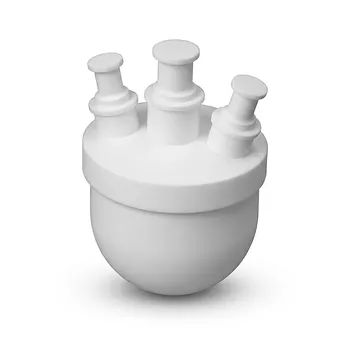
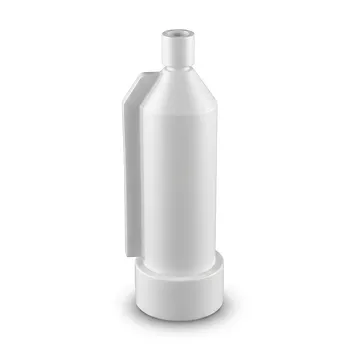
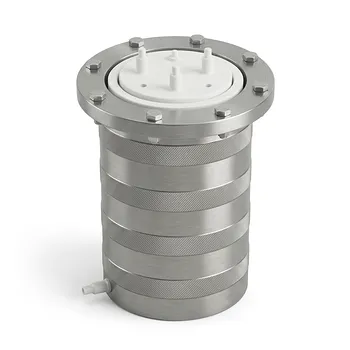
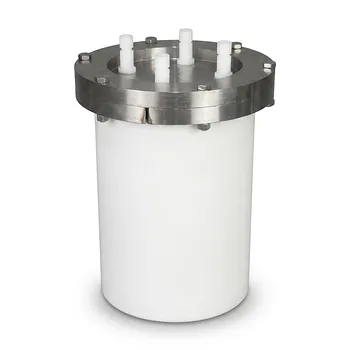
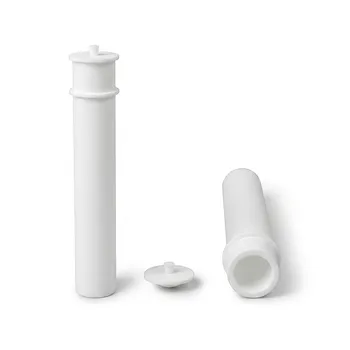
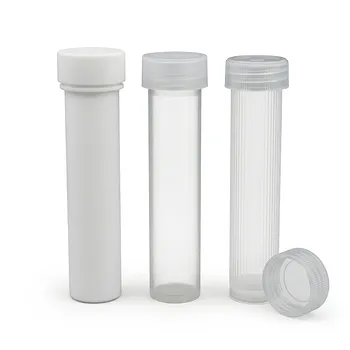
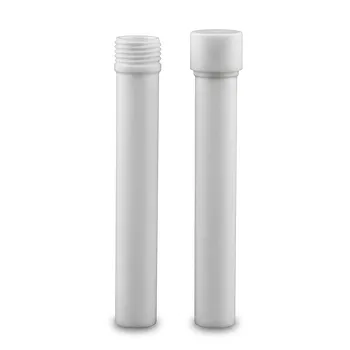
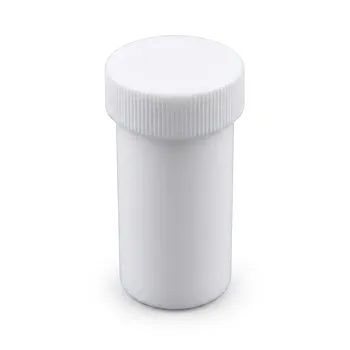
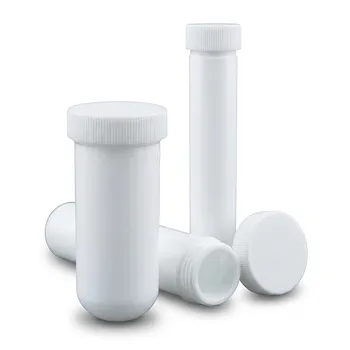
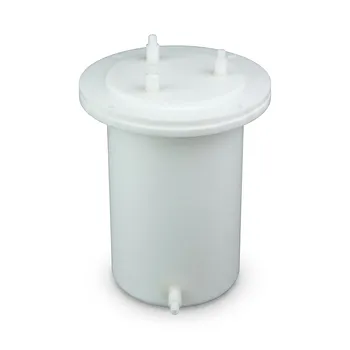
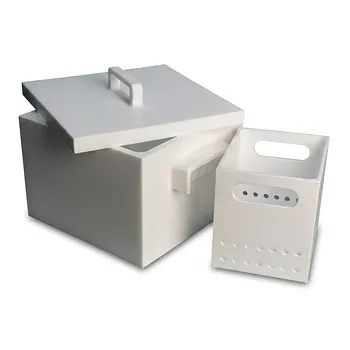
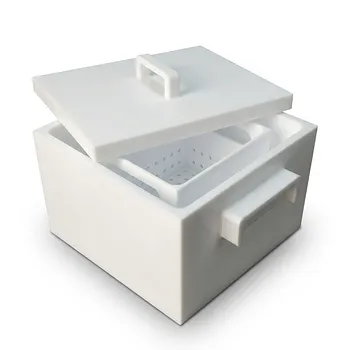
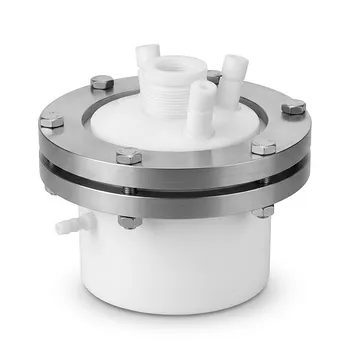
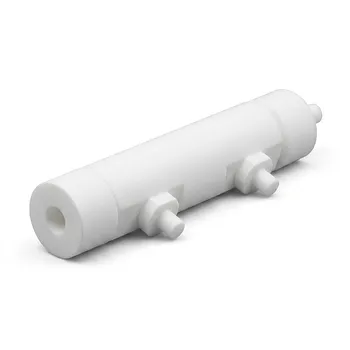
Chemical stability in laboratory apparatus is the primary safeguard against the degradation of Fe(II) phthalocyanine sensors. The use of PTFE-lined vessels and corrosion-resistant tools prevents aggressive organic solvents from eroding container walls and leaching contaminants into the solution. This integrity is essential to ensure the sensor maintains its specific spectral characteristics and its critical ability to selectively detect mercury ions.
Core Takeaway: High-performance materials like PTFE provide an inert environment that prevents chemical leaching and container erosion during the preparation of Fe(II) phthalocyanine. This ensures that the sensor's molecular structure and detection accuracy remain uncompromised by environmental impurities.
Preventing Chemical Degradation and Leaching
Resisting Aggressive Organic Solvents
The preparation of these sensors frequently involves the use of organic solvents such as methanol or chloroform. These chemicals can be highly aggressive, potentially softening or dissolving standard plastic labware.
Using PTFE-lined vessels ensures that the container remains structurally sound when exposed to these solvents. This prevents the physical breakdown of the apparatus during the mixing and preparation process.
Eliminating Spectral Interference
When containers erode, they release microscopic substances into the solution known as leachables. In the context of Fe(II) phthalocyanine, these impurities can drastically alter the sensor's spectral characteristics.
Maintaining a pure environment is vital because the sensor relies on precise light absorption or emission patterns. Any foreign substance introduced via leaching could lead to inaccurate data or "noisy" signals.
Protecting Molecular Functionality and Precision
Ensuring Selectivity for Mercury Ions
Fe(II) phthalocyanine sensors are designed to selectively identify and bind to mercury ions. The structural integrity of these molecules must be perfectly preserved to maintain this specific binding affinity.
Chemically inert containers prevent trace metal impurities from entering the solution. If these impurities were present, they might occupy the sensor's binding sites, effectively "poisoning" the sensor and rendering it unable to detect the intended mercury targets.
Stability During pH Adjustments
Sensor preparation often requires precise pH adjustments, which involve the addition of acids or bases. These reagents can increase the risk of corrosion in non-specialized laboratory equipment.
Fluoropolymers like PTFE are uniquely resistant to a wide range of pH levels. This resistance ensures that the container does not react with the pH-adjusting agents, maintaining a stable and predictable reaction environment.
Understanding the Trade-offs
The Cost and Complexity of High-Performance Materials
While PTFE and similar fluoropolymers offer superior protection, they are significantly more expensive than standard glassware or disposable plastics. This necessitates a higher initial investment for laboratory setups.
Thermal and Mechanical Limitations
PTFE is highly inert but has a lower mechanical strength compared to stainless steel and can be prone to "creep" or deformation under high pressure. Additionally, while it handles moderate heat well, it cannot withstand the extreme temperatures that some specialized ceramics or alloys can endure.
Cleaning and Maintenance Requirements
Due to their non-stick nature, PTFE vessels are generally easy to clean, but they can be prone to surface scratching. Scratches can trap trace residues from previous experiments, potentially leading to cross-contamination if rigorous cleaning protocols are not followed.
How to Apply This to Your Project
When selecting laboratory apparatus for sensitive chemical synthesis, consider the following guidelines to ensure the highest data integrity:
- If your primary focus is high-precision analytical sensing: Always prioritize PTFE or PFA materials to eliminate the risk of trace metal leaching that could interfere with ion detection.
- If your primary focus is cost-effective bulk preparation: Use standard borosilicate glass for non-aggressive steps, but transition to chemically resistant liners once organic solvents or pH-adjusting reagents are introduced.
- If your primary focus is long-term sensor durability: Ensure the sensor's outer shell is constructed from high-grade epoxy or PTFE to protect the internal components from corrosive environments like anaerobic digestate or acidic runoff.
Selecting the appropriate chemically stable apparatus is the fundamental step in ensuring that high-sensitivity sensors deliver reliable, repeatable, and accurate results in complex chemical environments.
Summary Table:
| Feature | Benefit for Fe(II) Phthalocyanine Sensors |
|---|---|
| Chemical Inertness | Prevents aggressive solvents (methanol/chloroform) from leaching contaminants. |
| Spectral Purity | Eliminates impurities that cause noisy signals or shift spectral characteristics. |
| pH Resistance | Ensures stability during critical acid/base adjustments without container corrosion. |
| Ion Selectivity | Protects molecular binding sites from trace metals to maintain mercury detection. |
| Non-Stick Surface | Simplifies cleaning protocols and reduces cross-contamination risks. |
Secure Your Research Integrity with KINTEK High-Performance Fluoropolymers
Don’t let trace contaminants compromise your sensor's precision. KINTEK specializes in manufacturing virtually all laboratory supplies crafted from high-performance PTFE and PFA, ensuring a 100% inert environment for your most sensitive chemical synthesis.
From everyday basic labware like beakers, reagent bottles, and digestion tubes to advanced components like custom electrochemical cells and microchannel reactors, we provide the chemical stability your Fe(II) phthalocyanine projects demand. Whether you need high-purity trace analysis instruments or bespoke, CNC-machined non-standard parts, our end-to-end fabrication capabilities deliver exactly what your lab requires.
Ready to eliminate leaching and ensure spectral accuracy? Contact KINTEK today to discuss your custom laboratory setup and discover how our fluoropolymer expertise can empower your next breakthrough!
References
- Yasemin Çağlar. A Novel DLLME-Based Approach for the Spectrophotometric Determination of Mercury in Environmental Samples Using the Fe(II) Phthalocyanine Sensor. DOI: 10.3390/molecules30214192
This article is also based on technical information from Kintek Knowledge Base .
Related Products
- PTFE Lined High Pressure Digestion Vessel 50ml High Temperature Hydrothermal Synthesis Tank
- Custom TFM Reaction Vessel with Stainless Steel Jacket and PTFE Inner Cup for High Corrosion Resistance
- Custom PTFE Flask Large Volume 18L Corrosion Resistant Low Background High Purity Chemical Vessel
- High Purity PTFE Corrosion Resistant Reaction Vessel with Luer Fittings and Caps for Trace Analysis
- High Pressure Custom TFM Reactor Stainless Steel Outer Vessel PTFE Inner Cup for Corrosive Synthesis
People Also Ask
- What are the benefits of using a PTFE-lined vessel for carbon-sulfur cathode treatment? Maximize Purity & Performance
- Why are PTFE-lined pressure digestion vessels required for the preparation of Ag/CeO2 catalysts? Purity & Performance
- What safety features are typically incorporated into high-pressure PTFE digestion vessel designs? Ensure Lab Safety
- What is the function of high-pressure PTFE digestion vessels in mineral analysis? Optimize Sample Mineralization
- What is the function of PTFE lined high-pressure vessels in g-C3N4 synthesis? Achieve High-Purity Material Growth