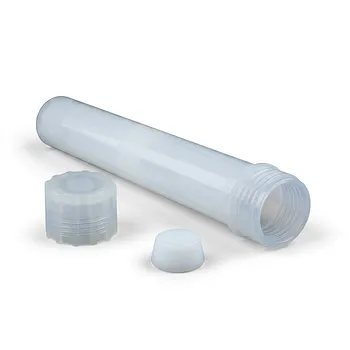
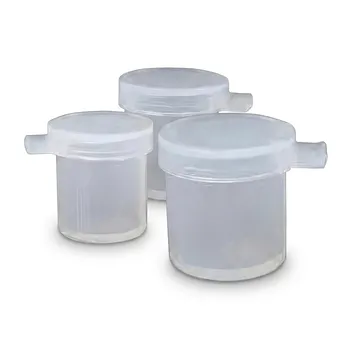
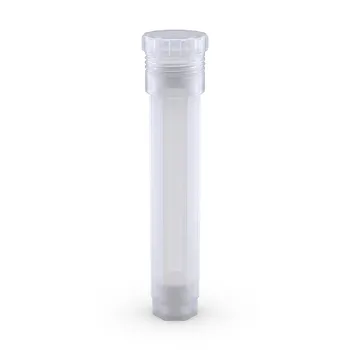
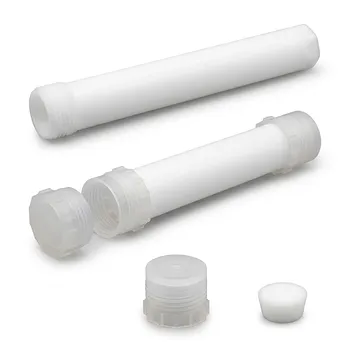
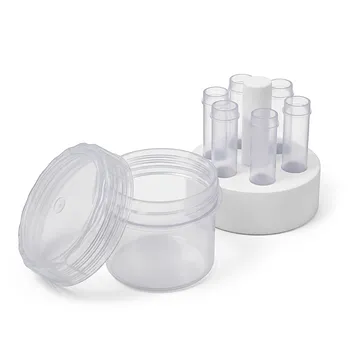
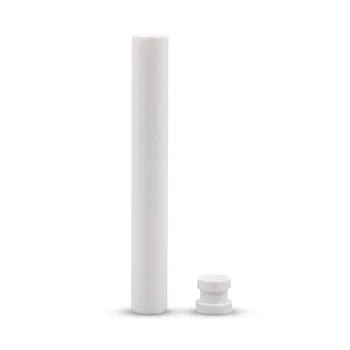
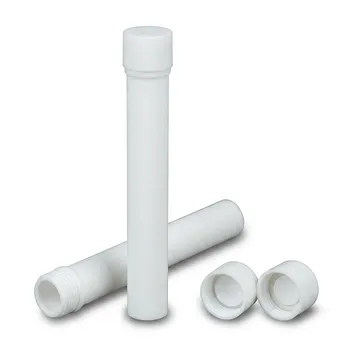
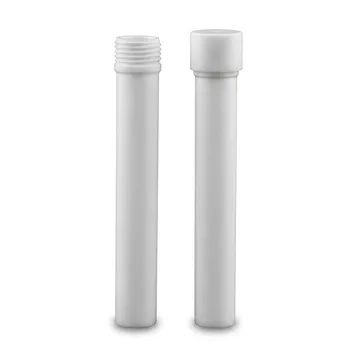
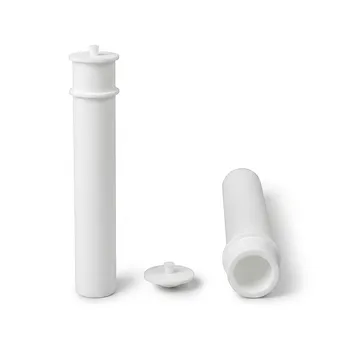
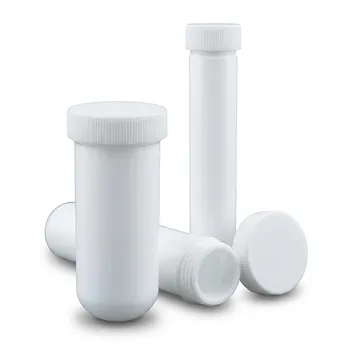
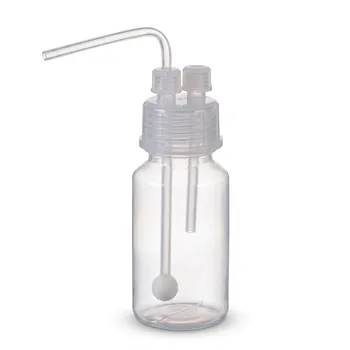
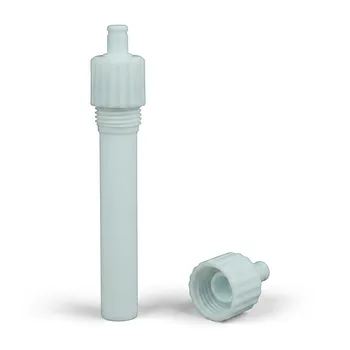
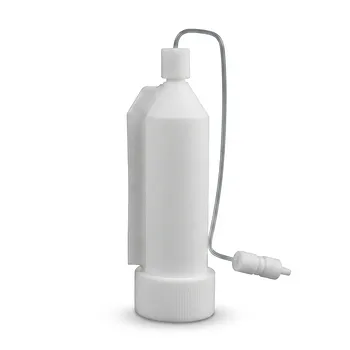
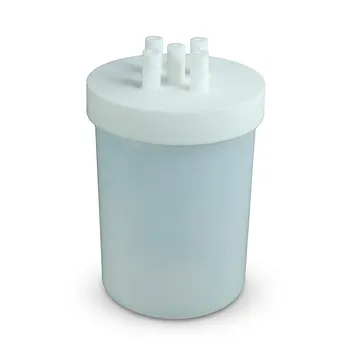
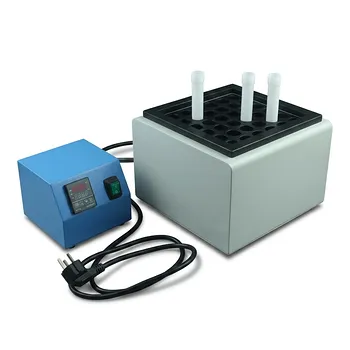
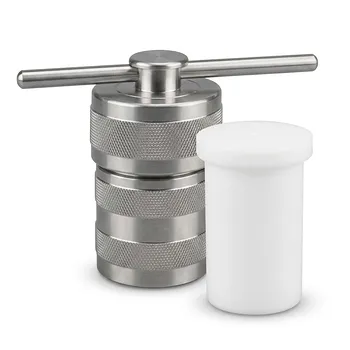
PFA digestion vessels are the industry standard for trace analysis because they eliminate sample contamination and ensure maximum analyte recovery. These vessels provide an ultra-clean environment with nearly zero metal background levels and an exceptionally smooth, non-stick surface. By preventing the leaching of impurities and the adsorption of target elements, PFA ensures that detection limits remain low and analytical results remain precise.
Core Takeaway: PFA vessels are essential because they combine extreme chemical inertness with high-purity surfaces, allowing researchers to process samples at high temperatures and pressures without compromising the integrity of trace-level measurements.
Ensuring Analytical Purity and Sensitivity
Eliminating Metal Background Noise
PFA material possesses an extremely low background value for metal elements, which is critical when measuring concentrations at the ppb (parts-per-billion) or ppt (parts-per-trillion) levels. This purity prevents the container itself from leaching ions—such as zinc, selenium, or radionuclides like $^{238}U$ and $^{232}Th$—into the sample.
Achieving Superior Recovery Rates
The exceptionally smooth inner surface of PFA significantly reduces the physical adsorption of target analytes onto the container walls. This non-stick characteristic ensures that the entire sample remains in the liquid phase, leading to higher recovery rates and more accurate quantification during ICP-MS analysis.
Preventing Cross-Contamination
Because PFA is chemically non-reactive and has a low-friction surface, it is much easier to clean thoroughly between uses. This excellent non-stick property minimizes the risk of "carryover" or cross-contamination from previous samples, which is vital for high-throughput laboratories processing diverse matrices.
Withstanding Extreme Digestion Conditions
Resistance to Aggressive Reagents
Trace analysis often requires the use of strong oxidizing acids, such as concentrated nitric acid, hydrochloric acid, and even hydrofluoric acid (HF). PFA is uniquely capable of withstanding these corrosive chemicals at high temperatures without degradation or structural failure.
Stability Under High Temperature and Pressure
Microwave digestion processes generate significant internal pressure and temperatures often reaching 200°C. PFA maintains its structural integrity and chemical inertness under these extreme conditions, allowing complex matrices like soil, bacterial powders, or tissues to be completely mineralized.
Transparency to Microwave Energy
As a fluoropolymer, PFA is transparent to microwave radiation, allowing the energy to pass directly through the vessel walls to heat the acid and sample mixture. This ensures efficient and uniform heating, which is necessary for the rapid dissolution of difficult-to-digest materials.
Understanding the Trade-offs
Cost and Lifecycle Considerations
While PFA vessels offer superior performance, they represent a significant financial investment compared to disposable or lower-grade plastic alternatives. Their value is realized over a long lifecycle, but they require strict cleaning protocols to maintain their high-purity status.
Thermal Limitations
Although PFA is highly heat-resistant, it does have a maximum operating temperature (typically around 250°C-260°C). Exceeding these limits can lead to vessel deformation or failure, meaning precise temperature monitoring is required during the microwave digestion cycle.
Handling and Mechanical Stress
PFA is more "plastic" than rigid materials like quartz; therefore, it can be prone to deformation under extreme mechanical stress if not supported by a proper outer sleeve. Users must ensure that vessels are correctly assembled within their pressure-containing shields to prevent leaks or ruptures.
How to Apply This to Your Project
Recommendations for Vessel Selection
- If your primary focus is ultra-trace analysis (ppt levels): Utilize high-purity PFA vessels exclusively to ensure the lowest possible detection limits and prevent leaching.
- If your primary focus is digestion involving Hydrofluoric Acid (HF): Choose PFA over glass or quartz, as it is one of the few materials that remains completely unreactive to HF.
- If your primary focus is high-throughput soil or tissue testing: Leverage PFA’s non-stick properties to simplify the cleaning process and reduce the risk of sample-to-sample carryover.
Ultimately, PFA digestion vessels serve as the foundational tool for modern trace element analysis, providing the chemical stability and purity required for high-precision science.
Summary Table:
| Feature | Advantage | Application Benefit |
|---|---|---|
| Ultra-Low Background | Nearly zero metal leaching | Critical for ppt/ppb trace analysis |
| Non-Stick Surface | High analyte recovery rates | Minimizes adsorption and cross-contamination |
| Chemical Inertness | Resists HF and strong acids | Safely handles aggressive digestion reagents |
| Thermal Stability | Operates up to 260°C | Ideal for high-pressure microwave digestion |
| Microwave Transparency | Efficient, uniform heating | Ensures complete mineralization of samples |
Elevate Your Analytical Precision with KINTEK
Maximize the accuracy of your trace analysis with high-performance fluoropolymer labware from KINTEK. We specialize in the end-to-end custom CNC fabrication of high-purity PTFE and PFA solutions designed to meet the most rigorous laboratory standards.
From everyday essentials like beakers, reagent bottles, and centrifuge tubes to specialized PFA digestion vessels, high-purity trace analysis instruments, and fluid transfer components (tubing, valves, fittings), we provide everything your lab needs. Our expertise extends to advanced apparatus, including electrochemical cells, battery testing fixtures, and microwave digestion vessels, ensuring absolutely zero contamination for your most sensitive projects.
Whether you require complex non-standard machined parts or high-volume orders, KINTEK is your dedicated partner for high-performance materials.
Contact us today to request a custom quote and secure your sample integrity!
References
- Pusit Pookmanee, Thipsuda Pookmanee. Green Hydrothermal Synthesis of Dual‐Phase Submicron Cu <sub>2</sub> O‐CuO Particles Using Corn Husk Extract for Enhanced Antibacterial Applications. DOI: 10.1002/slct.202502184
This article is also based on technical information from Kintek Knowledge Base .
Related Products
- High Purity Corrosion Resistant PFA Microwave Digestion Vessels 55ml Replacement Tubes for Trace Analysis
- High Purity PFA Sample Dissolution Cups Acid Resistant Chemical Digestion Vessels with Lids Trace Analysis Labware
- High Purity PTFE PFA Microwave Digestion Vessels Custom Acid Digestion Tanks for Laboratory Sample Preparation
- High Purity Laboratory Microwave Digestion Vessel Customizable PFA PTFE Digestion Tank for Analytical Sample Preparation Trace Metal Analysis
- High Purity Corrosion Resistant PFA Reaction Vessel with PTFE Holder and Integrated Sampling Tube for Trace Analysis
People Also Ask
- Why are high-strength PFA microwave digestion vessels ideal for complex samples? Ensure Pure & Precise Trace Analysis
- What safety features are commonly integrated into microwave digestion vessels? Ensuring High-Pressure Laboratory Safety
- What are the advantages of using microwave digestion vessels for environmental analysis? Boost speed and sample accuracy.
- What are the advantages of using microwave digestion vessels? Optimize EG@MO synthesis with superior thermal control.
- How do microwave digestion vessels support pharmaceutical elemental impurity testing? Achieve Precise USP Compliance